

To maintain a state of ketosis while following a ketogenic diet, it is essential to limit sugar intake to less than 20 to 50 grams of net carbohydrates per day, which encompasses all types of sugars. This strict limitation is necessary because consuming excess sugar can disrupt ketosis, a metabolic state where the body primarily uses fat for fuel instead of carbohydrates. In this article, we will delve into the specifics of sugar consumption on a keto diet, including how to identify hidden sugars, suitable sugar alternatives, and practical tips for successful implementation of a low-sugar lifestyle.
Understanding Sugar on a Keto Diet
Sugar can be classified into two main categories: natural sugars and added sugars. Natural sugars, found in whole foods such as fruits and dairy, can still impact ketosis, especially when consumed in large amounts due to their carbohydrate content. Added sugars, often found in processed foods, can significantly elevate carbohydrate intake and should be avoided to maintain ketosis. Both types of sugar can contribute to overall carbohydrate consumption, making it crucial for individuals on a ketogenic diet to track their carbohydrate intake meticulously. This includes not only sugars but all sources of carbohydrates, as exceeding the daily limit can lead to a state of glucose metabolism rather than fat metabolism.
Recommended Sugar Limits
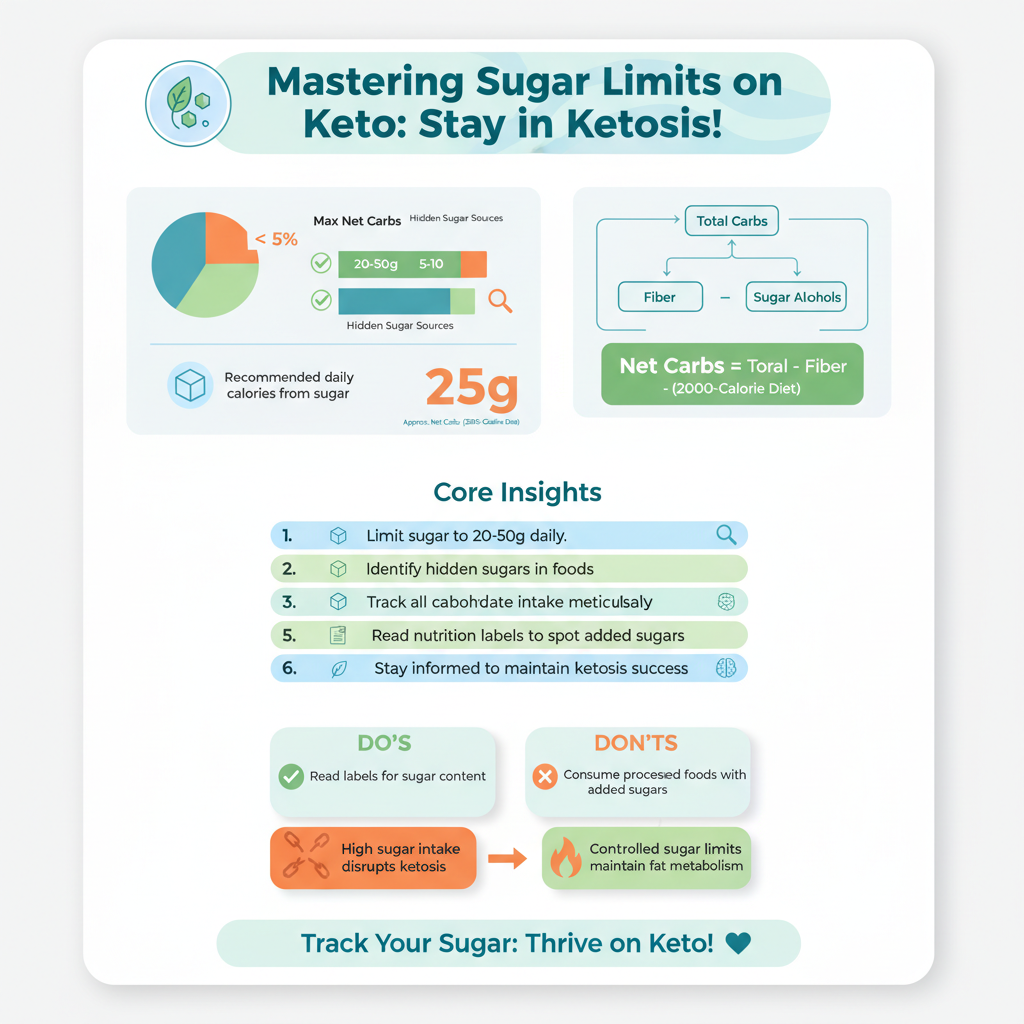
For those adhering to a ketogenic diet, the recommended sugar intake is generally limited to less than 5% of total daily calories, translating to about 20 to 50 grams of net carbohydrates per day. Net carbs are calculated by subtracting fiber and certain sugar alcohols from total carbohydrates, as these do not significantly impact blood sugar levels. Therefore, it is essential for keto dieters to understand how sugar fits into their broader carbohydrate context. For example, if a person follows a 2,000-calorie diet, they should aim for no more than 100 calories from carbohydrates, equating to approximately 25 grams of net carbs. This means that sugar consumption must be carefully monitored and managed within this framework to ensure that individuals remain in ketosis.
Hidden Sugars in Foods
Many foods contain hidden sugars that can easily derail a keto diet. Common culprits include sauces, dressings, and packaged snacks, which often contain added sugars for flavor enhancement. For example, barbecue sauce, salad dressings, and even certain brands of nut butter can be loaded with sugars that significantly increase carbohydrate counts. To effectively spot hidden sugars, it is crucial to read nutrition labels carefully. Look for ingredients like high fructose corn syrup, cane sugar, and other sweeteners, as these can contribute to a surprising amount of carbohydrate intake. Familiarizing oneself with different names for sugar can help consumers make better choices and avoid inadvertently exceeding their carbohydrate limits.
Sugar Alternatives Suitable for Keto
Fortunately, there are several sugar substitutes available that can be used in place of traditional sugar without affecting ketosis. Popular options include erythritol, stevia, and monk fruit. Erythritol is a sugar alcohol that contains nearly zero calories and does not spike blood sugar or insulin levels. Stevia, derived from the leaves of the Stevia plant, is another zero-calorie sweetener that is often used in beverages and desserts. Monk fruit, which is also calorie-free, provides a sweetness that can be 150-200 times sweeter than sugar. While these sugar alternatives can be beneficial for those on a keto diet, it is essential to consider potential drawbacks. Some individuals may experience digestive discomfort with sugar alcohols, while others may have varying reactions to different sweeteners. Therefore, it is advisable to test these substitutes in moderation to determine personal tolerance.
Balancing Sugar Intake with Keto Goals
In some cases, individuals may wish to incorporate small amounts of sugar while still adhering to their ketogenic goals. This can be achieved by being mindful of portion sizes and choosing high-quality, low-sugar foods. For instance, opting for berries over higher-sugar fruits like bananas can allow for the enjoyment of natural sweetness without exceeding carbohydrate limits. It is also important to recognize that individual tolerance to sugar can vary significantly; some may find that even small amounts of sugar can disrupt their ketosis, while others may be able to tolerate it better. Monitoring one’s metabolic response to sugar and adjusting intake accordingly can help each person find their balance.
Practical Tips for Managing Sugar Intake
Managing sugar cravings and making mindful food choices is essential for anyone on a ketogenic diet. One practical strategy is to stay hydrated, as thirst can sometimes be mistaken for hunger or cravings. Drinking water throughout the day can help curb unnecessary snacking. Additionally, meal planning and preparation can be invaluable in minimizing sugar consumption. Preparing meals in advance and having keto-friendly snacks readily available can reduce the temptation to reach for sugary alternatives when hunger strikes. Incorporating healthy fats and proteins into meals can also promote satiety, helping to diminish cravings for sugary foods.
In summary, adhering to a ketogenic diet requires careful consideration of sugar intake. By understanding the limits of sugar consumption, recognizing hidden sugars, and utilizing suitable sugar alternatives, individuals can successfully navigate their dietary goals. Practical strategies for managing cravings and meal planning further enhance the ability to maintain ketosis. Exploring sugar alternatives and closely monitoring intake can empower readers to achieve their desired health objectives while enjoying the benefits of a low-sugar lifestyle.
Frequently Asked Questions
How much sugar can you have on a keto diet?
On a keto diet, it’s typically recommended to limit your daily carbohydrate intake to around 20 to 50 grams. Since sugar is a form of carbohydrate, any added sugar should ideally be kept to a minimum. Some ketogenic dieters aim for a sugar intake of less than 5 grams per day to maintain ketosis, which is the metabolic state where your body burns fat for fuel instead of carbohydrates.
What are the best sugar alternatives for a keto diet?
The best sugar alternatives for a keto diet are those that are low in carbohydrates and do not spike blood sugar levels. Popular options include stevia, erythritol, monk fruit sweetener, and allulose. These sweeteners provide the sweetness of sugar without the associated carbs, making them ideal for maintaining ketosis while satisfying your sweet tooth.
Why is sugar restricted on a keto diet?
Sugar is restricted on a keto diet because it can significantly raise blood glucose levels, prompting the body to release insulin, which in turn can inhibit ketosis. When sugar is consumed, the body prefers to burn glucose for energy over fat. By minimizing sugar intake, individuals on a keto diet encourage their bodies to enter and remain in ketosis, where fat is utilized as the primary energy source.
How can I satisfy my sweet cravings on a keto diet without sugar?
To satisfy sweet cravings on a keto diet without sugar, consider using keto-friendly sweeteners like stevia or erythritol in recipes, or opt for naturally low-carb foods such as berries in moderation. You can also experiment with keto desserts made from almond flour, coconut flour, and healthy fats, which can provide both sweetness and texture without compromising your dietary goals.
Which fruits can I eat on a keto diet with low sugar content?
Fruits that are low in sugar and suitable for a keto diet include avocados, strawberries, blackberries, and raspberries. These fruits are not only low in carbohydrates but also rich in fiber, which can help mitigate the impact on blood sugar levels. It’s essential to consume them in moderation to stay within your daily carb limit while still enjoying the benefits of vitamins and antioxidants they offer.
References
- https://www.ncbi.nlm.nih.gov/pmc/articles/PMC6461057/
- The Ketogenic Diet: A Detailed Beginner’s Guide to Keto
- https://www.webmd.com/diet/what-is-a-keto-diet
- https://www.mayoclinic.org/healthy-lifestyle/nutrition-and-healthy-eating/in-depth/keto-diet/art-20459814
- Vitamin C (Ascorbic Acid) – StatPearls – NCBI Bookshelf
- https://www.diabetes.org/nutrition/healthy-foods/what-is-the-keto-diet
- https://www.cdc.gov/diabetes/basics/diabetes.html