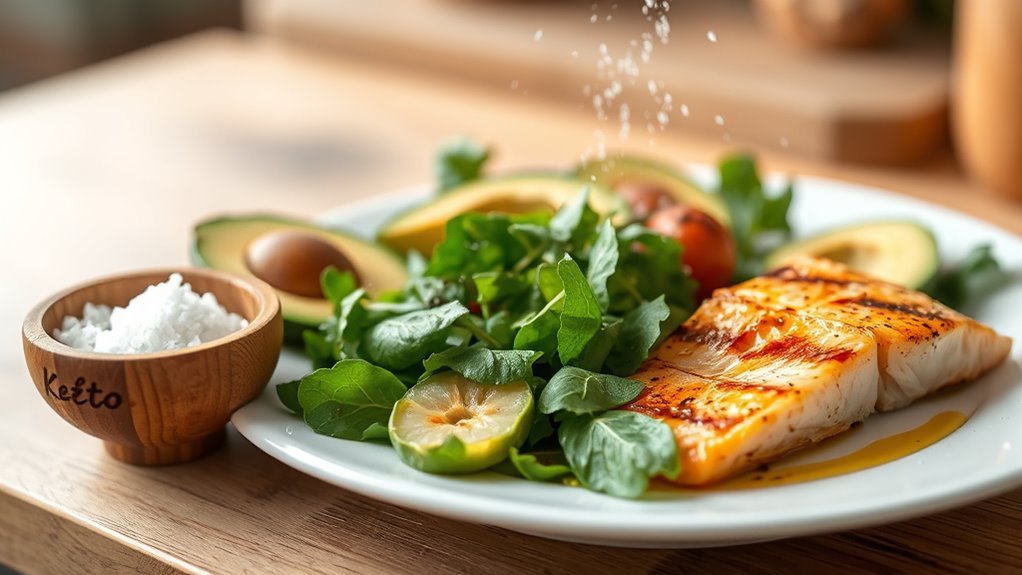

On a keto diet, you should aim for between 3,000 to 5,000 mg of sodium daily to maintain electrolyte balance and prevent fatigue. Sodium supports muscle function and energy levels, especially during fat burning. Incorporating sodium-rich foods like bone broth, sea salt, and pickled vegetables can help you reach this goal. Monitoring your intake is important to avoid deficiency symptoms. There’s much more to learn about maintaining your sodium levels effectively.
Understanding Sodium’s Role in the Keto Diet
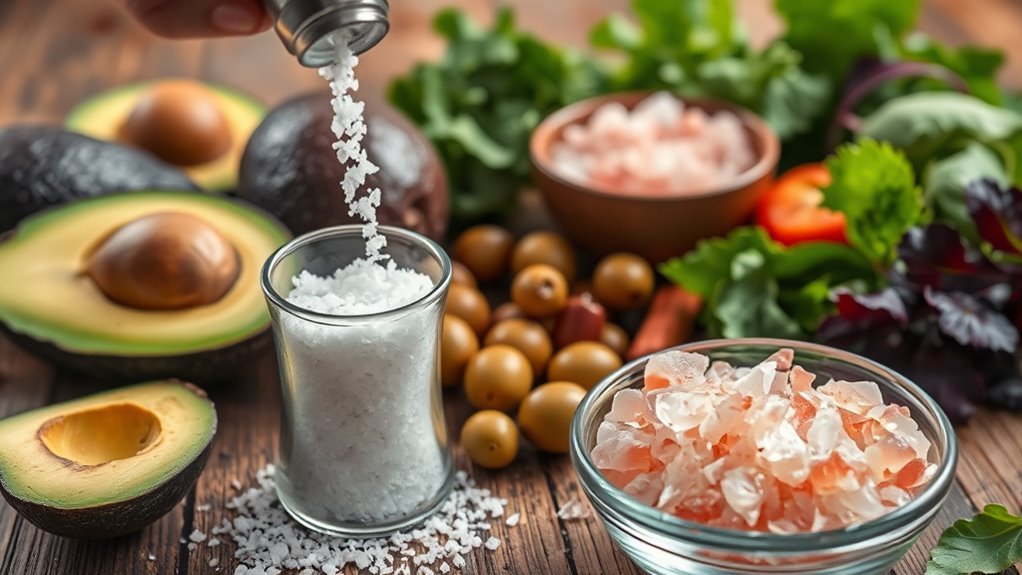
When you commence a keto diet, understanding sodium’s role is essential, as it helps maintain important bodily functions. Sodium is important for muscle contractions and nerve function, especially when your body shifts to burning fat for fuel. Without adequate sodium, you might experience fatigue or muscle cramps. To guarantee you get enough, focus on sodium sources like salt, bone broth, and pickled vegetables, which can enhance your meals while boosting your sodium intake. The benefits of sodium extend beyond hydration; it can help maintain blood pressure and support kidney function, allowing you to feel more energized during your keto journey. Remember, balancing your sodium intake is key to enjoying the freedom and energy that the keto diet can offer.
The Importance of Electrolyte Balance
Maintaining a proper electrolyte balance is essential on a keto diet, especially with sodium’s key role in fluid regulation and muscle function. If you experience symptoms like fatigue, muscle cramps, or headaches, it could indicate an imbalance. To keep your electrolytes in check, consider incorporating sodium-rich foods and staying hydrated.
Sodium’s Role in Keto
Though you might focus on cutting carbs while following a ketogenic diet, paying attention to sodium intake is equally important for maintaining electrolyte balance. Sodium plays a significant role in hydration, nerve function, and muscle contraction. When you reduce carbs, your body loses water and electrolytes, making it essential to replenish sodium to avoid fatigue and cramping. The recommended daily carb intake should be limited to 20-50 grams for ketosis, which emphasizes the need for maintaining electrolyte levels as well. Sodium sources like sea salt, bone broth, and pickled foods can help you meet your needs. The sodium benefits include improved energy levels and enhanced performance during workouts. Remember, while you crave freedom in your diet, don’t overlook the importance of maintaining proper sodium levels to support your overall health and well-being on keto. Embrace these practices for a more balanced lifestyle.
Symptoms of Imbalance
If you don’t manage your sodium levels properly on a ketogenic diet, you might experience a range of unpleasant symptoms that signal an electrolyte imbalance. These can include fatigue, muscle cramps, headaches, and dizziness. It’s important to recognize that not all sodium sources are created equal; processed foods often perpetuate sodium myths, suggesting you need more than you actually do. Instead, focus on natural sources like sea salt and bone broth, which provide essential minerals without the additives. Staying aware of your sodium intake can help you avoid these symptoms, allowing you to enjoy the freedom of your keto journey without unnecessary discomfort. Remember, proper hydration is key to feeling your best while pursuing your dietary goals.
Tips for Balance
To guarantee you stay energized and healthy on a ketogenic diet, it’s crucial to prioritize electrolyte balance, especially sodium. Aim for about 3,000 to 5,000 mg of sodium daily, but listen to your body’s needs. Great sodium sources include bone broth, pickles, and salt added to your meals. Don’t overlook potassium and magnesium; they work hand-in-hand with sodium for ideal balance. Maintaining sodium levels is essential to mitigate the risk of dehydration and support overall bodily functions.
For hydration tips, drink plenty of water throughout the day, and consider adding electrolytes to your beverages, especially during workouts. Remember, proper hydration supports your overall wellness and energy levels. By being mindful of your sodium intake and hydration, you can enjoy the freedom of the keto lifestyle while maintaining your health.
Recommended Sodium Intake on Keto
When following a ketogenic diet, it is vital to pay attention to your sodium intake, as reducing carbohydrates can lead to lower insulin levels and increased sodium excretion. Aim for about 3,000 to 5,000 mg of sodium daily, depending on your activity level and individual needs. Good sodium sources include bone broth, sea salt, and pickled vegetables. It’s important to challenge health myths that demonize sodium; it’s essential for maintaining fluid balance and muscle function, especially in a low-carb diet. Staying mindful of your sodium intake can help you feel your best while enjoying the freedom of keto. Just remember, too little sodium can lead to unwanted side effects, so make sure you’re replenishing adequately.
Signs of Sodium Deficiency
If you’re not getting enough sodium on a keto diet, you might notice some common symptoms like fatigue and mood swings. Low sodium levels can greatly impact your energy and lead to cravings that make it tough to stick to your plan. Recognizing these signs early can help you adjust your intake and maintain your well-being.
Common Symptoms Noted
Although sodium is often overlooked in discussions about the ketogenic diet, its deficiency can lead to several noticeable symptoms. You might experience headaches, fatigue, or muscle cramps, which can feel particularly frustrating when you’re trying to enjoy the freedom of a keto lifestyle. Increased sodium sensitivity can heighten these symptoms, making it vital to monitor your intake. To counteract this, consider effective hydration strategies, like adding electrolyte-rich foods or supplements to your diet. Staying well-hydrated can also help your body maintain sodium balance, alleviating some deficiency symptoms. Remember, it’s not just about cutting carbs; ensuring adequate sodium intake is essential for overall well-being on keto. Listen to your body, and make adjustments as needed to feel your best.
Impact on Energy Levels
Sodium deficiency can greatly impact your energy levels, leaving you feeling sluggish and unmotivated. Maintaining adequate sodium intake is essential for those following a keto diet, as it plays a significant role in energy production and the overall balance of electrolytes. Here are some signs you might be experiencing fatigue due to low sodium:
- Persistent fatigue despite adequate rest
- Difficulty concentrating or brain fog
- Decreased physical performance during workouts
- Cravings for salty foods
Cravings and Mood Changes
When you’re low on sodium, it can lead to more than just fatigue; cravings for salty foods and mood changes often signal a deficiency. If you find yourself experiencing intense sodium cravings or unexpected mood swings, it might be time to reassess your electrolyte intake. Sodium plays an essential role in maintaining fluid balance and supporting nerve function, so a deficiency can create havoc on your emotional state. To counteract these symptoms, consider incorporating more sodium-rich foods like olives, pickles, or bone broth into your diet. Additionally, monitoring your nutritional intake closely can help mitigate deficiencies. Remember, feeling free and balanced on keto is key, and keeping your sodium levels in check can help you maintain that sense of well-being. Always listen to your body and adjust accordingly.
Sources of Sodium on a Low-Carb Diet
Steering through a low-carb diet doesn’t mean you have to sacrifice flavor or essential nutrients, including sodium. In fact, there are plenty of sodium sources that fit perfectly into your low carb options. Here are some great ways to boost your intake:
- Sea Salt: Use it to season meats and veggies.
- Bone Broth: Rich in electrolytes, it’s perfect for soups and stews.
- Pickled Vegetables: Enjoy as snacks to add crunch and flavor.
- Olives: A tasty, low-carb option packed with sodium.
Incorporating these sodium sources can help you maintain your electrolyte balance while enjoying diverse and flavorful meals. Don’t shy away from seasoning your dishes—embrace the freedom of flavor while staying aligned with your low-carb goals!
The Connection Between Sodium and Keto Flu
When you start a keto diet, your sodium levels can greatly impact how you feel, especially if you experience keto flu. Symptoms like fatigue, headaches, and dizziness often stem from a decrease in sodium as your body adjusts to burning fat for fuel. Increasing your sodium intake can help alleviate these symptoms and support your shift into ketosis.
Role of Sodium
Although many people focus on carbohydrate intake while following a ketogenic diet, the role of sodium is equally fundamental, especially in relation to the often-dreaded keto flu. Sodium isn’t just a seasoning; it’s crucial for maintaining hydration and electrolyte balance. When you cut carbs, your body loses more water and sodium, leading to potential imbalances.
- Supports nerve function
- Regulates blood pressure
- Aids muscle contraction
- Balances fluid levels
To prevent keto flu, you should incorporate sodium sources like broth, pickles, and salt. By ensuring you get enough sodium, you can enjoy the benefits while feeling more energized and focused. Additionally, being aware of potential nutritional deficiencies can help you make informed dietary choices. Remember, it’s all about balance and making the most of your keto journey!
Symptoms of Keto Flu
Experiencing symptoms of keto flu can be overwhelming, especially as your body adjusts to a low-carb lifestyle. Common signs include fatigue, headaches, and irritability. These can be attributed to electrolyte imbalances, particularly sodium deficiency. For a smoother keto flu recovery, consider electrolyte supplementation to help ease these symptoms. Additionally, ensuring adequate water intake is crucial for maintaining hydration levels during this transition.
| Keto Flu Symptoms | Potential Remedies |
|---|---|
| Fatigue | Increase sodium intake |
| Headaches | Stay hydrated with electrolytes |
| Irritability | Incorporate magnesium and potassium |
Maintaining proper sodium levels is essential for your overall well-being during this shift. Listening to your body and addressing these deficiencies can pave the way for a more comfortable low-carb journey.
Increasing Sodium Intake
To effectively manage the symptoms of keto flu, increasing your sodium intake can play an essential role in your shift to a low-carb diet. When you cut carbs, your body excretes more sodium, leading to potential deficiencies. By boosting your sodium, you can alleviate headaches, fatigue, and muscle cramps.
Consider these sodium sources to enhance your diet:
- Bone broth: A rich, sodium-packed option.
- Sea salt: Natural seasoning that adds flavor and electrolytes.
- Pickles: A tasty, low-carb snack with added sodium benefits.
- Olives: A delicious way to incorporate healthy fats and sodium.
Embracing these sodium sources can help you maintain energy and balance electrolytes, empowering you on your keto journey.
Adjusting Sodium Intake During Keto Adaptation
As you commence your keto journey, adjusting your sodium intake becomes essential for a smoother adaptation phase. Your body may excrete more sodium during this shift, which can lead to symptoms like fatigue and headaches. To counteract this, focus on incorporating sodium sources such as broth, pickles, or salted nuts into your meals. These can help maintain your electrolyte balance. Additionally, hydration strategies are vital; drinking enough water will support your kidneys in processing sodium. Aim for a daily intake of about 3,000 to 5,000 mg, depending on your activity level and individual needs. Listen to your body, and don’t shy away from adding a bit of salt to your food to facilitate a more comfortable keto adaptation.
Tips for Increasing Sodium Intake Safely
While increasing sodium intake can be essential for your well-being on a keto diet, it’s important to do so safely and mindfully. Here are some tips to help you boost your sodium levels without overdoing it:
- Incorporate sodium-rich foods: Use natural sodium sources like bone broth, pickles, or olives.
- Season your meals: Add sea salt or Himalayan salt to enhance flavor and sodium content.
- Consider sodium supplementation: If necessary, use electrolyte powders specifically designed for the keto lifestyle.
- Monitor your intake: Keep track of your sodium levels to guarantee you’re meeting your needs without exceeding them.
Common Misconceptions About Sodium and Health
Many people believe that all sodium is harmful, but this misconception can lead to misguided dietary choices, especially for those following a keto diet. Sodium myths often stem from outdated health misconceptions that ignore the body’s needs. In reality, sodium plays a vital role in maintaining fluid balance, nerve function, and muscle contraction. When you’re on a keto diet, your body excretes more sodium due to lower insulin levels, making adequate intake essential for optimal well-being. Embracing sodium doesn’t mean overindulging; instead, focus on balance and listen to your body’s signals. Choose nutrient-dense sources like bone broth or electrolyte supplements to support your needs. By understanding the true role of sodium, you can enjoy your keto journey with freedom and confidence. Additionally, it’s crucial to monitor sodium intake to prevent deficiencies that can affect your overall health.
Monitoring Your Sodium Levels on Keto
Monitoring your sodium levels on a keto diet is essential, especially since your body tends to excrete more sodium as insulin levels drop. Keeping track of your sodium intake helps prevent potential issues like the “keto flu” and maintains your energy levels. Here are some practical tips to reflect upon:
- Know your sodium sources: Opt for natural sources like sea salt, bone broth, and low-carb vegetables.
- Banish sodium myths: Not all sodium is bad; balance is key for peak health.
- Hydration matters: Drink plenty of water to support kidney function and sodium balance.
- Listen to your body: Pay attention to symptoms like fatigue or muscle cramps, which may indicate an imbalance.
Additionally, understanding the key principles of the keto diet can help you make informed choices about your overall nutrition.
Embrace these tips for a successful keto journey while staying free and healthy!
Frequently Asked Questions
Can I Get Enough Sodium From Food Alone on Keto?
Yes, you can get enough sodium from food alone on keto. Imagine a vibrant plate filled with salty olives, crispy bacon, and zesty pickles—each bite a celebration of flavor and nourishment. These sodium sources not only enhance your meals but also help maintain electrolyte balance. By choosing foods like broth, cheese, and nuts, you can easily meet your sodium needs while enjoying the freedom of a delicious ketogenic lifestyle.
What Are the Risks of Excessive Sodium Intake on Keto?
Excessive sodium intake on keto can pose risks like increased hypertension, especially if you’re sodium sensitive. You might find that too much salt can lead to water retention and elevated blood pressure, which isn’t ideal for your health goals. It’s essential to monitor your sodium levels while enjoying the freedom of keto. Balance is key; aim for adequate intake without overdoing it. Listening to your body and consulting a healthcare professional is always wise.
How Does Sodium Affect Weight Loss on the Keto Diet?
Sodium’s essential for maintaining sodium balance, especially on a keto diet. It helps regulate fluid levels, which can impact your weight management. Adequate sodium intake can prevent dehydration and support muscle function, aiding your workouts. However, too much can lead to water retention, skewing your weight loss progress. Focus on getting the right amount of sodium through whole foods, and listen to your body’s cues to find what works best for you.
Is Sodium Intake Different for Athletes on a Keto Diet?
If you’re an athlete, your sodium requirements may ramp up on a keto diet. Think of sodium as your trusty sidekick, essential for peak performance and recovery. During intense training, you’ll lose more sodium through sweat, impacting hydration and muscle function. It’s important to adjust your intake accordingly, ensuring you maintain energy levels and prevent cramping. Aim for a higher sodium intake to support your performance without feeling restricted. Balance is key!
Can I Use Salt Substitutes on a Keto Diet?
Yes, you can use salt substitutes on a keto diet. Many salt alternatives, like potassium chloride, can help maintain electrolyte balance and offer health benefits, like reduced blood pressure. Just be cautious, as some people may experience digestive issues with certain substitutes. It’s all about finding what works for you while enjoying the freedom of flavor in your meals. Always check labels to verify they fit your dietary needs!