

Understanding your daily net carb intake is crucial for successfully following a ketogenic diet. Most people aim for about 20 to 50 grams of net carbs per day to maintain ketosis and optimize fat burning. This range allows individuals to experience the metabolic benefits of ketosis while still enjoying a variety of foods. In this article, you’ll learn how to determine your ideal carb intake based on factors like individual metabolism, activity level, and dietary goals.
What Are Net Carbs?

Net carbs are the carbohydrates in food that your body can digest and convert into glucose, impacting blood sugar levels and influencing ketosis. To calculate net carbs, you subtract dietary fiber and certain sugar alcohols from the total carbohydrates in a food item. For example, if a food contains 10 grams of total carbohydrates, 3 grams of dietary fiber, and 2 grams of erythritol (a common sugar alcohol), the net carbs would be 5 grams (10 – 3 – 2 = 5). This calculation is essential for those on a ketogenic diet as it helps them focus on the carbs that truly affect their metabolic state. Understanding net carbs enables dieters to make informed choices about their food intake, ensuring they remain within their desired carb limits to maintain ketosis effectively.
Recommended Daily Intake for Ketosis
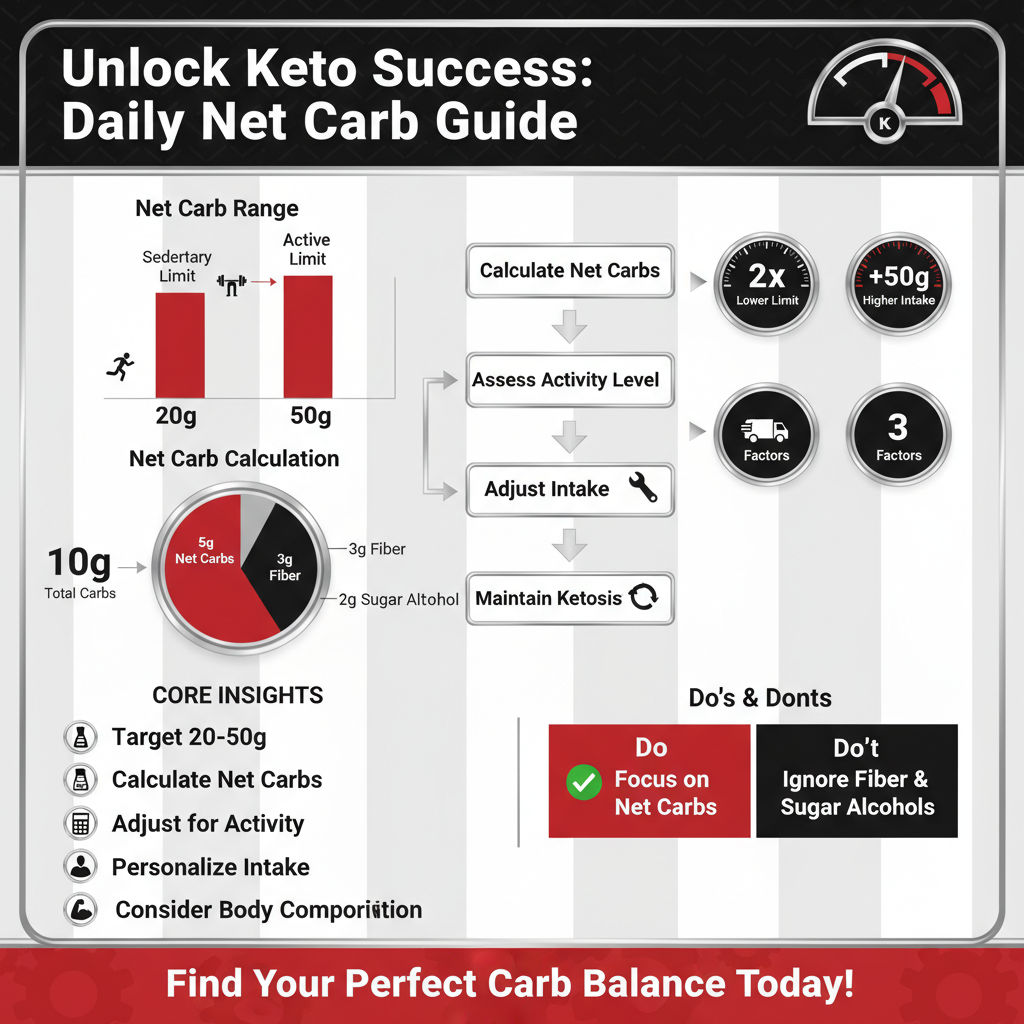

Most keto dieters target between 20-50 grams of net carbs daily to achieve and sustain ketosis. This range is generally considered optimal for most individuals, allowing for sufficient carb intake while promoting fat burning. However, individual requirements may vary based on several factors, including age, weight, activity level, and overall health. For instance, someone who is sedentary may find that they need to stay closer to the lower end of that spectrum, while a more active individual might be able to consume closer to 50 grams without disrupting their state of ketosis. It is essential to experiment within this range to find the sweet spot that works best for your unique metabolism and lifestyle.
Factors Influencing Carb Intake
Several factors can influence your daily carb intake on a ketogenic diet. One of the most significant is your activity level. More active individuals, particularly those engaging in high-intensity workouts or resistance training, may tolerate higher carbohydrate intakes due to increased muscle glycogen demand. Conversely, those with a more sedentary lifestyle may need to stick to lower carb limits to achieve ketosis.
Another critical factor is body composition. Individuals with greater muscle mass often have a higher metabolic rate and may, therefore, be able to consume more net carbs while remaining in ketosis. Additionally, age, hormonal balance, and metabolic health play roles in determining how many carbs one can handle. It’s vital to consider these variables when deciding your daily carb intake to tailor your diet to your specific needs.
How to Track Your Net Carbs
Tracking net carbs is a fundamental part of successfully adhering to a ketogenic diet. Utilizing apps like MyFitnessPal or Cronometer can simplify this process, allowing you to log your daily food intake, calculate net carbs, and monitor your progress over time. Additionally, keeping a food diary can be beneficial in understanding your eating habits and making necessary adjustments.
When tracking, be diligent about reading nutrition labels carefully to identify net carbs in packaged foods. Many products now provide detailed nutritional information, including fiber and sugar alcohol content, making it easier to calculate net carbs. It’s also advisable to measure your food portions accurately; even small discrepancies can lead to significant variances in your carb intake over time. By being methodical and organized in your tracking efforts, you can ensure that you remain within your desired net carb limits.
Adjusting Your Carb Intake
Finding the right level of carb intake for your body may require some trial and error. A common approach is to start at a lower carb limit, around 20 grams of net carbs daily, and gradually increase this amount based on your body’s response. This method allows you to gauge how your body reacts to different levels of carbohydrate intake while maintaining ketosis.
Pay close attention to your body’s signals during this process. If you find that you are experiencing symptoms of fatigue, irritability, or a lack of mental clarity, it may be a sign that your carb intake is too low. Conversely, if you are not seeing the desired weight loss or fat-burning results, you may need to reduce your carb intake further. Regularly assessing your energy levels, mood, and weight can help you make informed adjustments to your carb intake to optimize your ketogenic journey.
Common Mistakes to Avoid
When following a ketogenic diet, there are several common mistakes that can hinder your success. One of the most significant pitfalls is overlooking hidden carbs in sauces, dressings, and processed foods, where sugars may be added. Always read labels carefully, as some seemingly low-carb foods can contain unexpected sugars that could impede your progress.
Another mistake is not accounting for fiber in your total carb calculations. Fiber is a crucial component of a healthy diet and does not affect blood sugar levels the same way as other carbohydrates. Failing to subtract fiber can mislead you into thinking you have consumed more net carbs than you actually have, potentially leading to unnecessary restrictions or frustrations. By being vigilant about these common errors, you can maintain better control over your net carb intake and enhance your likelihood of staying in ketosis.
Staying within your net carb limits is essential for maintaining ketosis on a keto diet. To ensure success, track your intake, adjust as necessary, and be mindful of hidden carbs. Start your keto journey today by calculating your daily net carbs and exploring delicious low-carb recipes. Remember, the key to achieving your dietary goals lies in understanding your body’s needs and responding accordingly. By following these guidelines, you can effectively navigate your ketogenic lifestyle and enjoy the benefits it has to offer.
Frequently Asked Questions
How many net carbs should I eat daily on a keto diet?
On a ketogenic diet, it’s generally recommended to limit net carbohydrate intake to about 20 to 50 grams per day. This range helps most people achieve and maintain ketosis, a metabolic state where the body burns fat for fuel instead of carbohydrates. Individual tolerance to carbs can vary, so it’s essential to monitor your body’s response and adjust accordingly.
What are net carbs and how do I calculate them for my keto meal plan?
Net carbs are calculated by subtracting dietary fiber and certain sugar alcohols from the total carbohydrates in a food item. This is important for a keto diet because fiber doesn’t raise blood sugar levels, so it doesn’t count against your carb limit. To calculate net carbs, use the formula: Net Carbs = Total Carbohydrates – Fiber – Sugar Alcohols (if applicable).
Why is limiting carbs crucial for achieving ketosis on a keto diet?
Limiting carbs is crucial for achieving ketosis because it forces your body to deplete its glycogen stores and switch to burning fat for energy instead. When carbohydrate intake is low, insulin levels drop, and fat stores are mobilized, allowing the liver to produce ketones. This metabolic shift is what characterizes the ketogenic diet and aids in weight loss and improved energy levels.
Which foods should I avoid to stay within my net carb limit on keto?
To stay within your net carb limit on a keto diet, avoid high-carb foods such as grains (bread, pasta, rice), starchy vegetables (potatoes, corn, peas), sugary snacks (candies, pastries), and most fruits. Instead, focus on low-carb options like leafy greens, non-starchy vegetables, nuts, seeds, and healthy fats to keep your meals satisfying while adhering to your carb limits.
What is the best way to track my net carbs on a keto diet?
The best way to track your net carbs on a keto diet is to use a food diary or a mobile app designed for nutritional tracking. Apps like MyFitnessPal or Cronometer allow you to log your meals and automatically calculate net carbs, making it easier to stay within your daily limits. Regularly monitoring your intake helps you understand your eating habits and adjust as necessary to maintain ketosis effectively.
References
- Ketogenic diet
- https://www.healthline.com/nutrition/what-are-net-carbs
- https://www.ncbi.nlm.nih.gov/pmc/articles/PMC6520680/
- https://www.cdc.gov/healthyweight/healthy_eating/what_is_a_healthy_diet.html
- Carbohydrates • The Nutrition Source
- https://www.webmd.com/diet/what-is-the-keto-diet
- https://www.verywellfit.com/the-keto-diet-4176496
- https://www.nutrition.gov/topics/nutrition-101/carbohydrates