

A ketogenic diet typically allows for 20 to 50 grams of net carbs per day, depending on individual factors like age, activity level, and weight loss goals. Understanding your personal carb threshold is essential for optimizing your ketogenic journey and achieving your desired results. In this article, you’ll learn how to determine your ideal carb intake, the importance of net carbs, and tips for staying within your limit while enjoying a variety of foods.
Understanding Net Carbs

Net carbs are calculated by subtracting fiber and certain sugar alcohols from total carbohydrates. This calculation is crucial for those on a ketogenic diet, as fiber does not impact blood sugar levels. For instance, if a food item contains 10 grams of total carbohydrates and 5 grams of fiber, the net carbs would be calculated as follows: 10 grams (total carbs) – 5 grams (fiber) = 5 grams of net carbs. This distinction allows individuals on a keto diet to consume fiber-rich foods that provide health benefits without hindering their ability to maintain ketosis.
The concept of net carbs is particularly relevant in a ketogenic diet because the aim is to enter a state of ketosis, wherein the body burns fat for fuel instead of carbohydrates. This metabolic state is typically achieved by drastically reducing carbohydrate intake, making it essential to focus on the types of carbohydrates consumed.
Factors Influencing Carb Intake
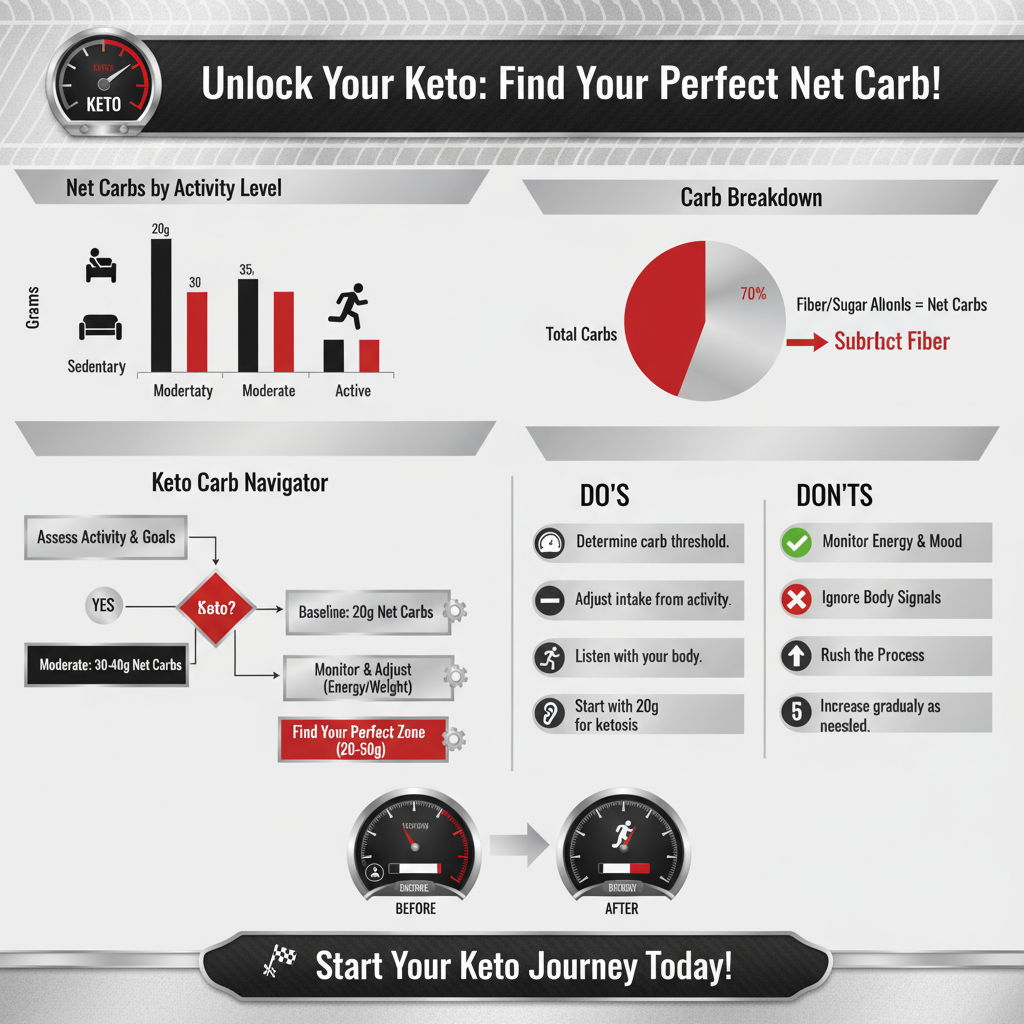

Individual factors such as metabolic health, daily activity level, and personal weight loss goals can affect how many net carbs you should consume. Generally, a more active individual may require a slightly higher carb intake compared to someone who leads a sedentary lifestyle. For example, an athlete may find that they can consume closer to 50 grams of net carbs without leaving ketosis, while a sedentary individual might need to stick to the lower end of the range to maintain their desired state of fat burning.
Additionally, age can play a role in metabolic rate and insulin sensitivity, which may influence how well the body processes carbohydrates. It’s important to listen to your body and adjust your carb intake based on your unique response to the diet. Monitoring energy levels, weight loss progress, and even mood can provide insights into whether your current carb intake is appropriate.
How to Calculate Your Ideal Net Carbs
Start with a baseline of 20 grams of net carbs per day for a strict keto approach. This lower limit is generally recommended to initiate ketosis efficiently. However, it’s important to remember that everyone’s body responds differently. As you adapt to the diet, consider gradually increasing your net carb intake to 30 or even 50 grams per day to determine what works best for you without disrupting your state of ketosis.
To effectively calculate your ideal net carbs, you can use a food diary or mobile application designed for tracking macronutrient intake. These tools can help ensure accuracy in your calculations and enable you to see how various foods affect your carb count. Pay attention to your body’s feedback during this process; if you notice symptoms of ketosis (such as increased energy, reduced hunger, or mental clarity), you may be on the right track.
Foods to Include and Avoid
When following a ketogenic diet, it’s essential to focus on low-carb vegetables, healthy fats, and quality proteins to stay within your net carb limit. Foods such as leafy greens, broccoli, cauliflower, avocados, nuts, and seeds are excellent choices as they are nutrient-dense and low in carbohydrates. Additionally, healthy fats from sources like olive oil, coconut oil, and fatty fish can enhance satiety and provide essential nutrients.
Conversely, it is crucial to avoid high-carb foods like grains, sugars, and starchy vegetables that can quickly elevate your carb intake. Common culprits include bread, pasta, rice, potatoes, and sugary snacks. Understanding food labels is vital; many processed foods may contain hidden sugars and carbohydrates that can easily disrupt your nutritional goals.
Incorporating a variety of foods while adhering to your net carb limit can make the ketogenic diet more enjoyable and sustainable. Experiment with different recipes and meal combinations to keep your diet exciting.
Tips for Staying on Track
Using mobile apps or food diaries to track your daily net carb consumption is an effective way to stay accountable. Many apps allow you to scan barcodes or search for foods to simplify the process of tracking. This practice not only helps you monitor your carb intake but also gives you insights into your overall nutrition, ensuring you are getting enough vitamins and minerals.
Meal prepping can also help you avoid accidental high-carb meals and keep your intake consistent. By preparing meals in advance, you can manage portion sizes and ensure that you have keto-friendly options readily available. This strategy can significantly reduce the temptation to indulge in high-carb foods when hunger strikes.
Moreover, consider joining online communities or forums related to the ketogenic diet. Engaging with others who share similar goals can provide motivation, recipe ideas, and support, making your keto journey more enjoyable.
Common Mistakes to Avoid
Failing to account for hidden carbs in packaged foods can lead to exceeding your limit. Always read labels carefully and be cautious of “low-carb” or “sugar-free” claims, as these can sometimes be misleading. For example, some sugar alcohols can still impact blood sugar levels, so it’s essential to understand how your body reacts to them.
Not considering the impact of liquid calories from drinks like soda and alcohol can also derail your keto efforts. Many beverages contain added sugars or high-carb ingredients that can contribute to your daily carb total without you realizing. Opt for water, unsweetened tea, or black coffee to stay hydrated without adding unnecessary carbs.
Additionally, be mindful of portion sizes. Even healthy foods can contribute to a higher carb intake if consumed in excess.
Your journey on a ketogenic diet can be fulfilling and enjoyable by staying informed about your net carb intake. Adjust your diet according to your unique needs, and remember to track your progress regularly. By understanding net carbs and their significance, you will be better equipped to navigate your keto lifestyle successfully, ultimately leading to improved health and well-being.
Frequently Asked Questions
What are net carbs and how are they calculated on a keto diet?
Net carbs refer to the total carbohydrates in a food minus the fiber and sugar alcohols that your body doesn’t digest. On a keto diet, calculating net carbs is crucial because it helps you stay within your carbohydrate limit to maintain ketosis. To find net carbs, simply subtract the fiber and any non-impact carbs (like certain sugar alcohols) from the total carbohydrates listed on the nutrition label.
How many net carbs should I consume daily to stay in ketosis?
Most people on a ketogenic diet aim to consume between 20 to 50 grams of net carbs per day to maintain a state of ketosis. The exact number can vary based on individual factors such as age, activity level, and metabolic health. It’s essential to track your intake to find the right balance for your body and ensure you’re meeting your dietary goals effectively.
Why is it important to limit net carbs on a keto diet?
Limiting net carbs is vital on a keto diet because it encourages your body to enter and remain in ketosis, a metabolic state where it burns fat for fuel instead of carbohydrates. Consuming too many net carbs can kick you out of ketosis, leading to decreased fat-burning and potential weight gain. By adhering to a low net carb limit, you maximize the benefits of the keto diet, such as weight loss and improved energy levels.
What are the best low-carb foods to help me stay within my net carb limit?
To stay within your net carb limit on a keto diet, focus on incorporating low-carb foods such as leafy greens, avocados, eggs, seafood, and meats. Nuts and seeds are also excellent options, as they are nutrient-dense and low in carbohydrates. Additionally, consider using non-starchy vegetables like zucchini and cauliflower as substitutes for higher-carb ingredients, making it easier to meet your net carb goals while enjoying a variety of meals.
Which common foods should I avoid to keep my net carbs low on a keto diet?
To keep your net carbs low on a keto diet, it’s essential to avoid foods high in sugar and starch, such as bread, pasta, rice, and sugary snacks. Additionally, be cautious with high-carb fruits like bananas and grapes, as well as starchy vegetables like potatoes and corn. By steering clear of these foods, you can better manage your net carb intake and increase your chances of successfully maintaining ketosis.
References
- Ketogenic diet
- https://www.ncbi.nlm.nih.gov/pmc/articles/PMC6074250/
- https://www.healthline.com/nutrition/what-is-a-ketogenic-diet
- https://www.diabetes.org/nutrition/healthy-food-choices-made-easy/ketogenic-diet
- https://www.cdc.gov/healthyweight/assessing/bmi/adult_bmi/english_bmi_calculator/bmi_calculator.html
- https://www.nutrition.gov/topics/whats-in-food/low-carb-diets
- https://www.mayoclinic.org/healthy-lifestyle/nutrition-and-healthy-eating/expert-answers/keto-diet/faq-20457976
- Diet Review: Ketogenic Diet for Weight Loss • The Nutrition Source