

Maintaining a ketogenic diet typically requires consuming about 70-80% of your daily calories from fat. For most individuals, this translates to approximately 150-200 grams of fat per day, depending on personal factors like total caloric intake and activity level. In this article, we’ll dive deeper into how to determine the right amount of fat for your unique needs while following a keto lifestyle.
Understanding the Keto Diet

The ketogenic diet focuses on high-fat, low-carb intake to induce ketosis, a metabolic state where the body efficiently burns fat for fuel instead of carbohydrates. This shift in energy usage occurs when carbohydrate intake is significantly reduced, compelling the liver to convert fat into ketones, which can be utilized by the brain and other organs. The primary goal of a ketogenic diet is to promote fat loss while maintaining muscle mass and overall health. By adhering to a high-fat, low-carb regimen, individuals can experience benefits such as improved mental clarity, sustained energy levels, and reduced hunger pangs, making it easier to stick to their dietary goals.
Calculating Your Daily Caloric Needs
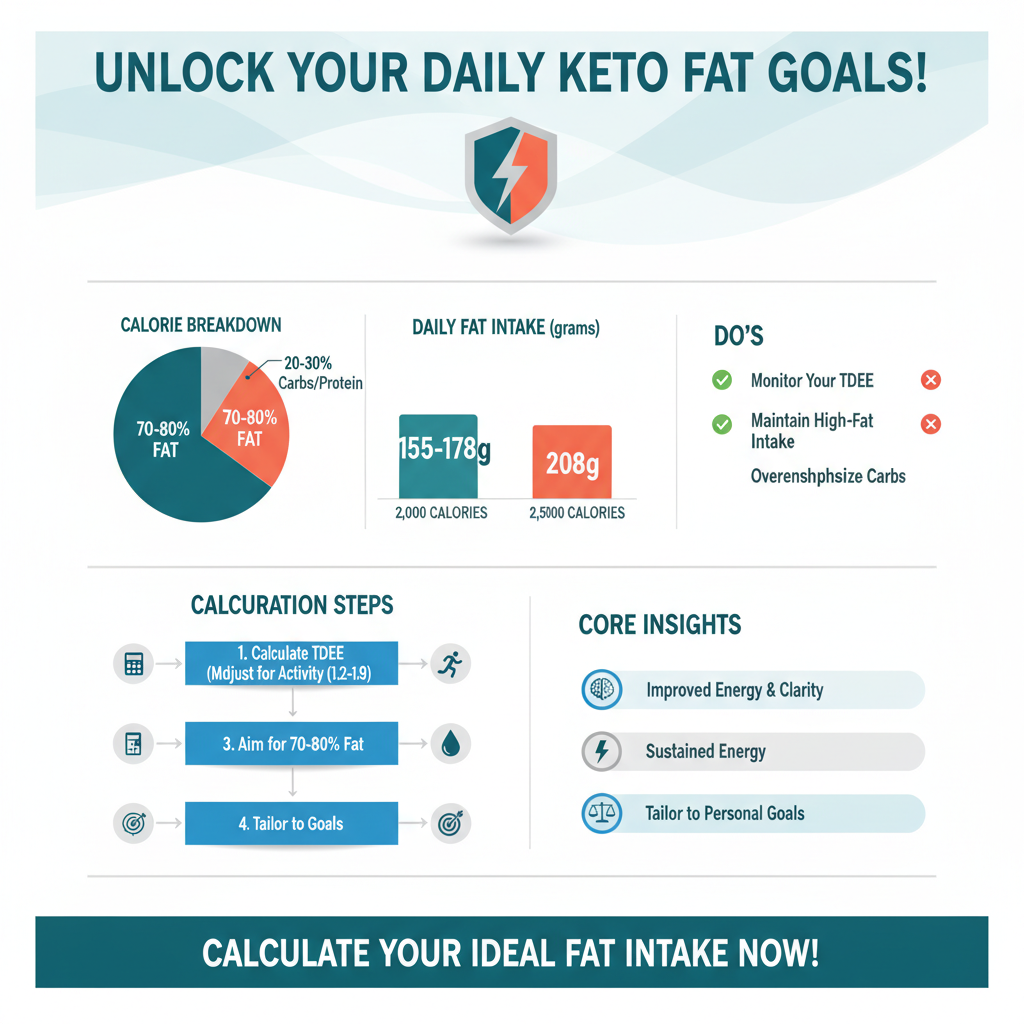

To establish how many grams of fat you should consume daily on a ketogenic diet, it is crucial to first determine your total daily energy expenditure (TDEE). The TDEE is calculated based on your basal metabolic rate (BMR) and your activity level. Tools such as the Mifflin-St Jeor equation can help you estimate your BMR, which accounts for your age, gender, height, and weight. Once you have your BMR, you can multiply it by an activity factor—ranging from sedentary (1.2) to very active (1.9)—to find your TDEE.
For example, if your TDEE is 2,500 calories, and you aim for a ketogenic ratio of 75% of calories from fat, you would calculate your fat intake as follows: 2,500 calories x 0.75 = 1,875 calories from fat. Since each gram of fat provides 9 calories, you would divide 1,875 by 9, resulting in approximately 208 grams of fat per day. Understanding your caloric needs is essential for tailoring your fat intake to achieve your personal health and weight loss goals effectively.
Recommended Fat Intake on Keto
As a general guideline, individuals following a ketogenic diet should aim to consume 70-80% of their total daily calories from fat. For a standard 2,000-calorie diet, this translates to approximately 155-178 grams of fat per day. However, it is essential to recognize that caloric needs vary significantly from person to person based on factors such as age, sex, activity level, and overall health goals.
For those seeking weight loss, a lower caloric intake may be appropriate, while athletes or individuals looking to build muscle may require a higher caloric allowance with a correspondingly increased fat intake. It’s important to adjust these numbers based on your body’s specific needs and responses. Regular monitoring of weight, body composition, and energy levels can guide you in fine-tuning your fat intake on the ketogenic diet.
Types of Fats to Include
Not all fats are created equal, and it is essential to prioritize the consumption of healthy fats while minimizing unhealthy options. Healthy fats include sources such as avocados, nuts, seeds, olive oil, coconut oil, and fatty fish like salmon. These fats not only support ketosis but also provide essential fatty acids and nutrients that can enhance overall health.
Conversely, it is crucial to limit the intake of unhealthy trans fats and highly processed fats found in many fast foods, baked goods, and certain margarines. These fats can lead to inflammation and negative health outcomes, undermining the benefits of a ketogenic diet. Focus on integrating a variety of healthy fats into your meals to create a balanced and enjoyable eating plan that supports your keto journey.
Adjusting Fat Intake Based on Goals
Your fat intake on a ketogenic diet should align with your specific health goals, whether that is weight loss, maintenance, or muscle gain. For weight loss, slight caloric deficits may be necessary, which could involve adjusting fat intake downward while ensuring you still meet the minimum fat requirements to stay in ketosis. Conversely, those trying to gain muscle may need to increase their fat intake alongside protein to support muscle repair and growth.
Listening to your body is key; factors such as energy levels, satiety, and physical performance can all indicate if your fat intake is appropriate. Keeping a food diary can help track how different fat intakes impact your overall well-being, making it easier to make informed adjustments as needed.
Common Mistakes to Avoid
One of the prevalent mistakes people make on a ketogenic diet is focusing solely on fat intake while neglecting other macronutrients, particularly protein. While fat is crucial for ketosis, it’s essential to ensure you’re also consuming adequate protein to support muscle health and overall body function. Additionally, neglecting micronutrient intake can lead to deficiencies that may affect your health negatively.
Another common pitfall is the overconsumption of unhealthy fat sources. While the keto diet allows for higher fat intake, it should not come at the expense of health. Prioritize whole, nutrient-dense foods over processed options to maintain optimal health while following a ketogenic lifestyle.
Tips for Meeting Your Fat Goals
To effectively meet your fat goals on a ketogenic diet, consider utilizing food tracking apps like MyFitnessPal or Cronometer. These tools can help you log your food intake and ensure that you are hitting your macronutrient targets accurately. Additionally, planning your meals in advance can help you stay on track and avoid the temptation of high-carb snacks.
Experimenting with new recipes can make your meals enjoyable and compliant with your ketogenic goals. Incorporating healthy fats into everyday dishes can be as simple as adding avocado to salads, using olive oil for cooking, or snacking on a handful of nuts. Keeping your meals varied and delicious will help sustain your interest in the diet and improve long-term adherence.
Summarizing the essential aspects of fat intake on a keto diet can help you achieve your health goals effectively. Remember to calculate your caloric needs, choose healthy fats, and adjust your intake based on personal objectives. By understanding the balance of macronutrients in your diet and making informed choices, you can thrive on a ketogenic lifestyle. For more personalized advice, consider consulting with a nutritionist or dietitian to optimize your ketogenic journey.
Frequently Asked Questions
How many grams of fat should I eat per day on a keto diet?
On a ketogenic diet, fat intake typically constitutes about 70-80% of your total daily calories. For an average person consuming 2,000 calories, this translates to approximately 155-178 grams of fat per day. However, individual needs may vary based on factors like age, activity level, and weight loss goals, so it’s crucial to adjust your fat intake accordingly while ensuring you maintain a state of ketosis.
What types of fats are best for a keto diet?
The best types of fats for a keto diet include healthy sources such as avocados, olive oil, coconut oil, nuts, and seeds. Saturated fats from sources like grass-fed butter and fatty cuts of meat are also beneficial, but it’s important to limit trans fats found in processed foods. Prioritizing unsaturated fats helps promote heart health while keeping your body in ketosis.
Why is fat intake so high on a ketogenic diet?
Fat intake is high on a ketogenic diet because it is the primary source of energy when carbohydrates are severely restricted. By consuming a high amount of healthy fats, you encourage your body to enter ketosis, a metabolic state where it burns fat for fuel instead of carbohydrates. This shift not only aids in weight loss but also helps stabilize blood sugar levels and reduce cravings.
How can I track my fat intake on a keto diet?
To track your fat intake on a keto diet, consider using a food diary app or a nutrition tracker like MyFitnessPal or Cronometer. These tools allow you to log your meals and automatically calculate your daily macronutrient ratios, ensuring you meet your fat intake goals. Additionally, reading food labels and measuring portion sizes can help you stay on track with your fat consumption.
Which foods should I avoid to keep my fat intake within the keto range?
To maintain your fat intake on a ketogenic diet, avoid foods high in carbohydrates and sugars, such as bread, pasta, rice, sugary snacks, and most fruits. Additionally, steer clear of processed foods that contain unhealthy fats and additives. Instead, focus on whole, nutrient-dense foods that are low in carbs and high in healthy fats to support your ketogenic lifestyle.
References
- https://www.ncbi.nlm.nih.gov/pmc/articles/PMC6313425/
- https://www.ncbi.nlm.nih.gov/pmc/articles/PMC7690620/
- https://www.healthline.com/nutrition/keto-diet-macros
- https://www.webmd.com/diet/what-is-the-keto-diet
- https://www.verywellfit.com/the-ketogenic-diet-5189835
- https://www.jamanetwork.com/journals/jama/fullarticle/2723017
- https://www.cdc.gov/healthyweight/healthy_eating/dietary_guidelines.html