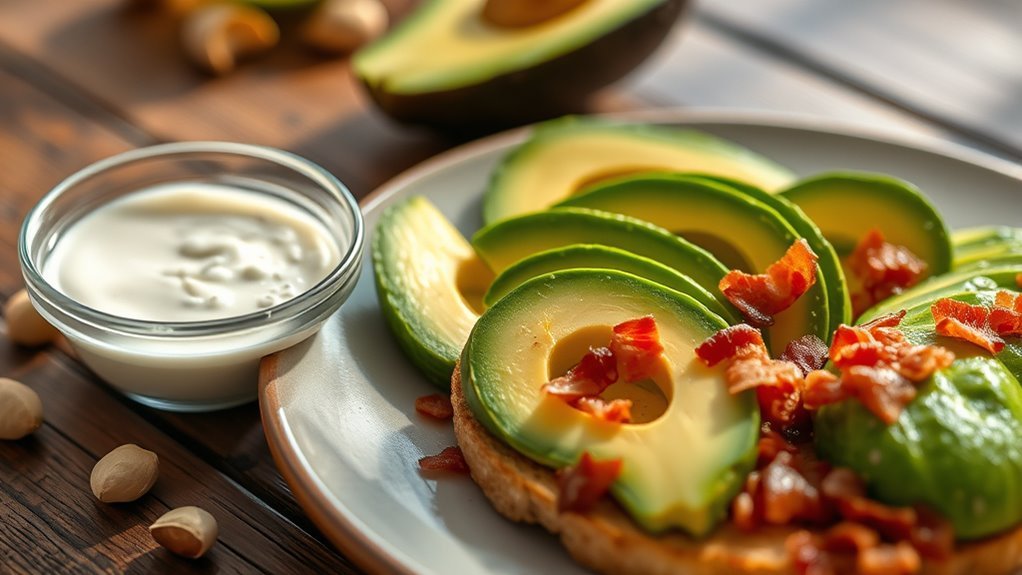

On a ketogenic diet, you should aim for about 70-75% of your daily calories to come from fat. For a typical 2,000-calorie diet, that translates to approximately 156 grams of fat daily. It’s important to focus on healthy fat sources like avocados, olive oil, and fatty fish. Remember, balancing your fat intake and monitoring your body’s response are key to success. There’s more to explore about adjusting your fat intake effectively for your needs.
Understanding the Keto Diet and Its Macros
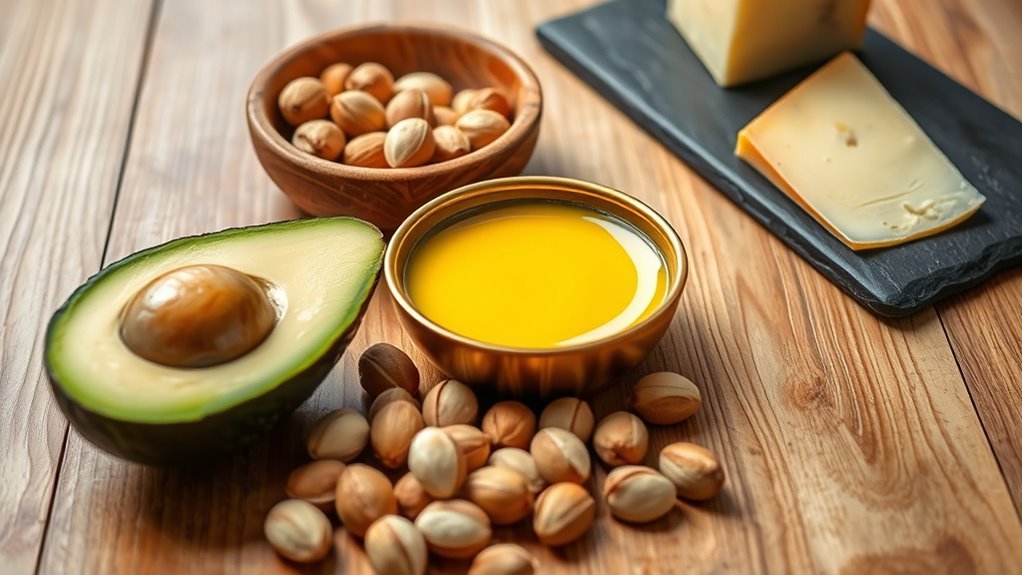
When diving into the keto diet, it’s essential to break down its foundational components, particularly its macronutrient ratios. You’ll typically aim for about 70-75% of your calories from fat, 20-25% from protein, and only 5-10% from carbohydrates. This unique ratio can help you achieve fat adaptation, where your body shifts from using carbs for energy to burning fat instead. Many people fall prey to keto misconceptions, believing they can eat any type of fat without consequence. In reality, choosing healthy fats—like avocados, nuts, and olive oil—is vital for best health. By understanding these macronutrient ratios, you’ll empower yourself on your keto journey, allowing for freedom in your food choices while promoting sustained energy and weight loss.
The Role of Fat in a Ketogenic Diet

While many people focus on carbohydrates and protein when starting a ketogenic diet, fat plays an essential role in this nutritional approach. Embracing a high-fat intake allows your body to undergo fat adaptation, where it efficiently uses fat stores for energy instead of relying on glucose. This shift is vital for energy production, as your body becomes a fat-burning machine, which can enhance mental clarity and physical endurance. When you prioritize healthy fats, you’re not just fueling your body; you’re also promoting overall well-being. Remember, the key to a successful keto journey lies in understanding that fat is your friend, providing you with the necessary energy while granting you the freedom to enjoy satisfying meals without feeling restricted.
Calculating Your Daily Caloric Needs
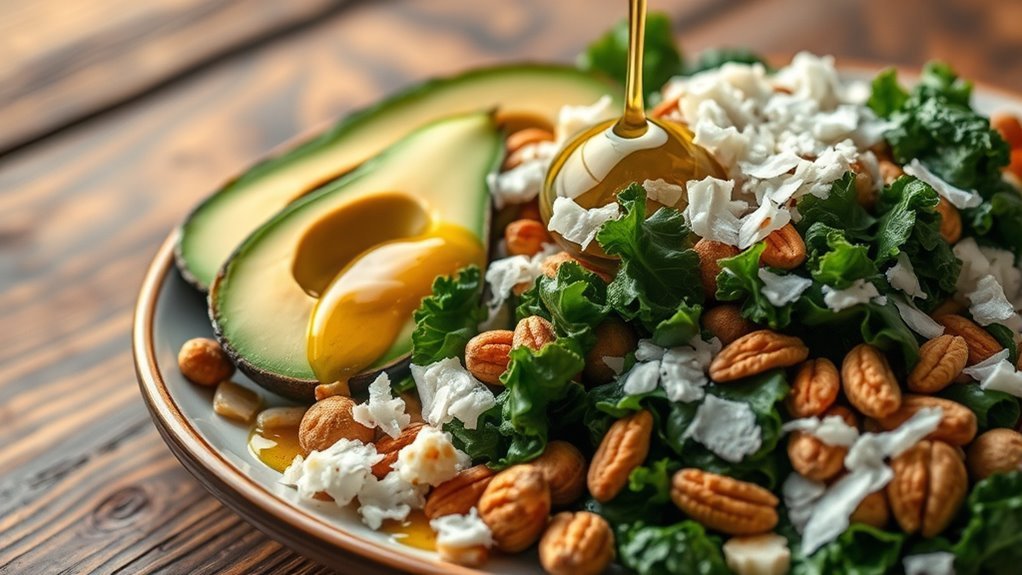
To effectively commence a ketogenic diet, you first need to calculate your daily caloric needs, as this will guide how much fat, protein, and carbohydrates you should consume. Start by determining your activity level, which impacts your caloric intake. Here’s how to calculate it:
- Calculate Basal Metabolic Rate (BMR): Use the Mifflin-St Jeor equation to find your BMR, which estimates the calories you burn at rest.
- Determine Activity Level: Multiply your BMR by a factor based on your lifestyle (sedentary, moderately active, or very active).
- Adjust for Goals: If you’re aiming for weight loss or gain, adjust your caloric needs accordingly.
Understanding these steps guarantees you’re effectively calculating caloric intake for your keto journey.
Recommended Fat Intake Based on Macronutrient Ratios
To effectively follow a ketogenic diet, understanding ideal macronutrient ratios is essential. Typically, a keto diet consists of about 70-75% of your daily calories from fat, which translates to calculating your specific fat requirements based on your total caloric intake. By determining these ratios, you can guarantee that you’re meeting your nutritional needs while staying in ketosis.
Ideal Macronutrient Ratios
When following a ketogenic diet, understanding ideal macronutrient ratios is vital for achieving your health goals. These ratios help guide your keto meal planning and support fat adaptation, allowing your body to efficiently burn fat for fuel.
Here are the typical macronutrient ratios for a standard ketogenic diet:
- Fat: 70-75% of your total daily caloric intake. This is your primary energy source.
- Protein: 20-25% of your total daily caloric intake. It supports muscle maintenance and repair.
- Carbohydrates: 5-10% of your total daily caloric intake. Keeping carbs low is essential for entering ketosis.
Calculating Fat Requirements
How can you accurately calculate your fat requirements on a ketogenic diet? Start by determining your daily caloric needs based on your activity level and weight goals. Once you’ve established that, you’ll want to set your macronutrient ratios. For a standard keto diet, aim for about 70-75% of your calories from fat. To find your fat intake in grams, multiply your total daily calories by the percentage you want from fat, then divide by 9 (since fat has 9 calories per gram). For example, if your daily intake is 2,000 calories, 70% from fat equals about 156 grams. This method guarantees your calorie distribution aligns with keto principles, giving you the freedom to enjoy a satisfying, low-carb lifestyle.
Adjusting Fat Intake for Weight Loss vs. Maintenance
While you might find success on a ketogenic diet by initially consuming a higher fat intake, adjusting this amount becomes essential once you’ve reached your weight loss goals or are aiming for maintenance. To achieve effective weight maintenance, consider these key adjustments:
Adjust your fat intake after reaching weight loss goals for effective maintenance on a ketogenic diet.
- Assess Your Current Status: Monitor your body composition and energy levels to determine if you need more or less fat.
- Gradually Reduce Intake: If you’re maintaining weight, consider slowly decreasing your fat intake to prevent excess calorie consumption.
- Focus on Quality: Prioritize nutrient-dense fats that support fat adaptation, like avocados and nuts, rather than processed options.
Factors Influencing Individual Fat Needs
Several factors can influence your individual fat needs on a ketogenic diet, making it essential to personalize your approach. Your level of individual activity and metabolic rate play vital roles in determining how much fat you should consume. Additionally, dietary preferences and health conditions can greatly impact your choices. For instance, if you’re managing specific health issues, you may need to adjust your fat intake accordingly. Your personal goals, whether it’s weight loss or muscle gain, will also dictate your requirements. Body composition and age factors, such as hormonal balance, further influence your fat needs. Understanding these elements helps you create a sustainable and effective ketogenic plan that aligns with your unique lifestyle and aspirations.
Types of Fats to Include in Your Diet
When you’re following a keto diet, it’s crucial to focus on the types of fats you include in your meals. Healthy fats, like those from avocados, nuts, and olive oil, provide important nutrients and support your overall health. Conversely, you’ll want to steer clear of trans fats and highly processed oils, as they can negatively impact your well-being.
Healthy Fats Sources
Incorporating healthy fats into your keto diet is essential for achieving ideal results and overall wellness. These fats not only provide energy but also support your body’s functions. Here are some excellent sources to include:
- Avocado oil and olive oil: Great for cooking and dressings, offering heart-healthy monounsaturated fats.
- Fatty fish and grass-fed butter: Rich in omega-3 fatty acids, these options promote brain health and reduce inflammation.
- Nut butters, cheese varieties, and full-fat yogurt: Perfect for snacks, they provide protein and healthy fats, making you feel satisfied.
Don’t forget about dark chocolate and coconut butter for a delicious treat. Incorporating these healthy fats will keep your meals satisfying and your body thriving.
Fats to Avoid
While healthy fats play an essential role in your keto diet, it’s just as important to recognize which fats to avoid. Unhealthy oils, like soybean, corn, and canola oil, can negatively impact your health. These oils often contain high levels of omega-6 fatty acids, which may promote inflammation. Additionally, trans fats are a major concern; they’re often found in processed foods and can increase your risk of heart disease. Instead of reaching for these harmful fats, focus on natural sources like olive oil and coconut oil. By steering clear of unhealthy oils and trans fats, you’re not just enhancing your keto journey, but also empowering your overall well-being. Make informed choices to enjoy the freedom of a healthier lifestyle.
Monitoring Your Progress and Adjusting Intake
As you begin your keto journey, monitoring your progress and adjusting your fat intake is essential for achieving your health goals. Here are three effective strategies for tracking progress and adjusting your intake:
- Keep a Food Diary: Document everything you eat, focusing on fat content, to identify patterns and make necessary adjustments.
- Regular Check-Ins: Weigh yourself weekly or take body measurements to assess changes. This helps you understand how your body responds to your current intake.
- Listen to Your Body: Pay attention to your hunger levels and energy. If you’re feeling sluggish or hungry often, it might be time to adjust your fat intake.
Common Mistakes to Avoid With Fat Consumption on Keto
Maneuvering fat consumption on a keto diet can be tricky, especially when common mistakes can undermine your progress. One major issue is falling into overconsumption pitfalls. It’s easy to think all fats are created equal, but exceeding your fat intake can stall weight loss. Be mindful of hidden fat sources in processed foods, sauces, and snacks that can quickly add up. Additionally, neglecting to balance your fat sources can lead to deficiencies in essential nutrients. Focus on whole food fats like avocados, nuts, and olive oil, and steer clear of unhealthy trans fats. By staying aware of these common mistakes, you’ll maintain your keto journey with freedom and success, ensuring your fat consumption supports your goals effectively.
Frequently Asked Questions about Fat Intake on Keto
1. How many grams of fat should I consume on a keto diet?
The typical macronutrient ratio for a ketogenic diet is about 70-80% of your daily calories coming from fats. To translate this into grams, you should aim for around 150-200 grams of fat per day, depending on your total calorie intake and personal goals. For example, if you consume 2000 calories daily, 70-80% of that would be 1400-1600 calories from fat, which equates to approximately 155-177 grams of fat.
2. Can I eat too much fat on a keto diet?
While the keto diet is high in fats, it’s important to be mindful of the quality and quantity of the fats you consume. Overeating fats can lead to excessive calorie intake, which may hinder weight loss. Focus on healthy fats, like avocados, nuts, seeds, and olive oil, and consider tracking your intake to ensure you’re staying within your target range while achieving your health and weight-loss goals.
3. What types of fat are best for a keto diet?
On a keto diet, prioritize healthy fats such as monounsaturated fats (found in olive oil and avocados), saturated fats (from coconut oil and grass-fed butter), and omega-3 fatty acids (from fatty fish, flaxseeds, and walnuts). Avoid trans fats and highly processed fats, as they can lead to health issues and are not beneficial for maintaining ketosis.
4. How do I calculate my individual fat needs on keto?
To calculate your individual fat needs for keto, first determine your daily caloric intake based on your goals (weight loss, maintenance, etc.). Then, use the keto macronutrient ratio of 70-80% fat. For example, if you’re targeting 2000 calories a day, multiply by 0.7 to get 1400 calories from fat. Since there are 9 calories in a gram of fat, divide 1400 by 9 to get approximately 155 grams of fat per day. Adjust these calculations as needed based on your unique dietary needs and lifestyle.
5. Is it necessary to track fat intake on a keto diet?
Tracking fat intake can be beneficial, especially when starting the keto diet, as it helps ensure you are meeting your macronutrient goals and maintaining ketosis. Many people find that using a food diary or a nutrition tracking app simplifies this process. However, as you become more familiar with keto-friendly foods and portion sizes, you may find it easier to estimate your intake without strict tracking.
References
- https://www.ncbi.nlm.nih.gov/pmc/articles/PMC6313445/
- https://www.health.harvard.edu/staying-healthy/the-truth-about-fats-bad-and-good
- https://www.cdc.gov/healthyweight/healthy_eating/fats.html
- https://www.nutrition.gov/topics/nutrition-101/fats
- https://www.mayoclinic.org/healthy-lifestyle/nutrition-and-healthy-eating/in-depth/fat/art-20045519
- https://www.ncbi.nlm.nih.gov/pmc/articles/PMC6460466/
- https://www.heart.org/en/healthy-living/healthy-eating/eat-smart/nutrition-basics/fats
- https://www.usda.gov/media/blog/2018/03/23/understanding-different-types-fats