

Following a keto diet typically involves consuming about 70-75% of your daily calories from fat, which translates to roughly 150-200 grams of fat per day for most people. This high-fat approach is essential to achieving and maintaining ketosis, the metabolic state that encourages the body to burn fat for fuel instead of carbohydrates. In this comprehensive guide, we will delve deeper into understanding fat requirements on a keto diet, how to accurately calculate your needs, and the types of fats that can optimize your health and wellness.
Understanding Macronutrient Ratios on Keto

The cornerstone of a ketogenic diet lies in its unique macronutrient distribution, which focuses on high fat, moderate protein, and low carbohydrate intake. The standard breakdown typically includes 70% of total daily calories from fats, 25% from proteins, and a mere 5% from carbohydrates. However, these ratios may vary based on individual factors such as age, sex, activity level, and specific health goals. For example, someone who is very active might require a slightly higher protein intake to support muscle repair and growth, while someone aiming for rapid weight loss may prioritize lower protein and maintain higher fat for sustained energy.
Understanding this macronutrient ratio is crucial for anyone embarking on a keto journey. It establishes the foundation for maintaining ketosis, where the body adapts to using fat as its primary energy source, effectively transforming how energy is derived from food.
Calculating Your Daily Fat Intake
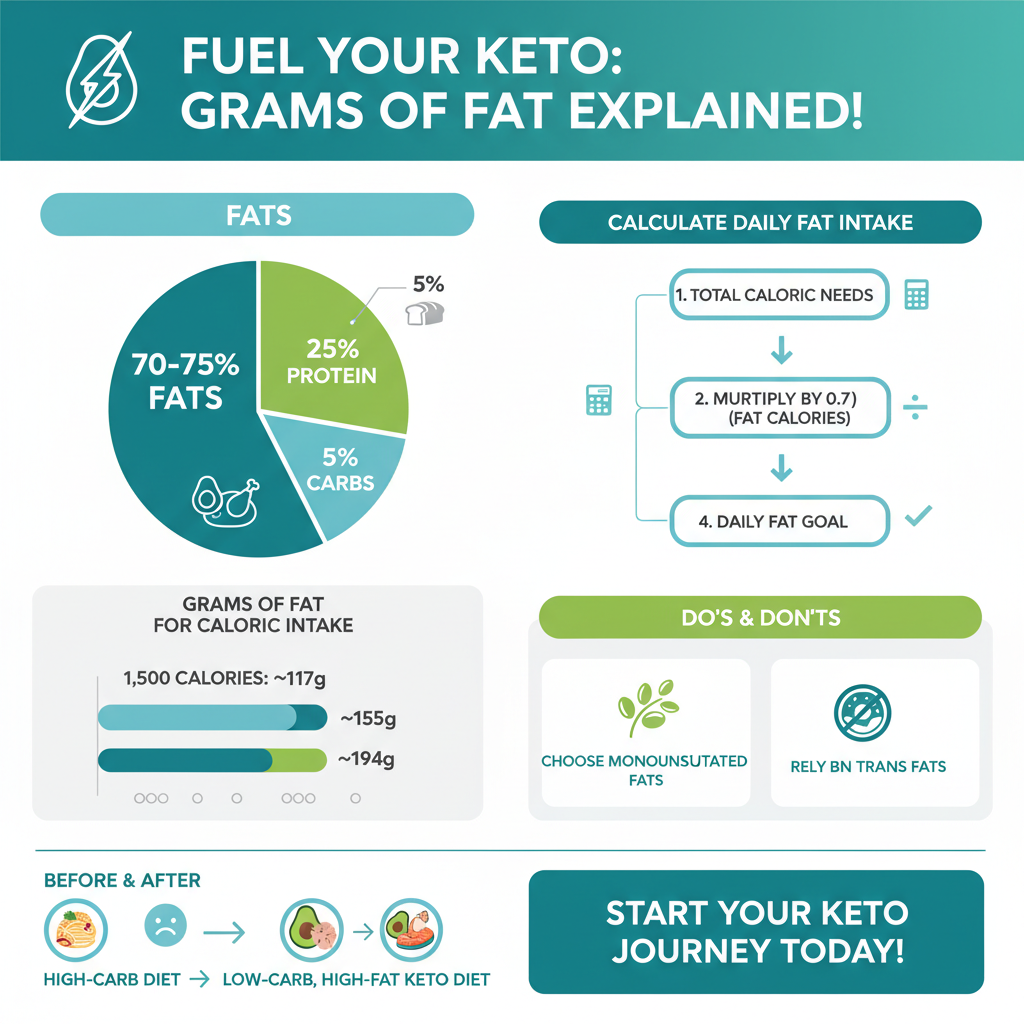
To correctly determine your fat intake on a keto diet, the first step is calculating your total daily caloric needs. This can be achieved through various online calculators that consider factors such as age, weight, height, and activity level. Once you have established your caloric needs, you can multiply this figure by 0.7 (for 70% of your calories from fat). For instance, if your daily caloric requirement is 2,000 calories, then 1,400 calories should come from fats.
Next, divide this number by 9, as there are 9 calories in each gram of fat. Continuing with our example, 1,400 calories divided by 9 gives you approximately 155 grams of fat per day. This calculation provides a clear target to aim for and can be adjusted according to your specific dietary goals or changes in lifestyle.
Types of Fats to Include in Your Diet
When selecting fats for your keto diet, it is imperative to focus on healthy fat sources that not only facilitate ketosis but also promote overall health. Some beneficial types of fats include:
– Monounsaturated Fats: Found in olive oil, avocados, and nuts, these fats support heart health and can help lower bad cholesterol levels.
– Polyunsaturated Fats: Omega-3 and omega-6 fatty acids, predominantly sourced from fatty fish (like salmon, mackerel, and sardines), flaxseeds, and walnuts, are essential for brain function and reducing inflammation.
– Saturated Fats: While moderation is key, healthy sources of saturated fats can include coconut oil and grass-fed butter, which can provide immediate energy while also supporting the absorption of fat-soluble vitamins.
Conversely, it is essential to avoid trans fats, commonly found in processed foods, as they can have detrimental effects on cardiovascular health. Limiting saturated fats from less healthy sources, such as fatty cuts of red meat and full-fat dairy products, can also help maintain heart health.
Adjusting Fat Intake for Weight Loss or Maintenance
For individuals aiming to lose weight on a keto diet, it may be necessary to adjust fat intake based on changes in body composition or activity levels. A decrease in body weight may lead to lower caloric needs, requiring a recalibration of fat intake. Conversely, as activity levels rise, more energy might be needed, which can be compensated for by increasing fat consumption.
Monitoring ketone levels can provide insight into whether your fat intake is sufficient for maintaining ketosis. Ketone testing strips or blood ketone meters can help ensure that you’re in the desired range for optimal fat burning. If ketone levels drop, consider increasing fat intake or reducing protein and carbohydrate levels to regain ketosis.
Common Mistakes When Calculating Fat on Keto
One of the common pitfalls when transitioning to a keto diet is overlooking hidden carbs that can disrupt ketosis. Many seemingly high-fat foods can contain sugars or starches that accumulate quickly, pushing daily carb intake beyond the recommended limits. For instance, certain nut butters may contain added sugars, and some dairy products can have higher carb contents than expected.
Additionally, focusing solely on fat intake without considering protein and carb levels can lead to nutrient imbalances. A well-rounded approach, ensuring adequate protein intake to support muscle health while keeping carbs low, is essential for achieving long-term success on a keto diet.
Tips for Tracking Your Fat Intake
To effectively monitor your fat intake and maintain your macronutrient targets, consider using food tracking apps such as MyFitnessPal or Cronometer. These tools allow you to log your meals, providing insights into your macronutrient ratios in real-time.
Meal prepping can also be a valuable strategy for staying within your fat targets. By preparing meals in advance, you can ensure that you have healthy fat sources readily available, thus preventing impulsive choices that may disrupt your dietary goals. Incorporating a variety of high-fat recipes can also help keep your meals interesting and enjoyable.
Benefits of a High-Fat Diet
A well-structured keto diet can offer numerous benefits beyond weight loss. Many individuals report improved mental clarity and focus, thanks to the brain’s preference for ketones over glucose. Additionally, the sustained energy derived from fat can help stabilize blood sugar levels, reducing energy crashes commonly associated with high-carb diets.
Furthermore, understanding the right fat intake can enhance overall health and wellness. Research suggests that a high-fat diet may improve cardiovascular health markers and support metabolic function, making it a viable option for many looking to improve their health profile.
By following these guidelines, you can effectively determine how many grams of fat to include in your keto diet. Tailoring your fat intake to your personal health goals and dietary preferences is essential, and consulting a nutritionist can provide personalized advice to optimize your keto experience. The journey toward a successful ketogenic diet is not solely about fat intake; it is about balancing all macronutrients to achieve a healthier lifestyle.
Frequently Asked Questions
What is the recommended daily fat intake on a keto diet?
On a ketogenic diet, the general recommendation is to consume about 70-80% of your total daily calories from fat. For most individuals, this translates to approximately 150-200 grams of fat per day, depending on their caloric needs. It’s essential to focus on healthy fat sources such as avocados, nuts, seeds, and olive oil to ensure you meet your fat intake while promoting overall health.
How do I calculate my fat intake for a keto diet?
To calculate your fat intake on a keto diet, first determine your total daily caloric needs based on factors like age, weight, activity level, and goals. Once you know your caloric target, multiply it by the percentage of calories you want to come from fat (usually 70-80% for keto). Then, divide that number by 9 (since there are 9 calories per gram of fat) to find out how many grams of fat you should consume each day.
Why is fat intake important on a ketogenic diet?
Fat intake is crucial on a ketogenic diet because it serves as the primary source of energy when carbohydrates are significantly reduced. When your body enters ketosis, it relies on fat for fuel instead of glucose, which can help with weight loss, improved energy levels, and better mental clarity. A high-fat intake also helps to keep you satiated, reducing hunger and cravings throughout the day.
What are the best sources of fat for a keto diet?
The best sources of fat for a keto diet include avocados, olive oil, coconut oil, butter, ghee, and fatty fish like salmon. Nuts and seeds, such as almonds, walnuts, and chia seeds, are also excellent options. Incorporating these healthy fats not only helps you meet your daily fat intake but also provides essential nutrients that support overall health.
Which common mistakes should I avoid regarding fat intake on a keto diet?
One common mistake is underestimating the importance of healthy fat sources, opting instead for processed and unhealthy fats. Another mistake is failing to track your fat intake accurately, which can lead to insufficient fat consumption or excessive reliance on protein. It’s also vital to avoid focusing solely on fat quantity without considering the quality, as healthier fats contribute to better overall health and weight loss results.
References
- Ketogenic diet
- https://www.ncbi.nlm.nih.gov/pmc/articles/PMC6468236/
- https://www.healthline.com/nutrition/what-is-a-keto-diet
- https://www.bbc.com/news/health-46767024
- https://www.webmd.com/diet/what-is-a-keto-diet
- https://www.ncbi.nlm.nih.gov/pmc/articles/PMC7023061/
- https://www.eatright.org/health/wellness/preventing-illness/the-ketogenic-diet
- Choline – Health Professional Fact Sheet