

The smell associated with the ketogenic diet, often described as fruity or metallic, can last anywhere from a few days to several weeks depending on individual factors and adherence to the diet. This unique odor arises from the production of ketones, a natural byproduct of fat metabolism when the body enters ketosis. While this smell can be a nuisance for some, understanding its causes and duration can help individuals manage it effectively and continue to thrive on their keto journey.
What Causes the Keto Smell?

The primary cause of the keto smell is the production of ketones, specifically acetone, during the metabolic state known as ketosis. When carbohydrate intake is significantly reduced, the body begins to break down fats for energy, resulting in the formation of ketones. Acetone is one of the three main ketones produced and is known for its distinctive fruity scent, often likened to that of nail polish remover. This odor is released through breath, urine, and even sweat, making it noticeable in various contexts.
In addition to acetone, other ketones such as acetoacetate and beta-hydroxybutyrate can also contribute to the overall scent profile. The presence of these ketones indicates that the body is efficiently burning fat for fuel, a primary goal of the ketogenic diet. While the smell can be bothersome for some, it is a sign that the body is adapting to a new metabolic state.
Duration of the Keto Smell
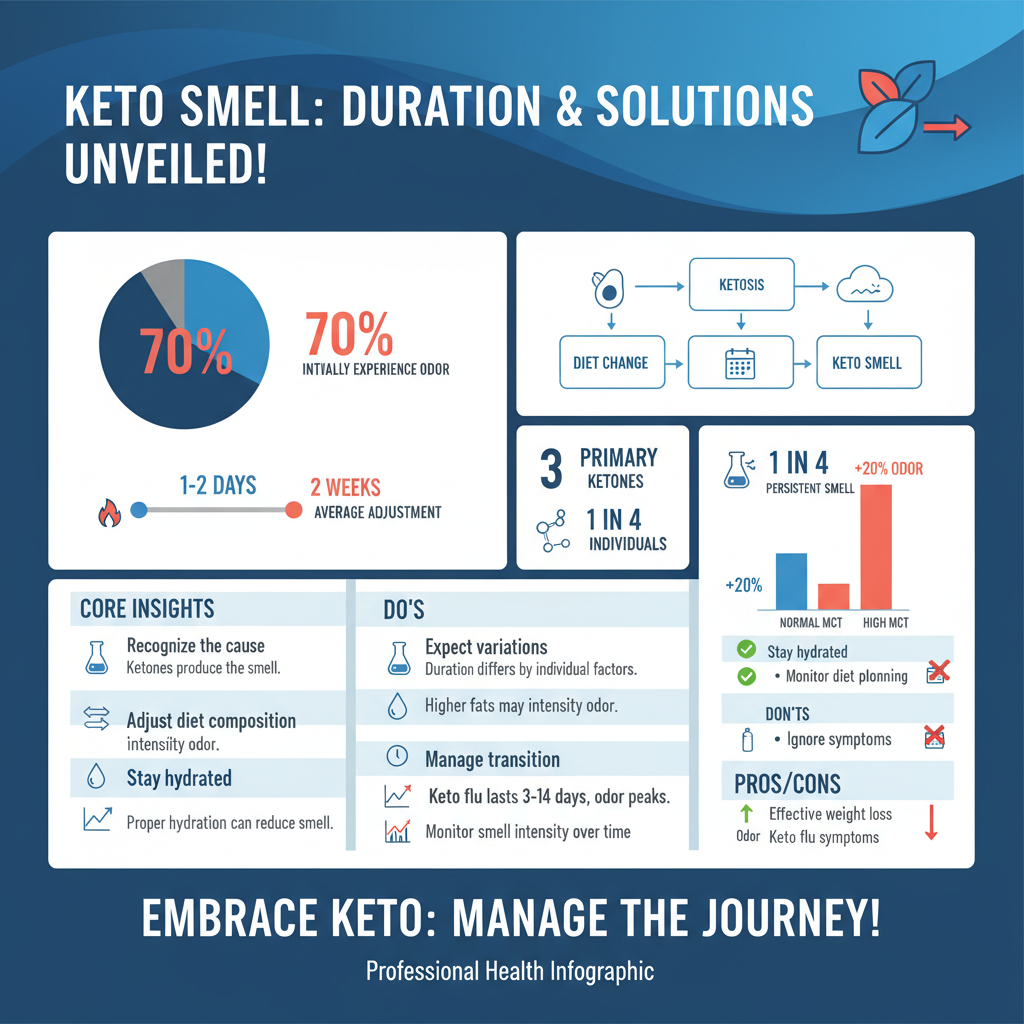
The duration of the keto smell varies significantly from person to person, typically lasting from a few days to several weeks. For many individuals, the smell is most pronounced during the initial stages of the diet as the body transitions into ketosis. This adjustment phase, often termed the “keto flu,” can last anywhere from a few days to two weeks, during which time individuals may experience more intense symptoms, including the characteristic odor.
Factors such as individual metabolism, diet adherence, and hydration levels play a crucial role in determining how long the smell persists. For some, the smell may dissipate relatively quickly as their bodies adapt to the ketogenic lifestyle, while others may experience lingering odors for a longer period. It is important to understand that this duration can fluctuate based on various lifestyle choices and physiological factors.
Factors Influencing the Smell’s Duration
– Diet Composition: The specific macronutrient breakdown of an individual’s diet can influence the intensity of the keto smell. A diet that is high in fats, particularly medium-chain triglycerides (MCTs), may lead to increased ketone production and a stronger odor. Conversely, a more balanced approach with adequate protein and low-carb vegetables may mitigate the smell.
– Hydration: Staying adequately hydrated is essential not only for overall health but also for managing the keto smell. Water helps to flush out excess ketones through urine, reducing the concentration of these compounds in the body. Individuals should aim to drink plenty of water throughout the day, which can also help alleviate other symptoms associated with ketosis, such as fatigue and headaches.
– Personal Metabolism: Each person’s metabolism is unique, influencing how quickly ketones are processed and eliminated. Factors such as age, physical activity level, and hormonal status can all affect metabolic rates and, consequently, the duration of the keto smell. Understanding one’s individual metabolic profile can provide insights into how best to manage this aspect of the diet.
Managing the Keto Smell
Managing the keto smell involves a combination of dietary adjustments and practical solutions. Here are some actionable strategies to consider:
– Increase Water Intake: As mentioned earlier, drinking more water can help flush out ketones from the body, reducing the intensity of the smell. Aim for at least 2-3 liters of water daily, and consider incorporating electrolyte-rich beverages to maintain proper hydration levels.
– Incorporate More Low-Carb Vegetables: Adding a variety of low-carb vegetables to your diet, such as spinach, broccoli, and zucchini, can provide essential nutrients while helping to balance the overall composition of your meals. These vegetables can aid in digestion and may contribute to reducing the overall odor.
– Use Mouthwash or Breath Fresheners: For immediate relief from the keto smell, consider using mouthwash or breath fresheners. Sugar-free mints and chewing gum can also be effective temporary solutions. However, it is essential to choose products that are compatible with the ketogenic lifestyle to avoid inadvertently increasing carbohydrate intake.
– Practice Good Oral Hygiene: Regular brushing, flossing, and using tongue scrapers can help manage bad breath associated with the keto smell. Maintaining good oral hygiene is crucial for overall health and can significantly improve breath freshness.
When to Expect the Smell to Fade
The intensity of the keto smell generally decreases as the body becomes more adapted to ketosis. Many individuals report a reduction in odor after the initial adjustment period of 2-4 weeks. During this time, the body becomes more efficient at utilizing ketones for energy, resulting in less excess production and therefore a less pronounced smell.
As individuals continue to follow the ketogenic diet, they may find that the initial odors become less of an issue. In some cases, people even report that the smell becomes less noticeable to themselves, although it may still be apparent to others. It’s essential to remain patient during this adaptation phase and focus on the overall benefits of the diet, such as increased energy and weight loss.
Other Signs of Ketosis Beyond the Smell
Beyond the characteristic keto smell, individuals may experience other signs of ketosis. Common symptoms include fatigue, brain fog, and changes in appetite, all of which are part of the body’s adaptation process. Understanding these signs can help individuals recognize that their bodies are transitioning into a state of ketosis.
Monitoring these symptoms can also provide valuable feedback regarding diet adherence and overall health. For instance, if fatigue and brain fog persist beyond the initial adjustment period, it may indicate that dietary adjustments are needed, or that the individual is not consuming enough calories or nutrients. Recognizing these signs can empower individuals to make informed decisions about their keto journey.
The keto smell can be an inevitable part of the ketogenic journey for many. By understanding its causes and duration, as well as implementing strategies to manage it, you can continue your keto lifestyle with more confidence. If the odor persists or becomes bothersome, consider consulting a nutritionist for personalized advice, which can help tailor your approach to minimize this aspect of the diet while maximizing its benefits.
Frequently Asked Questions
What causes the keto smell and why does it occur on a ketogenic diet?
The keto smell, often described as fruity or reminiscent of nail polish remover, is primarily caused by the production of ketones during ketosis. When the body shifts from burning carbohydrates to fats for energy, it produces acetone, a type of ketone that can be exhaled and lead to this distinct odor. This smell is more prevalent in the early stages of a ketogenic diet as your body adapts to burning fat for fuel.
How long does the keto smell typically last for someone on a ketogenic diet?
The duration of the keto smell can vary widely among individuals, but it usually lasts from a few days to a couple of weeks. Many people notice a significant reduction in the odor as their body becomes accustomed to ketosis and their metabolism stabilizes. Staying well-hydrated and maintaining proper oral hygiene can also help mitigate the smell over time.
What are some effective ways to reduce or eliminate the keto smell?
To effectively reduce or eliminate the keto smell, consider increasing your water intake, which can help dilute ketones in your system and reduce their concentration in your breath. Additionally, consuming more leafy greens and fibrous vegetables can aid digestion and improve overall breath freshness. Regular brushing, mouthwash, and sugar-free gum can also help mask the odor.
Why do some people experience a stronger keto smell than others?
The intensity of the keto smell can differ based on several factors, including an individual’s metabolic rate, hydration levels, and dietary composition. Those who produce more ketones or are less hydrated may experience a stronger smell. Genetic factors and overall health can also influence how the body processes ketones and subsequently eliminates them.
Which foods can help minimize the keto smell while on a ketogenic diet?
Incorporating high-water content foods like cucumbers, celery, and zucchini can help reduce the keto smell due to their hydrating properties. Additionally, foods rich in healthy fats, such as avocados and nuts, can promote a more balanced diet and potentially lessen the intensity of the smell. Including herbs and spices like mint, parsley, and cinnamon can also help freshen your breath.
References
- https://www.healthline.com/nutrition/keto-breath
- https://www.ncbi.nlm.nih.gov/pmc/articles/PMC5876712/
- https://www.webmd.com/diet/what-is-the-ketogenic-diet
- https://www.medicalnewstoday.com/articles/what-is-keto-breath
- https://www.hopkinsmedicine.org/health/wellness-and-prevention/the-ketogenic-diet-what-you-need-to-know
- https://www.verywellfit.com/what-is-keto-breath-5197365