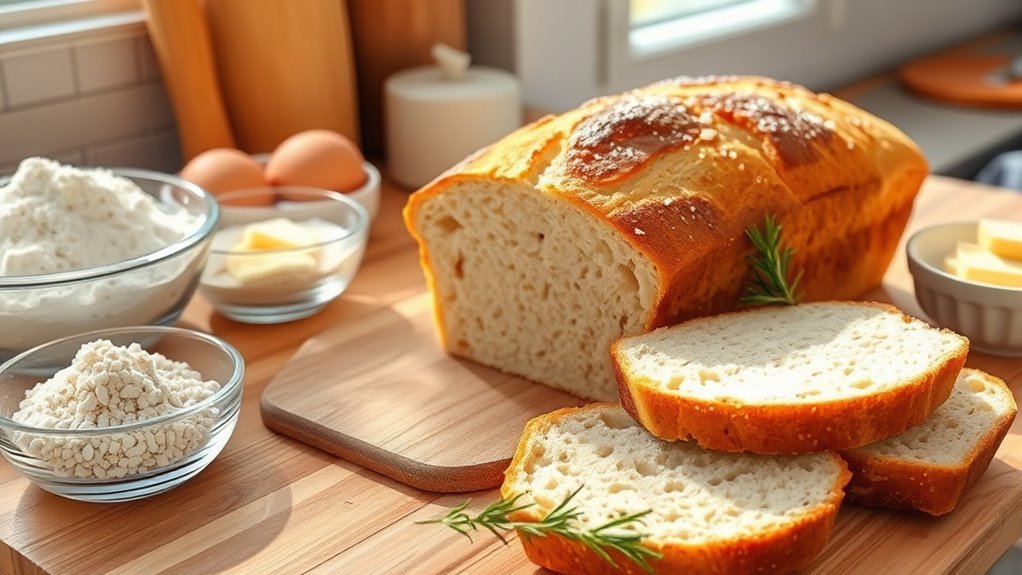

To make keto bread, you’ll need almond flour, eggs, baking powder, and optional low-carb sweeteners. Start by mixing dry ingredients separately from wet ones, then combine until smooth. Pour the batter into a greased loaf pan and bake at 350°F for about 30 minutes. Remember to cool it completely before slicing. Use high-quality ingredients for the best results, and if you want to explore more techniques and creative meal ideas, there’s plenty more to discover.
Understanding Keto Bread Ingredients
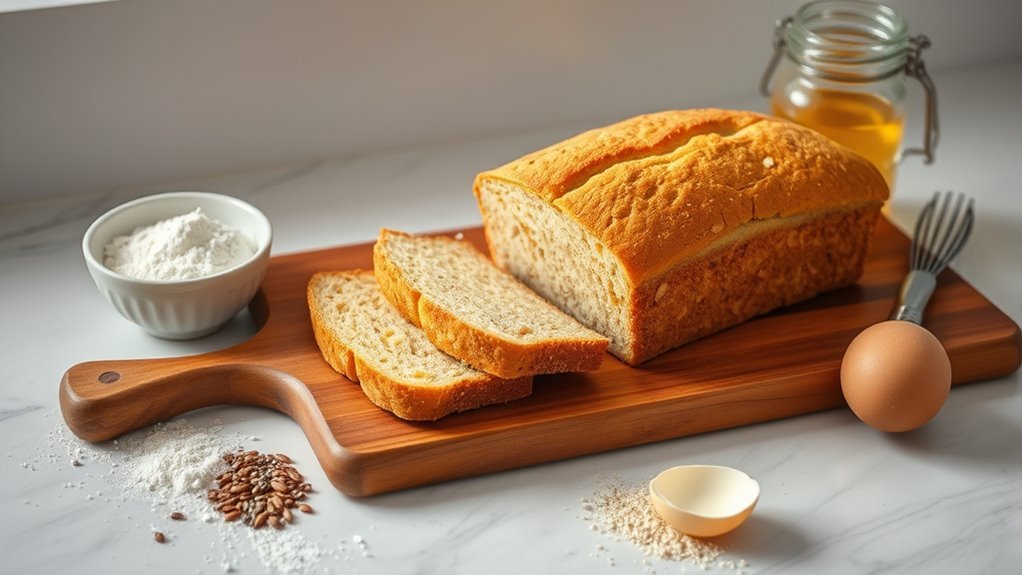
When you’re diving into the world of keto bread, it’s essential to understand the key ingredients that make it low in carbs yet satisfying. The most popular keto flour types include almond flour, coconut flour, and psyllium husk. Almond flour offers a nutty flavor and is rich in healthy fats, while coconut flour has a slightly sweet taste and absorbs moisture well. Psyllium husk adds fiber and helps achieve a bread-like texture. When it comes to sweetness, low carb sweeteners like erythritol and stevia can enhance flavor without spiking your blood sugar. These ingredients not only keep your carb count low but also guarantee your bread remains delicious and enjoyable, giving you the freedom to indulge without guilt.
Essential Equipment for Making Keto Bread
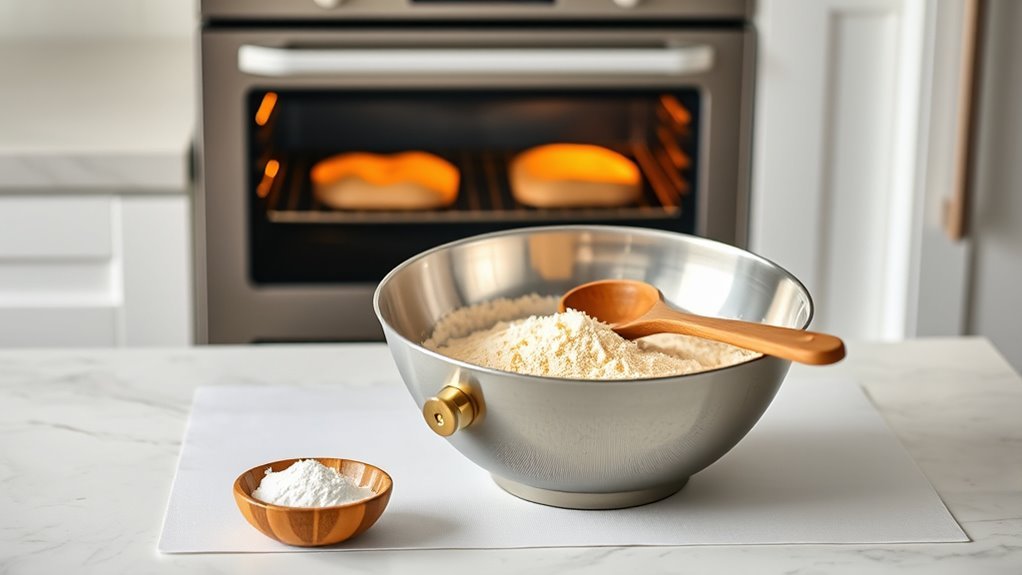
To successfully make keto bread, you’ll need some essential kitchen tools that guarantee precision and efficiency. Measuring ingredients accurately is vital for achieving the right texture and flavor, while proper storage solutions will keep your bread fresh longer. Let’s explore these key pieces of equipment that can enhance your keto baking experience.
Essential Kitchen Tools
Creating delicious keto bread requires more than just the right ingredients; having the right kitchen tools can make all the difference. The right kitchen gadgets and baking tools streamline your process and guarantee a perfect loaf every time. Here are four essentials you shouldn’t overlook:
- Mixing Bowl: A sturdy bowl is vital for combining your ingredients effectively.
- Electric Mixer: This tool helps achieve the right texture, especially for batter-based recipes.
- Loaf Pan: A non-stick loaf pan guarantees your bread releases easily after baking.
- Cooling Rack: It allows your bread to cool evenly, preventing sogginess.
With these tools in your arsenal, you’ll find making keto bread to be a much more enjoyable experience!
Measuring Ingredients Accurately
Accurate measurement of ingredients is essential for achieving the perfect texture and flavor in keto bread. Using precise measuring techniques can help you maintain the correct ingredient ratios, ensuring that your bread rises and holds together as it should. Invest in a digital kitchen scale for the most accuracy, especially when dealing with almond flour or coconut flour, which can vary in density. Measuring cups and spoons are also helpful for liquids and smaller quantities. Remember, even a slight miscalculation can affect the outcome, so take your time. By mastering these techniques, you’ll have the freedom to experiment with flavors while still creating a delicious, low-carb bread that meets your dietary needs. Enjoy the process!
Storage Solutions for Bread
When it comes to storing keto bread, having the right solutions can greatly extend its freshness and quality. Effective bread preservation is key to enjoying your homemade creations for longer periods. Here are some essential storage solutions to take into account:
- Airtight Storage Containers: These help keep moisture out and prevent mold.
- Freezer Bags: For long-term storage, wrap slices in freezer bags to maintain flavor and texture.
- Bread Boxes: A well-ventilated bread box can keep your loaf fresh while preventing excess moisture.
- Silicone Bags: Reusable and eco-friendly, these bags are great for on-the-go storage.
Step-by-Step Guide to Making Keto Bread

Although making keto bread may seem intimidating at first, following a simple step-by-step guide can help you achieve delicious results without the carbs. Start by gathering ingredients like almond flour, eggs, and baking powder. Mix the dry ingredients separately from the wet ones, then combine them until smooth. Pour the mixture into a greased loaf pan and bake at 350°F for about 30 minutes.
One of the keto bread benefits is that it’s low in carbs, making it a great alternative for your diet. However, avoid common mistakes like overmixing or skipping the baking powder, which can lead to dense bread. With practice, you’ll master the art of keto bread and enjoy the freedom of a low-carb lifestyle.
Popular Keto Bread Recipes to Try
If you’re looking to expand your keto bread repertoire, there are some popular recipes worth trying. Almond flour bread is a classic choice, offering a nutty flavor and great texture. For something lighter, consider cloud bread or cheese-based options that are both delicious and low in carbs.
Almond Flour Bread Recipe
One of the most popular keto bread recipes is almond flour bread, which offers a delicious low-carb alternative to traditional bread. This bread not only satisfies your cravings but also brings numerous almond benefits, like healthy fats and vitamin E. If you’re curious about making it, here’s a simple list to get you started:
- Ingredients: Almond flour, eggs, baking powder, and salt.
- Mixing: Combine all ingredients until smooth.
- Baking: Pour into a loaf pan and bake at 350°F for about 25-30 minutes.
- Cooling: Let it cool before slicing.
Using almond flour is a fantastic choice among flour alternatives, ensuring you stay within your keto goals while enjoying a tasty, homemade bread.
Cloud Bread Variation
After experimenting with almond flour bread, you might want to try another delightful option: cloud bread. This airy, low-carb alternative is made primarily from eggs and cream cheese, making it a fantastic choice for those on a keto diet. Cloud bread variations can include adding herbs, spices, or even nutritional yeast for an extra flavor kick.
One of the best parts of cloud bread is its versatility with toppings. You can spread avocado, cream cheese, or even sugar-free nut butter on top for a satisfying snack. Remember, the lighter texture means it pairs well with both sweet and savory options, giving you the freedom to customize it to your taste. Enjoy experimenting with this unique bread!
Cheese-Based Bread Options
While cloud bread offers a light and fluffy texture, cheese-based bread options provide a rich, savory alternative that many keto enthusiasts love. These recipes leverage various cheese types to create satisfying breads that still fit your low-carb lifestyle. Here are four popular options to contemplate:
- Fathead Dough: Made with mozzarella and cream cheese, it’s versatile for pizza or bagels.
- Cheddar Chaffles: A simple mix of eggs and cheese, perfect for a quick snack or sandwich.
- Almond Flour Cheese Bread: Combines almond flour and cheese for a hearty loaf.
- Ricotta Bread: Uses ricotta for a moist, dense texture that’s great for toasting.
These options not only satisfy cravings but also enhance your keto journey. Enjoy the freedom to indulge!
Tips for Perfecting Your Keto Bread
To achieve the perfect keto bread, it’s essential to pay attention to the ingredients and techniques you use. Start with high-quality almond or coconut flour for a great foundation. Experiment with different ratios to find the perfect balance for your desired keto bread textures. Adding psyllium husk can enhance chewiness, while eggs provide structure and moisture. Don’t shy away from incorporating flavors; herbs, spices, or even cheese can elevate your keto bread flavors. Always preheat your oven and consider using a baking stone for more even cooking. Finally, let your bread cool completely before slicing; this helps maintain its shape. Following these tips can lead to delicious, satisfying keto bread that fits your lifestyle beautifully.
Storing and Freezing Keto Bread
Storing keto bread properly can extend its freshness and maintain its texture, allowing you to enjoy it for longer. Here are some effective storing techniques and freezing tips:
Proper storage of keto bread enhances freshness and texture, ensuring you savor it for an extended period.
- Cool Completely: Let the bread cool before storing to prevent moisture buildup.
- Use Airtight Containers: Store bread in an airtight container or a resealable bag to keep it fresh.
- Refrigerate for Longevity: If you won’t eat it within a few days, refrigerate to extend its shelf life.
- Freeze for Future Use: Slice the bread and wrap it tightly in plastic wrap before placing it in a freezer bag.
Creative Ways to Use Keto Bread in Meals
Keto bread can be a versatile addition to your meals, providing a delicious low-carb alternative to traditional bread. You can create satisfying keto sandwiches using various fillings like turkey, avocado, or cream cheese, ensuring you stick to your dietary goals without sacrificing flavor. For breakfast, try making keto toast topped with almond butter and berries—it’s a tasty way to start your day. You can also use keto bread as a base for pizzas, adding your favorite low-carb toppings. Don’t forget about croutons; just cube and bake your keto bread for a crunchy salad addition. By thinking outside the box, you can enjoy your keto bread in multiple ways, making your meals exciting and fulfilling.
Frequently Asked Questions about Making Keto Bread
1. What ingredients do I need to make keto bread?
To make keto bread, you’ll typically need almond flour or coconut flour as the base. Other common ingredients include eggs, baking powder, salt, and a fat source such as olive oil or melted butter. Some recipes may also include cream cheese or psyllium husk for added texture and moisture.
2. Can I use regular flour in keto bread recipes?
No, regular flour is not suitable for keto bread as it is high in carbohydrates, which can disrupt ketosis. Instead, opt for low-carb alternatives like almond flour or coconut flour, which are both keto-friendly and provide a similar texture to traditional bread.
3. How do I achieve the right texture in keto bread?
Achieving the right texture in keto bread often involves using a combination of low-carb flours and binding agents. For instance, using almond flour with psyllium husk can help mimic the elasticity of gluten. Additionally, incorporating eggs not only helps bind the ingredients but also adds moisture, contributing to a softer texture.
4. How long does keto bread last, and how should I store it?
Keto bread can last for about 3-5 days at room temperature if stored in an airtight container. For longer storage, consider refrigerating it, which can extend its shelf life to about a week. Alternatively, you can freeze keto bread for up to 3 months. Just make sure to wrap it tightly to prevent freezer burn.
5. Can I customize my keto bread recipe?
Absolutely! Keto bread recipes are highly customizable. You can add herbs, spices, or cheese for flavor, or incorporate seeds and nuts for added texture. Just be mindful of the carb content of any additional ingredients to maintain your keto goals. Experimenting with different flavors and textures can help you find the perfect keto bread that suits your taste.
References
- https://en.wikipedia.org/wiki/Keto_diet
- https://www.ncbi.nlm.nih.gov/pmc/articles/PMC7074755/
- https://www.healthline.com/nutrition/keto-diet-101
- https://www.webmd.com/diet/what-is-the-keto-diet
- https://www.cdc.gov/healthyweight/healthy_eating/index.html
- https://www.mayoclinic.org/healthy-lifestyle/nutrition-and-healthy-eating/expert-answers/keto-diet/faq-20407419
- https://www.hsph.harvard.edu/nutritionsource/keto-diet/