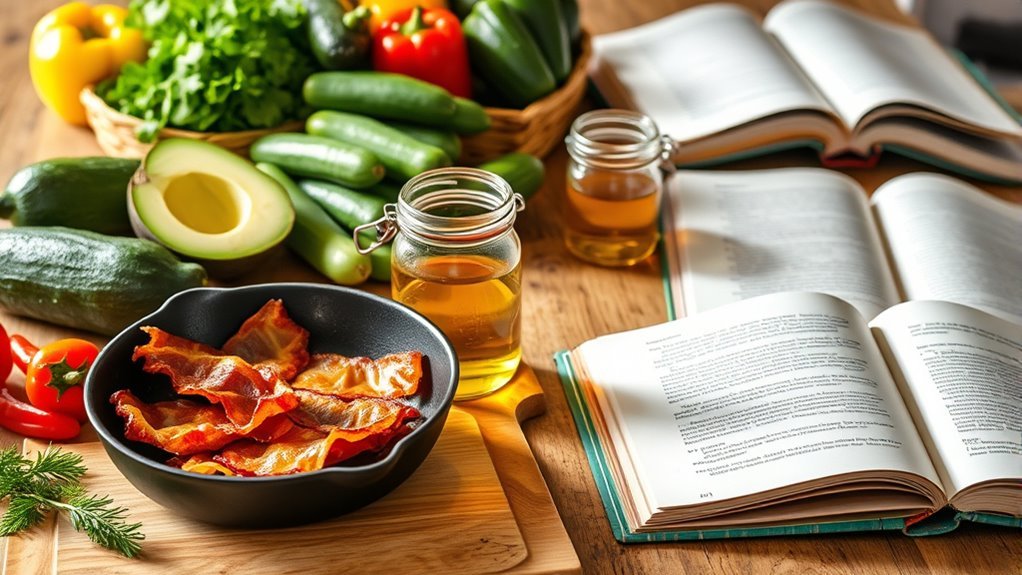

To get started on the keto diet, you’ll need to cut back on carbs considerably and boost your fat intake. Aim for a macronutrient ratio of about 70-75% fats, 20-25% protein, and just 5-10% carbohydrates. Focus on whole, unprocessed foods like avocados, nuts, and leafy greens. Meal planning can help you stay on track, and it’s crucial to prepare for cravings and social situations. Stick with it, and you’ll discover more helpful strategies ahead.
Understanding the Keto Diet: Basic Principles
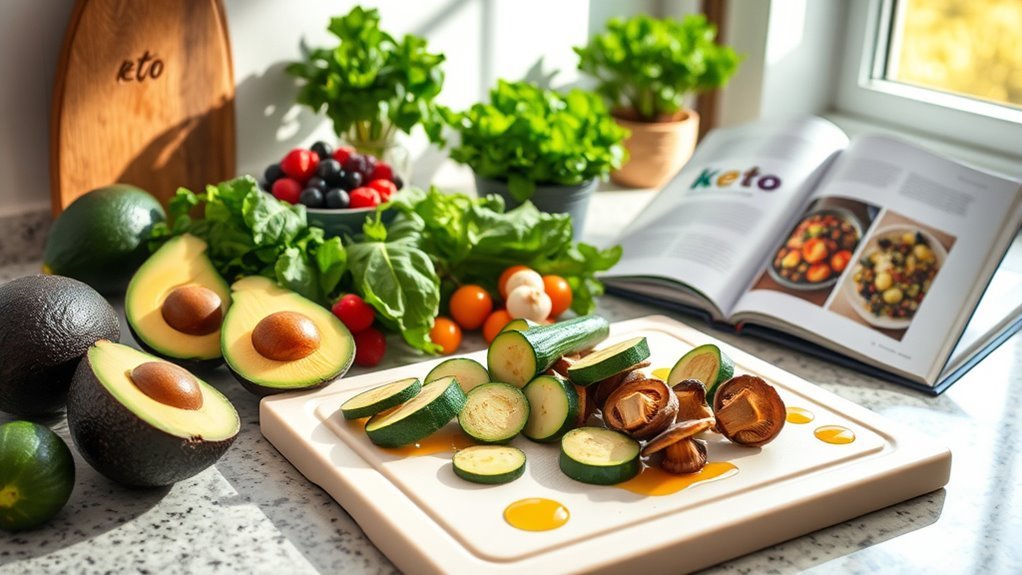
When you’re diving into the keto diet, it’s essential to understand its basic principles. At its core, the keto diet focuses on low carb principles, drastically reducing carbohydrate intake while increasing fats. This shift forces your body into ketosis, a metabolic state where it burns fat for fuel instead of glucose. Typically, you’ll aim for about 70-75% of your daily calories from fats, 20-25% from protein, and only 5-10% from carbohydrates. Emphasizing whole, unprocessed foods is vital—think avocados, nuts, and leafy greens. By grasping these keto diet basics, you can create meals that keep you satisfied and energized. Remember, it’s not just about restrictions; it’s about enjoying a new way to nourish your body and reclaim your freedom. Additionally, understanding the role of healthy fats in the diet can enhance your overall experience and results.
Calculating Your Macros for Keto

Having grasped the basic principles of the keto diet, the next step involves calculating your macros. To achieve the desired state of ketosis, you’ll need to focus on specific macro ratios: typically, 70% fats, 25% protein, and 5% carbs. Using a keto calculator can simplify this process by determining your daily caloric needs based on your goals. It’s essential to track your macros diligently to maximize benefits and ensure you’re staying within your carb limits.
Here’s a quick reference to guide you:
| Macro Type | Percentage |
|---|---|
| Fats | 70% |
| Protein | 25% |
| Carbs | 5% |
Foods to Eat and Avoid on the Keto Diet
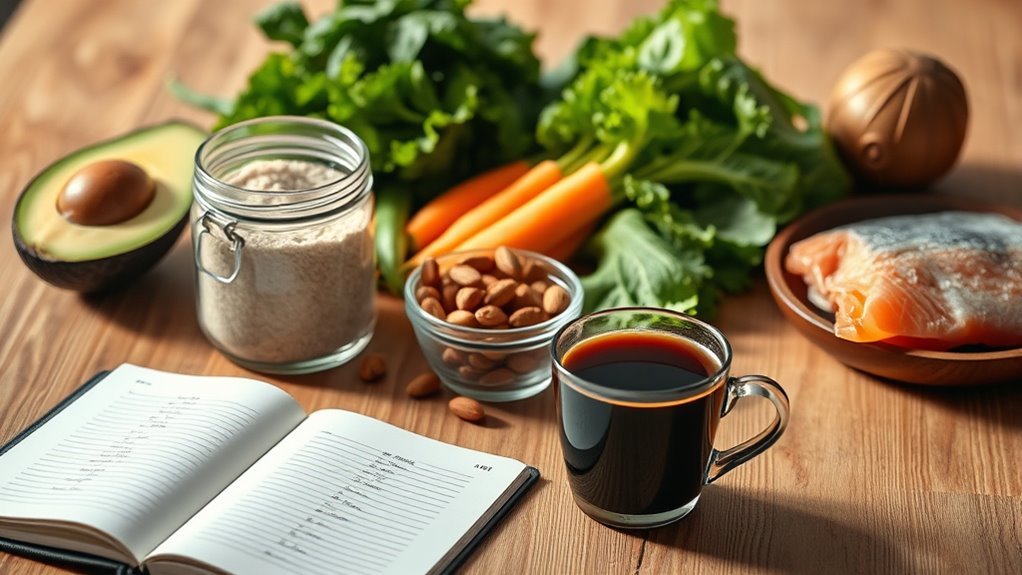
Steering through the keto diet means knowing which foods to embrace and which to steer clear of. Focus on high-fat, low-carb options like avocados, nuts, and fatty fish, as these will help you maintain ketosis. Incorporate low carb vegetables like spinach, broccoli, and zucchini to add essential nutrients without spiking your carb intake. When it comes to snacks, opt for keto friendly snacks such as cheese, olives, or hard-boiled eggs to keep your energy levels steady. Avoid starchy foods, grains, and sugary treats, as they can derail your progress. By making informed choices, you can enjoy delicious meals while staying true to the keto lifestyle, giving you the freedom to thrive on your journey. Additionally, prioritize whole, nutrient-dense foods to ensure you’re getting the necessary vitamins and minerals while on keto.
Meal Planning and Preparation Tips
To successfully navigate the keto diet, effective meal planning and preparation are essential. Start by organizing your grocery shopping to guarantee you have all the right ingredients on hand. Here are some tips to streamline your meal prepping:
- Create a weekly meal plan that includes breakfast, lunch, dinner, and snacks.
- Make a shopping list based on your meal plan to avoid impulse buys.
- Batch cook keto-friendly meals, like casseroles or soups, and portion them out.
- Use versatile ingredients, such as eggs or leafy greens, to create multiple dishes.
- Keep healthy snacks, like nuts or cheese, accessible for when cravings hit. Additionally, focus on nutrient-dense foods that will support your overall health while on the diet.
Common Challenges and How to Overcome Them
Even with a solid meal planning strategy, starting on the keto diet can present a variety of challenges that might derail your progress. One major hurdle is dealing with keto cravings, which can be intense, especially in the early weeks. To combat this, focus on high-fat snacks like nuts or cheese to keep you satisfied. Additionally, understanding the importance of nutrition tracking can help you maintain proper macronutrient ratios and stay on track.
Social situations can also prove tricky, as you may encounter meals that don’t align with your new lifestyle. Don’t hesitate to communicate your dietary needs; most people will be understanding. Bringing a keto-friendly dish to gatherings can ease the pressure. Remember, it’s about finding balance and enjoying your journey without feeling restricted. Stay prepared, and you’ll navigate these challenges more effortlessly.
Staying Motivated and Committed to the Keto Lifestyle
While starting on the keto journey can be exciting, staying motivated and committed requires a proactive approach. Building a strong support system and surrounding yourself with inspirational stories can keep your spirits high. Here are some practical tips to help you stay on track:
Embarking on a keto journey is thrilling, but maintaining motivation demands a proactive mindset and a supportive community.
- Connect with like-minded individuals online or in person.
- Share your progress and challenges to foster accountability.
- Celebrate small victories to maintain your enthusiasm.
- Keep a journal to reflect on your journey and emotions.
- Find keto-friendly recipes that excite you and keep meals interesting.
- Engage in community support to help navigate challenges and celebrate successes together.
Tracking Your Progress and Adjusting Your Plan
As you commence your keto journey, tracking your progress and adjusting your plan becomes essential for long-term success. Progress monitoring involves keeping an eye on your weight, measurements, and energy levels. Use apps or journals to log your daily food intake and ketone levels, helping you stay accountable. If you notice a plateau or unwanted weight gain, it might be time for plan adjustments. Experiment with your macronutrient ratios or meal timing to see what works best for you. Additionally, be mindful of electrolyte balance as it plays a crucial role in maintaining overall health during ketosis. Don’t forget to celebrate your victories, no matter how small! This journey is about finding what suits your lifestyle, allowing you the freedom to adapt your plan while staying committed to your health goals. Enjoy the process!
Frequently Asked Questions
Can I Drink Alcohol on the Keto Diet?
Yes, you can drink alcohol on the keto diet, but you’ll need to choose wisely. Opt for keto-friendly drinks like dry wines, spirits, and low-carb mixers. Be aware that alcohol can affect your metabolism and may slow down ketosis. Moderation is key; overindulging might lead to cravings for high-carb foods. Always keep track of your intake to maintain your progress while enjoying the occasional drink without guilt.
Is the Keto Diet Safe for Everyone?
The keto diet isn’t a one-size-fits-all solution; it’s more like a tailored suit. While many thrive on it, individual health factors play an essential role in determining its safety for you. Those with certain medical conditions, like liver or kidney issues, should tread carefully. It’s best to consult a healthcare professional before diving in, ensuring that your unique needs are met while pursuing your health goals. Freedom lies in informed choices!
How Long Does It Take to Enter Ketosis?
It typically takes about 2 to 7 days to enter ketosis, depending on your individual metabolism and activity level. Your ketosis timeline can vary based on factors like your carbohydrate intake and how strictly you adhere to the diet. To speed up the process, consider reducing carbs considerably and increasing your physical activity. Staying hydrated and monitoring your ketone levels can also help you track your progress toward entering ketosis effectively.
What Are the Symptoms of Keto Flu?
Keto flu symptoms can include fatigue, headaches, irritability, and nausea as your body adapts to ketosis. To ease this shift, managing keto flu is essential. Make sure you’re staying hydrated, replenishing electrolytes, and getting enough rest. Eating nutrient-rich foods can also help. Remember, these symptoms are usually temporary, typically lasting a few days to a week. Staying committed to your keto journey will ultimately reward you with the energy and clarity you seek.
Can I Exercise While on the Keto Diet?
Yes, you can definitely exercise while on the keto diet. In fact, keto workouts can be quite effective. However, you might want to adjust your exercise intensity initially, as your body adapts to burning fat for fuel instead of carbs. Start with moderate exercises and gradually increase the intensity as you feel more comfortable. Listening to your body is key; it’ll guide you in finding the right balance for your fitness journey.
References
- https://www.ncbi.nlm.nih.gov/pmc/articles/PMC6073070/
- https://www.healthline.com/nutrition/ketogenic-diet-101
- https://www.webmd.com/diet/obesity/ss/slideshow-ketogenic-diet
- https://www.cdc.gov/healthyweight/healthy_eating/dietary_guidelines.html
- https://www.mayoclinic.org/healthy-lifestyle/nutrition-and-healthy-eating/in-depth/keto-diet/art-20459804
- https://www.hopkinsmedicine.org/health/wellness-and-prevention/keto-diet-what-you-need-to-know
- https://www.nutrition.org.uk/healthyliving/drinks/what-is-the-ketogenic-diet.html
- https://www.eatright.org/health/wellness/preventing-illness/what-is-the-ketogenic-diet
- https://www.verywellfit.com/what-is-the-ketogenic-diet-5180299