To eat keto, shift your diet to focus on high healthy fats, like avocados and olive oil, moderate proteins such as chicken and fish, and minimize carbohydrates found in bread and sugary snacks. Keep an eye on portion sizes and meal timing to maintain energy levels. Customizing orders when dining out can also help you stick to your plan. There’s much more to explore about meal planning and overcoming challenges for successful keto living.
Understanding the Keto Diet Basics
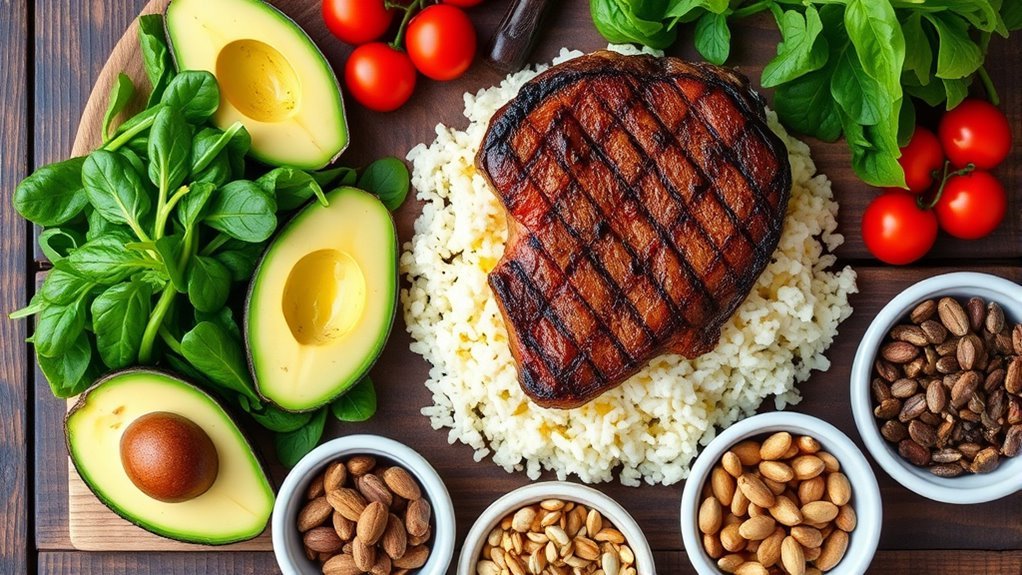
The ketogenic diet, often referred to as keto, is fundamentally about shifting your body’s metabolism from burning carbohydrates to utilizing fats for energy. Many people fall prey to keto diet myths, believing it’s all about consuming excessive amounts of bacon or cheese. In reality, the focus is on a balanced intake of healthy fats, moderate proteins, and minimal carbs. This approach can help stabilize blood sugar levels and promote fat loss. Common misconceptions suggest that you’ll miss out on essential nutrients, but with proper planning, you can maintain a diverse and satisfying diet. Understanding these basics allows you to embrace keto with confidence, empowering you to make informed choices that align with your freedom to enjoy food while achieving your health goals.
Foods to Include on a Keto Diet
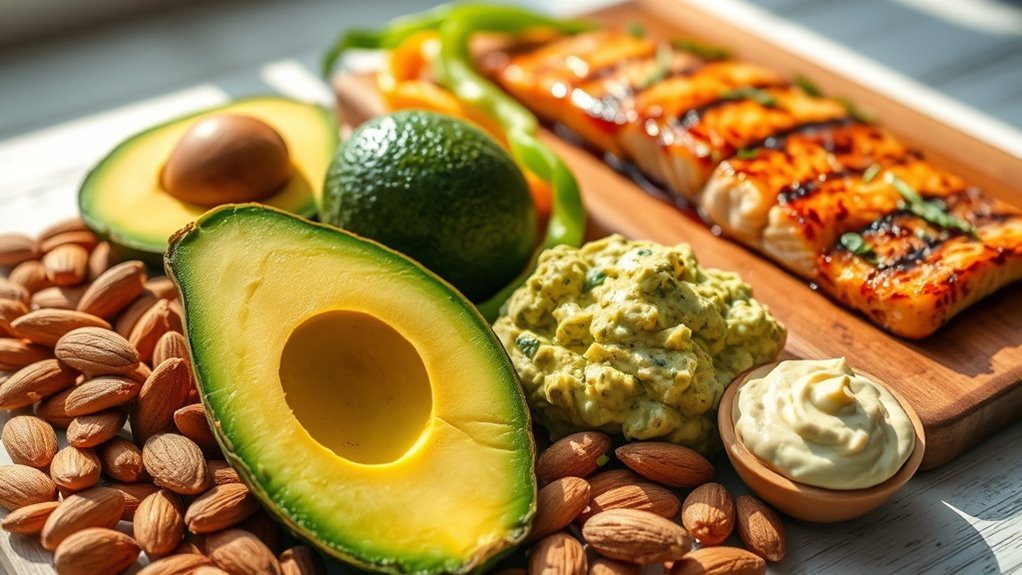
When you’re following a keto diet, focusing on the right foods is essential for success. Incorporating healthy fats, low-carb vegetables, and quality protein sources can help you stay within your carb limits while meeting your nutritional needs. Let’s explore the best options to include in your meals.
Healthy Fats Choices
Incorporating healthy fats into your keto diet is essential for achieving and maintaining ketosis, and there are plenty of delicious options to choose from. Avocado benefits include healthy monounsaturated fats that support heart health, while coconut oil provides medium-chain triglycerides for quick energy. Olive oil is perfect for dressings and low-heat cooking, and nut butters add flavor and nutrients. Don’t forget fatty fish like salmon, which are rich in omega-3s. Explore various cheese options and seed varieties to diversify your meals. Pay attention to portion sizes and meal timing—eating fats strategically can help keep you satisfied and energized throughout the day. With these healthy fat choices, you’ll enjoy freedom in your keto journey while nourishing your body.
Low-Carb Vegetables
Including low-carb vegetables in your keto diet is a great way to boost your nutrient intake while keeping your carb count in check. Focus on nutrient-dense options like spinach, kale, zucchini, and bell peppers. These veggies can be incorporated into keto-friendly salads or enjoyed as low-carb snacks. Experiment with various vegetable cooking methods, such as steaming, roasting, or sautéing, to enhance flavors while retaining nutrients. Don’t forget about seasonal vegetable choices, which can add variety and freshness to your meals. For effective veggie meal prep, chop and store your favorites in advance, making it easier to whip up quick dishes. Embrace these low-carb vegetables to stay satisfied and nourished on your keto journey!
Protein Sources
Since protein is essential for building and repairing tissues, it’s crucial to choose the right sources while following a keto diet. Here are some excellent protein options to evaluate:
- Lean Meats: Chicken, turkey, and lean cuts of beef provide high protein quality while being low in carbs.
- Seafood Options: Salmon, shrimp, and other fish are rich in omega-3 fatty acids and protein, making them ideal for your diet.
- Dairy Sources: Full-fat cheeses and Greek yogurt offer protein benefits along with healthy fats.
- Plant Proteins: Explore alternative proteins like tofu or tempeh to diversify your protein intake.
Don’t forget about protein shakes for convenient supplementation. Focus on protein timing and portioning to maximize your results while enjoying the freedom of your keto lifestyle.
Foods to Avoid on a Keto Diet

When starting on a keto diet, it’s vital to steer clear of certain foods that can hinder your progress. High-carb foods like bread, pasta, and sugary snacks are common pitfalls that can sabotage your efforts. Instead of reaching for those traditional snack options, opt for low-carb alternatives like nuts, cheese, or vegetables with dip. Fruits, particularly high-sugar varieties like bananas and grapes, should also be avoided since they can spike your blood sugar. Processed foods often contain hidden sugars and unhealthy carbs, so it’s best to read labels carefully. Remember, staying committed to your food choices is fundamental for enjoying the freedom and benefits of a successful keto lifestyle!
How to Calculate Your Macros
To successfully follow a keto diet, you first need to determine your daily caloric needs based on your activity level and goals. Once you know your calorie target, calculating the right macronutrient ratios—typically high in fats, moderate in protein, and very low in carbs—is vital for achieving ketosis. This tailored approach guarantees you’re fueling your body correctly while staying within the parameters of the diet.
Determine Daily Caloric Needs
Calculating your daily caloric needs is essential for successfully following a ketogenic diet, as it helps you understand how much energy you can consume while still reaching your goals. To determine your caloric intake, consider these key factors:
- Metabolic Rate: Identify your basal metabolic rate (BMR), the calories your body needs at rest.
- Activity Level: Factor in how active you are during the day, as this affects energy balance.
- Body Composition: Understand how muscle mass versus fat impacts your caloric needs.
- Weight Management Goals: Decide if you want to lose, maintain, or gain weight, which will alter your daily caloric target.
Calculate Macronutrient Ratios
Understanding how to calculate your macronutrient ratios is essential for adhering to a ketogenic diet. To achieve the right macro balance, start with a keto calculator to determine your ideal fat, protein, and carb percentages. Typically, you’ll aim for around 70% fat, 25% protein, and 5% carbs. Use tracking apps to monitor your intake and guarantee portion control. Consider nutrient timing and meal frequency to optimize energy levels and support your goals. If you enjoy variety, experiment with carb cycling to maintain flexibility in your diet. As you progress, don’t hesitate to make dietary adjustments to suit your lifestyle and preferences, allowing for a sustainable and enjoyable keto journey.
Meal Planning for Success
When you plan your meals effectively, sticking to a keto diet becomes much easier and more enjoyable. Here are some practical tips to help you succeed:
- Create a Weekly Planner: Outline your meals and snacks in advance, ensuring you’re meeting your macros.
- Use a Grocery Checklist: Focus on pantry staples and budget-friendly items, keeping your shopping efficient.
- Incorporate Portion Control: Measure your servings to avoid overeating and maintain keto-friendly ratios.
- Explore Recipe Ideas: Look for meal prep and snack options that excite you, making it easier to stay on track.
Easy Keto Recipes to Get You Started
If you want to kickstart your keto journey, having a collection of easy recipes on hand can make all the difference. Start your day with keto breakfast ideas like scrambled eggs with spinach and feta or avocado and bacon omelets. These meals not only keep you full but also fuel your body with healthy fats. For those midday cravings, consider keto snack options such as cheese crisps or cucumber slices topped with cream cheese and smoked salmon. These snacks are low in carbs, satisfying, and easy to prepare. By incorporating these recipes into your routine, you’ll find it simpler to stay on track with your keto lifestyle, enjoying delicious food while achieving your health goals.
Tips for Eating Out on Keto
Eating out on keto doesn’t have to be challenging if you know what to look for. Focus on choosing low-carb options, steering clear of sugary sauces, and customizing your order to fit your dietary needs. With a few smart choices, you can enjoy dining out while staying on track with your keto lifestyle.
Choose Low-Carb Options
Although dining out can pose challenges for those on a keto diet, you can still enjoy your meals by choosing low-carb options. Here are some tips to keep your meals keto-friendly:
- Opt for grilled proteins: Choose chicken, steak, or fish over breaded or fried options.
- Substitute sides: Replace starchy sides like fries with vegetables or salads.
- Select low-carb sauces: Ask for olive oil, vinegar, or butter instead of high-carb dressings.
- Be mindful of drinks: Stick to water, black coffee, or unsweetened tea to avoid hidden carbs.
Avoid Sugary Sauces
When dining out on keto, it’s important to pay attention to sauces, as many can be loaded with sugar and hidden carbs. Opt for dishes that come with ingredients that are low in sugar. Instead of traditional dressings, consider asking for homemade dressings made with olive oil and vinegar, which are both keto-friendly. If you’re craving something sweeter, look for sugar alternatives like stevia or erythritol in sauces or dressings. Always inquire about the ingredients; many restaurants are willing to accommodate your dietary needs. By being mindful of what’s on your plate, you can enjoy eating out without compromising your keto lifestyle. Remember, a little caution goes a long way in maintaining your freedom on this journey.
Customize Your Order
To successfully navigate dining out on a keto diet, customizing your order can make a significant difference. By tailoring your meal, you can enjoy dining while adhering to your dietary preferences. Here are some tips for making the most of your custom meal options:
- Request no bread or buns – Substitute lettuce wraps or skip the carbs entirely.
- Choose healthy fats – Opt for olive oil, avocado, or butter over dressings and sauces.
- Load up on non-starchy veggies – Ask for extra greens or low-carb vegetables instead of rice or potatoes.
- Inquire about cooking methods – Grilled, baked, or sautéed options are often more keto-friendly than fried.
With these strategies, you’ll find freedom in enjoying meals out without sacrificing your keto goals.
Overcoming Common Keto Challenges
As you commence on your keto journey, you might encounter a few common challenges that can test your resolve. From keto cravings to maneuvering social situations, staying on track requires strategy. Meal prepping is essential to combat emotional eating and maintain energy levels. Reading labels helps you choose the right snack options, especially when dining out or during holiday challenges. Family support can also be a key factor in your success.
| Challenge | Strategy | Tips |
|---|---|---|
| Keto Cravings | Meal Prepping | Prepare keto-friendly snacks |
| Social Situations | Communicate | Share your goals with friends |
| Dining Out | Research Menus | Look for low-carb options |
| Holiday Challenges | Plan Ahead | Bring your own dishes |
Stay proactive, and you’ll overcome these hurdles!
Tracking Your Progress on Keto
Tracking your progress on keto is essential for staying motivated and making necessary adjustments to your diet. By incorporating a structured approach, you can effectively monitor your journey. Here are four key methods:
Tracking your keto progress is vital for motivation and making diet adjustments effectively.
- Keto Journaling: Document your meals and snacks to identify patterns and make informed decisions.
- Weight Measurements: Regularly check your weight to assess your progress, but remember it’s just one aspect.
- Body Composition: Track changes in muscle versus fat to get a clearer picture of your health.
- Weekly Check-Ins: Set aside time each week to reflect on your mood, energy levels, and fitness milestones.
Using these strategies, you’ll enhance your goal setting and guarantee a more fulfilling keto experience.
Maintaining Your Keto Lifestyle Long-Term
Sustaining a keto lifestyle long-term requires strategic planning and commitment. To thrive, you’ll want to connect with the keto community support, where you can share experiences, recipes, and motivation. This camaraderie can help you stay accountable and inspired.
Next, focus on sustainable meal prep. Plan your meals weekly, ensuring you have keto-friendly options ready to avoid impulsive choices. Batch-cooking meals and snacks can save time and energy, making it easier to stick to your goals.
Additionally, embrace flexibility. Allow yourself occasional treats without guilt; it’s about balance. By incorporating these practices, you’ll find that maintaining your keto lifestyle becomes a satisfying and liberating journey, empowering you to enjoy food while staying healthy.
What foods can I eat on a keto diet?
On a keto diet, you should focus on foods that are high in healthy fats, moderate in protein, and very low in carbohydrates. Key food categories include:
- Fats and Oils: Avocado oil, olive oil, coconut oil, butter, and ghee.
- Meats: Grass-fed beef, pork, chicken, turkey, and fatty fish such as salmon and sardines.
- Dairy: High-fat dairy products like cheese, heavy cream, and Greek yogurt (in moderation).
- Low-Carb Vegetables: Leafy greens, broccoli, cauliflower, zucchini, and bell peppers.
- Nuts and Seeds: Almonds, walnuts, chia seeds, and flaxseeds.
- Beverages: Water, coffee, and tea without sugar.
Avoid high-carb foods such as grains, sugars, fruits, and starchy vegetables.
How do I calculate my macronutrient ratios for keto?
To successfully follow a ketogenic diet, you need to calculate your macronutrient ratios, which typically consist of about 70-75% fat, 20-25% protein, and 5-10% carbohydrates. Here’s how to do it:
- Determine Your Daily Caloric Needs: Use an online calculator to find your Total Daily Energy Expenditure (TDEE).
- Set Your Goals: Based on your goals (weight loss, maintenance, or muscle gain), adjust your caloric intake.
- Calculate Macronutrients: Multiply your total calories by the percentage of each macronutrient. For example, if your goal is 2000 calories, you would aim for approximately 140-150 grams of fat (70-75%), 100-125 grams of protein (20-25%), and 25-50 grams of carbohydrates (5-10%).
Tracking apps or websites can help you monitor your intake and adjust as needed.
What are the common side effects of starting a keto diet?
When starting a keto diet, some people may experience what is commonly referred to as the “keto flu.” This can include symptoms such as:
- Fatigue
- Headaches
- Nausea
- Dizziness
- Irritability
- Muscle cramps
These symptoms are typically temporary and can last from a few days to a week. Staying hydrated, ensuring adequate electrolyte intake, and gradually reducing carbohydrates can help ease these symptoms.
Can I eat fruits on a keto diet?
Fruits are generally high in carbohydrates, which makes them challenging to include in a standard ketogenic diet. However, there are some exceptions that can be consumed in moderation:
- Berries: Strawberries, raspberries, blackberries, and blueberries are lower in carbs compared to other fruits.
- Avocado: Technically a fruit, avocados are high in healthy fats and low in carbs.
- Olives: Another low-carb fruit that provides healthy fats.
When including fruits, it’s essential to monitor portion sizes to stay within your daily carb limits.
How do I know if I’m in ketosis?
To determine if you are in ketosis, you can look for several signs and symptoms, such as:
- Increased ketone levels in the blood (which can be measured with a blood ketone meter).
- Fruity smell on your breath (due to acetone, a type of ketone).
- Increased energy levels and mental clarity after the initial adaptation phase.
- Reduced appetite and cravings.
- Weight loss and changes in body composition.
For the most accurate measurement, consider using blood ketone testing kits, which can provide precise levels of ketones in your body.
References
- https://en.wikipedia.org/wiki/Ketogenic_diet
- https://www.health.harvard.edu/staying-healthy/the-ketogenic-diet
- https://www.cdc.gov/healthyweight/assessing/bmi/adult_bmi/english_bmi_calculator/bmi_calculator.html
- https://www.ncbi.nlm.nih.gov/pmc/articles/PMC6543035/
- https://www.ncbi.nlm.nih.gov/pmc/articles/PMC8254427/
- https://www.mayoclinic.org/healthy-lifestyle/nutrition-and-healthy-eating/expert-answers/keto-diet/faq-20407948
- https://www.hsph.harvard.edu/nutritionsource/healthy-weight/dietary-approaches-for-weight-loss/keto-diet/
- https://www.nih.gov/news-events/nih-research-matters/ketogenic-diet-may-help-control-seizures-children
- https://www.webmd.com/diet/ss/slideshow-ketogenic-diet-overview