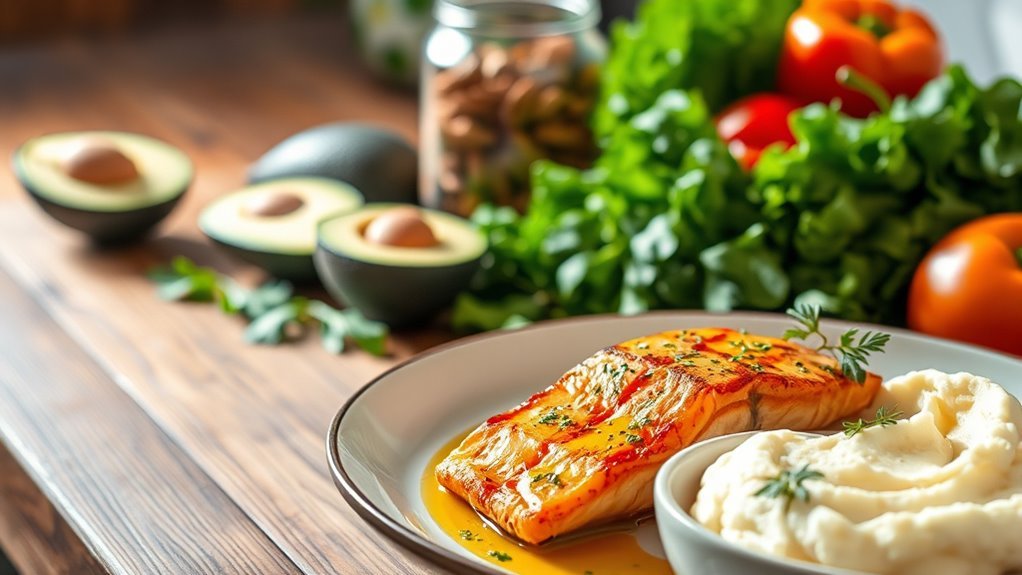

To do the keto diet, focus on high fats, moderate protein, and very low carbs. Aim to enter ketosis, where your body burns fat for energy. Include healthy fats like avocados and olive oil, and eat fatty meats with leafy greens. Avoid grains, starchy vegetables, and sugary snacks. Gradually adjust your carb intake, prepare meals ahead of time, and find supportive communities. Explore meal planning and recipe ideas to keep your journey successful and enjoyable.
Understanding the Basics of the Keto Diet

When you’re considering the keto diet, it’s essential to understand its fundamental principles. The ketogenic diet primarily focuses on high fat, moderate protein, and very low carbohydrate intake. This shift in macronutrient ratios helps your body enter a state of ketosis, where it burns fat for fuel instead of carbs. Many people are drawn to keto benefits like weight loss, increased energy, and improved mental clarity. However, it’s vital to be aware of common keto misconceptions, such as the belief that all fats are bad or that you can eat unlimited amounts of fat without consequences. By understanding these basics, you can make informed decisions that align with your health goals and embrace the freedom that comes with a well-planned keto lifestyle.
Foods to Include in Your Keto Meal Plan

Building on the foundational principles of the keto diet, selecting the right foods is key to successfully maintaining a ketogenic lifestyle. Focus on incorporating healthy fats, which are the cornerstone of your meals. Avocados, olive oil, and coconut oil are excellent choices. Don’t forget about fatty cuts of meat, poultry, and fish, as they provide essential proteins while keeping your carb count low. Leafy greens and cruciferous vegetables, like broccoli and cauliflower, are fantastic for adding fiber and nutrients without spiking your blood sugar. For those moments when you need a quick bite, stock up on keto snacks like nuts, cheese, and hard-boiled eggs. By embracing these foods, you’ll enjoy the freedom to create diverse meals while staying within your keto goals.
Foods to Avoid on the Keto Diet

To successfully navigate the keto diet, it is crucial to avoid certain foods that can hinder your progress and disrupt ketosis. Common culprits include grains, starchy vegetables, and sugary snacks. These foods often contain hidden sugars that can spike your blood sugar levels and kick you out of ketosis. Instead, you can explore keto snack alternatives to satisfy your cravings.
| Foods to Avoid | Keto Snack Alternatives |
|---|---|
| Bread and Pasta | Lettuce wraps, zucchini noodles |
| Potatoes | Cauliflower mash |
| Rice | Riced cauliflower |
| Sugary Snacks | Nuts and cheese |
| Sweetened Beverages | Sparkling water |
Tips for Transitioning to a Keto Lifestyle
Shifting to a keto lifestyle can be challenging, but with the right approach, you can make the process smoother and more sustainable. Start with a keto mindset shift; embrace the idea that you’re not just changing your diet, but your entire lifestyle. Gradually reduce carbohydrate intake to help your body adapt without overwhelming it. Make lifestyle adjustments by meal prepping and stocking up on keto-friendly snacks to curb cravings. Stay hydrated and consider supplementing with electrolytes to combat potential fatigue. Surround yourself with supportive communities, whether online or locally, to share experiences and tips. Remember, patience is key; give yourself time to adjust and thrive on your new path to freedom in food choices.
Managing Common Keto Challenges
As you commence your keto journey, you’ll likely face challenges like carb cravings and meal prep hurdles. Understanding strategies to manage these issues can make your shift smoother and more sustainable. With the right approach, you can stay on track and enjoy the benefits of a ketogenic lifestyle.
Overcoming Carb Cravings
While starting a keto diet can be exciting, it’s common to encounter intense carb cravings that challenge your commitment. Understanding your craving triggers is essential in overcoming these urges. Stress, boredom, or even social situations can ignite a desire for carbs. To combat this, focus on satisfying carb alternatives like cauliflower rice, zucchini noodles, or keto-friendly snacks. These options can help you feel full and curb cravings without derailing your progress. Staying hydrated and maintaining a balanced intake of fats and proteins can also stabilize blood sugar levels, reducing the likelihood of cravings. Remember, it’s about freedom from unhealthy habits, so find what works best for you to enjoy the journey while staying committed to your goals.
Meal Prep Strategies
Managing cravings is just one of the many challenges you might face on the keto diet, and meal prep can play a key role in your success. Start by planning your meals for the week to avoid impulse eating. When grocery shopping, stick to a list that includes low-carb essentials, ensuring you have plenty of healthy fats and proteins on hand. Consider batch cooking to make meals easier and control portions effectively. Storing meals in portion-sized containers can help you resist the temptation to overeat. Having keto-friendly snacks prepared also helps curb cravings between meals. By taking these steps, you’ll empower yourself to stick to your goals while enjoying the freedom that comes with being in control of your food choices.
Meal Planning and Recipe Ideas for Keto Success
Meal planning is an essential component of achieving success on the keto diet. By organizing your meals, you can guarantee you stay within your carb limits while enjoying flavorful dishes. Start by creating a weekly menu that includes quick recipes like zucchini noodles with pesto or egg muffins. Don’t forget to stock up on keto snacks, such as cheese crisps and nut butter, for those moments when you need a quick energy boost. Preparing ingredients in advance can save you time and make it easier to stick to your plan. Experiment with different flavors and textures to keep your meals exciting. With thoughtful planning, you’ll find freedom in your food choices, making the keto lifestyle enjoyable and sustainable.
Frequently Asked Questions about the Keto Diet
1. What is the Keto Diet?
The Keto Diet, short for ketogenic diet, is a low-carb, high-fat diet that aims to shift the body’s metabolism away from carbohydrates and towards fat and ketones. By significantly reducing carbohydrate intake and replacing it with fat, the body enters a metabolic state called ketosis, where it becomes highly efficient at burning fat for energy. This diet typically involves consuming about 70-75% of total daily calories from fats, 20-25% from protein, and only about 5-10% from carbohydrates.
2. What foods can I eat on the Keto Diet?
On the Keto Diet, you can enjoy a variety of foods that are high in healthy fats and low in carbohydrates. Some examples include:
- Meats: beef, pork, chicken, turkey, and other unprocessed meats.
- Fish and seafood: salmon, trout, shrimp, and other fatty fish.
- Healthy fats: olive oil, coconut oil, avocado oil, and butter.
- Dairy: full-fat cheese, heavy cream, and unsweetened yogurt.
- Low-carb vegetables: leafy greens, broccoli, cauliflower, zucchini, and bell peppers.
- Nuts and seeds: almonds, walnuts, chia seeds, and flaxseeds.
It’s important to avoid high-carb foods such as bread, pasta, rice, sugary snacks, and most fruits.
3. How long does it take to enter ketosis?
The time it takes to enter ketosis varies from person to person, but generally, it can take anywhere from 2 to 7 days of following a strict low-carb, high-fat diet. Factors that influence this include your previous carbohydrate intake, physical activity levels, metabolic rate, and individual body chemistry. To expedite the process, some people may choose to incorporate intermittent fasting or increase their physical activity.
4. What are the potential side effects of the Keto Diet?
While many people experience positive effects on the Keto Diet, some may encounter side effects, especially during the initial transition into ketosis. Common side effects include:
- Keto flu: symptoms such as headache, fatigue, dizziness, nausea, and irritability.
- Digestive issues: constipation or diarrhea may occur as your body adjusts to the new diet.
- Nutrient deficiencies: if not well-planned, the diet may lack essential vitamins and minerals.
- Increased cholesterol levels: some individuals may experience changes in their lipid profiles, which should be monitored.
It’s advisable to consult with a healthcare professional before starting the Keto Diet, especially if you have pre-existing health conditions.
5. Can I maintain the Keto Diet long-term?
Many people successfully maintain the Keto Diet long-term, but this requires careful planning and commitment. It’s important to ensure that you are consuming a balanced diet that includes a variety of nutrient-dense foods to avoid deficiencies. Some individuals choose to cycle in and out of ketosis, known as cyclical ketogenic dieting, which allows for higher carb intake on certain days. Always listen to your body and consult with a healthcare professional to determine what works best for your individual health and lifestyle.
References
- https://www.health.harvard.edu/staying-healthy/the-truth-about-the-keto-diet
- https://www.ncbi.nlm.nih.gov/pmc/articles/PMC6313446/
- https://www.cdc.gov/healthyweight/assessing/bmi/adult_bmi/english_bmi_calculator/bmi_calculator.html
- https://www.mayoclinic.org/healthy-lifestyle/nutrition-and-healthy-eating/expert-answers/keto-diet/faq-20405529
- https://www.webmd.com/diet/obesity/what-is-the-keto-diet
- https://www.nutrition.gov/topics/nutrition-health/healthy-eating/keto-diet
- https://www.who.int/news-room/fact-sheets/detail/healthy-diet
- https://www.nhlbi.nih.gov/health-topics/healthy-eating
- https://www.sciencedirect.com/science/article/pii/S0899900719310429
- https://www.clevelandclinic.org/health/diet-and-nutrition/what-is-the-keto-diet