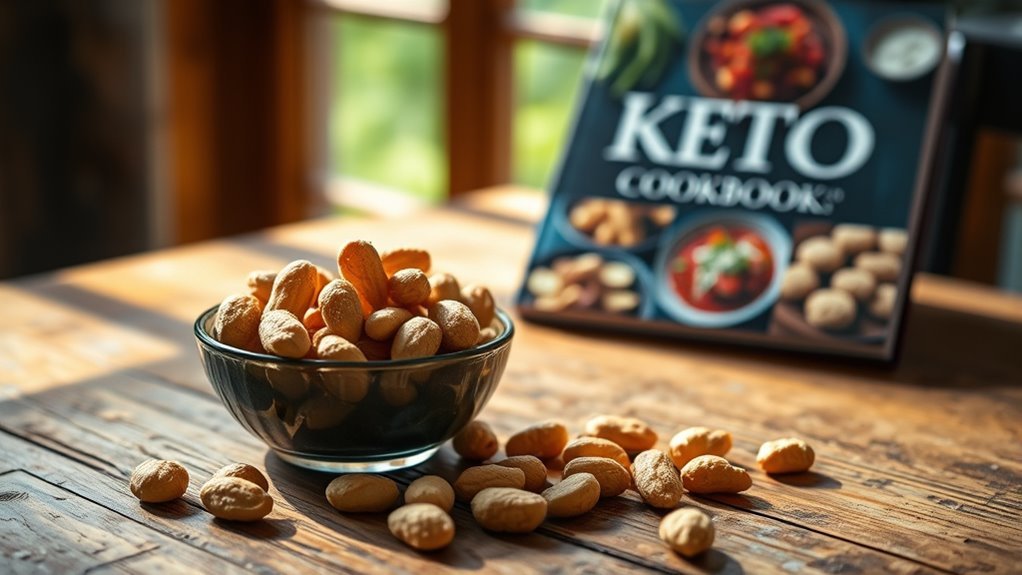

Yes, you can eat peanuts on a keto diet. They’re low in carbs, with just about 6 grams per ounce, and packed with healthy fats and protein. This makes them a nutritionally beneficial snack, especially if you combine them with other low-carb foods. However, be mindful of portion sizes and potential allergies. Interested in more ways to incorporate peanuts into your meals? There are plenty of healthy options and alternatives to explore!
Nutritional Profile of Peanuts
When it comes to snacking on the keto diet, peanuts can be a surprisingly appealing option. They’re packed with healthy fats, protein, and essential nutrients, making them a great choice for maintaining energy levels. A typical serving of peanuts contains about 14 grams of fat and 7 grams of protein, aligning well with your keto goals. However, if you or someone you know has peanut allergies, it’s important to avoid them altogether. Peanut butter, a popular keto-friendly spread, offers similar nutritional benefits but should also be consumed mindfully, as portion sizes can add up quickly. Overall, peanuts can enhance your keto experience while providing a satisfying crunch, but always be wary of allergies and moderation in mind.
Carbohydrate Content in Peanuts
Peanuts are not just rich in healthy fats and protein; they also have a relatively low carbohydrate content, making them a suitable snack for those on a keto diet. Typically, one ounce of peanuts contains about 6 grams of carbs, which is quite manageable for your daily intake. When you look at different peanut varieties, such as raw, roasted, or boiled, you’ll find minimal carb differences, keeping them within the same low range. For greater clarity, carb comparisons with other nuts reveal that peanuts often have fewer carbs than some popular options like cashews and pistachios. So, if you’re craving a crunchy, satisfying snack without straying from your keto goals, peanuts can fit right into your plan.
Fats in Peanuts: Good or Bad?
When considering peanuts on a keto diet, it’s important to look at their fat content. Peanuts are high in healthy fats, which can benefit your overall nutritional profile, especially when you’re minimizing carbs. However, understanding the balance between these fats and their impact on your diet is key to making informed choices.
Nutritional Profile Overview
Although you might wonder about the role of fats in your diet, peanuts offer a unique nutritional profile that can be beneficial on a ketogenic lifestyle. Different peanut varieties, like raw, roasted, and unsalted, provide varying levels of nutrient density. Generally, peanuts are high in healthy monounsaturated and polyunsaturated fats, which can support heart health. They also contain protein, fiber, and essential vitamins and minerals, making them a satiating snack option. However, moderation is key, as they’re calorie-dense. When you’re choosing peanuts, opt for those with minimal processing to retain their health benefits. Incorporating peanuts into your keto diet can provide you with a tasty, nutritious source of fats, enhancing your overall dietary experience.
Healthy Fats vs. Carbs
While many may question the role of fats in a ketogenic diet, it is vital to understand that not all fats are created equal. Peanuts provide a blend of healthy fats that can support your keto journey, but they also contain some carbs. You need to be mindful of these factors:
- Peanuts are rich in monounsaturated fats, which are heart-healthy.
- They offer protein, making them a satisfying snack.
- The carb content is relatively low compared to other carb sources.
- Portion control is key to staying within your carb limit.
- Choosing unsalted, natural varieties maximizes health benefits.
Incorporating peanuts mindfully can enhance your diet, but balance is essential for achieving your keto goals.
Protein Levels in Peanuts
When considering peanuts as a protein source on a keto diet, it’s essential to recognize that they contain about 25-30 grams of protein per 100 grams. Compared to other nuts, peanuts offer a relatively high protein content, but they also differ considerably in fat and carbohydrate levels. This comparison can help you assess how peanuts fit into your overall nutritional goals.
Protein Content Overview
Peanuts are often praised for their nutritional benefits, and their protein content is one of the standout features. If you’re looking for solid protein sources while on a keto diet, peanuts can be a great option. Here’s a quick overview of their protein content:
- About 7 grams of protein per ounce
- Contains all nine essential amino acids
- A rich source of protein with relatively low carbs
- Supports muscle maintenance and growth
- Provides satiety, which can aid in weight management
Incorporating peanuts into your diet can help you meet your protein needs while enjoying the numerous peanut benefits. Just remember to keep portion sizes in check, as moderation is key when following a keto lifestyle.
Comparison With Other Nuts
Although several nuts offer protein, peanuts stand out for their impressive levels. With about 7 grams of protein per ounce, they provide a substantial source compared to almonds and walnuts, which contain around 6 grams and 4 grams, respectively. This makes peanuts an excellent choice if you’re looking to boost your protein intake while enjoying delicious snacks.
When you consider nut comparisons, peanut benefits extend beyond protein; they’re also rich in healthy fats and essential nutrients. While some might question their place in a keto diet due to higher carb content, their protein levels can help maintain muscle mass. Ultimately, if you’re weighing your nut options, peanuts deliver both taste and nutrition, making them a worthy addition to your diet.
Peanuts vs. Other Nuts on Keto
While many people on a keto diet might focus on traditional nuts like almonds and macadamias, peanuts also deserve consideration due to their unique nutritional profile. They’re technically legumes, but their health benefits can be compelling for your keto journey.
Here’s how peanuts stack up against other nuts:
- Higher protein content
- Lower fat than macadamias
- Rich in fiber, aiding digestion
- Affordable compared to other nuts
- Versatile in forms like peanut butter
However, keep in mind that some individuals have nut allergies, which may exclude peanuts from their diet. When incorporating peanuts or peanut butter, assess how they fit into your overall macros and personal preferences. Ultimately, balance is key on your keto path!
The Impact of Peanuts on Ketosis
When considering how peanuts affect ketosis, it is essential to evaluate their carbohydrate content and overall nutritional profile. Peanuts are relatively low in carbs, containing about 6 grams of net carbs per ounce, which makes them a suitable option for many on a keto diet. Their healthy fats and protein can help maintain energy levels and satiety. Additionally, peanut butter, when consumed in moderation, can also fit within your keto lifestyle, providing a rich source of nutrients. However, be aware of the ketosis effects; excessive consumption may lead you to exceed your daily carb limits. Balancing your peanut intake while monitoring your overall diet can help you enjoy these tasty legumes without derailing your ketosis goals.
Portion Control: How Many Peanuts Can You Eat?
When incorporating peanuts into your keto diet, portion control is essential to stay within your daily carb limits. A typical serving size is about 1 ounce, which provides a balanced nutritional profile without overwhelming your carb intake. Understanding the nutritional breakdown can help you enjoy peanuts while maintaining your ketosis goals.
Serving Size Guidelines
Understanding portion control is essential if you’re incorporating peanuts into your keto diet. While peanuts can be a tasty and nutritious snack, it’s important to be mindful of your serving size to stay within your carb limits. Typically, a serving size is around 1 ounce, which is about 28 grams or roughly 28 peanuts. Here are some guidelines to help you enjoy them without overdoing it:
- Measure your servings to maintain consistency.
- Limit to one ounce per sitting to control carbs.
- Keep track of total daily carb intake.
- Consider using peanuts as a topping rather than a main snack.
- Balance your intake with other low-carb foods.
Nutritional Breakdown Analysis
Peanuts can be a nutritious addition to your keto diet, but knowing their nutritional breakdown is vital for portion control. A standard serving of peanuts is about 1 ounce, or roughly 28 grams, containing around 14 grams of fat, 6 grams of protein, and 6 grams of carbs. This makes them a suitable keto snack, provided you monitor your intake. However, if you have peanut allergies, it’s important to steer clear of them entirely. To enjoy peanuts while maintaining balance, limit yourself to a small handful per day, ensuring they fit within your daily carb limits. Being mindful of portion sizes allows you to relish the benefits of peanuts without compromising your keto goals.
Daily Carb Limits
To maintain your keto diet effectively, it’s important to be aware of your daily carb limits, especially when enjoying snacks like peanuts. Portion control is vital in your keto meal planning and helps guarantee you stay within your carb tracking goals.
Here are some guidelines for peanut consumption on keto:
- Aim for 1 ounce (about 28 grams) of peanuts.
- This serving contains roughly 6 grams of carbs.
- Combine peanuts with other low-carb foods for balanced snacking.
- Monitor your total daily carb intake to prevent exceeding limits.
- Consider using a food diary or app to track your carbs.
Healthy Ways to Incorporate Peanuts Into Your Diet
Incorporating peanuts into your keto diet can be both enjoyable and nutritious, with just a handful providing a good source of healthy fats and protein. One of the easiest ways to enjoy peanuts is through homemade peanut butter, which offers numerous peanut butter benefits like improved heart health and satiety. You can blend roasted peanuts with a pinch of salt for a delicious spread. Additionally, try roasted peanut recipes as a crunchy snack or as toppings on salads for added texture. Consider mixing them into keto-friendly granola or energy balls for a quick, satisfying treat. By using peanuts creatively, you can enhance your meals while staying within your carb limits and enjoying the flavors you love.
Potential Risks of Eating Peanuts on Keto
While peanuts can be a tasty addition to a keto diet, it’s important to be aware of potential risks associated with their consumption. Here are some concerns you might encounter:
Peanuts can enhance a keto diet, but be mindful of potential allergies and other health concerns.
- Potential allergens: Peanuts are a common allergen, and reactions can range from mild to severe.
- Digestive issues: Some people may experience bloating or gas due to the fiber content.
- Oxalates: Peanuts contain oxalates, which can contribute to kidney stones in susceptible individuals.
- Carbohydrate content: While generally low, peanuts do have carbs that could impact your daily intake.
- Aflatoxins: These toxic compounds can be present in improperly stored peanuts, posing health risks.
Being aware of these factors can help you make informed decisions about including peanuts in your keto lifestyle.
Alternatives to Peanuts for Keto Snacking
If you’re looking for alternatives to peanuts for keto snacking, there are several tasty options that can satisfy your cravings without compromising your dietary goals. Consider nut alternatives like macadamia nuts or pecans; they’re low in carbs and high in healthy fats, making them perfect keto snacks. Seeds, such as pumpkin or sunflower seeds, also fit the bill and provide essential nutrients. If you’re in the mood for something crunchy, try cheese crisps or roasted seaweed snacks. These options can offer variety while keeping you within your carb limits. With these alternatives, you can enjoy satisfying snacks that align with your keto lifestyle, helping you feel free and energized throughout the day.
Frequently Asked Questions about Eating Peanuts on Keto
1. Can I eat peanuts on a keto diet?
Yes, you can eat peanuts on a keto diet, but moderation is key. Peanuts are relatively low in carbohydrates compared to other snack options, with about 6 grams of carbs per ounce, making them suitable for many keto dieters. However, it’s essential to monitor portion sizes to avoid exceeding your daily carb limit.
2. Are peanuts considered a nut or a legume?
Peanuts are technically classified as legumes, not nuts. They grow underground and belong to the same family as beans and lentils. However, they are often grouped with tree nuts in culinary contexts due to their similar nutritional profiles and uses. This distinction is important to consider, especially for those with nut allergies.
3. How many carbs are in peanuts?
One ounce (approximately 28 grams) of roasted peanuts contains about 6 grams of total carbohydrates, with around 2 grams of fiber. This results in a net carb count of about 4 grams per ounce, making them a relatively low-carb snack option for those on a keto diet.
4. Can peanut butter be consumed on a keto diet?
Yes, peanut butter can be consumed on a keto diet, but it’s crucial to choose natural, unsweetened varieties without added sugars or hydrogenated oils. Look for options that contain only peanuts and perhaps a pinch of salt. Be mindful of portion sizes, as the carbs can add up quickly, and always check the nutritional label.
5. Are there healthier alternatives to peanuts on a keto diet?
Indeed, there are several healthier alternatives to peanuts for those on a keto diet. Consider options like macadamia nuts, pecans, almonds, or walnuts, which are higher in healthy fats and lower in carbs. These nuts can provide similar crunch and flavor while fitting well within your daily carb allowance. Always remember to consume nuts in moderation due to their calorie density.
References
- https://www.healthline.com/nutrition/peanuts-and-keto
- https://www.medicalnewstoday.com/articles/peanuts-and-keto-diet
- https://www.ncbi.nlm.nih.gov/pmc/articles/PMC6313448/
- https://www.dietdoctor.com/low-carb/foods/peanuts
- https://www.washingtonpost.com/food/2021/02/25/are-peanuts-keto/
- https://www.verywellfit.com/peanuts-and-the-keto-diet-4782882
- https://www.livescience.com/peanut-nutrition-facts.html
- https://www.thekitchn.com/are-peanuts-keto-friendly-22914645