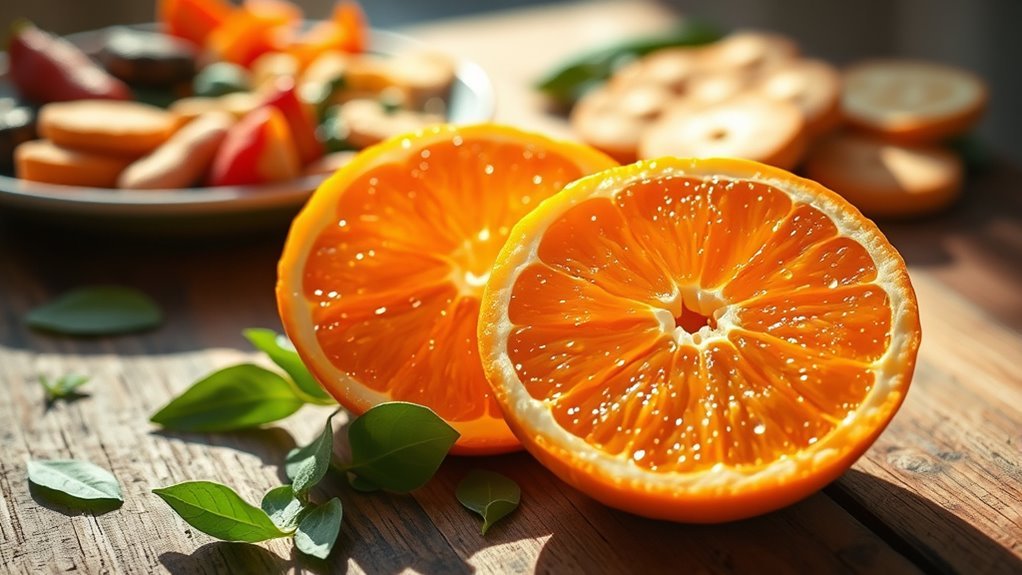

Yes, you can eat oranges on a keto diet, but be mindful of portion sizes. A medium orange has about 12 grams of carbs, which can impact your daily limit. Maintaining a net carb intake of 20-50 grams is essential for staying in ketosis. While oranges provide vitamin C and other nutrients, consider incorporating them in moderation or pairing them with low-carb foods. There’s more to explore about incorporating oranges and other citrus fruits into your keto meal plan.
Understanding the Keto Diet
When you’re exploring the keto diet, it’s vital to understand its core principles. The keto basics revolve around drastically reducing carbohydrate intake while increasing fats. This shift prompts your body to enter a state called ketosis, where it burns fat for energy instead of carbs. Familiarizing yourself with these diet principles helps you make informed choices about what to eat. Emphasizing healthy fats, adequate protein, and low-carb vegetables is key. You’ll also want to monitor your macronutrient ratios closely, typically aiming for about 70% fats, 25% protein, and 5% carbohydrates. This approach can promote weight loss and improve mental clarity, granting you the freedom to enjoy a diverse range of foods within those guidelines. Understanding these fundamentals is essential for your success.
Nutritional Profile of Oranges
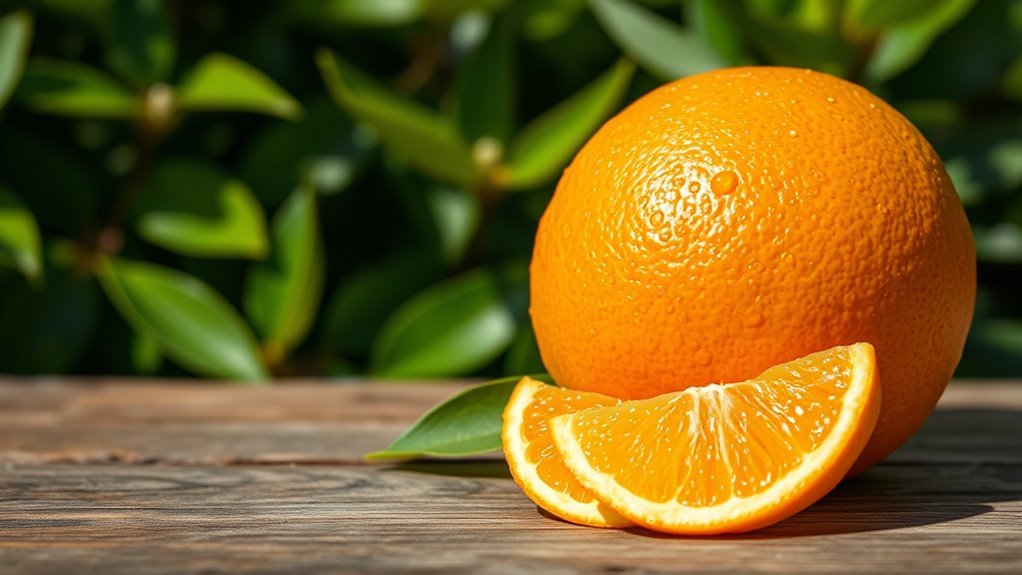
Understanding the keto diet’s focus on low carbohydrate intake makes it important to contemplate the nutritional profile of various fruits, including oranges. While oranges are delicious and invigorating, they also offer significant nutritional benefits. Here’s a quick look at their vitamin content:
| Nutrient | Amount per 100g | Benefits |
|---|---|---|
| Vitamin C | 53.2 mg | Boosts immune system |
| Fiber | 2.4 g | Aids digestion |
| Folate | 30 mcg | Supports cell function |
| Potassium | 181 mg | Helps regulate blood pressure |
| Calcium | 40 mg | Essential for bone health |
These nutrients contribute to overall health, but keep in mind the carbohydrate content when considering oranges in your diet.
Carbohydrates in Oranges
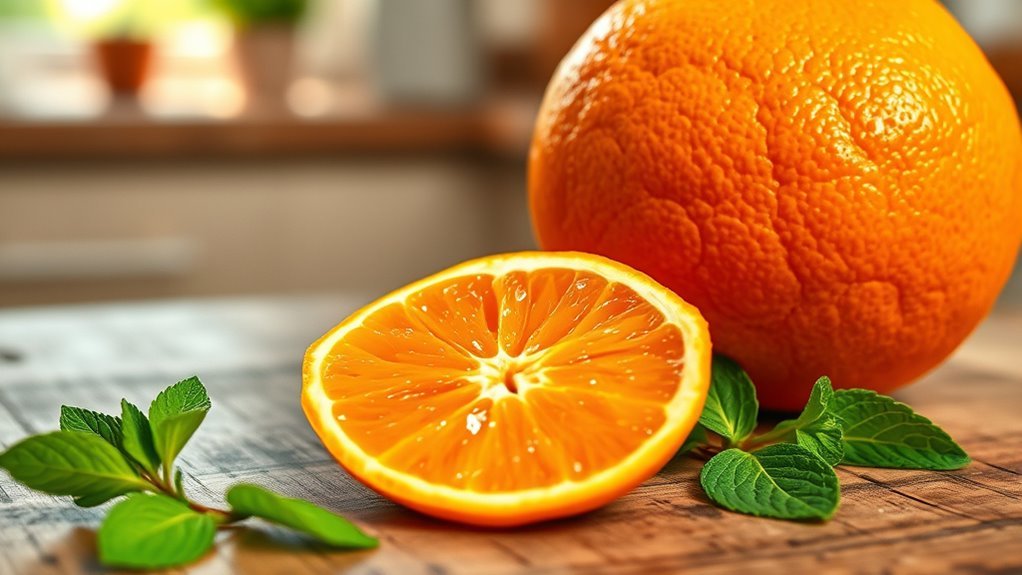
When considering oranges on a keto diet, it’s essential to understand their carbohydrate content. A medium orange typically contains about 12 grams of carbs, which can impact your daily intake depending on your serving size. By being mindful of how many oranges you consume, you can better manage your carb limits while enjoying this fruit.
Carb Content Overview
Although oranges are often celebrated for their vitamin C content and invigorating taste, it’s essential to evaluate their carbohydrate content, especially for those following a ketogenic diet. While some orange varieties might seem appealing as keto snacks, their carb counts can add up quickly.
Here’s a quick overview of the carb content in common orange varieties:
| Orange Variety | Carbs per 100g |
|---|---|
| Navel Orange | 11.75 g |
| Blood Orange | 9.35 g |
| Mandarin Orange | 11.54 g |
As you can see, even small servings can contribute notably to your daily carb intake. Always consider these values to maintain your keto lifestyle while enjoying the occasional citrus treat.
Serving Size Impact
While you might be tempted to indulge in an orange as a revitalizing snack, it’s important to take into account the impact of serving size on your carbohydrate intake. A medium orange contains about 15 grams of carbs, which can quickly add up if you’re trying to stick to a strict keto diet. Portion control is significant; consider enjoying a smaller piece, like a few segments, to satisfy your craving without exceeding your carb limit. Balancing your love for citrus with mindful choices can help you maintain your keto goals. Remember, it’s not just about what you eat, but how much you eat. By being aware of serving sizes, you can enjoy the freedom of choice while staying within your carb constraints.
The Role of Fiber in Keto
When following a keto diet, dietary fiber plays a vital role in maintaining digestive health and overall well-being. While you’re aiming for low carbohydrate intake, fiber can help you stay in ketosis by promoting satiety and regulating blood sugar levels. Incorporating fiber-rich foods can support your keto journey, so understanding where to find them is essential.
Importance of Dietary Fiber
Dietary fiber plays an essential role in the ketogenic diet, as it helps maintain digestive health and supports overall wellness. By including fiber-rich foods, you can enjoy several fiber benefits, such as improved bowel regularity and a reduced risk of constipation. This is particularly important on a keto diet, where lower carbohydrate intake can sometimes lead to digestive challenges. Fiber not only helps keep your gut healthy but also aids in managing blood sugar levels, making it easier to stay in ketosis. Embracing a variety of high-fiber foods—like non-starchy vegetables and seeds—can empower you to feel fuller for longer, giving you the freedom to enjoy your keto journey while prioritizing your digestive health.
Fiber and Ketosis
Incorporating fiber into your ketogenic diet is crucial for maintaining ketosis, as it not only supports digestive health but also helps regulate blood sugar levels. By focusing on high-quality fiber sources, you can enhance your overall well-being while enjoying the ketosis benefits. Fiber aids in slowing down the digestion of carbohydrates, which helps prevent blood sugar spikes that can disrupt ketosis. Additionally, it promotes satiety, making it easier for you to manage cravings and support weight loss. As you explore your fiber options, remember that soluble and insoluble fibers both play important roles in a balanced keto lifestyle. Prioritizing fiber-rich foods can help you achieve your keto goals while feeling satisfied and energized.
Fiber-Rich Food Sources
Fiber-rich food sources play an essential role in a ketogenic diet by providing vital nutrients while keeping carbohydrate intake low. Including these fiber sources not only helps maintain digestive health but also offers various fiber benefits, such as improved satiety and balanced blood sugar levels. Here’s a quick look at some fiber-rich options that fit within a keto lifestyle:
| Food Source | Fiber Content (per 100g) | Net Carbs (per 100g) |
|---|---|---|
| Avocado | 6.7g | 1.8g |
| Chia Seeds | 34.4g | 6.9g |
| Flaxseeds | 27.3g | 1.5g |
| Broccoli | 2.6g | 4.0g |
| Spinach | 2.2g | 3.6g |
Incorporating these foods can enhance your keto journey while enjoying the freedom of diverse meals.
Potential Health Benefits of Oranges
Although oranges are often viewed as a sweet snack, they offer a variety of health benefits that can be beneficial even for those following a keto diet. For starters, their vitamin C content provides essential immune support, helping you fend off illnesses. Additionally, oranges are rich in other vitamins, such as B vitamins, which play a vital role in energy metabolism. The antioxidants found in oranges may also help reduce inflammation and combat oxidative stress in your body. While you need to be mindful of carbs on a keto diet, enjoying a small portion of oranges can still provide these valuable vitamin benefits without derailing your goals. So, don’t hesitate to incorporate these vibrant fruits into your balanced approach to health!
How Many Carbs Can You Eat on Keto?
When following a keto diet, it’s essential to understand how many carbs you can eat daily to stay in ketosis. Generally, most people aim for a limit of about 20 to 50 grams of net carbs per day, and knowing how to track your carb intake can help you stay on track. Understanding net carbs—total carbs minus fiber and certain sweeteners—can also help you make informed food choices.
Daily Carb Limit
Establishing a daily carb limit is essential for anyone following a keto diet, as it directly impacts your ability to achieve and maintain ketosis. Generally, most keto enthusiasts aim for a daily carb intake of around 20 to 50 grams. However, daily carb considerations can vary based on individual factors like activity level and metabolic health. When engaging in keto meal planning, it’s vital to focus on low-carb, high-fat foods that support your goals while keeping your carb intake in check. Remember, the quality of carbs matters too; prioritize fiber-rich vegetables and healthy fats. This balanced approach allows you the freedom to enjoy a variety of foods while staying within your carb limit and enjoying the benefits of keto.
Net Carbs Explained
Understanding your carb intake is essential when you’re on a keto diet, especially regarding net carbs. Net carbs are calculated by subtracting fiber and certain sugar alcohols from total carbohydrates. This matters because fiber benefits digestion and doesn’t spike your blood sugar. On keto, you typically aim for about 20-50 grams of net carbs daily, allowing you to maintain ketosis while enjoying some flexibility in your food choices. When you’re considering whether to eat oranges or other fruits, remember to factor in their fiber content, which can lower the net carb calculation. Ultimately, it’s about finding the right balance that keeps you energized and satisfied while adhering to your keto lifestyle.
Tracking Carb Intake
While managing a keto diet, it’s essential to keep track of your carb intake to stay within the recommended limits for maintaining ketosis. Most keto guidelines suggest limiting your daily net carbs to about 20-50 grams. This means you’ll need to be diligent with carb counting, especially when it comes to foods like fruits. Although oranges are nutritious, they can be higher in carbs than other low-carb options. By using apps or food diaries, you can easily monitor your carb consumption and make informed choices. Remember, it’s not just about cutting carbs; it’s about balancing your diet while enjoying the freedom to choose foods that fit within your limits. Stay aware, and enjoy your keto journey!
Incorporating Oranges Into a Keto Meal Plan
If you’re looking to incorporate oranges into your keto meal plan, it’s important to understand their carbohydrate content. While a medium orange has about 12 grams of carbs, you can still enjoy them in moderation. Consider using oranges in creative ways: whip up invigorating orange recipes like a citrus salad or a vibrant salsa. These dishes can balance out your meals without exceeding your carb limits.
For keto snacks, try pairing small orange segments with nuts or cheese for a satisfying treat. Alternatively, infuse water with orange slices to enjoy a flavorful drink. Remember, it’s all about balance—if you plan your meals thoughtfully, you can savor the taste of oranges while staying on track with your keto lifestyle.
Alternative Citrus Fruits for Keto
When you’re looking for alternative citrus fruits that fit into a keto diet, consider options like lemons, limes, and grapefruits. These citrus alternatives are not only invigorating but also low in carbs, making them perfect for your meal plan. For instance, a medium lemon has about 5 grams of carbs, while a lime has around 7 grams. Grapefruit is another excellent choice, with approximately 8 grams of carbs in half a fruit. Incorporating these fruits can add flavor to your dishes and beverages without derailing your keto goals. Plus, they’re rich in vitamin C and antioxidants, contributing to overall health. So, embrace these low carb fruits to enjoy zest without compromising your dietary freedom!
Tips for Mindful Eating on Keto
Mindful eating on a keto diet can enhance your experience and help you stay aligned with your health goals. By practicing mindful eating, you’ll develop a better relationship with food while maintaining portion control. Here are some tips to incorporate into your routine:
- Focus on the flavors and textures of your meals.
- Eat slowly, allowing your body time to signal fullness.
- Serve meals in smaller portions to avoid overeating.
- Eliminate distractions, like screens, to fully engage with your food.
These strategies can empower you to enjoy your meals without feeling deprived. Remember, the goal is to savor your food while staying within your keto guidelines, allowing for both satisfaction and freedom on your journey.
Final Thoughts on Oranges and Keto
Although oranges are often celebrated for their nutritional benefits, incorporating them into a keto diet requires careful consideration due to their higher carbohydrate content. While they can provide essential vitamins and antioxidants, their natural sugars can quickly add up and potentially hinder your ketosis. If you’re craving a sweet treat, consider using oranges sparingly as a flavoring agent in dishes or desserts rather than as a staple. Instead, focus on low-carb alternatives for your keto snacks, like berries or nuts, which can offer similar nutritional perks with fewer carbs. Ultimately, it’s about balance—if you do choose to enjoy an orange, track your intake and adjust your overall carb consumption accordingly to stay on track with your keto goals.
Frequently Asked Questions about Eating Oranges on Keto
1. Can you eat oranges on a keto diet?
Oranges are generally not considered keto-friendly due to their relatively high carbohydrate content. A medium-sized orange contains about 12 grams of carbohydrates, which can take up a significant portion of the daily carb limit typically recommended for those on a keto diet (usually around 20-50 grams). However, small amounts of orange in moderation may be acceptable for some individuals, especially if they can balance their carb intake throughout the day.
2. What fruits can I eat on a keto diet?
On a keto diet, low-carb fruits are typically recommended. These include berries such as strawberries, raspberries, and blackberries, which are lower in sugar and carbs compared to citrus fruits like oranges. Avocados and olives are also great choices, as they are high in healthy fats and very low in carbohydrates.
3. What are the health benefits of oranges?
Oranges are rich in vitamin C, fiber, and various antioxidants, which can provide numerous health benefits. They support the immune system, improve skin health, and can aid in digestion due to their fiber content. However, while these benefits are significant, it’s important to consider the carbohydrate content when on a keto diet.
4. Can I have orange juice on keto?
Generally, orange juice is not recommended on a keto diet. Even a small glass of orange juice can contain upwards of 20-25 grams of carbohydrates, which can quickly exceed your daily limit. Whole oranges provide fiber that helps slow down sugar absorption, while juice lacks this benefit and can lead to spikes in blood sugar levels.
5. How can I satisfy my citrus craving on keto?
If you are craving citrus while on a keto diet, consider using lemon or lime juice in small amounts to add flavor to water, dressings, or marinades. These options are low in carbohydrates and can provide a refreshing citrus taste without significantly impacting your carb intake. Additionally, you might explore flavored teas or infused water to curb cravings.