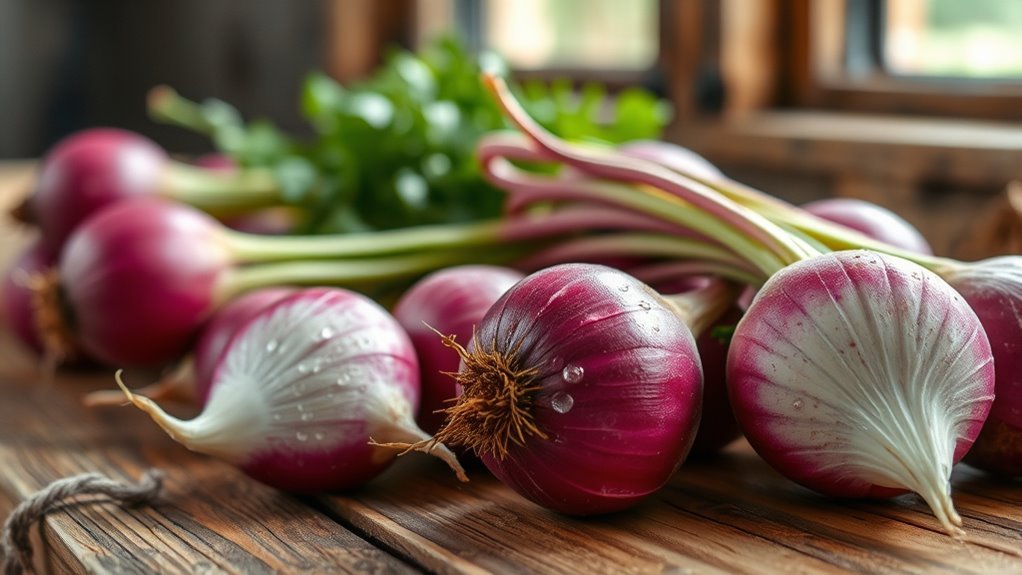

Yes, turnips are great for a keto diet. They’re low in carbs, with about 6 grams of net carbs per 100 grams, making them a perfect addition to your meals. Not only are they nutrient-dense with vitamins C and K, but they also support digestion and overall health. Plus, their versatility allows you to enjoy them in various dishes, from creamy mash to roasted sides. Keep exploring to discover more ways turnips can fit into your keto lifestyle.
Nutritional Profile of Turnips
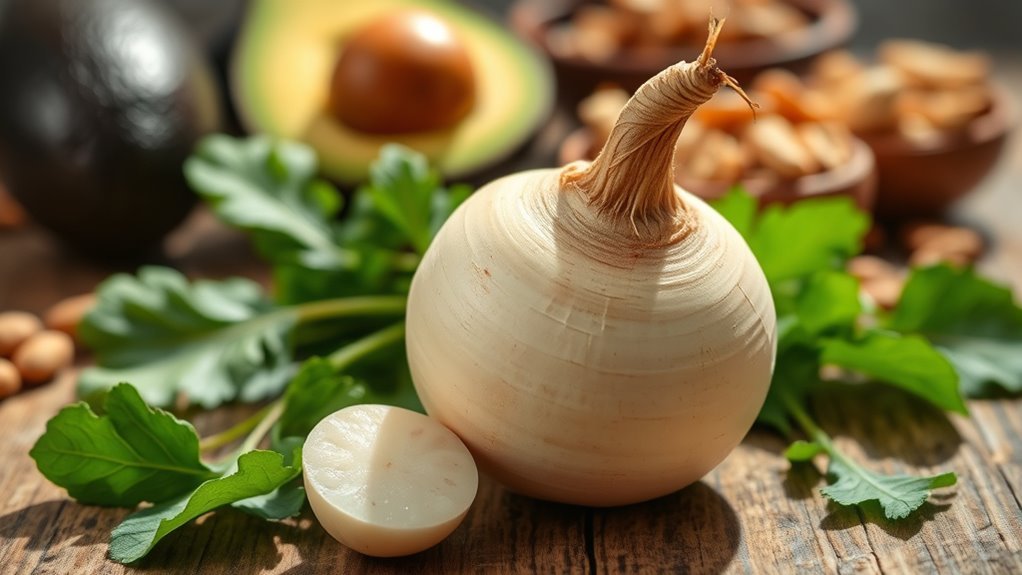
When considering the nutritional profile of turnips, it’s essential to note that these root vegetables are low in calories and carbohydrates, making them a popular choice for those following a keto diet. Turnip varieties, such as the purple-top and white globe, offer a range of flavors while maintaining a high nutrient density. They’re rich in vitamins C and K, along with essential minerals like potassium and calcium. This nutrient density means you get more vitamins and minerals per calorie, supporting your overall health goals without compromising your dietary preferences. As you explore different turnip varieties, you’ll discover how they can easily fit into a balanced, keto-friendly lifestyle, providing both flavor and essential nutrients.
Carbohydrate Content in Turnips
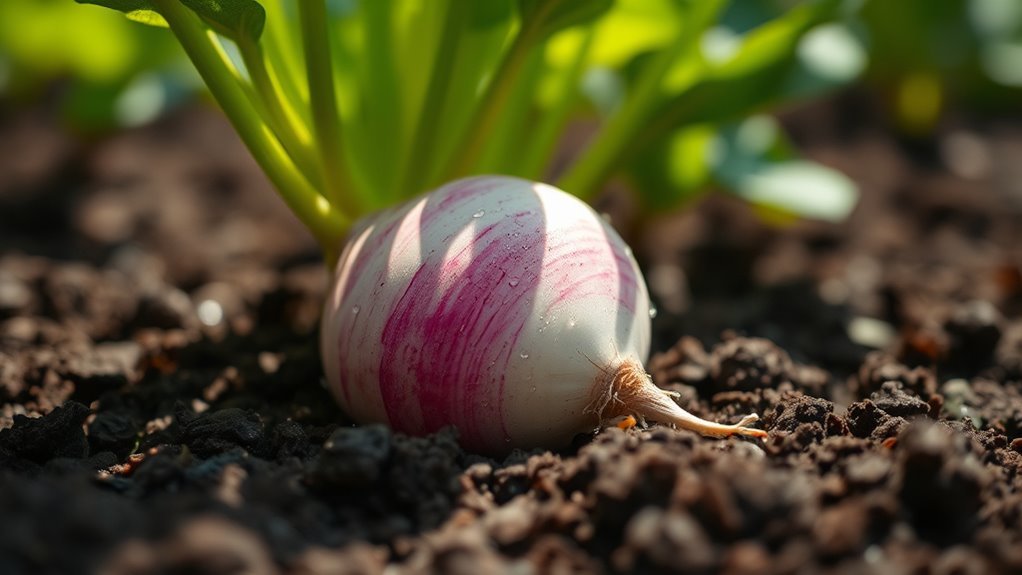
Carbohydrates are an essential consideration for anyone maneuvering a keto diet, and turnips stand out with their low carb content. A cup of raw turnips contains about 8 grams of carbs, making them a suitable option for your keto meal plan. Different turnip varieties, such as white globe and purple top, offer similar carbohydrate levels, ensuring you can enjoy variety without compromising your carb count. When exploring turnip recipes, consider roasting or mashing them as a lower-carb alternative to traditional potatoes. These options allow you to savor delicious flavors while staying within your daily carb limits. By incorporating turnips into your diet, you can find freedom in your food choices without sacrificing your keto goals.
Health Benefits of Turnips
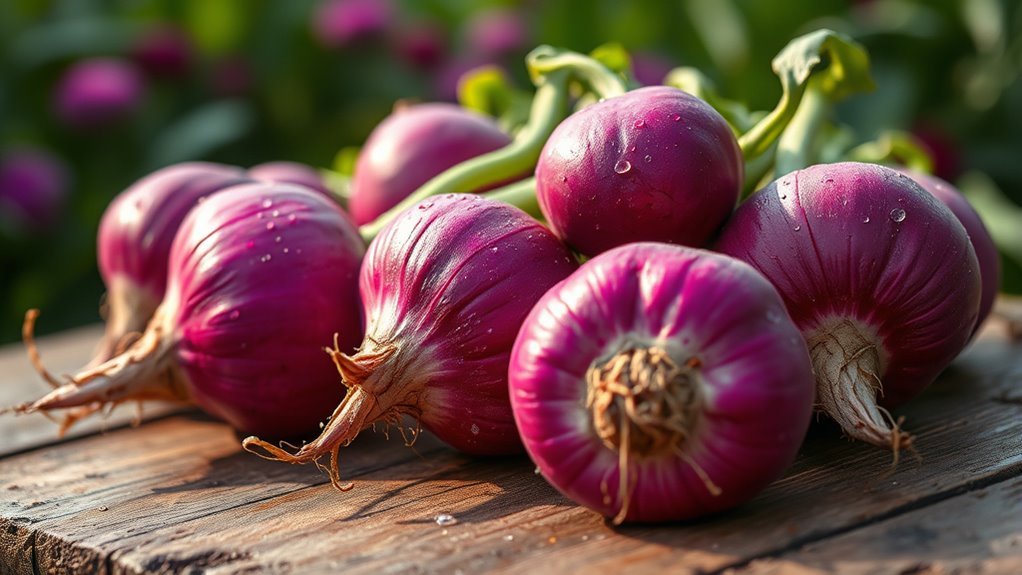
Turnips offer several health benefits that make them an essential addition to your diet. These root vegetables are low in calories and high in nutrients, providing crucial vitamins like C and K, as well as fiber that supports digestion. Different turnip varieties, such as purple-top and hakurei, can add diversity to your meals while offering similar health perks. Their antioxidant properties may help reduce inflammation and protect against chronic diseases. Plus, the potassium in turnips plays a role in maintaining healthy blood pressure levels. By incorporating turnips into your diet, you’re not just enjoying their unique flavor, but you’re also embracing a range of health benefits that promote overall wellness and liveliness.
Turnips in a Keto Diet
How do turnips fit into a keto diet? Turnips are a fantastic option for those following a keto lifestyle. Low in carbohydrates and high in fiber, they can help you stay within your carb limits while providing essential nutrients. A 100-gram serving has only about 6 grams of net carbs, making them a versatile addition to your meal plan. You can enjoy turnip recipes like creamy turnip mash or roasted turnip fries for a delicious side dish. If you’re looking for alternatives, turnip substitutes like cauliflower or radishes can also work well in keto-friendly dishes. Embrace the freedom of experimenting with turnips in your meals, allowing you to enjoy flavorful, satisfying options while maintaining your dietary goals.
Tips for Incorporating Turnips Into Your Meals
If you’re looking to add variety to your meals, incorporating turnips can be a delicious and nutritious choice. These versatile veggies can be used in many ways. Here are some tips to help you get started:
- Create creamy turnip mash as a low-carb substitute for mashed potatoes.
- Roast turnips with olive oil, salt, and herbs for a savory side dish.
- Add diced turnips to soups or stews for added texture and flavor.
- Try spiralizing turnips to use them as a pasta substitute in your favorite dishes.
- Explore various turnip recipes, like turnip gratin or turnip fries, to keep your meals exciting.
Don’t forget to take into account turnip substitutes if you’re looking to mix things up even more!
Frequently Asked Questions about Turnips and the Keto Diet
1. Are turnips low in carbohydrates?
Yes, turnips are low in carbohydrates, making them a suitable vegetable for a keto diet. A 100-gram serving of boiled turnips contains approximately 6 grams of carbohydrates, of which about 1.8 grams are fiber. This means the net carbs come to around 4.2 grams, allowing for easy incorporation into a low-carb meal plan.
2. How do turnips compare to other root vegetables on a keto diet?
Turnips are generally lower in carbs compared to other root vegetables like potatoes and carrots, which can be high in starch and sugar. For instance, a medium potato can have around 37 grams of carbs, while a medium carrot contains about 6 grams. This makes turnips a better option for those following a strict keto diet, as they provide essential nutrients with fewer carbs.
3. What are the health benefits of consuming turnips on a keto diet?
Turnips are rich in vitamins C and K, as well as antioxidants, which support immune function and bone health. They also contain glucosinolates, which may have cancer-protective properties. Additionally, the fiber in turnips aids digestion and promotes a feeling of fullness, making them an excellent choice for those looking to manage their weight on a keto diet.
4. How can I incorporate turnips into my keto meals?
Turnips can be used in various ways on a keto diet. You can roast them with olive oil and herbs, mash them as a low-carb alternative to mashed potatoes, or add them to soups and stews for added flavor and nutrition. They can also be spiralized into noodles or used in salads. Their versatility makes them easy to include in many dishes.
5. Are there any potential downsides to eating turnips on a keto diet?
While turnips are generally safe and healthy, some individuals may experience digestive discomfort due to their fiber content, particularly if consumed in large amounts or if they are not used to high-fiber foods. Additionally, those sensitive to cruciferous vegetables may want to limit their intake. As with any food, moderation is key, and it’s important to listen to your body.
References
- https://www.healthline.com/nutrition/are-turnips-keto-friendly
- https://www.medicalnewstoday.com/articles/turnips-nutrition
- https://www.ncbi.nlm.nih.gov/pmc/articles/PMC4462647/
- https://www.nutritionvalue.org/vegetables/turnip
- https://www.whfoods.com/genpage.php?tname=foodspice&dbid=62
- https://www.verywellfit.com/what-are-turnips-nutrition-facts-5185308