

Black eyed peas are not generally considered keto-friendly due to their higher carbohydrate content. However, understanding their nutritional profile can help you decide how to incorporate them into your diet, especially in moderation. This article will explore the carbohydrate content, nutritional benefits, and alternatives to black eyed peas on a ketogenic diet, providing insights that can assist in meal planning while adhering to your dietary goals.
Nutritional Profile of Black Eyed Peas

Black eyed peas are a type of legume that offers a variety of essential nutrients. A standard half-cup serving of cooked black eyed peas contains approximately 20 grams of carbohydrates, making them a significant contributor to your daily carbohydrate intake. In addition to their carbohydrate content, black eyed peas are rich in protein, with about 7 grams per serving, and provide 6 grams of dietary fiber, which can aid in digestion and promote a feeling of fullness.
Moreover, black eyed peas are an excellent source of several vitamins and minerals, including folate, potassium, and magnesium. Folate is particularly important for cellular function and tissue growth, which is essential for maintaining overall health. The fiber content in black eyed peas not only supports digestive health but also plays a role in stabilizing blood sugar levels, making them a nutritious choice when consumed in moderation. Despite their higher carb content, their overall nutritional profile makes them a valuable food source.
Carbohydrate Considerations for Keto Dieters
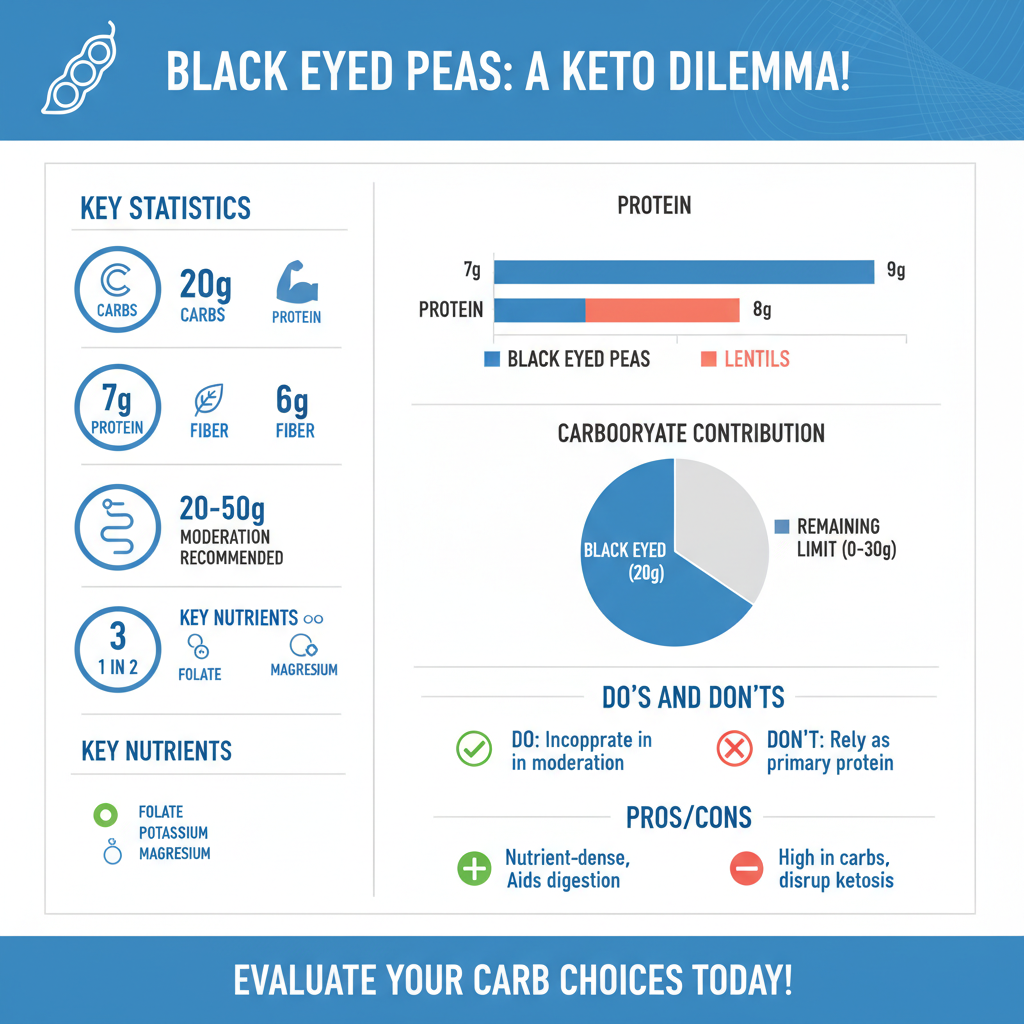

Following a ketogenic diet typically involves a strict limit on carbohydrate intake, usually ranging from 20 to 50 grams per day. This limitation is crucial for achieving and maintaining a state of ketosis, where the body burns fat for fuel instead of carbohydrates. Given that a half-cup serving of black eyed peas contains around 20 grams of carbs, consuming them could take up a substantial portion of your daily allowance.
For individuals on a keto diet, it is essential to assess how the inclusion of black eyed peas aligns with personal carbohydrate limits and overall dietary goals. If you choose to include them, it might be wise to do so sparingly, perhaps as an occasional ingredient in a larger dish rather than as a primary component. Understanding this balance is key to ensuring that your dietary choices support your health objectives.
Health Benefits of Black Eyed Peas
Despite their carbohydrate content, black eyed peas boast numerous health benefits that can enhance overall well-being. One of the most significant advantages is their high fiber content, which can aid in digestion and promote satiety. This can be particularly beneficial for those looking to manage their weight or reduce frequent snacking between meals.
Additionally, black eyed peas are rich in folate, a B-vitamin that plays a crucial role in DNA synthesis and repair, making it vital for pregnant women and those planning to conceive. They also contain potassium, which is essential for maintaining healthy blood pressure levels and proper muscle function. The combination of these nutrients makes black eyed peas a wholesome addition to any diet, although moderation is key for those adhering to a keto lifestyle.
Ways to Incorporate Black Eyed Peas into a Low-Carb Diet
If you are keen on enjoying black eyed peas while following a low-carb diet, there are several creative ways to incorporate them into your meals without exceeding your carbohydrate limits. One effective strategy is to use black eyed peas in small amounts as part of larger dishes, such as salads or soups. For example, adding a tablespoon or two of black eyed peas to a mixed greens salad can provide a pop of flavor and nutrition without significantly impacting your carb count.
Another approach is to pair black eyed peas with low-carb vegetables, such as leafy greens, bell peppers, or zucchini. This combination not only enhances the nutritional value of your meal but also helps to balance the carbohydrate content. Consider preparing a vegetable stir-fry with a handful of black eyed peas mixed in, allowing you to enjoy their unique taste while keeping the overall carb intake in check.
Keto-Friendly Alternatives to Black Eyed Peas
For those strictly adhering to a ketogenic diet, exploring alternatives to black eyed peas can be beneficial. Several low-carb options can provide similar textures or flavors without the high carbohydrate load. Cauliflower is an excellent substitute, as it can be mashed, riced, or roasted to accompany various dishes. Zucchini can also serve as a versatile base for numerous recipes, from noodles to baked goods.
Additionally, while other legumes like lentils are often higher in carbohydrates than non-legume vegetables, they can be consumed in moderation due to their relatively better carb profile. Incorporating these alternatives not only helps maintain a ketogenic state but also encourages a diverse and nutrient-rich diet.
Tips for Meal Planning on Keto
Effective meal planning is a cornerstone of successful adherence to a ketogenic diet. Keeping track of your daily carbohydrate intake is vital to ensure you remain within your limits. Utilize meal tracking apps or maintain a food diary to monitor the carbohydrate content of the foods you consume, including any black eyed peas, to prevent exceeding your daily allowance.
Experimenting with low-carb recipes can also help you replace traditional dishes that commonly include black eyed peas. For instance, consider creating a hearty stew using cauliflower and zucchini instead of beans, or use spiralized zucchini as a pasta substitute in your favorite recipes. By diversifying your meals and being creative with your ingredient choices, you can enjoy a satisfying and fulfilling diet while staying true to your keto goals.
Black eyed peas may not be the best fit for a strict ketogenic diet due to their carbohydrate content, but understanding their nutritional benefits and exploring alternatives can help you maintain a balanced meal plan. If you’re looking to stay keto while enjoying a variety of foods, consider integrating low-carb options and monitoring your intake closely. Emphasizing moderation and creativity in your meal choices can enable you to enjoy the flavors of black eyed peas while supporting your dietary objectives.
Frequently Asked Questions
Are black-eyed peas low in carbohydrates for a keto diet?
Black-eyed peas are relatively high in carbohydrates, with approximately 20 grams of net carbs per cooked cup. For individuals following a strict ketogenic diet, which typically limits daily carb intake to about 20-50 grams, black-eyed peas may not be the best option. However, if consumed in moderation and balanced with other low-carb foods, they could potentially fit into a less strict low-carb plan.
How can I incorporate black-eyed peas into a keto-friendly meal?
To incorporate black-eyed peas into a keto-friendly meal, consider using a small portion as a protein source in a salad or as part of a vegetable stew. Pair them with low-carb vegetables like spinach, zucchini, or cauliflower to maintain a low carbohydrate count. Additionally, consider using seasoning and healthy fats, such as olive oil or avocados, to enhance flavor while keeping the meal keto-compliant.
Why are black-eyed peas considered a healthy food option?
Black-eyed peas are packed with essential nutrients, including protein, fiber, vitamins (like folate), and minerals (such as iron and potassium). Their high fiber content promotes digestive health and can help with satiety, which is beneficial for weight management. While they are not strictly keto-friendly, they can provide a range of health benefits when consumed as part of a balanced diet.
What are the best alternatives to black-eyed peas for a keto diet?
If you’re looking for low-carb alternatives to black-eyed peas, consider options like green beans, zucchini, or cauliflower. These vegetables offer similar textures and can be used in various recipes while keeping the carbohydrate count low. Additionally, legumes like lentils can be used in moderation, but they are still higher in carbs compared to non-starchy vegetables.
Which legumes are considered keto-friendly?
While most legumes are higher in carbohydrates, some options can be included in a keto diet in moderation. Green beans, black soybeans, and edamame are the most keto-friendly legumes due to their lower carb content. These legumes can provide protein and fiber without significantly impacting your daily carb limit, making them a better choice for those on a ketogenic diet.