

Black eyed peas are not considered keto-friendly due to their relatively high carbohydrate content. While they are nutritious and offer numerous health benefits, those following a strict ketogenic diet may need to limit or avoid them altogether. This article will delve into the nutritional profile of black eyed peas, their compatibility with a ketogenic lifestyle, and suggest alternatives for individuals adhering to a low-carb diet.
Nutritional Profile of Black Eyed Peas

Black eyed peas, or Vigna unguiculata, are a type of legume that is not only delicious but also packed with nutrients. A standard one-cup serving of cooked black eyed peas contains approximately 35 grams of carbohydrates, which includes about 10 grams of dietary fiber. While fiber is beneficial for digestive health, the net carbohydrates (total carbohydrates minus fiber) still tally up to around 25 grams per serving.
Additionally, black eyed peas are rich in protein, offering about 13 grams per cup, and they contain essential vitamins and minerals such as folate, manganese, potassium, and magnesium. These nutrients contribute to overall health, supporting bodily functions including immune response, energy production, and muscle health. However, despite these advantages, the high carbohydrate content makes black eyed peas a poor fit for those strictly adhering to a ketogenic diet.
Understanding the Keto Diet
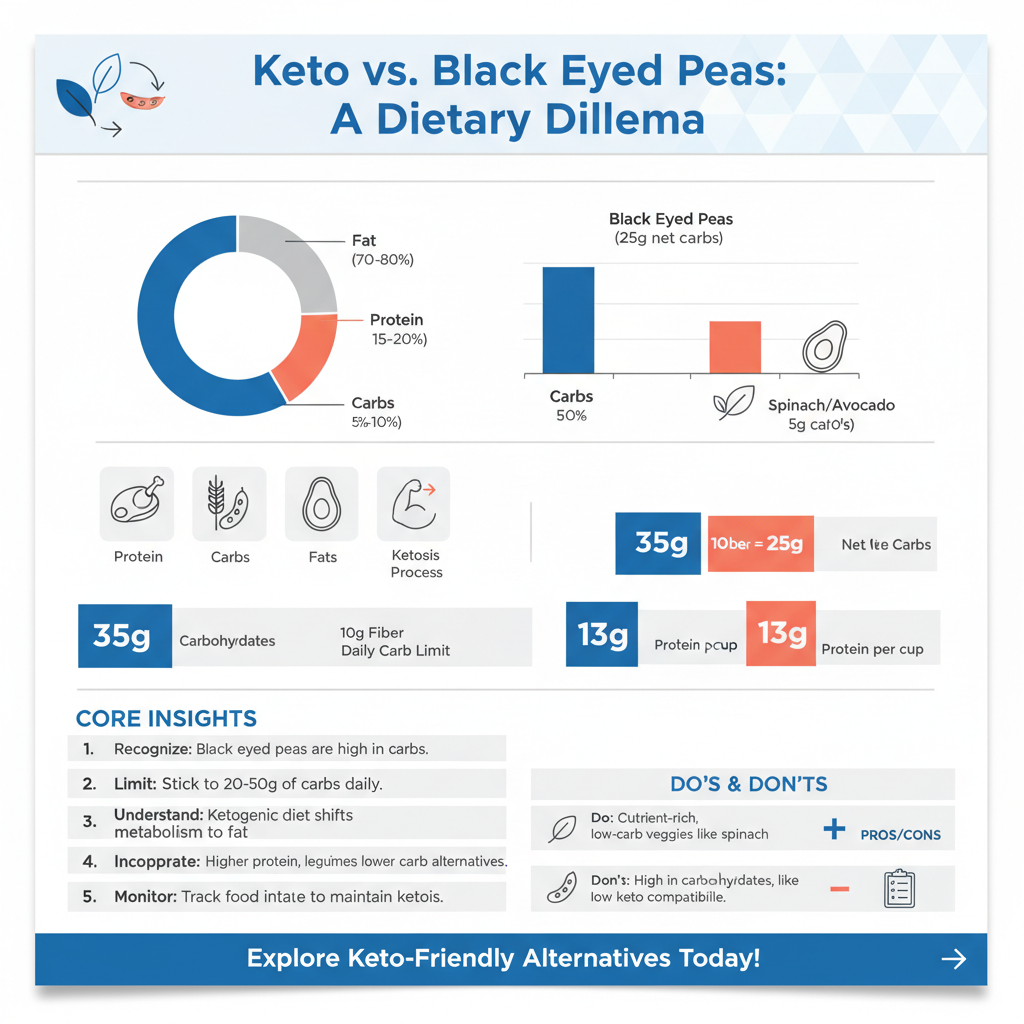
The ketogenic diet, commonly referred to as keto, is a low-carbohydrate, high-fat diet that aims to shift the body’s metabolism away from carbohydrates and toward fat. Typically, individuals following a ketogenic diet limit their daily carbohydrate intake to about 20-50 grams. This drastic reduction in carbs is designed to induce a metabolic state known as ketosis, wherein the body burns fat for fuel instead of glucose derived from carbohydrates.
In a standard ketogenic meal plan, the macronutrient distribution is heavily skewed towards fats—approximately 70-80% of total daily calories coming from fat, 15-25% from protein, and only 5-10% from carbohydrates. This unique approach to nutrition can offer benefits such as weight loss, improved mental clarity, and enhanced energy levels. However, it requires careful planning and vigilant tracking of food intake to successfully maintain ketosis.
How Black Eyed Peas Fit into a Keto Diet
Given their high carbohydrate content, black eyed peas generally do not fit within the daily carbohydrate limits set by a ketogenic diet. For most individuals aiming to maintain a state of ketosis, consuming even a small serving of black eyed peas may exceed their carb allowance for the day.
However, some people may choose to incorporate them in very limited portions, provided they meticulously track their overall carbohydrate intake. For instance, a half-cup serving may be possible for someone with a higher daily carb limit or who engages in more intensive physical activity, allowing for a bit more flexibility in their diet. It’s crucial to consider personal metabolic responses and lifestyle choices when determining whether to include black eyed peas in your meals.
Health Benefits of Black Eyed Peas
Despite their incompatibility with a strict keto diet, black eyed peas offer several health benefits that are worth noting. They are an excellent source of folate, which is vital for DNA synthesis and repair, and particularly important for pregnant women to support fetal development. Additionally, the manganese found in black eyed peas plays a role in bone formation, metabolism, and antioxidant defense systems in the body.
Furthermore, the high fiber content aids in digestion by promoting regular bowel movements and contributing to a feeling of fullness, which can be beneficial for weight management. Black eyed peas are also rich in antioxidants, such as flavonoids, which help combat oxidative stress and reduce inflammation, potentially lowering the risk of chronic diseases.
Low-Carb Alternatives to Black Eyed Peas
For those who are looking for low-carb substitutes that can provide similar textures or nutritional benefits, several options are available. Cauliflower is a popular alternative that can be riced or mashed to mimic the texture of legumes while contributing minimal carbohydrates. Zucchini, when spiralized, can serve as a pasta replacement, adding volume and nutrients without the carbs.
Another excellent choice is green beans, which offer a crunchy texture and can be enjoyed in various dishes, from salads to stir-fries. If you’re specifically looking for a legume-like experience, black soybeans are a great option, as they contain significantly fewer carbs—around 2 grams per half-cup serving—while still providing a good amount of protein and fiber.
Tips for Maintaining a Keto Diet
Successfully adhering to a ketogenic diet involves more than just avoiding high-carb foods; it requires a strategic approach to meal planning and preparation. Focusing on high-fat, low-carb foods is essential for staying within your daily macronutrient goals. Foods such as avocados, nuts, seeds, and fatty fish should be staples in your diet.
Meal prepping can also be an effective strategy for managing carb intake. By preparing meals in advance, you can ensure that you have keto-friendly options readily available, reducing the temptation to grab convenient but high-carb alternatives. Additionally, tracking your meals using apps or food diaries can help you monitor your carbohydrate intake, making it easier to maintain a ketogenic lifestyle.
Maintaining a ketogenic diet requires careful consideration of food choices, and while black eyed peas are nutritious, they are not ideal for those aiming for ketosis. If you’re looking for alternatives, explore the options mentioned above to keep your meals low in carbs while still being delicious and satisfying. Consider tracking your meals and adjusting your intake to find the best balance for your diet.
Frequently Asked Questions
Are black-eyed peas low in carbohydrates for a keto diet?
Black-eyed peas are not typically considered low in carbohydrates, making them less suitable for a strict ketogenic diet. A one-cup serving of cooked black-eyed peas contains about 35 grams of carbohydrates, which can exceed the daily carb limit for many people following keto. While they are nutritious, those on a keto diet should focus on vegetables and legumes that are lower in carbs, such as leafy greens and cauliflower.
What are the nutritional benefits of black-eyed peas?
Black-eyed peas are a good source of protein, fiber, vitamins, and minerals. They provide essential nutrients like folate, potassium, and magnesium, which can support overall health. Additionally, the high fiber content can help with digestion and maintaining stable blood sugar levels, making them a great addition to balanced diets, but not ideal for those strictly following keto due to their carb content.
How can I include black-eyed peas in my diet without exceeding my keto carb limit?
If you want to enjoy black-eyed peas while following a keto diet, consider using them in moderation. For example, you can use a small portion (like 1-2 tablespoons) as a garnish on salads or in soups, which allows you to enjoy their flavor without significantly increasing your carbohydrate intake. Pairing them with low-carb vegetables can help balance your meal while keeping it keto-friendly.
Why are legumes like black-eyed peas often avoided on a ketogenic diet?
Legumes, including black-eyed peas, are often avoided on a ketogenic diet primarily due to their high carbohydrate content. Keto diets aim to keep carb intake very low to promote ketosis, a metabolic state where the body burns fat for fuel instead of carbohydrates. Since black-eyed peas can contribute a significant amount of carbs, they may hinder the ability to maintain ketosis, making them less suitable for those adhering to this diet.
What are some keto-friendly alternatives to black-eyed peas?
If you’re looking for alternatives to black-eyed peas that fit better within a ketogenic diet, consider options like cauliflower, zucchini, or spinach. These vegetables are low in carbs and high in nutrients, making them excellent substitutes in recipes where you might typically use black-eyed peas. Additionally, legumes such as green beans or chickpeas in very small portions can also be considered, depending on your overall carb allowance for the day.