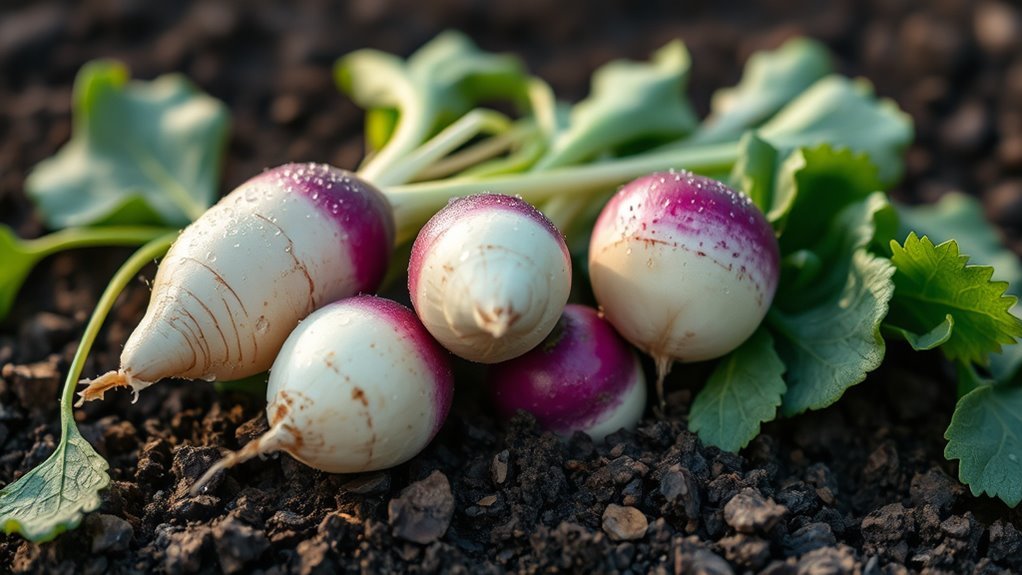

Yes, turnips are keto-friendly! With around 6 grams of carbs per 100 grams, they’re a low-carb option that fits well within a keto diet. They’re also low in calories and rich in vitamins C and K, potassium, and fiber, providing various health benefits. You can enjoy turnips roasted, mashed, or in soups without compromising your carb limits. If you’re curious about how to incorporate them into your meals, there are plenty of delicious recipes to explore!
Nutritional Profile of Turnips
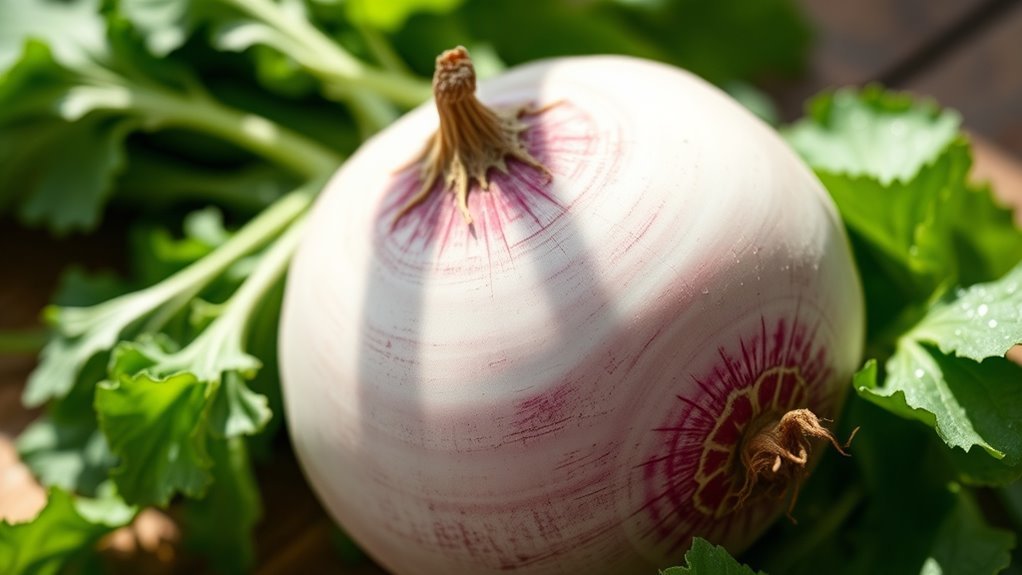
Turnips, often overlooked in the vegetable aisle, boast a remarkable nutritional profile that can complement a keto diet. These root vegetables come in various turnip varieties, such as purple-top and white globe, each offering unique flavors and textures. They’re low in calories yet rich in vitamins C and K, potassium, and fiber, making them a nutritious choice. When it comes to turnip preparation, you can enjoy them roasted, mashed, or sautéed, providing versatility in your meals. Their impressive nutrient density supports overall health while aligning with your keto goals. By incorporating turnips into your diet, you’ll not only enhance your meals but also embrace a food that nourishes your body without compromising your dietary freedom.
Carb Content in Turnips

While enjoying the nutritional benefits of turnips, it’s important to contemplate their carbohydrate content, especially for those following a keto diet. Turnips, particularly popular turnip varieties like white and purple, contain about 6 grams of carbs per 100 grams. This relatively low carb count makes them a viable option for keto enthusiasts, especially when prepared wisely. You can enjoy them roasted, mashed, or in soups, all while keeping your carb intake in check. When you consider turnip preparation methods, opting for steaming or roasting can help retain their nutrients while minimizing any added carbs from sauces or toppings. Consequently, incorporating turnips into your meals can support your keto lifestyle without compromising your dietary goals.
Health Benefits of Turnips

Although you might not think of turnips as a nutritional powerhouse, they actually offer several health benefits that can enhance your overall well-being. Packed with vitamins and minerals, turnips can support your immune system, promote digestive health, and even aid in weight management. The low-calorie content and high fiber make them a great addition to a balanced diet.
| Turnip Benefits | Health Properties | Nutritional Value |
|---|---|---|
| Low in calories | Supports digestion | 36 calories per cup |
| Rich in vitamin C | Boosts immune health | 30% RDI per serving |
| Contains antioxidants | Reduces inflammation | High in fiber |
| Good source of potassium | Regulates blood pressure | 10% RDI per serving |
Including turnips in your meals can contribute positively to your health journey.
How to Incorporate Turnips Into a Keto Diet
Incorporating turnips into a keto diet can be both simple and rewarding, given their low carbohydrate content and versatility in various dishes. You can start by exploring different turnip varieties, such as purple top and hakurei, each offering unique flavors and textures. For turnip preparation, consider roasting, mashing, or spiralizing them as a low-carb alternative to potatoes or pasta. Adding turnips to soups or stews enhances flavor without considerably impacting your carb count. You can also slice them thinly and use them in salads for a crunchy texture. By integrating turnips into your meals, you’ll enjoy a nutritious, satisfying addition that aligns with your keto lifestyle while keeping your carb intake in check.
Turnip Recipes for Keto Meal Planning
What are some delicious ways to enjoy turnips while sticking to your keto meal plan? Turnips are versatile and can be transformed into satisfying dishes. Here are a few keto-friendly recipes to take into account:
- Turnip Mash: Blend cooked turnips with butter and garlic for a creamy side dish.
- Turnip Fries: Cut turnips into strips, season, and roast them for a low-carb alternative to traditional fries.
- Turnip and Bacon Hash: Sauté diced turnips with bacon and onions for a hearty breakfast.
- Turnip Soup: Puree cooked turnips with broth and herbs for a comforting soup.
- Turnip Gratin: Layer thinly sliced turnips with cheese and bake for a savory dish.
These recipes not only keep your meals exciting but also align perfectly with your keto lifestyle.
Comparing Turnips With Other Low-Carb Vegetables
When evaluating low-carb vegetables for your keto diet, turnips stand out due to their unique flavor and nutritional profile. They contain about 6 grams of net carbs per cup, making them a solid choice among turnip alternatives like radishes and cauliflower. Vegetable comparisons reveal that radishes are slightly lower in carbs, while cauliflower offers more versatility in dishes. However, turnips provide a distinct taste that can enhance your meals. Additionally, they’re rich in vitamins and minerals, giving you nutritional benefits beyond just low carb counts. Incorporating a variety of these vegetables can help you maintain interest in your meals while adhering to your keto lifestyle. So, consider how turnips fit within your overall vegetable strategy for ideal health.
Frequently Asked Questions
Can Turnips Be Eaten Raw on a Keto Diet?
Yes, you can definitely eat raw turnips on a keto diet. They offer numerous benefits, like being low in carbs and high in fiber, making them a great option for keto snack alternatives. Raw turnips are crunchy and can be enjoyed with dips or in salads, adding a nutritious boost to your meals. Incorporating them into your diet can enhance flavor while keeping your carb count in check, providing you with freedom in your food choices.
Do Turnips Cause Blood Sugar Spikes?
Turnips generally don’t cause significant blood sugar spikes due to their low carbohydrate content and high fiber levels. Regarding turnip nutrition, they’re a great option for maintaining stable blood sugar levels. Their glycemic index is relatively low, meaning they’re less likely to impact your blood sugar dramatically compared to higher-carb vegetables. Incorporating turnips into your diet can help you enjoy flavorful meals while keeping blood sugar stable.
Are There Any Turnip Side Effects on a Keto Diet?
When you think of turnips, picture a wise old tree, standing tall with wisdom and nutrients to share. On a keto diet, turnips can be a delightful addition with minimal side effects. Their fiber-rich content aids digestion, while their low carb count keeps you in ketosis. However, if you’re sensitive, prepare them thoughtfully—steaming or roasting can enhance their flavor and nutrients without overwhelming your system. Enjoy the freedom of balance!
How Do Turnips Fit Into a Vegetarian Keto Diet?
Turnips fit well into a vegetarian keto diet as they’re low in carbs and high in fiber. You can incorporate them into various keto recipes, like turnip mash or roasted turnips, providing satisfying vegetarian options. Their versatility allows you to experiment with flavors while staying within your carb limits. Just remember to balance them with other low-carb veggies to maintain your overall nutritional goals while enjoying the freedom of a plant-based lifestyle.
Can Turnips Replace Potatoes in Recipes?
Absolutely, turnips can be a fantastic potato alternative in many recipes! With their slightly sweet, earthy flavor, you’ll find they can mimic the texture of potatoes beautifully. Try turnip recipes like mashed turnips or turnip fries for a low-carb twist. They’re versatile, healthy, and can easily be seasoned to your liking. So, if you’re looking to reduce carbs, turnips are your culinary superheroes in the kitchen!
1. Are turnips low in carbohydrates?
Yes, turnips are relatively low in carbohydrates compared to many other vegetables. A 100-gram serving of turnips contains about 6 grams of total carbohydrates, making them a suitable option for those following a keto diet, which typically limits daily carb intake to around 20-50 grams.
2. How do turnips fit into a ketogenic diet?
Turnips can be an excellent addition to a ketogenic diet due to their low carbohydrate content and high fiber, which helps with digestion. They can be used in various recipes, such as soups, stews, or roasted dishes, providing a nutritious and flavorful alternative to higher-carb vegetables like potatoes.
3. What are the nutritional benefits of turnips?
Turnips are packed with nutrients, including vitamin C, potassium, and fiber. They are low in calories and provide antioxidants that can help reduce inflammation. The high fiber content also aids in maintaining healthy digestion, which is beneficial for those on a ketogenic diet, as it can help prevent constipation often associated with low-carb eating.
4. Can I eat turnips in large quantities on a keto diet?
While turnips are low in carbs, it’s essential to consume them in moderation, especially on a strict keto diet. Overeating turnips can still contribute to your daily carbohydrate limit. It’s best to monitor your overall carbohydrate intake and incorporate turnips as part of a varied diet to ensure you’re meeting your nutritional needs without exceeding your carb goals.
5. Are there any alternatives to turnips for a keto diet?
Yes, there are several low-carb alternatives to turnips that can also be included in a keto diet. Some popular options include cauliflower, zucchini, and radishes. These vegetables can be used in similar ways and provide additional variety in your meals while keeping the carbohydrate count low.
References
- https://www.healthline.com/nutrition/are-turnips-keto-friendly
- https://www.medicalnewstoday.com/articles/325391
- https://www.ncbi.nlm.nih.gov/pmc/articles/PMC6511185/
- https://www.webmd.com/diet/health-benefits-turnips
- https://www.cdc.gov/nutrition/index.html
- https://www.hsph.harvard.edu/nutritionsource/what-should-you-eat/vegetables/