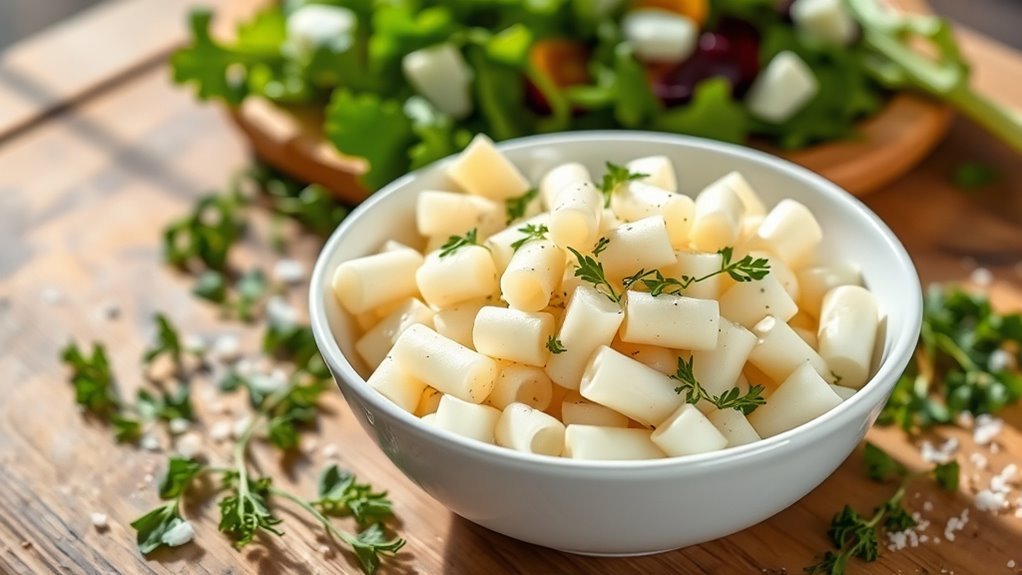

Hearts of palm are an excellent addition to a keto diet, as they contain only about 1 gram of net carbs per serving. They’re low in calories but high in fiber, making them a nutritious option. Packed with potassium and vitamin C, they also bring a unique, mildly nutty flavor to your meals. Incorporating them into various dishes can enhance your culinary experience. If you want to know more about their benefits and uses, keep exploring!
What Are Hearts of Palm?
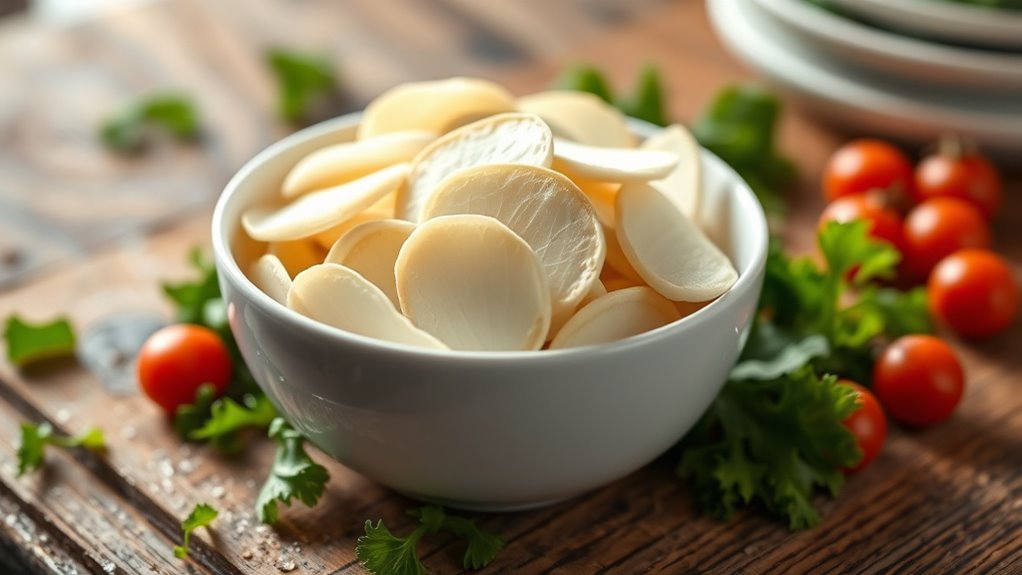
Hearts of palm are the tender inner core of certain palm trees, often harvested from species like the peach palm and coconut palm. Known for their versatility, you can incorporate them into various cooking techniques. Whether you’re grilling, sautéing, or adding them to salads, they adapt well to different culinary approaches. Their mild, slightly nutty flavor profiles enhance dishes without overpowering other ingredients, making them a great addition to numerous recipes. You might find them in Asian, Latin, or Mediterranean cuisines, showcasing their global appeal. As you explore new dishes, consider hearts of palm for their unique texture and ability to absorb flavors, offering you the freedom to create satisfying meals that align with your taste preferences.
Nutritional Profile of Hearts of Palm
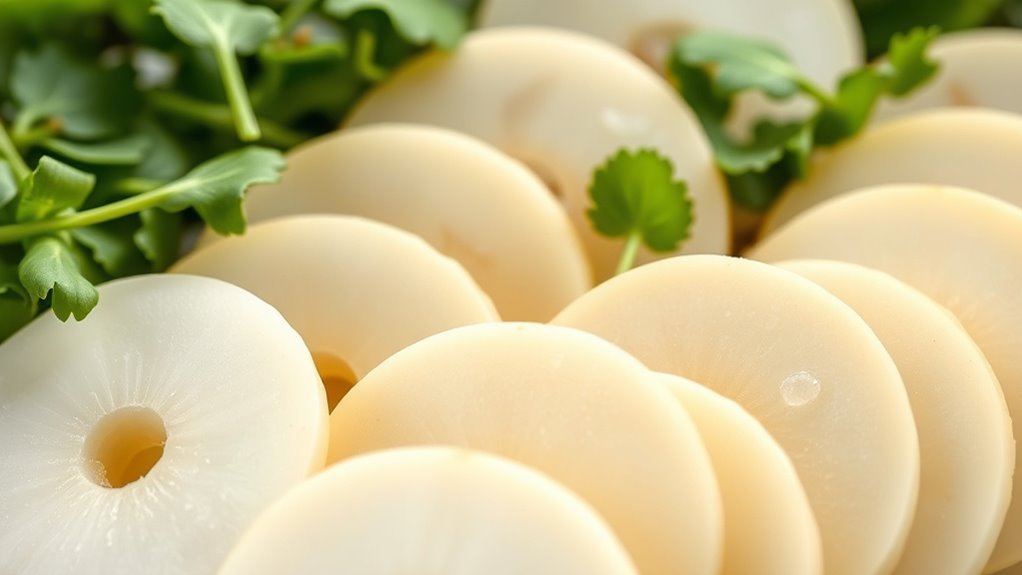
Hearts of palm are a low-calorie, nutrient-dense food that provides a unique macronutrient profile. With about 1 gram of protein, 0.5 grams of fat, and 4 grams of carbohydrates per serving, they’re an excellent choice for those on a keto diet. Additionally, their high fiber content and essential vitamins contribute to various health benefits, including improved digestion and heart health.
Macronutrient Breakdown
While exploring low-carb options for a keto diet, you’ll find that the nutritional profile of hearts of palm is particularly compelling. In a typical serving, they provide about 20 calories, with less than 4 grams of carbohydrates, making them an excellent choice for maintaining ketosis. When you examine a macronutrient comparison, you’ll notice they contain around 1 gram of protein and minimal fat, aligning perfectly with keto guidelines. One standout feature is their dietary fiber content; with about 2 grams per serving, they help support digestive health while keeping net carbs low. This unique combination allows you to enjoy a versatile ingredient without compromising your dietary goals, making hearts of palm a smart addition to your keto meals.
Health Benefits
The nutritional profile of hearts of palm offers a variety of health benefits that can enhance your overall well-being. These versatile vegetables are low in calories and rich in fiber, providing essential nutritional advantages. Their high potassium content supports heart health by helping to regulate blood pressure and maintain proper cardiovascular function. Additionally, hearts of palm contain antioxidants that combat oxidative stress, potentially reducing the risk of chronic diseases. They’re also a good source of vitamins C and B6, which play roles in immune support and energy metabolism. Including hearts of palm in your diet can be a delicious way to promote heart health while enjoying a low-carb option that fits perfectly into a keto lifestyle.
Carbohydrate Content and Keto Compatibility
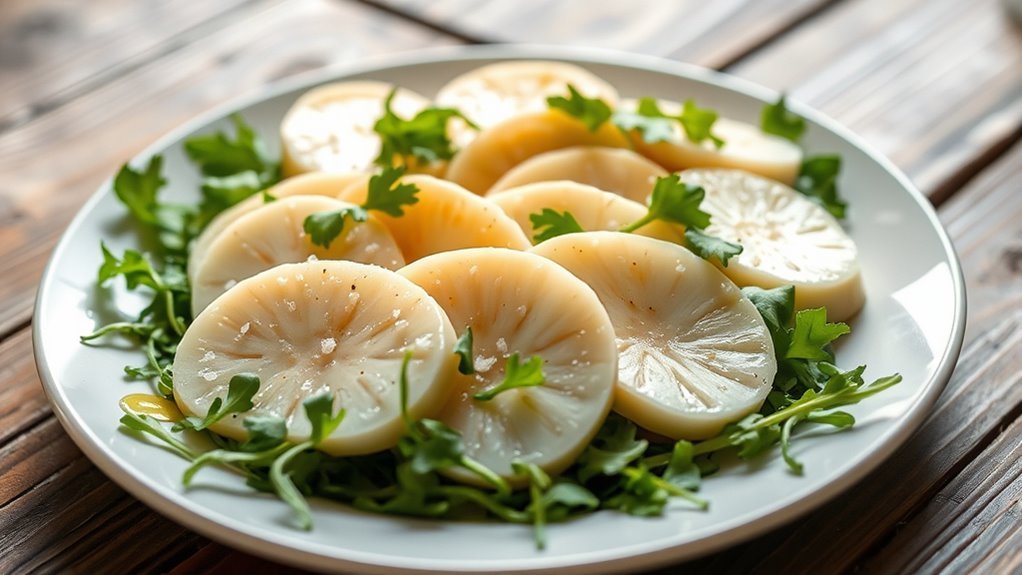
When considering hearts of palm for your keto diet, it’s essential to look at their carbohydrate content. With a low net carb count, they can fit nicely into your meal plan, especially when you pay attention to ideal serving sizes. Understanding the nutritional profile will help you make informed choices that align with your keto goals.
Nutritional Profile Overview
Hearts of palm, often celebrated for their versatility in various dishes, offer a compelling option for those following a ketogenic diet due to their low carbohydrate content. These nutrient-rich vegetables provide numerous hearts benefits, making them a staple in many meals. Here’s a quick overview of their nutritional profile:
- Low in Carbs: Typically, they contain about 4-6 grams of carbohydrates per serving, making them a keto-friendly choice.
- High in Fiber: This helps support digestion and aids in satiety.
- Rich in Nutrients: Hearts of palm varieties are packed with vitamins and minerals, including potassium and vitamin C.
Incorporating hearts of palm into your meals can enhance flavor while keeping you aligned with your keto goals.
Net Carbs Calculation
For those on a ketogenic diet, understanding net carbs is essential for maintaining ketosis, and hearts of palm fit well into this framework. Each serving of hearts of palm contains about 4 grams of carbohydrates, but here’s the catch: it also boasts a notable fiber content of around 3 grams. To calculate net carbs, you subtract the fiber from the total carbohydrates. So, when you do the math, you’re left with just 1 gram of net carbs per serving. This makes hearts of palm an excellent choice for keto enthusiasts looking for low-carb alternatives. Incorporating them into your meals can help you enjoy a satisfying texture in dishes while staying aligned with your dietary goals.
Ideal Serving Sizes
One serving of hearts of palm, typically around half a cup, is an ideal portion for those following a ketogenic diet. This serving size contains approximately 4 grams of net carbs, making it a great choice for maintaining your carb limits. When incorporating hearts of palm into your meals, keep these serving guidelines in mind:
- Versatility: They can be used in salads, stir-fries, or as a pasta alternative.
- Nutritional Benefits: Rich in fiber and low in calories, they support digestive health and satiety.
- Flavor Profile: Their mild taste complements many dishes without overpowering other ingredients.
Health Benefits of Hearts of Palm
Known for their unique texture and mild flavor, hearts of palm offer a range of health benefits that can enhance your diet. They’re low in calories and high in fiber, which aids digestion and promotes regularity. This can help you feel fuller for longer, reducing the temptation to snack on less healthy options. Additionally, hearts of palm are rich in potassium, essential for maintaining heart health by regulating blood pressure and supporting overall cardiovascular function. Their antioxidant properties also help combat oxidative stress, promoting a healthier heart. Incorporating hearts of palm into your meals can be a simple yet effective way to boost your nutrient intake while enjoying a delicious, versatile food that fits seamlessly into a balanced diet.
Culinary Uses and Recipe Ideas
Incorporating hearts of palm into your meals not only enhances your nutrient intake but also adds a delightful texture and flavor to various dishes. These versatile ingredients can be used in numerous hearts recipes, making them a fantastic addition to your culinary repertoire. You can try them in:
- Fresh salads for a light crunch and unique taste.
- Stir-fries where they soak up sauces beautifully.
- Heart-healthy dips, like a creamy hearts of palm hummus.
Their mild flavor allows them to blend seamlessly into both savory and sweet dishes. Additionally, their low-carb nature aligns perfectly with keto diets, offering you a guilt-free way to enjoy a diverse range of meals. Experiment with these culinary uses, and let your creativity shine!
How to Select and Store Hearts of Palm
When selecting hearts of palm, look for canned or jarred varieties that are labeled as “whole” or “sliced,” ensuring they maintain their firm texture and flavor. Check the expiration date to guarantee freshness, and opt for products with fewer additives. For storage methods, if you’ve opened a can or jar, transfer any leftovers to an airtight container and refrigerate, consuming them within a few days for best taste. Unopened cans can be stored in a cool, dark place. Always rinse the hearts of palm before use to enhance their flavor and remove excess sodium. By following these selecting tips and storage methods, you’ll enjoy delicious, crunchy hearts of palm that fit perfectly into your keto lifestyle.
Potential Considerations for Keto Dieters
While hearts of palm can be a nutritious addition to your keto diet, there are several factors to keep in mind. When you’re engaging in keto meal planning, consider the following:
- Net Carbs: Monitor your portion sizes, as hearts of palm contain some carbohydrates that can add up.
- Fiber Intake: They’re a good source of fiber, which is essential for digestion, but balance it with other fiber sources to meet your daily needs.
- Nutrient Density: Evaluate how they fit into your overall daily nutrient goals to guarantee you’re not missing out on essential vitamins and minerals.
Frequently Asked Questions
Can I Eat Hearts of Palm Raw?
You can definitely eat hearts of palm raw, and let’s be honest, who wouldn’t want to munch on a crunchy, tropical delight? Packed with nutritional benefits like fiber and vitamins, these little wonders can perk up your salad or snack game. Just think of it as a guilt-free indulgence! So, go ahead, embrace your freedom to enjoy raw hearts of palm and elevate your culinary creativity without sacrificing health. Enjoy the crunch!
Are There Any Allergies Related to Hearts of Palm?
Yes, there can be allergies related to hearts of palm. Some individuals may experience reactions due to palm sensitivity, particularly if they have existing allergies to other palm family plants. Symptoms can include itching, swelling, or digestive issues. It’s important to be cautious if you have known allergies to similar foods. If you suspect an allergy, consulting a healthcare professional is advisable to guarantee you can enjoy hearts of palm safely.
How Do Hearts of Palm Compare to Other Vegetables?
Hearts of palm stand out among vegetables due to their unique nutritional benefits, including high fiber and low calories. When you compare them to others, you’ll find they’re rich in potassium and vitamin C. You can enjoy them raw in salads, sautéed, or even grilled, making them versatile in cooking methods. Their mild flavor complements various dishes, giving you freedom to experiment while maintaining a healthy diet. Enjoy exploring their culinary potential!
Is Hearts of Palm Eco-Friendly?
Yes, hearts of palm can be considered eco-friendly. Studies show that harvesting them can yield about 10 tons of product per hectare, making it a sustainable crop when managed properly. Many producers adopt sustainability practices that minimize environmental impact, preserving ecosystems while providing a nutritious food source. By choosing responsibly sourced hearts of palm, you’re supporting practices that benefit the planet and contribute to a more sustainable food system.
Can Hearts of Palm Be Frozen?
Yes, you can freeze hearts of palm! To do it effectively, wash and slice them, then blanch for about three minutes. This helps preserve their texture and flavor. After blanching, cool them in ice water before packing in airtight containers or freezer bags. Remember to label them with the date for better storage tips. Proper freezing techniques can keep them fresh for up to six months, allowing you to enjoy their unique taste anytime!
1. Are hearts of palm keto-friendly?
Yes, hearts of palm are considered keto-friendly. They are low in carbohydrates, making them an excellent choice for those following a ketogenic diet. A typical serving of hearts of palm contains about 4 grams of carbohydrates, with 2 grams of fiber, resulting in only 2 grams of net carbs. This low carb content allows them to fit well within the daily carb limits of a keto diet.
2. What are the nutritional benefits of hearts of palm?
Hearts of palm are not only low in carbs but also rich in nutrients. They contain essential vitamins and minerals such as vitamin C, potassium, and iron. Additionally, they are a good source of fiber, which can aid in digestion and help maintain a feeling of fullness. Their low calorie count also makes them a great addition to salads and other dishes without adding excess calories.
3. How can I incorporate hearts of palm into my keto meals?
Hearts of palm can be used in a variety of ways in keto meals. They can be sliced and added to salads for a crunchy texture, blended into dips or spreads, or used as a substitute for pasta in dishes like stir-fries or casseroles. You can also grill or sauté them with herbs and spices for a flavorful side dish. Their versatility makes them a great ingredient to experiment with in your keto cooking.
4. Are there any drawbacks to eating hearts of palm?
While hearts of palm are generally safe and healthy, they may not be suitable for everyone. Some individuals may experience digestive issues if they consume them in large quantities due to their fiber content. Additionally, those with certain allergies or sensitivities should check labels carefully, as some canned versions may contain preservatives or added sugars. It’s always a good idea to introduce new foods gradually and monitor how your body reacts.
5. Where can I buy hearts of palm?
Hearts of palm can be found in most grocery stores, usually located in the canned vegetable aisle or the international foods section. They are also available in health food stores and online retailers. When purchasing, look for options packed in water or brine without added sugars or preservatives for the healthiest choice. Fresh hearts of palm may also be available at specialty markets or farmers’ markets, depending on your location.