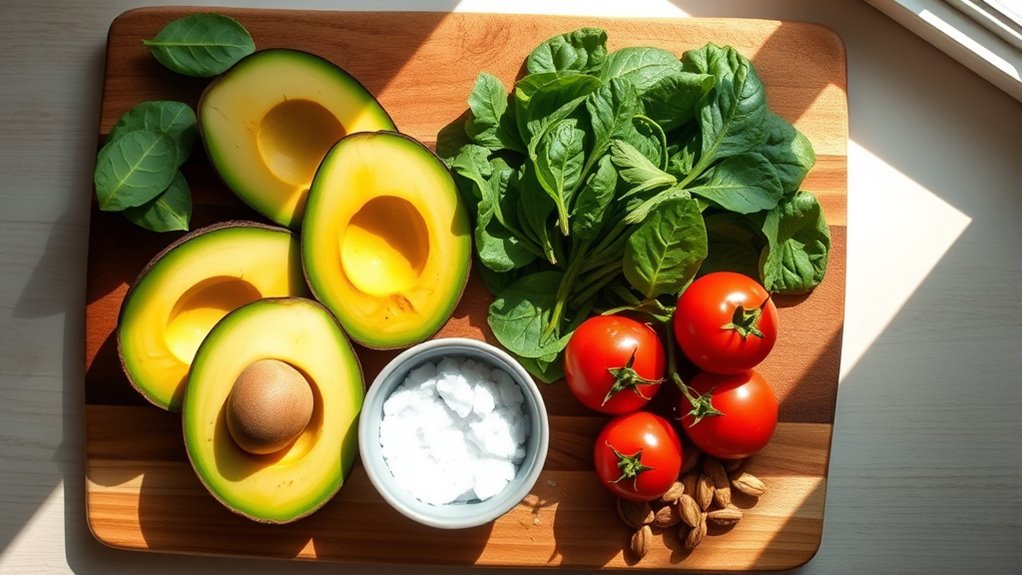

To get sufficient potassium on a keto diet, focus on incorporating potassium-rich foods like avocados (975 mg), spinach (840 mg), and Swiss chard (960 mg) into your meals. Additionally, consider adding salmon and mushrooms for a low-carb boost. Since a keto diet can lead to increased potassium excretion, aim for 3,500-4,700 mg daily to avoid deficiencies, which can cause muscle cramps and fatigue. Continue exploring creative meal ideas and monitoring tips to optimize your potassium intake.
Understanding the Importance of Potassium on a Keto Diet

While you might be focused on cutting carbs, it’s essential not to overlook the importance of potassium in your keto diet. Potassium plays a significant role in maintaining electrolyte balance, which is critical for muscle function and heart health. When you reduce carbohydrate intake, your body tends to excrete more potassium, increasing the risk of deficiency. This deficiency can lead to symptoms like fatigue, muscle cramps, and irregular heartbeat, undermining the freedom that a keto lifestyle offers. Incorporating adequate potassium helps mitigate these risks, promoting overall well-being. Additionally, potassium benefits include supporting healthy blood pressure levels and aiding in proper nerve function. Ensuring keto balance with sufficient potassium will help you thrive on your low-carb journey.
Top Keto-Friendly Foods Rich in Potassium

Maintaining adequate potassium levels is essential, especially on a keto diet where certain foods are limited. Incorporating potassium-rich foods can help balance electrolytes and support overall health. Avocados are a fantastic choice, offering about 975 mg of potassium per fruit, alongside healthy fats and fiber—these avocado benefits make them a keto staple. Leafy greens like spinach and Swiss chard are also excellent options, providing around 840 mg and 960 mg of potassium per cooked cup, respectively. These greens are low in carbs and nutrient-dense, making them perfect for your diet. Other keto-friendly foods include mushrooms and salmon, which also contribute to your potassium intake while fitting seamlessly into your meal plans. Embrace these foods for peak health on your keto journey!
Creative Ways to Incorporate Potassium-Rich Foods Into Your Meals
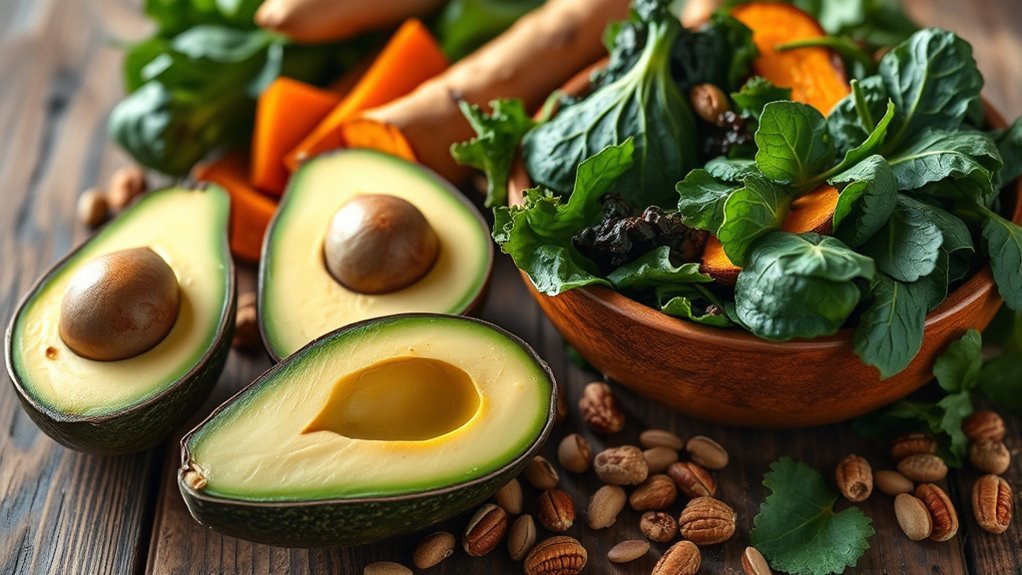
To effectively boost your potassium intake on a keto diet, consider incorporating a variety of creative meal ideas that highlight potassium-rich foods. Here are three delicious options:
Boost your potassium intake on a keto diet with creative meal ideas featuring potassium-rich foods.
- Avocado Smoothies: Blend avocado with coconut milk, spinach, and a low-carb sweetener for a creamy, nutrient-dense drink. This combination not only enhances your potassium levels but also provides healthy fats.
- Spinach Salad: Toss fresh spinach with olive oil, nuts, and seeds. Add some sliced avocado for an extra potassium punch while enjoying a satisfying crunch.
- Nut Butter: Use almond or cashew nut butter as a spread. Pair it with celery sticks or low-carb crackers for a quick snack that’s both tasty and potassium-rich.
These options will help you enjoy your meals while meeting your nutritional needs.
Tips for Monitoring Your Potassium Intake
Since potassium plays an essential role in maintaining various bodily functions, monitoring your intake on a keto diet is important. Start by tracking your daily potassium consumption through food diaries or apps; this helps you identify dietary adjustments needed to meet your requirements. Aim for 3,500 to 4,700 mg per day, depending on individual factors. Incorporate potassium-rich foods, like leafy greens, avocados, and nuts, into your meals while being mindful of their carb content. Additionally, consider periodic blood tests to measure your potassium levels, ensuring they remain within a healthy range. Don’t hesitate to consult a healthcare professional for personalized advice, especially if you’re adjusting medications or supplements, to support effective potassium monitoring and maintain overall health.
Signs of Potassium Deficiency and How to Address It
While potassium deficiency might not be immediately apparent, several signs can indicate you’re not getting enough of this essential mineral. Common potassium symptoms include:
Potassium deficiency may be subtle, but signs like muscle weakness and fatigue can indicate you’re lacking this vital mineral.
- Muscle Weakness: Insufficient potassium can lead to cramping and general weakness, affecting your ability to perform daily tasks.
- Fatigue: Low potassium levels can disrupt energy production, leaving you feeling tired and lethargic.
- Irregular Heartbeat: Severe deficiency may cause arrhythmias, which can be dangerous and require immediate attention.
To address these deficiency solutions, consider incorporating potassium-rich foods into your keto diet, such as avocados, leafy greens, and nuts. Additionally, consulting a healthcare professional for tailored advice can help guarantee you’re maintaining ideal potassium levels while enjoying your dietary freedom.
Frequently Asked Questions
Can I Take Potassium Supplements on a Keto Diet?
Yes, you can take potassium supplements on a keto diet. However, you should be cautious about the dosage. Aim for around 2,000 to 4,000 mg per day, depending on your individual needs and dietary sources. While potassium-rich foods like avocados and leafy greens are excellent, supplements can help fill gaps. Just be sure to consult a healthcare provider to tailor your intake to your specific health circumstances and avoid potential complications.
What Are the Side Effects of Too Much Potassium?
Too much potassium can lead to potassium toxicity, presenting symptoms like muscle weakness, fatigue, and irregular heartbeats. If you exceed safe potassium levels, it can disrupt your heart’s rhythm, potentially causing serious complications. It’s vital to monitor your intake, especially if you’re considering supplements. Always consult a healthcare professional before making significant changes to your diet or supplement regimen to guarantee you maintain a healthy balance without risking your well-being.
How Does Potassium Affect Blood Pressure on Keto?
Potassium can greatly influence your blood pressure, especially on a keto diet. When you consume adequate potassium, you’re likely to experience lower blood pressure levels due to its role in balancing sodium. This balance helps your blood vessels relax, reducing strain on your heart. However, if you’re not careful, too much potassium can lead to complications. Monitoring your intake is essential for reaping potassium benefits while maintaining healthy blood pressure levels.
Is There a Potassium-Rich Keto Snack Option?
Yes, you can enjoy potassium-rich keto snacks like avocado slices paired with nut butter. Avocados are packed with potassium, which helps regulate fluid balance and supports cellular function. When you combine avocado slices with nut butter, you not only enhance the flavor but also add healthy fats and protein. This combination keeps you satiated while maintaining your keto lifestyle, all while ensuring you meet your potassium needs for peak health and well-being.
Can I Get Enough Potassium From a Vegetarian Keto Diet?
Yes, you can get enough potassium from a vegetarian keto diet. Focus on vegetarian sources like avocados, spinach, and mushrooms, which are low in carbs yet high in potassium levels. Incorporating nuts and seeds, such as almonds and chia seeds, can also help boost your intake. Monitoring your diet to guarantee you meet your potassium needs is essential for maintaining ideal health while enjoying the freedom of a vegetarian keto lifestyle.
Frequently Asked Questions
1. Why is potassium important on a keto diet?
Potassium is an essential mineral that plays a crucial role in maintaining fluid balance, nerve function, and muscle contraction. On a keto diet, the body excretes more potassium due to lower insulin levels, which can lead to deficiencies. Ensuring adequate potassium intake helps prevent symptoms like muscle cramps, fatigue, and irregular heartbeats associated with the “keto flu.”
2. What are the best food sources of potassium for a keto diet?
Some of the best keto-friendly food sources of potassium include avocados, spinach, mushrooms, and salmon. Other options are nuts like almonds and seeds such as chia. Incorporating these foods into your meals can help you meet your potassium needs without exceeding your carbohydrate limits.
3. How can I tell if I am potassium deficient on a keto diet?
Symptoms of potassium deficiency may include muscle weakness, fatigue, cramping, constipation, and heart palpitations. If you experience these symptoms, it is advisable to consult with a healthcare professional who can recommend dietary adjustments or supplements to restore your potassium levels.
4. Are potassium supplements necessary on a keto diet?
While it is generally best to obtain nutrients from whole foods, some individuals on a keto diet may find it challenging to get enough potassium through diet alone. In such cases, potassium supplements may be recommended, but it’s crucial to consult with a healthcare provider before starting any supplements to determine the appropriate dosage and form.
5. How can I incorporate more potassium-rich foods into my keto meals?
To incorporate more potassium-rich foods into your keto meals, consider adding avocado slices to salads and smoothies, using spinach in omelets, snacking on nuts, or grilling mushrooms as a side dish. Additionally, you can try making creamy soups with coconut milk and spinach or blending avocados into a keto shake for added nutrition.
References
- https://www.ncbi.nlm.nih.gov/pmc/articles/PMC7060621/
- https://ods.od.nih.gov/factsheets/Potassium-HealthProfessional/
- https://www.health.harvard.edu/staying-healthy/the-importance-of-potassium
- https://www.cdc.gov/nutrition/data-statistics/know-your-limit-for-sodium-and-potassium.html
- https://www.kidney.org/atoz/content/potassium
- https://www.mayoclinic.org/healthy-lifestyle/nutrition-and-healthy-eating/in-depth/potassium/art-20044533
- https://www.webmd.com/diet/what-to-know-about-potassium
- https://www.nhlbi.nih.gov/health-topics/potassium
- https://www.who.int/news-room/fact-sheets/detail/potassium-and-sodium