

On a ketogenic diet, you should limit your sugar intake to about 20 to 50 grams per day. This helps maintain ketosis, allowing your body to efficiently burn fat for energy. Focus on avoiding traditional sugars and choosing low-carb sweeteners like erythritol or stevia instead. Be aware of hidden sugars in packaged foods and condiments, which can easily push you over your limit. There’s a lot more to learn about managing your sugar intake effectively.
Understanding the Keto Diet and Carbohydrate Limits

When you commence a keto diet, understanding carbohydrate limits is essential for success. The keto fundamentals emphasize that to enter ketosis, you should typically consume between 20 to 50 grams of net carbs daily. This means you’ll need to identify and limit your carbohydrate sources, such as grains, sugars, and starchy vegetables. Instead, focus on low-carb options like leafy greens, avocados, and nuts. By doing this, you’ll encourage your body to burn fat for fuel instead of relying on glucose. It’s vital to track your intake consistently, as even small amounts of hidden sugars can derail your progress. Embracing these guidelines allows you the freedom to explore diverse, satisfying meals without straying from your keto goals.
The Role of Sugar in the Ketogenic Lifestyle
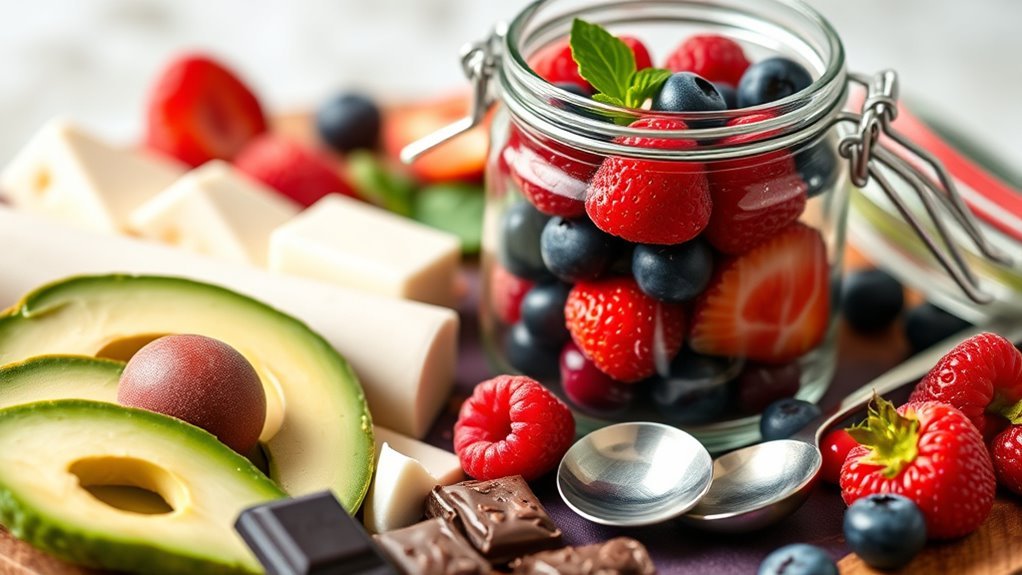
In the ketogenic lifestyle, understanding the role of sugar is vital for maintaining ketosis. Different types of sugars can impact your body differently, and knowing their effects helps you make informed choices. Additionally, adhering to daily sugar limitations is essential to stay within your carbohydrate goals and support your overall health.
Understanding Ketosis Mechanism
Although many people enjoy sweet treats, understanding the role of sugar in the ketogenic lifestyle is essential for achieving and maintaining ketosis. When you limit sugar intake, your body shifts from using glucose for energy to burning fat, leading to ketosis. This metabolic state offers numerous ketosis benefits, such as improved mental clarity and weight loss. However, it also presents challenges, like cravings for sugar. To stay in ketosis, you’ll need to monitor your carbohydrate consumption closely, aiming for a daily limit that keeps your body in fat-burning mode. By being mindful of sugar’s impact, you can enjoy the freedom of a ketogenic diet while reaping its rewards. Embrace this lifestyle change, and your body will thank you!
Sugar Types and Impact
Understanding the different types of sugar and their impact on your body is essential for successfully maneuvering a ketogenic lifestyle. On a keto diet, traditional sugars can spike insulin levels and kick you out of ketosis. Instead, consider using sugar substitutes like erythritol or stevia, which have minimal effects on blood sugar. These alternatives allow you to enjoy sweetness without derailing your progress. Additionally, natural sweeteners like monk fruit can be great options, as they provide flavor without the carbs. By choosing the right sweeteners, you can maintain your desired keto state while still enjoying a variety of flavors. Embrace these alternatives for a satisfying, low-carb lifestyle that aligns with your health goals.
Daily Sugar Limitations
Limiting sugar intake to about 20 to 50 grams per day is essential for maintaining ketosis on a ketogenic diet. This restriction helps curb sugar cravings and keeps your body in a fat-burning state. Instead of traditional sugar, consider using sugar alternatives like stevia or erythritol, which don’t spike your insulin levels.
| Sugar Source | Grams of Sugar per Serving |
|---|---|
| Regular Sugar | 4 grams |
| Stevia | 0 grams |
| Erythritol | 0.2 grams |
Recommended Daily Carbohydrate Intake

When you’re following a ketogenic diet, knowing your recommended daily carbohydrate intake is essential for maintaining ketosis. Generally, you should aim for about 20-50 grams of net carbs per day. This limit helps your body burn fat for fuel instead of carbohydrates. Here are some key considerations:
- Focus on net carbs: Subtract fiber and certain sugar alcohols from total carbs.
- Consider carb cycling: This can allow for higher carb days while still promoting fat loss.
- Track your intake: Use apps to monitor your daily carb consumption accurately.
- Adjust as needed: Individual tolerance to carbs varies, so find what works best for you.
Types of Sugars: Natural vs. Added
While steering through a ketogenic diet, it is crucial to differentiate between natural and added sugars, as both can impact your carb intake differently. Natural sweeteners, like honey and maple syrup, contain nutrients but can still spike your blood sugar levels due to their glycemic index. On the other hand, added sugars found in processed foods often provide empty calories and can lead to sugar cravings, negatively affecting your health. Sugar substitutes and alternatives, such as stevia or erythritol, offer lower-carb options with minimal metabolic effects. Understanding the nutritional differences between these types and reading ingredient labels can help you align your taste preferences with your keto goals, ensuring you make informed choices that support your freedom to enjoy food.
Hidden Sugars in Everyday Foods
Even if you think you’re eating healthy, hidden sugars in everyday foods can sneak their way into your diet and disrupt your ketogenic goals. To maintain ingredient awareness, practice mindful eating by carefully inspecting food labels. Here are some common sources of hidden sugars:
- Condiment choices: Ketchup, barbecue sauce, and salad dressings often contain added sugars.
- Packaged snacks: Many snacks like granola bars and trail mixes can have significant sugar content.
- Beverage sugars: Even seemingly healthy drinks, like flavored waters or smoothies, can be loaded with sugars.
- Cooking methods: Some cooking methods may involve sauces or marinades that introduce sugar.
Tips for Satisfying Your Sweet Tooth on Keto
If you’re craving something sweet while sticking to a keto diet, there are plenty of options that can satisfy your sweet tooth without derailing your progress. Sugar alternatives like erythritol, stevia, and monk fruit can help you create satisfying desserts and keto snacks. Here are some ideas to contemplate:
| Satisfying Desserts | Keto Snacks | Sweet Cravings |
|---|---|---|
| Keto chocolate mousse | Almond butter fat bombs | Coconut macaroons |
| Chia seed pudding | Cheese crisps | Sugar-free gummies |
| Avocado brownies | Greek yogurt with berries | Dark chocolate (90%+) |
| Coconut flour cookies | Pork rinds with seasoning | Berry smoothie |
| Cream cheese pancakes | Nut-based trail mix | Whipped cream with cocoa |
These treats can help curb your sweet cravings while keeping you in ketosis. Enjoy!
Monitoring Your Sugar Intake for Success
To succeed on a keto diet, it’s essential to monitor your sugar intake closely. You’ll want to know your ideal daily sugar limit and be aware of hidden sugars in foods that can sabotage your efforts. Tracking your intake effectively will help you stay on course and achieve your health goals.
Ideal Daily Sugar Limit
When following a ketogenic diet, keeping your sugar intake in check is essential for maintaining ketosis and promoting fat burning. To stay within your ideal daily sugar limit, aim for 20-50 grams of net carbs, including sugar. Here are some effective strategies:
- Choose sugar substitutes: Opt for low-carb options like stevia, erythritol, or monk fruit.
- Monitor your sweetener choices: Be mindful of hidden sugars in processed foods.
- Read labels carefully: Always check for total sugars and net carbs.
- Track your intake: Use apps or food journals to help you stay accountable.
Hidden Sugars to Avoid
Hidden sugars lurk in many foods, making it vital to stay vigilant while following a ketogenic diet. Even items labeled as “sugar-free” can contain hidden ingredients that spike your carb intake. Common culprits include sauces, dressings, and processed snacks. Always check ingredient lists for sugar alternatives like maltitol or agave syrup, which can still impact your blood sugar levels. High-carb fruits, certain dairy products, and even some nut butters might have added sugars, so it’s important to read labels carefully. By being aware of these hidden sugars, you’ll maintain better control over your carb consumption, ensuring your keto journey stays on track and aligns with your health goals. Remember, knowledge is your best ally in achieving freedom from unwanted sugar intake!
Tracking Your Intake Effectively
Although tracking your sugar intake may seem intimidating, it’s an essential step in maintaining a successful ketogenic diet. By doing so, you can achieve macro balancing while enjoying nutrient-dense foods. Here are some effective strategies to help you stay on track:
- Use tracking apps to log your meals and monitor sugar intake easily.
- Incorporate sugar substitutes to satisfy your sweet cravings without derailing your progress.
- Prioritize meal planning to guarantee you’re sticking to low-sugar options.
- Practice portion control and food journaling for mindful eating habits.
Frequently Asked Questions
Can I Eat Fruits on a Keto Diet?
Yes, you can eat fruits on a keto diet, but you’ll want to choose keto-friendly fruits. Low carb fruits like berries, avocados, and melons are great options. They’re lower in sugar and carbs compared to other fruits. Keep your portions moderate to stay within your carb limits. Incorporating these fruits can add flavor and nutrients to your meals without compromising your keto goals, allowing you to enjoy a bit of freedom in your diet.
What Sugar Substitutes Are Best for Keto?
When it comes to sugar substitutes, you’ve got plenty of keto-friendly options to choose from. Stevia, erythritol, and monk fruit are popular choices that won’t spike your blood sugar. They offer sweetness without the carbs, making your keto journey easier and more enjoyable. Just remember, not all substitutes are created equal, so it’s wise to experiment with different ones to find what you love. Enjoy your freedom to indulge without the guilt!
Is Sugar Alcohol Safe on Keto?
Yes, sugar alcohols are generally safe on keto, but moderation is key. They provide sweetness without greatly impacting blood sugar levels. In a keto sweeteners comparison, erythritol and monk fruit are often recommended for their minimal carbs and low glycemic index. However, some individuals may experience digestive issues with certain sugar alcohols, like sorbitol. Always listen to your body and choose what works best for your personal keto journey.
Can I Have Dark Chocolate on Keto?
Absolutely, you can indulge in dark chocolate on keto! Think of it as a rich, velvety treasure that offers health benefits like antioxidants and improved heart health. Just remember to choose varieties with at least 70% cocoa to keep your carb count low. Dark chocolate can elevate your keto dessert options, satisfying your sweet tooth while staying within your dietary goals. Enjoy it in moderation, and you’ll feel free to savor every bite!
How Does Stress Affect Sugar Cravings on Keto?
Stress can greatly impact your sugar cravings on keto. When you’re stressed, cortisol levels rise, which can increase your desire for sugary foods. This response is your body’s way of seeking quick energy. Effective stress management techniques, like mindfulness or exercise, can help regulate those cortisol levels and curb those cravings. By staying mindful of your stress and its effects, you can maintain better control over your dietary choices while enjoying your keto journey.
Frequently Asked Questions about Sugar Intake on Keto
1. How many grams of sugar can I have on a keto diet?
On a ketogenic diet, it is generally recommended to limit your total carbohydrate intake to about 20 to 50 grams per day. This includes sugars, both natural and added. Ideally, most of your carbohydrate intake should come from non-starchy vegetables and low-sugar foods. Therefore, sugar intake should be minimized, ideally keeping it under 5-10 grams per day to maintain ketosis.
2. Can I eat fruits on a keto diet?
Yes, but with caution. Most fruits contain natural sugars, which can add up quickly in your carbohydrate count. If you choose to include fruits, opt for low-sugar options like berries (strawberries, raspberries, and blackberries) and limit the portion sizes. Always track your carb intake to ensure you stay within your limits.
3. What are some sugar substitutes I can use on keto?
There are several keto-friendly sugar substitutes that you can use, including stevia, erythritol, monk fruit, and sucralose. These sweeteners contain little to no calories and carbohydrates, making them ideal for a ketogenic diet. Always check labels to ensure they do not contain added sugars or high-carb fillers.
4. What happens if I consume too much sugar on keto?
Consuming too much sugar on a keto diet can kick you out of ketosis, which is the state where your body burns fat for fuel instead of carbohydrates. This can lead to increased cravings, weight gain, and a slowdown in your progress. It’s crucial to monitor your sugar and overall carbohydrate intake to stay in ketosis and achieve your health goals.
5. Are there any hidden sugars I should be aware of?
Yes, many processed and packaged foods contain hidden sugars, even those marketed as “low-carb” or “sugar-free.” Always read nutrition labels carefully, as ingredients like maltodextrin, dextrose, and agave syrup can contribute to your sugar intake. Focus on whole, unprocessed foods to better control your carbohydrate and sugar consumption.
References
- https://www.ncbi.nlm.nih.gov/pmc/articles/PMC6471304/
- https://www.healthline.com/nutrition/keto-diet-guide
- https://www.mayoclinic.org/healthy-lifestyle/nutrition-and-healthy-eating/in-depth/keto-diet/art-20429084
- https://www.cdc.gov/nutrition/data-statistics/sugar-intake.html
- https://www.diabetes.org/nutrition/healthy-eating/what-is-the-keto-diet
- https://www.webmd.com/diet/what-is-the-keto-diet
- https://www.ncbi.nlm.nih.gov/pmc/articles/PMC5862040/
- https://www.verywellfit.com/what-is-the-ketogenic-diet-5117415