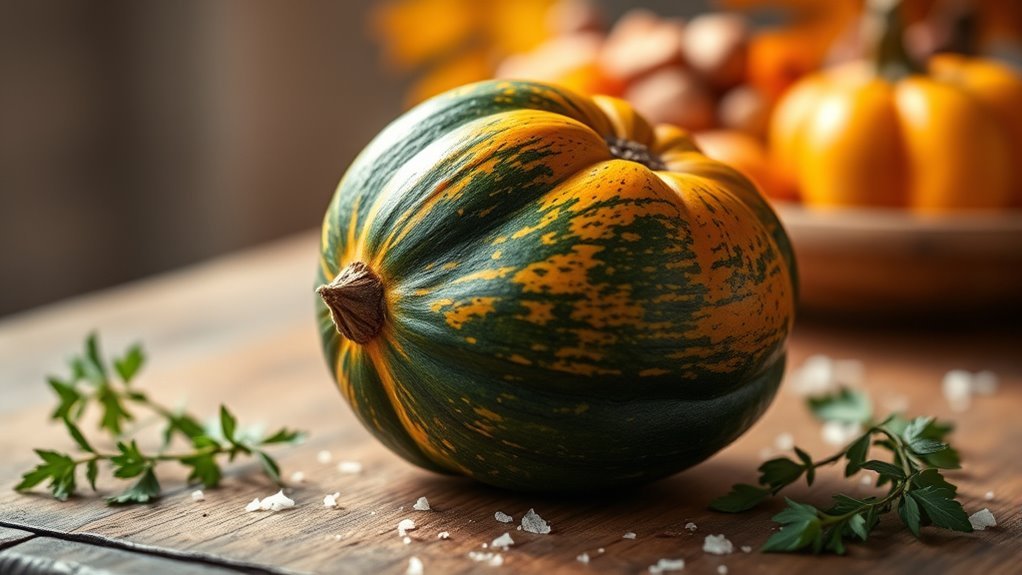

Acorn squash can fit into a ketogenic diet, but it’s important to watch your portion sizes. With about 15 grams of carbs per cup, moderation is key. Its fiber content can help stabilize blood sugar, making it a better option than higher-carb foods. You might enjoy its vitamins A and C, promoting overall health. If you want to explore how to incorporate acorn squash into your meals or find alternatives, keep going for more insights.
Understanding the Carbohydrate Content of Acorn Squash
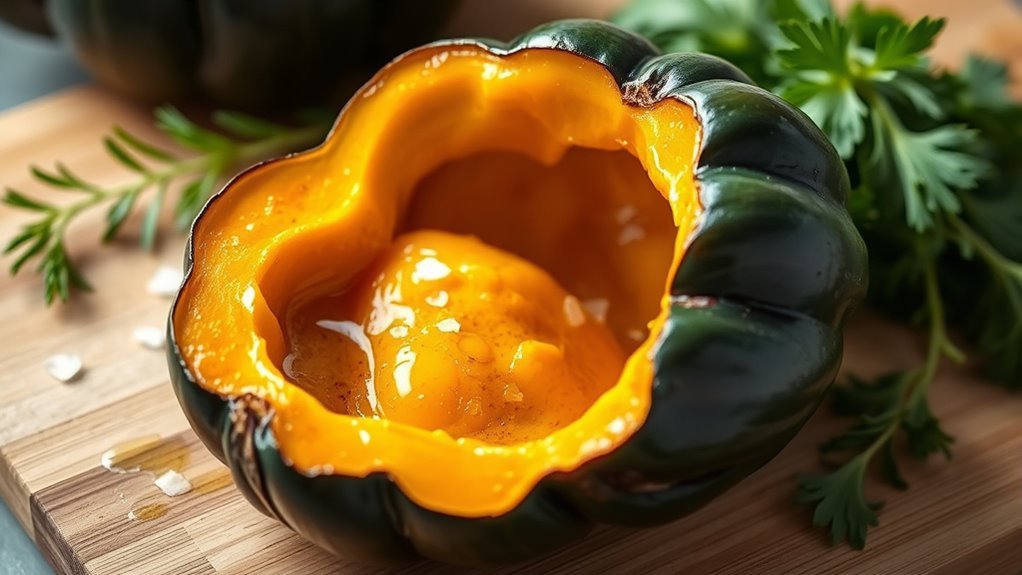
When you’re considering adding acorn squash to your diet, it’s crucial to understand its carbohydrate content, especially if you’re following a ketogenic lifestyle. Acorn squash contains about 15 grams of carbohydrates per cup, which can be significant depending on your daily carb limit. As a squash variety, it offers a unique balance of flavor and nutrition, but it’s crucial to monitor your overall carbohydrate sources. You might find that while acorn squash can fit into your diet, moderation is key. By incorporating it thoughtfully, you can enjoy its taste without derailing your keto goals. Always remember to assess how it fits into your overall meal plan for a balanced approach to eating that aligns with your lifestyle.
Nutritional Benefits of Acorn Squash

Acorn squash is more than just a seasonal favorite; it offers a variety of nutritional benefits that can enhance your diet. Packed with vitamins A and C, it supports your immune system and promotes healthy skin. The dietary fiber in acorn squash aids digestion and can help you feel full, contributing to weight management. Additionally, it’s low in calories, making it a guilt-free addition to your meals. You can enjoy its health benefits through various cooking methods, whether you roast, steam, or puree it. Each method retains its nutrients while adding a unique flavor profile. Integrating acorn squash into your diet not only diversifies your meals but also boosts your overall health.
Comparing Acorn Squash to Other Low-Carb Vegetables
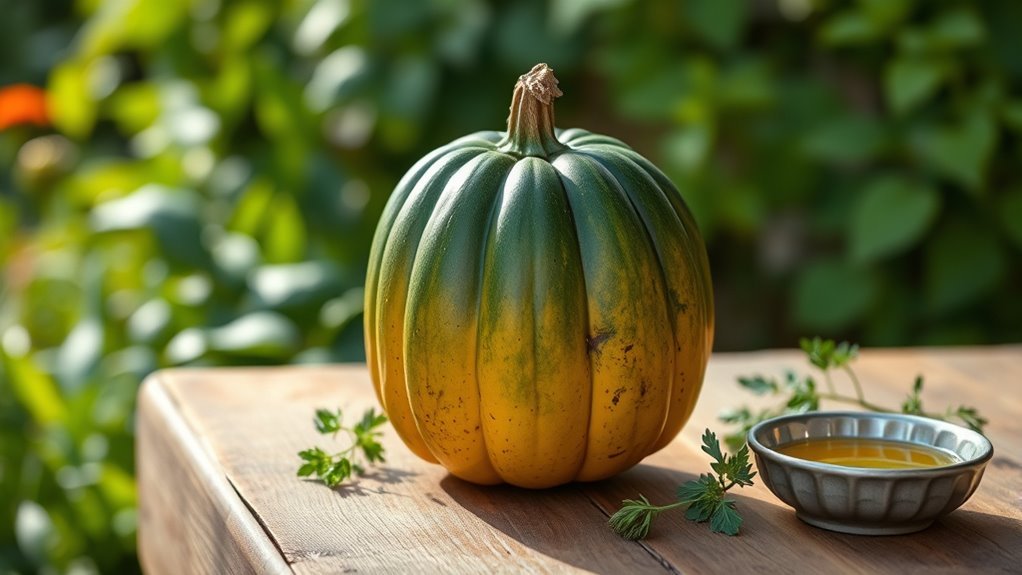
When considering acorn squash in your low-carb diet, it’s important to compare its nutritional profile and carb content with other vegetables. Some options may offer fewer carbs while still providing essential nutrients. By exploring these alternatives, you can better tailor your meals to fit your keto lifestyle.
Nutritional Profile Comparison
While exploring the keto-friendliness of various vegetables, it’s essential to compare their nutritional profiles. Acorn squash, often praised for its unique flavor and health benefits, contains vitamins A and C, potassium, and fiber, making it a nutritious choice. However, when compared to other low-carb vegetables like spinach or zucchini, acorn squash has higher carbohydrate content. Spinach, for instance, is rich in antioxidants and contains fewer carbs, making it a better fit for strict keto dieters. Zucchini also offers similar health benefits with lower carbs. Ultimately, you’ll want to weigh the nutritional value of acorn squash against your dietary goals, recognizing that while it has its merits, other low-carb options may align better with a keto lifestyle.
Carb Content Analysis
To better understand the keto compatibility of acorn squash, it’s important to analyze its carbohydrate content alongside other low-carb vegetables. Acorn squash contains about 15 grams of carbs per cup, which is relatively high compared to options like spinach or zucchini, both of which have considerably lower carb densities. However, acorn squash also offers a good amount of fiber, providing around 2 grams per serving. This fiber content can help mitigate some of the carb impact, promoting digestive health. When comparing it to other low-carb vegetables, you’ll find that while acorn squash isn’t the lowest in carbs, its nutritional benefits and fiber make it a more balanced choice if consumed in moderation within a keto diet.
Best Low-Carb Alternatives
How does acorn squash stack up against other low-carb vegetables? While it has its merits, there are several low-carb alternatives you might consider that offer even fewer carbs and more versatility in your meals. Here’s a quick comparison:
- Zucchini noodles: A fantastic pasta substitute, they’re low in calories and carbs.
- Cauliflower rice: A great base for stir-fries or bowls, it’s high in fiber and adaptable.
- Spinach: Nutrient-rich and versatile, it’s perfect for salads or sautéing.
- Broccoli: High in vitamins and low in carbs, it works well roasted or steamed.
- Bell peppers: Crunchy and sweet, they add flavor without adding many carbs.
These options can help you enjoy your meals while keeping your carb count low.
How Acorn Squash Affects Blood Sugar Levels
Acorn squash can have a notable impact on blood sugar levels, especially when consumed in moderation. While it’s relatively low in carbohydrates compared to other starchy vegetables, it still contains natural sugars that can influence your blood sugar. The fiber content in acorn squash helps slow the absorption of sugars, potentially leading to a more stable insulin response. This means your blood sugar levels may not spike as drastically as they would with higher-carb foods. However, individual responses can vary, so it’s important to monitor how your body reacts. If you’re mindful about portion sizes, you can enjoy acorn squash while maintaining better control over your blood sugar levels on a keto diet.
Tips for Incorporating Acorn Squash Into Your Keto Meal Plan
Incorporating acorn squash into your keto meal plan can be both enjoyable and beneficial, especially if you’re mindful of portion sizes. Here are some tips to help you include this nutritious vegetable without compromising your carb goals:
- Meal prep: Roast acorn squash in advance for quick meals.
- Portion control: Limit servings to about half a squash to maintain carb balance.
- Pair wisely: Combine with high-fat ingredients like butter or coconut oil.
- Experiment: Try different spices to enhance flavor without adding carbs.
- Monitor your macros: Keep track of your carb intake to stay within your limits.
Delicious Keto-Friendly Acorn Squash Recipes
While you’re steering through your keto diet, finding delicious recipes that align with your carb goals can be a challenge. Luckily, acorn squash can be a versatile ingredient. Here are some keto-friendly recipes to inspire you:
| Recipe Name | Key Ingredients |
|---|---|
| Roasted Acorn Squash | Acorn squash, olive oil, herbs |
| Acorn Squash Soup | Acorn squash, garlic, broth |
| Stuffed Acorn Squash | Ground turkey, cheese, spices |
| Acorn Squash Salad | Roasted acorn, greens, nuts |
| Mashed Acorn Squash | Acorn squash, butter, seasoning |
These dishes showcase the rich flavors of acorn squash while keeping carbs in check. Enjoy the freedom to indulge in healthy, satisfying meals!
Possible Alternatives to Acorn Squash on a Keto Diet
If you’re looking for variety in your keto meal plan, there are several alternatives to acorn squash that can fit your dietary needs without compromising on flavor. Here are some tasty options to evaluate:
- Zucchini noodles: A versatile and low-carb substitute for pasta that can absorb flavors beautifully.
- Cauliflower rice: Easy to prepare, this can serve as a great base for stir-fries and grain bowls.
- Spaghetti squash: Offers a similar texture to acorn squash and can be served with various sauces.
- Radishes: Roasted or sautéed, they can provide a satisfying, crunchy alternative.
- Broccoli: Packed with nutrients, it’s great for adding to salads or as a side dish.
These alternatives can keep your meals exciting while sticking to keto guidelines.
Frequently Asked Questions
Can I Eat Acorn Squash on a Strict Keto Diet?
You can eat acorn squash on a strict keto diet, but you’ll need to be mindful of its carb content. With around 15 grams of carbs per cup, it’s higher than some keto-friendly veggies. Acorn squash nutrition offers vitamins and minerals, so consider it in moderation. If you’re looking for keto diet alternatives, try zucchini or cauliflower, which are lower in carbs and can give you the freedom to enjoy your meals without compromising your goals.
How Many Servings of Acorn Squash Are Recommended for Keto?
When it comes to acorn squash servings on a keto diet, moderation is key. Typically, a serving size of about half a cup can fit into your carb limits, but you should consider your overall daily intake. Since acorn squash is higher in carbs compared to other keto vegetable options, it’s wise to enjoy it sparingly. Balancing it with lower-carb veggies will help you maintain your keto goals while still enjoying delicious flavors.
Is Frozen Acorn Squash Keto-Friendly?
Yes, frozen acorn squash can fit into your keto diet. Picture a vibrant bowl of golden squash, its nutrition intact even when frozen. It offers fiber and essential vitamins while being relatively low in carbs compared to other starchy vegetables. Just keep track of your portion sizes, as the carbs can add up. Embrace the convenience of frozen acorn squash, ensuring you enjoy its rich flavor without compromising your keto goals.
What Are the Best Cooking Methods for Acorn Squash on Keto?
The best cooking methods for acorn squash on keto are roasting and baking. For roasting, cut the squash in half, scoop out the seeds, and brush with olive oil before seasoning. Bake at 400°F for about 30-40 minutes until tender. You can enhance flavor with herbs or spices. If you prefer baking, try stuffing it with low-carb fillings. These roasting techniques and baking tips can help you enjoy acorn squash while staying on track!
Can I Use Acorn Squash in Smoothies on a Keto Diet?
You can use acorn squash in smoothies on a keto diet, but it’s important to keep portion sizes in check. Acorn squash smoothies can add a creamy texture and a slight sweetness, but they do contain carbs. To keep your keto smoothie recipes balanced, consider combining acorn squash with low-carb ingredients like spinach, avocado, or unsweetened almond milk. This way, you can enjoy a delicious drink without exceeding your carb limits.
Frequently Asked Questions about Acorn Squash and Keto Diet
1. Is acorn squash low in carbohydrates?
Acorn squash is not particularly low in carbohydrates compared to other vegetables typically recommended for a ketogenic diet. One cup of cooked acorn squash contains approximately 15 grams of carbohydrates, with about 9 grams of fiber, resulting in a net carb count of around 6 grams. While it can fit into a low-carb diet in moderation, it may not be suitable for strict keto dieters who aim to keep their carb intake below 20 grams per day.
2. Can I include acorn squash in my keto meal plan?
Including acorn squash in your keto meal plan is possible, but it should be done with caution. If you choose to consume acorn squash, it’s important to monitor your portion sizes and overall carbohydrate intake throughout the day. It can be included as an occasional side dish or as part of a meal that is otherwise low in carbohydrates to maintain ketosis.
3. What are the health benefits of acorn squash?
Acorn squash offers several health benefits, including being a good source of vitamins A and C, potassium, and dietary fiber. These nutrients contribute to improved immune function, better digestion, and overall health. Additionally, the antioxidants found in acorn squash may help reduce inflammation and protect against chronic diseases, making it a nutritious choice when consumed in moderation.
4. How can I prepare acorn squash for a keto diet?
To prepare acorn squash for a keto diet, consider roasting it with healthy fats like olive oil or butter. You can slice it in half, scoop out the seeds, season it with herbs and spices, and roast it in the oven until tender. Alternatively, you can mash it or incorporate it into soups and stews with low-carb ingredients to create a satisfying dish while keeping your carb count in check.
5. Are there keto-friendly alternatives to acorn squash?
Yes, there are several keto-friendly alternatives to acorn squash. Vegetables lower in carbohydrates, such as zucchini, cauliflower, and broccoli, can be excellent substitutes. These alternatives can be used in similar recipes and provide similar textures while keeping your net carb intake lower, making them more suitable for a strict ketogenic diet.
References
- https://www.healthline.com/nutrition/low-carb-vegetables
- https://www.ncbi.nlm.nih.gov/pmc/articles/PMC7072315/
- https://www.dietaryguidelines.gov/
- https://www.eatright.org/health/dietary-guidelines-and-myplate/what-is-a-keto-diet
- https://www.webmd.com/diet/obesity/acorn-squash-nutrition-facts
- https://www.verywellfit.com/acorn-squash-nutrition-facts-4687168
- https://www.vegetablefacts.com/acorn-squash-nutrition-101-what-you-need-to-know
- https://www.cdc.gov/nutrition/healthy-eating/index.html