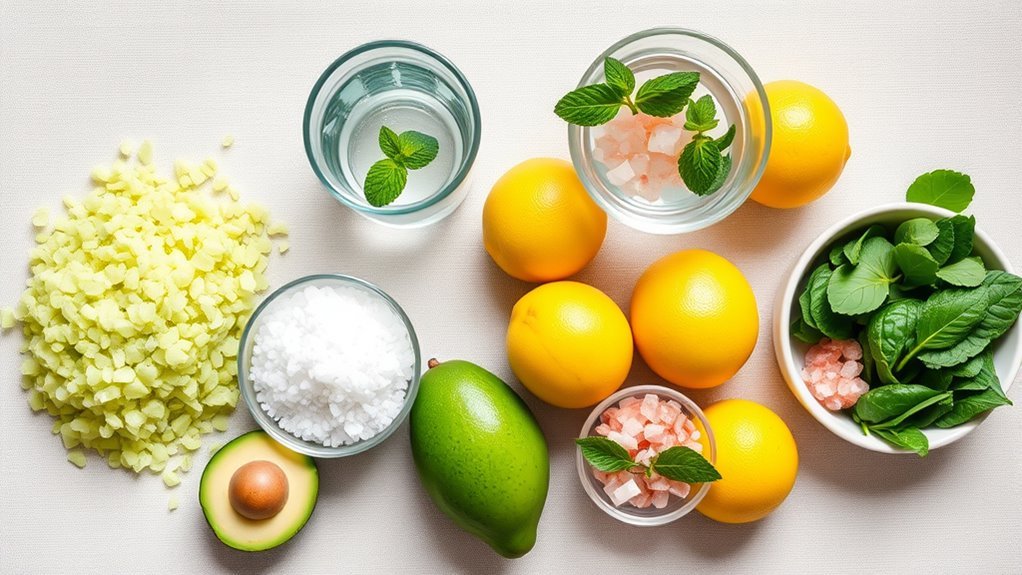

To get electrolytes on a keto diet, focus on key minerals like sodium, potassium, and magnesium. Aim for 2,000-3,000 mg of sodium from sources like sea salt, and include potassium-rich foods like avocados and spinach. For magnesium, consider leafy greens and nuts. Staying hydrated is essential, so incorporate these foods into balanced meals. Monitor symptoms like fatigue and headaches that may indicate an imbalance. You can explore more effective strategies for maintaining electrolyte levels.
Understanding the Role of Electrolytes in a Keto Diet

When you’re following a keto diet, understanding the role of electrolytes is essential, as they help maintain your body’s fluid balance and nerve function. During keto adaptation, your body shifts from using glucose to fat for energy, which can lead to a loss of electrolytes through increased urination. This shift may cause symptoms like fatigue, headaches, and muscle cramps, commonly referred to as “keto flu.” To support electrolyte function, it’s vital to replenish minerals such as sodium, potassium, and magnesium. Balancing these electrolytes not only helps mitigate discomfort but also enhances overall performance. Staying mindful of your electrolyte intake empowers you to embrace the freedom of a keto lifestyle while maintaining your health and well-being.
Key Electrolytes to Focus On
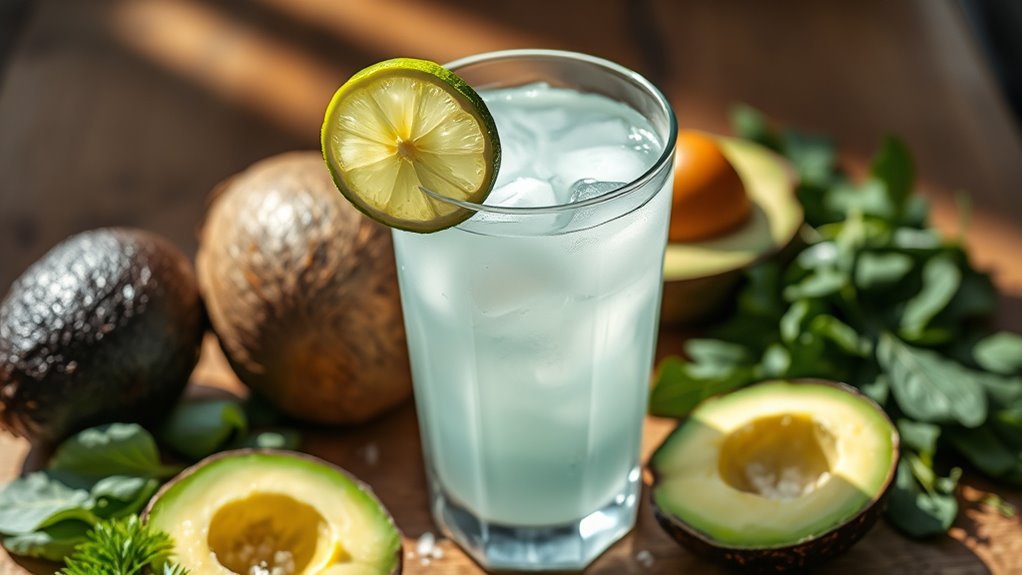
Three key electrolytes are essential for anyone on a keto diet: sodium, potassium, and magnesium. Sodium helps maintain fluid balance and nerve function, and you can find it in sources like sea salt and pickled vegetables. Potassium benefits include regulating blood pressure and muscle contractions, making it critical for overall health. Good potassium sources include avocados and leafy greens. Magnesium plays a significant role in energy production and muscle function, which is essential when adapting to ketosis. By focusing on these electrolytes, you can support your body’s needs while enjoying the freedom of a keto lifestyle. Remember to adjust your intake based on your activity level and individual health needs for ideal results.
Top Food Sources for Electrolytes
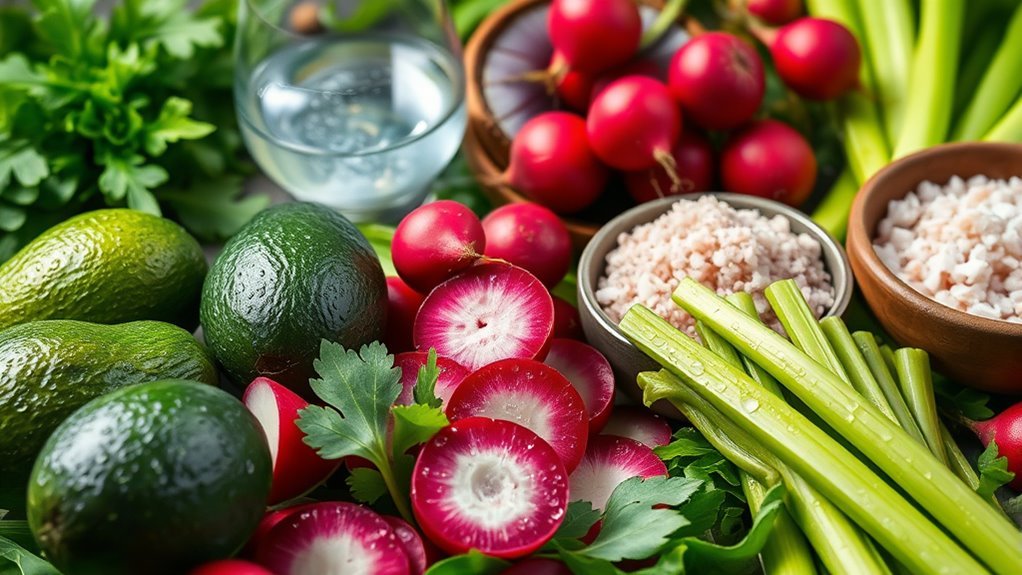
When you’re following a keto diet, getting the right electrolytes from food is essential. For sodium, consider options like pickles and olives, while high-potassium foods include avocados and leafy greens. Incorporating these foods can help maintain your electrolyte balance effectively.
Best Foods for Sodium
Although many people associate sodium with negative health effects, it plays an essential role in maintaining electrolyte balance, especially on a ketogenic diet. To guarantee you’re getting enough sodium, consider incorporating sodium-rich foods like olives, pickles, and certain cheeses. These are great sodium sources that enhance flavor and provide necessary nutrients. You can also use cooking techniques such as brining or seasoning dishes with sea salt to elevate sodium levels. If you’re looking for sodium alternatives, consider adding broth or miso paste to your meals. Remember, achieving sodium balance is critical for muscle function and hydration. Embracing these sodium benefits can help you enjoy your keto journey while supporting your overall health.
High-Potassium Options
To maintain ideal electrolyte levels on a ketogenic diet, you can’t overlook the importance of potassium-rich foods. Incorporating high potassium foods into your meals is crucial for overall health and can help balance your electrolytes. Here are some top options and potassium-rich recipes to contemplate:
| Food Source | Potassium (mg) per 100g | Serving Suggestion |
|---|---|---|
| Avocado | 485 | Smoothies or salads |
| Spinach | 558 | Sautéed or in omelets |
| Mushrooms | 318 | Stir-fries or soups |
| Salmon | 628 | Grilled or baked |
| Coconut Water | 250 | Invigorating drink |
Incorporate these foods into your diet to guarantee you’re hitting your potassium needs while enjoying delicious meals!
Supplements to Consider for Electrolyte Balance
When you’re on a keto diet, maintaining electrolyte balance can be challenging, making supplements a valuable option. Essential electrolyte supplements can help fill the gaps, while natural sources provide additional benefits. It’s vital to understand recommended dosage guidelines to guarantee you’re getting the right amounts for ideal health.
Essential Electrolyte Supplements
Maintaining proper electrolyte balance is critical for anyone on a ketogenic diet, as the body may lose necessary minerals during the shift to ketosis. To support your hydration strategies and guarantee peak performance, consider these key electrolyte supplements:
- Sodium: Important for fluid balance, it helps maintain blood pressure and supports nerve function.
- Potassium: Significant for muscle contractions and heart health, it can help prevent cramps and fatigue.
- Magnesium: Aids in muscle relaxation, energy production, and can alleviate headaches.
Incorporating these supplements can help you stay hydrated and maintain energy levels, allowing you to embrace the freedom of your keto journey. Remember, it’s important to consult with a healthcare professional before adding supplements to your routine.
Natural Sources of Electrolytes
While many people turn to supplements for electrolyte balance, natural food sources can also provide essential minerals to support your ketogenic lifestyle. Leafy greens, such as spinach and kale, are packed with potassium, magnesium, and calcium. Incorporating these vibrant veggies into your meals can help maintain your electrolyte levels effectively. Additionally, consider enjoying coconut water for its numerous benefits; it’s a natural source of potassium and aids in hydration. Just one cup can offer around 600 mg of potassium, making it a great addition to your diet. By focusing on these natural sources, you can enjoy a balanced intake of electrolytes, feel energized, and embrace the freedom that comes with a well-supported ketogenic journey.
Recommended Dosage Guidelines
Electrolyte supplements can play an essential role in maintaining balance, especially on a ketogenic diet. To optimize electrolyte absorption and support your body, consider these recommended dosage guidelines:
- Sodium: Aim for 2,000-3,000 mg daily, adjusting based on activity level and sweat loss.
- Potassium: A daily intake of 3,500-4,700 mg is ideal, with food sources enhancing absorption.
- Magnesium: 300-400 mg per day can help with muscle cramps and sleep issues.
For best results, spread out your intake throughout the day. This dosage frequency helps maintain stable electrolyte levels and guarantees your body functions smoothly. Always consult with a healthcare professional before starting any supplementation to tailor it to your unique needs.
Signs of Electrolyte Imbalance on Keto
How can you tell if you’re experiencing an electrolyte imbalance while on a ketogenic diet? Pay attention to symptoms like fatigue, which can drain your energy levels. You might also notice muscle cramps, making it hard to stay active. Heart palpitations could arise, signaling that something’s off with your electrolyte levels. Dizziness and nausea are common signs too, often indicating dehydration or imbalances. Cognitive impairment, like trouble concentrating or brain fog, can hinder your mental freedom. Finally, digestive issues such as constipation may occur, impacting your overall comfort. If you experience any of these symptoms, it’s important to assess your electrolyte intake to maintain a balanced and thriving ketogenic lifestyle.
Tips for Staying Hydrated and Balanced
Staying hydrated and balanced on a ketogenic diet is essential, especially since the shift in your body’s metabolism can lead to increased water and electrolyte loss. Implementing effective hydration strategies can help you maintain your well-being. Here are a few tips:
Staying hydrated on a ketogenic diet is crucial due to potential water and electrolyte loss.
- Opt for electrolyte drinks that are low in sugar and high in essential minerals.
- Increase your water intake throughout the day, aiming for at least half your body weight in ounces.
- Incorporate foods rich in electrolytes, such as avocados, nuts, and leafy greens.
Creating an Electrolyte-Rich Meal Plan
Maintaining proper hydration goes hand in hand with creating a meal plan that supports your electrolyte needs on a ketogenic diet. By focusing on meal prep and incorporating diverse food choices, you can easily enhance your electrolyte intake. Here’s a simple table to guide your meal planning:
| Meal Type | Food Options | Snack Ideas |
|---|---|---|
| Breakfast | Spinach omelet | Celery with cream cheese |
| Lunch | Grilled chicken salad | Olives |
| Dinner | Salmon with asparagus | Almonds |
| Snacks | Avocado slices | Cucumber with salt |
Incorporating these options guarantees you get essential electrolytes while enjoying varied meals that keep your taste buds satisfied. Embrace this freedom to craft a nourishing meal plan!
Frequently Asked Questions
Can I Get Electrolytes From Drinks Other Than Water?
Absolutely, you can get electrolytes from drinks other than water! Imagine you’re training for a marathon and feeling drained. Instead of plain water, you grab an electrolyte drink like coconut water or a low-carb sports drink. These hydration options not only replenish electrolytes but also provide a revitalizing taste. Remember, staying hydrated with diverse drinks can keep your energy up and your body balanced, especially during intense activities or hot weather.
How Do I Know if I Need More Electrolytes?
You’ll know you need more electrolytes if you experience symptoms like muscle cramps, fatigue, or dizziness. Keep a symptom checklist handy to monitor these signs. Additionally, if you’re feeling unusually thirsty or have dark urine, it might indicate dehydration, signaling a need for electrolytes. To maintain balance, consider hydration tips like consuming broths or electrolyte-rich foods, ensuring you stay energized and healthy while enjoying your freedom to choose your diet.
Are There Vegan Sources of Electrolytes for Keto?
Yes, there are plenty of vegan sources of electrolytes for keto! You can find potassium in avocados and spinach, while magnesium can be sourced from nuts and seeds. Don’t forget about sodium; seaweed packs quite a punch! Coconut water, though higher in carbs, is another option. By incorporating these plant sources into your meals, you can maintain your electrolyte balance while enjoying the freedom of a vegan keto lifestyle.
Can Electrolyte Imbalances Affect My Workout Performance?
Yes, electrolyte imbalances can considerably affect your workout performance. When you’re low on key electrolytes, it can lead to dehydration and muscle cramps, diminishing your workout hydration and overall endurance. Maintaining proper levels of sodium, potassium, and magnesium is essential for performance optimization. By ensuring you’re adequately hydrated and replenishing electrolytes, you’ll enhance your energy levels and focus, allowing you to reach your fitness goals with greater freedom and effectiveness.
Is It Safe to Use Electrolyte Supplements Daily?
Yes, it’s generally safe to use electrolyte supplements daily, especially if you’re active or sweating a lot. However, you should be cautious of potential side effects like gastrointestinal discomfort or imbalances if taken excessively. It’s important to choose high-quality supplements and consult with a healthcare provider to determine the right dosage for your needs. Remember, balancing natural food sources with supplementation can give you the freedom to maintain ideal hydration and performance.
Frequently Asked Questions about Getting Electrolytes on Keto
1. Why do I need electrolytes on a keto diet?
Electrolytes are essential minerals that help regulate various bodily functions, including hydration, nerve function, and muscle contractions. When following a keto diet, your body undergoes significant changes in carbohydrate intake, which can lead to a loss of electrolytes through increased urination. This can result in symptoms known as the “keto flu,” including fatigue, headaches, and muscle cramps. Ensuring you have adequate electrolytes can help mitigate these symptoms and maintain your overall health while on the diet.
2. What electrolytes should I focus on while on keto?
The key electrolytes to focus on while on a keto diet are sodium, potassium, and magnesium. Sodium helps maintain fluid balance and nerve function, potassium is crucial for muscle contractions and heart health, and magnesium plays a role in energy production and muscle relaxation. It’s essential to monitor your intake of these electrolytes to support optimal bodily functions and reduce the risk of deficiencies.
3. How can I increase my electrolyte intake on a keto diet?
You can increase your electrolyte intake on a keto diet by consuming foods rich in these minerals. For sodium, consider adding sea salt or Himalayan salt to your meals. Foods high in potassium include avocados, leafy greens, and mushrooms. For magnesium, opt for nuts, seeds, and dark chocolate. Additionally, you may consider electrolyte supplements or drinks specifically formulated for those on a low-carb diet. Always consult with a healthcare professional before starting any supplementation.
4. Are there any signs of electrolyte imbalance I should watch for?
Yes, there are several signs of electrolyte imbalance to be aware of, particularly when you are on a keto diet. Common symptoms include muscle cramps, dizziness, fatigue, irregular heartbeat, headaches, and nausea. If you experience any of these symptoms, it may indicate that your electrolyte levels are not balanced. It’s important to address these issues promptly by adjusting your diet or considering supplementation, and consulting a healthcare professional if symptoms persist.
5. Can I get enough electrolytes without supplements on a keto diet?
Yes, it is possible to get enough electrolytes without supplements while on a keto diet. By consuming a variety of keto-friendly foods rich in electrolytes, such as avocados, nuts, seeds, leafy greens, and meats, you can meet your daily requirements. However, if you find it challenging to maintain balance or experience symptoms of deficiency, using supplements can be a convenient way to ensure adequate intake. Always aim for a diet that includes a wide range of nutrient-dense foods to support your health.
References
- https://www.ncbi.nlm.nih.gov/pmc/articles/PMC6470868/
- https://www.healthline.com/nutrition/electrolytes-keto-diet
- https://www.webmd.com/diet/what-are-electrolytes
- https://www.mayoclinic.org/healthy-lifestyle/nutrition-and-healthy-eating/expert-answers/electrolytes/faq-20057964
- https://www.verywellfit.com/electrolyte-deficiency-and-keto-diet-5181968
- https://www.hopkinsmedicine.org/health/wellness-and-prevention/the-role-of-electrolytes-in-the-body
- https://www.americannutritionassociation.org/newsletter/electrolytes-and-the-ketogenic-diet
- https://www.ncbi.nlm.nih.gov/pmc/articles/PMC6412108/