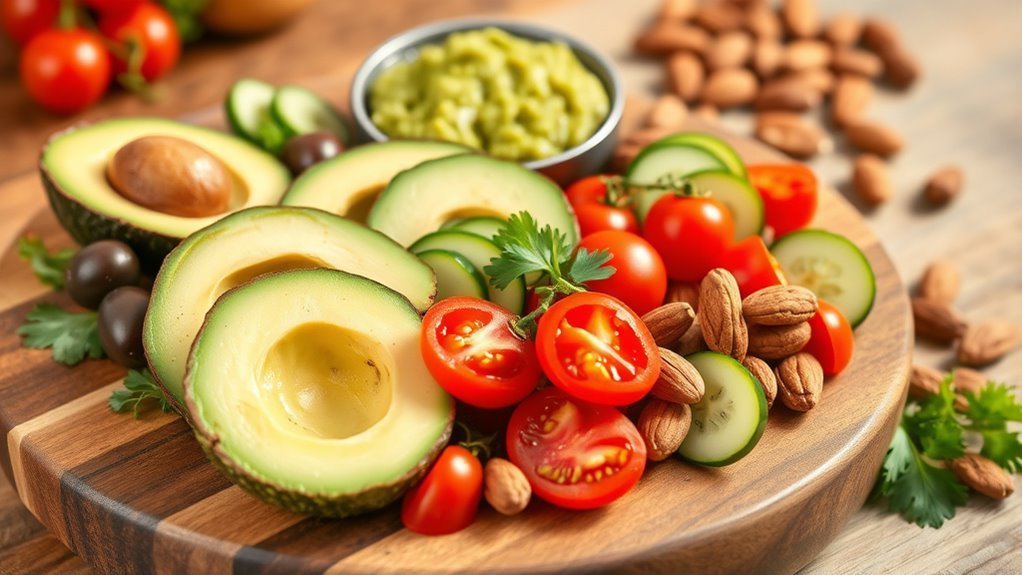

On a keto diet, you can enjoy high-fat foods like avocado oil, coconut butter, and fatty fish like salmon. Lean proteins, such as chicken and Greek yogurt, are great options. Fill your plate with low-carb vegetables like spinach, kale, and zucchini noodles. For snacks, opt for cheese crisps or guacamole with celery sticks. These choices will help maintain your ketosis and energy levels, while supporting your health. There’s more to explore about keto-friendly options that can enhance your meals.
Understanding the Keto Diet Basics
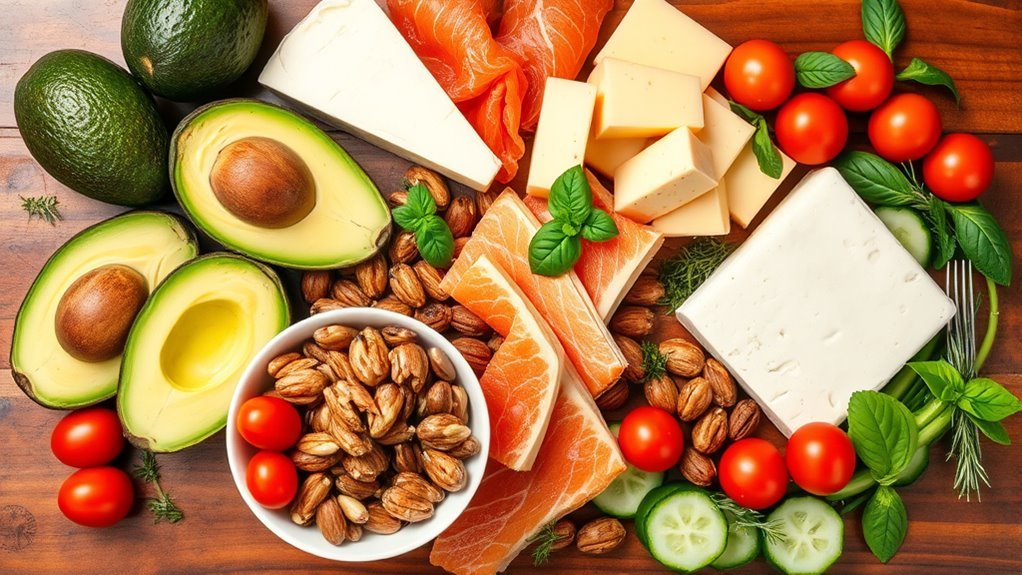
While many diets promise quick weight loss, the keto diet stands out by fundamentally altering your body’s approach to energy. The keto diet fundamentals revolve around drastically reducing carbohydrates and increasing fats, leading your body into a state of ketosis. This metabolic shift enables your body to burn fat for fuel instead of glucose. Typically, the macronutrient ratios on a keto diet consist of about 70-75% fats, 20-25% protein, and only 5-10% carbohydrates. By adhering to these ratios, you empower yourself to enjoy a variety of foods while promoting fat loss and improved energy levels. Understanding these basics can help you make informed choices and embrace the freedom that comes with a successful keto lifestyle.
Keto-Friendly Fats to Incorporate

To truly embrace the keto diet and its benefits, incorporating the right types of fats is key. Healthy fats not only provide energy but also support your body’s shift into ketosis. Avocado oil is a fantastic option; it’s rich in monounsaturated fats and can enhance heart health. Use it for drizzling on salads or cooking at high temperatures. Coconut butter is another excellent choice, offering medium-chain triglycerides (MCTs) that your body can quickly convert into fuel. It adds a creamy texture to smoothies or can be enjoyed straight from the jar. By choosing these fats, you’re not just adding flavor, but also fueling your body with the nutrients it needs while enjoying the freedom that comes with a ketogenic lifestyle.
Protein Sources for a Ketogenic Lifestyle
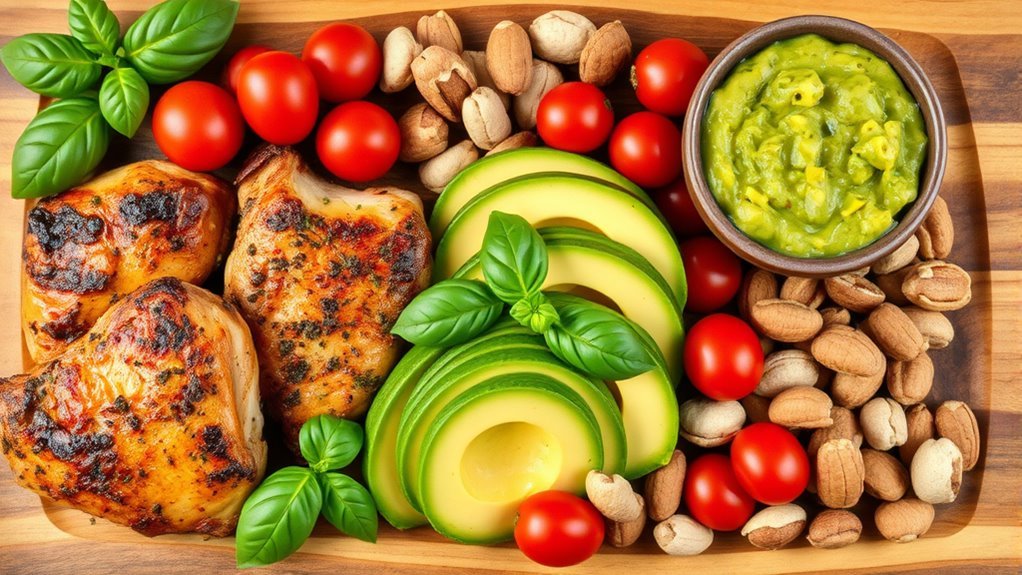
When you’re following a ketogenic lifestyle, selecting the right protein sources is essential for maintaining muscle mass and promoting overall health. Lean meats and dairy options are excellent choices that provide necessary nutrients while keeping your carb intake low. Here’s a quick overview of some protein sources you can enjoy:
| Protein Source | Type |
|---|---|
| Chicken Breast | Lean Meat |
| Salmon | Fatty Fish |
| Greek Yogurt | Dairy Option |
| Cheddar Cheese | Dairy Option |
Incorporating these foods can help guarantee you’re getting the protein your body needs while staying within your carb limits. Remember, a balanced approach to protein will support your goals and keep you feeling satisfied.
Low-Carb Vegetables to Enjoy
Incorporating low-carb vegetables into your ketogenic diet can not only enhance your meals but also provide essential vitamins and minerals. Vegetables like spinach, kale, and broccoli are fantastic choices, as they’re low in carbs and high in fiber. You can enjoy zucchini noodles as a pasta substitute, offering a satisfying texture without the carbs of traditional pasta. Cauliflower rice is another great option; it’s versatile and can be used in various dishes, from stir-fries to casseroles. These low-carb veggies not only help you stay within your carb limits but also keep your meals colorful and nutritious. Embracing these options can lead to delicious, satisfying dishes that align perfectly with your keto lifestyle. Enjoy the freedom of creativity in your cooking!
Snacks and Treats That Fit the Keto Plan
While low-carb vegetables add variety and nutrition to your meals, snacks and treats can also play a significant role in your keto journey. Choosing keto-friendly desserts like coconut flour brownies or chia seed pudding can satisfy your sweet tooth without derailing your progress. For savory keto snacks, consider options like cheese crisps, pepperoni chips, or guacamole with celery sticks. These snacks not only taste great but also keep you within your carb limits, allowing you to enjoy food without feeling restricted. Remember, it’s all about balance. Incorporating these delicious options can make your keto lifestyle enjoyable and sustainable, ensuring you feel free to indulge occasionally while staying on track with your health goals.
Frequently Asked Questions about the Keto Diet
1. What foods can I eat on a keto diet?
On a keto diet, you can eat foods that are high in healthy fats, moderate in protein, and very low in carbohydrates. This includes meats (like beef, pork, and poultry), fatty fish (like salmon and mackerel), eggs, dairy (such as cheese and yogurt), non-starchy vegetables (like leafy greens, broccoli, and cauliflower), nuts, seeds, and healthy oils (like olive oil and coconut oil). It’s important to avoid grains, sugars, and starchy vegetables.
2. Can I eat fruits on a keto diet?
Fruits are generally higher in carbohydrates than other food groups, so they should be consumed in moderation on a keto diet. Low-carb options such as berries (strawberries, raspberries, and blackberries) can be enjoyed in small portions, while fruits like bananas, apples, and grapes should typically be avoided due to their higher sugar content.
3. What snacks are keto-friendly?
Keto-friendly snacks are those that are low in carbohydrates and high in fats. Great options include cheese sticks, hard-boiled eggs, nuts (like almonds or walnuts), seeds (like pumpkin or sunflower seeds), olives, and low-carb protein bars. You can also consider making your own snacks using ingredients like nut butters or avocado.
4. Are there any beverages I can drink on a keto diet?
Yes, there are several beverages that are suitable for a keto diet. Water is the best option, but you can also enjoy unsweetened tea, coffee (preferably black or with heavy cream), and bone broth. Be cautious with sugary drinks, fruit juices, and even some smoothies, as they can quickly increase your carb intake.
5. Can I eat processed foods on a keto diet?
While some processed foods can fit into a keto diet, it’s important to read labels carefully. Look for products that are low in carbs and free from added sugars. Some processed foods like keto-friendly protein bars or snacks may be convenient; however, whole, unprocessed foods should be prioritized for optimal health and nutrition.
References
- https://www.ncbi.nlm.nih.gov/pmc/articles/PMC5788910/
- https://www.health.harvard.edu/staying-healthy/the-ketogenic-diet
- https://www.mayoclinic.org/healthy-lifestyle/nutrition-and-healthy-eating/expert-answers/keto-diet/faq-20430376
- https://www.cdc.gov/healthyweight/healthy_eating/index.html
- https://www.webmd.com/diet/what-is-the-keto-diet
- https://www.nutrition.gov/topics/nutrition-nutrition-education/healthy-eating-plans/keto-diet
- https://en.wikipedia.org/wiki/Ketogenic_diet