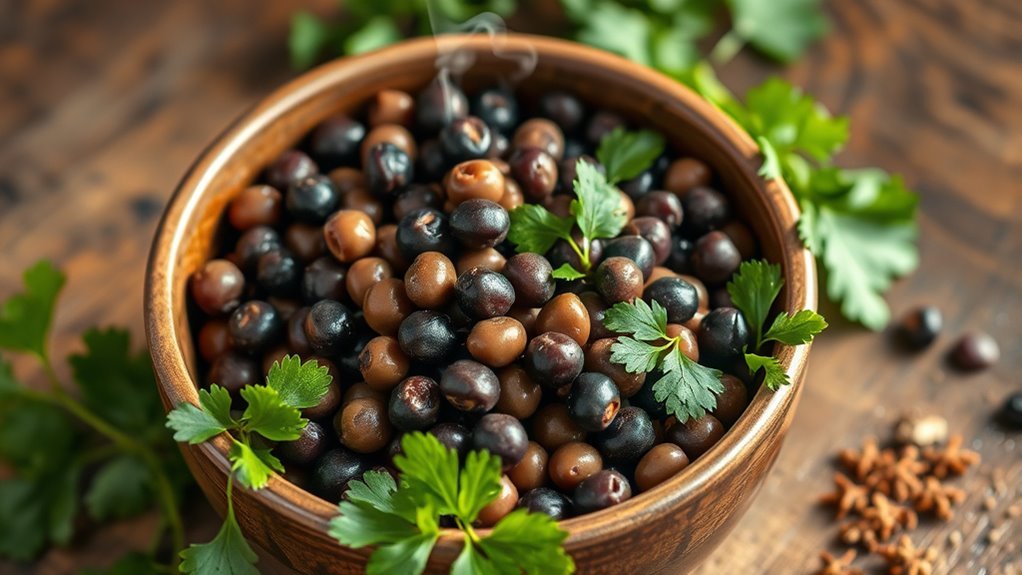

Black-eyed peas aren’t typically keto-friendly due to their higher carb content, containing about 20 grams of carbohydrates per cooked cup. This amount can greatly affect your daily carb allowance on a keto diet. While they provide health benefits like fiber and essential nutrients, careful portion control is essential for keto adherence. If you’re curious about how to incorporate them wisely or explore alternatives, there’s more valuable information to ponder.
Nutritional Profile of Black-Eyed Peas
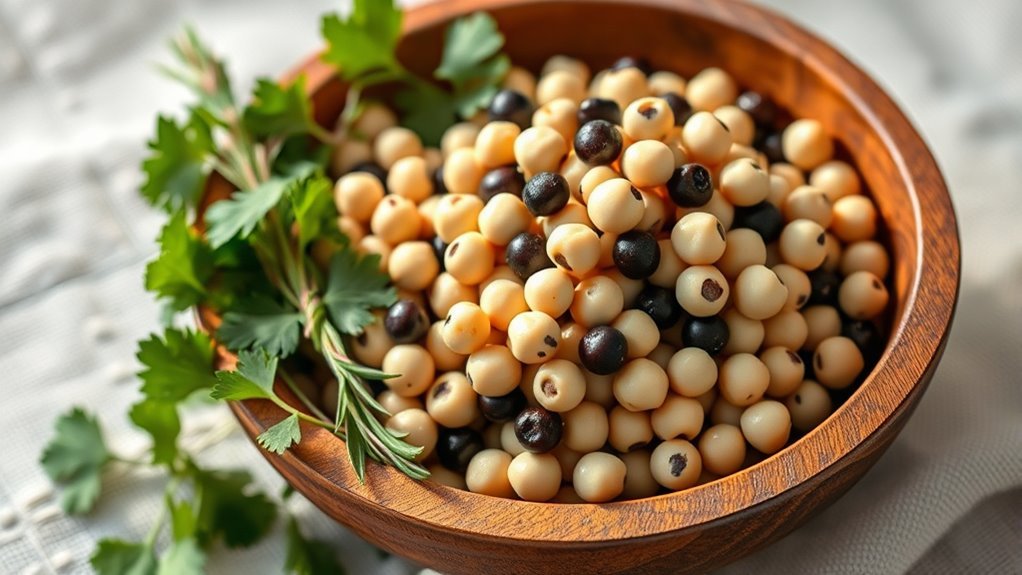
When considering whether black-eyed peas fit into a keto diet, it’s vital to look at their nutritional profile. Black-eyed peas are known for their nutrient density, providing a rich source of vitamins and minerals. They’re high in protein content, which can be beneficial for those aiming to maintain muscle mass while following a low-carb regimen. Each serving offers a variety of nutrients, including folate, iron, and magnesium, contributing to overall health. However, while black-eyed peas are nutritious, it’s important to weigh their carb content against your specific keto goals. Understanding the balance between nutrient density and individual dietary needs will empower you to make informed choices that align with your health journey.
Carb Content Analysis
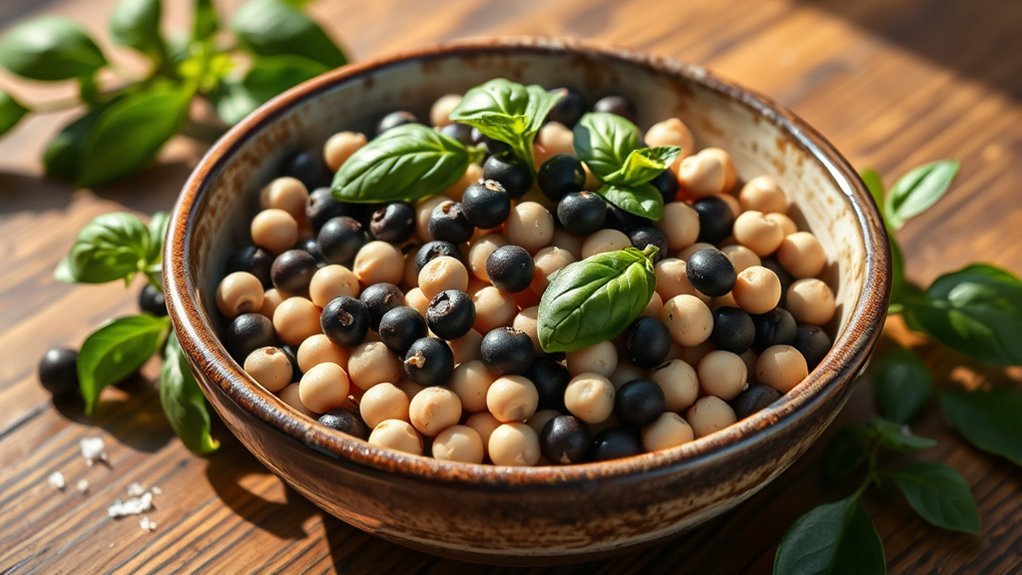
Black-eyed peas contain approximately 20 grams of carbohydrates per cooked cup, which can greatly impact your daily carb allowance on a keto diet. When you consider a typical keto limit of 20-50 grams per day, this carb content can be significant. In a carb comparison with other legumes, black-eyed peas are on the higher side. If you’re looking for legume alternatives that are more keto-friendly, options like green beans or spinach might be better choices. They offer lower carb counts while still providing fiber and nutrients. Ultimately, if you’re committed to a strict keto lifestyle, it’s essential to monitor your intake of black-eyed peas and make informed choices that align with your dietary goals.
Health Benefits of Black-Eyed Peas

While black-eyed peas may not fit neatly into a strict keto diet due to their higher carbohydrate content, they do offer a range of health benefits worth considering. One of the most significant advantages is their high dietary fiber content, which promotes digestive health and can help regulate blood sugar levels. Incorporating black-eyed peas into your meals can aid in weight management by keeping you fuller for longer. They’re also rich in essential nutrients like vitamins A and C, folate, and potassium, supporting overall wellness. Plus, their antioxidant properties can help combat inflammation. So, even if you’re mindful of carbs, adding them occasionally can enhance your diet with valuable nutrients and health benefits.
Incorporating Black-Eyed Peas Into a Keto Diet
Although incorporating black-eyed peas into a keto diet might seem challenging due to their carbohydrate content, there are strategic ways to enjoy them while still adhering to your dietary goals. Consider using them in small portions or as a flavorful addition to salads. Meal planning can help you balance your carb intake effectively.
| Keto Recipes | Portion Size | Carbs per Serving |
|---|---|---|
| Black-Eyed Pea Salad | 1/4 cup | 10g |
| Spiced Black-Eyed Peas | 1/4 cup | 9g |
| Black-Eyed Pea Soup | 1/2 cup | 12g |
| Black-Eyed Peas Stir Fry | 1/4 cup | 8g |
With careful meal planning, you can enjoy the unique flavors of black-eyed peas while staying true to your keto lifestyle.
Alternatives to Black-Eyed Peas on Keto
What can you substitute for black-eyed peas on a keto diet? If you’re looking for keto legumes, consider options like green beans, edamame, or lentils in moderation. These alternatives not only provide similar textures but also align with low-carb requirements. Green beans are low in carbs and high in fiber, making them an excellent choice. Edamame offers protein and healthy fats, perfect for keto enthusiasts. If you want to go for a legume-like flavor, try chickpeas, though they’re slightly higher in carbs. It’s important to weigh your choices, ensuring they fit your macros while still allowing culinary creativity. Remember, freedom in your diet comes from knowing your options and making informed, satisfying choices!
Frequently Asked Questions
Can I Eat Black-Eyed Peas on a Strict Keto Diet?
You can’t eat black-eyed peas on a strict keto diet like you can’t swim in the desert. Their nutritional value is high, but they’re also packed with carbs. One cup contains around 35 grams of carbohydrates, which is more than most keto dieters can afford. If you’re looking for freedom from carbs, it’s best to explore alternatives with lower carb content that align better with your keto goals.
How Do Black-Eyed Peas Compare to Other Legumes on Keto?
Black-eyed peas have a higher carb content compared to other legumes, making them less ideal for a strict keto diet. In a nutritional comparison, you might find alternatives like lentils or chickpeas better suited, as they typically offer lower net carbs. However, if you’re looking for variety, using them in moderation can still fit into a relaxed low-carb plan. Just be mindful of portion sizes and overall carb intake to maintain your goals.
Are Canned Black-Eyed Peas Keto-Friendly?
Canned black-eyed peas can be a convenient choice for your keto journey. They pack a punch of protein and nutrition, though they do contain some carbs. If you enjoy legumes, consider portion control to maintain your macro balance. While they’re not the lowest carb legume alternative, they can fit into a well-planned keto diet. Just keep an eye on your overall carb intake, and savor the benefits of these versatile beans!
What Are the Best Recipes Using Black-Eyed Peas for Keto?
For keto-friendly recipes using black-eyed peas, try making invigorating black-eyed pea salads with avocado, cherry tomatoes, and a zesty lime dressing. You can also whip up hearty black-eyed pea soups by simmering them with low-sodium broth, garlic, and spinach for added nutrients. Just watch your portion sizes, as they do contain carbs. These dishes can be tasty options to include in your keto meal planning without feeling restricted.
Do Black-Eyed Peas Affect Ketosis Levels?
Black-eyed peas can impact ketosis due to their carb content, which is about 20 grams per cup. This means that if you’re aiming for a strict keto diet, consuming them might make it harder to maintain your ketosis levels. Curiously, studies show that incorporating legumes like black-eyed peas can provide fiber and protein, which are beneficial for overall health. If you love them, consider portion control to enjoy their benefits without derailing your goals.
Frequently Asked Questions about Black Eyed Peas and Keto Diet
1. Are Black Eyed Peas considered keto-friendly?
Black Eyed Peas are not typically considered keto-friendly due to their higher carbohydrate content. A standard serving of cooked Black Eyed Peas contains around 20 grams of carbohydrates, which can take up a significant portion of the daily carb allowance for those following a strict ketogenic diet that usually limits carbs to 20-50 grams per day.
2. What are the carbohydrate counts in Black Eyed Peas?
A 1-cup serving of cooked Black Eyed Peas contains approximately 20 grams of total carbohydrates, along with around 6 grams of fiber. This means the net carbs would be about 14 grams per serving. While they are nutritious, this carb content may not fit within the limits for those on a ketogenic diet.
3. Can I include Black Eyed Peas in a low-carb diet?
If you are following a low-carb diet rather than a strict keto diet, you might be able to include Black Eyed Peas in moderation. The key is to monitor your overall carbohydrate intake throughout the day. Including small portions of Black Eyed Peas can provide beneficial nutrients without significantly impacting your carb limits.
4. What are the nutritional benefits of Black Eyed Peas?
Black Eyed Peas are a great source of protein, fiber, vitamins, and minerals. They are particularly high in folate, iron, and potassium. The fiber content can help promote digestive health and support a balanced diet, making them a valuable addition to many meal plans, albeit in moderation for those on keto.
5. Are there any alternatives to Black Eyed Peas for a keto diet?
Yes, there are several alternatives to Black Eyed Peas that are more suitable for a keto diet. Some great options include leafy greens, broccoli, cauliflower, and zucchini. These vegetables are low in carbohydrates and high in nutrients, making them excellent substitutes to maintain ketosis while still enjoying a variety of flavors and textures in your meals.
References
- https://www.healthline.com/nutrition/black-eyed-peas
- https://www.ncbi.nlm.nih.gov/pmc/articles/PMC6381715/
- https://www.health.gov/dietaryguidelines/2015/guidelines/
- https://www.ncbi.nlm.nih.gov/pmc/articles/PMC7576247/
- https://www.cdc.gov/nutrition/index.html
- https://www.washingtonpost.com/food/2020/01/03/keto-diet-explained/
- https://www.webmd.com/diet/what-is-the-keto-diet
- https://www.eatright.org/health/wellness/preventing-illness/what-is-the-keto-diet
- https://www.mayoclinic.org/healthy-lifestyle/nutrition-and-healthy-eating/expert-answers/keto-diet/faq-20409589

