
Yes, kelp noodles are a great choice for a keto diet! With just 3.0g of carbs per 100g serving, they’re low in carbohydrates, allowing you to maintain ketosis. They’re also rich in vitamins and minerals, particularly iodine, supporting overall health. Plus, they’re versatile and can easily be incorporated into various dishes like stir-fries, salads, or soups. If you want to know how to use them creatively in your meals, keep exploring!
Nutritional Profile of Kelp Noodles
Kelp noodles are a unique addition to the culinary landscape, especially for those following a ketogenic diet. These noodles are made from various kelp varieties, which are known for their impressive nutrient density. Rich in vitamins A, C, E, and K, as well as essential minerals like calcium and iodine, kelp noodles offer a healthy alternative to traditional pasta. They’re low in calories and fat, making them a versatile option for your meals. Incorporating kelp noodles can help you boost your nutrient intake without adding excessive carbs. Plus, their chewy texture and ability to absorb flavors mean they can fit seamlessly into a variety of dishes. Enjoying these noodles can empower your culinary creativity while maintaining a balanced, health-conscious diet.
Carb Content and Ketosis
When considering kelp noodles in your keto diet, it’s important to look at their carb content. These noodles are low in carbohydrates, which can help maintain your ketosis levels. Understanding their nutritional profile can help you make informed choices that align with your dietary goals.
Kelp Noodles Nutrition Facts
For those following a ketogenic diet, understanding the nutritional profile of foods is essential, and kelp noodles present an intriguing option. These noodles are low in carbohydrates and high in dietary fiber, offering several kelp benefits that can complement your keto lifestyle. Here’s a breakdown of their nutrition facts:
| Nutrient | Amount per 100g | Daily Value (%) |
|---|---|---|
| Calories | 17 | 1 |
| Carbohydrates | 3.0g | 1 |
| Dietary Fiber | 1.0g | 4 |
| Protein | 1.0g | 2 |
| Fat | 0.2g | 0 |
Incorporating kelp noodles into your meals can enhance your diet while keeping carb intake low.
Impact on Ketosis Levels
With a low carbohydrate content of just 3.0g per 100g serving, kelp noodles can be a great addition to a ketogenic diet. They offer a unique option for those aiming for ketosis maintenance without sacrificing variety. Here are some key points about their metabolic impact:
- Low Carb Count: Minimal carbs support your goal of staying in ketosis.
- High Fiber: Aids digestion and helps keep you feeling full.
- Nutrient-Dense: Packed with vitamins and minerals for overall health.
- Versatile: Easily incorporated into various dishes, enhancing flavor without adding carbs.
Incorporating kelp noodles provides flexibility in your meals while ensuring you maintain your ketogenic lifestyle effectively.
Health Benefits of Kelp Noodles
Kelp noodles offer a myriad of health benefits that can enhance your diet, particularly for those following a keto lifestyle. As a type of sea vegetable, kelp is rich in essential nutrients while being low in calories and carbs. They’re a great source of iodine, which supports thyroid function and metabolism. Kelp noodles also contain antioxidants and anti-inflammatory properties, promoting overall wellness.
| Health Benefit | Description |
|---|---|
| Low Calorie | Helps maintain a calorie deficit. |
| High in Iodine | Supports thyroid health. |
| Antioxidants | Protects against oxidative stress. |
| Gluten-Free | Ideal for those with gluten sensitivities. |
| Easy to Prepare | Quick and versatile addition to meals. |
Incorporating kelp noodles can be a delicious way to elevate your health while enjoying your freedom with food!
How to Incorporate Kelp Noodles Into Your Diet
Incorporating kelp noodles into your meals can be both simple and rewarding, particularly given their health benefits. They’re incredibly versatile and can enhance your meal prep. Here are some easy ways to include them in your diet:
- Stir-Fries: Toss kelp noodles into your favorite stir-fry for added texture.
- Salads: Mix them with fresh veggies and a flavorful dressing for a rejuvenating salad.
- Soups: Add them to soups or broths for a nutrient boost.
- Flavor Pairing: Experiment with sauces like sesame or peanut for delicious flavor pairings.
With these ideas, you’ll enjoy the health benefits of kelp noodles while keeping your meals exciting and satisfying.
Comparing Kelp Noodles to Traditional Pasta
While traditional pasta is a staple in many diets, kelp noodles offer a unique alternative that caters to specific dietary needs, particularly for those following a keto lifestyle. When you compare the two, you’ll notice notable differences in texture and flavor profile.
| Feature | Kelp Noodles | Traditional Pasta |
|---|---|---|
| Texture | Crunchy and chewy | Soft and pliable |
| Flavor Profile | Mild, slightly briny | Neutral, absorbs sauces |
| Carbohydrates | Very low | High |
Kelp noodles can provide a revitalizing twist to your meals, especially if you’re looking for something low in carbs. While they lack the robust flavor of traditional pasta, they can still be a versatile base for various dishes.
Recipes Featuring Kelp Noodles
If you’re looking to incorporate kelp noodles into your meals, you have some delicious options. A Quick Kelp Noodle Stir-fry can be prepared in minutes, making it perfect for busy weeknights, while a Creamy Kelp Noodle Salad offers a revitalizing, low-carb side. Both recipes showcase the versatility of kelp noodles and can easily be tailored to fit your taste preferences.
Quick Kelp Noodle Stir-fry
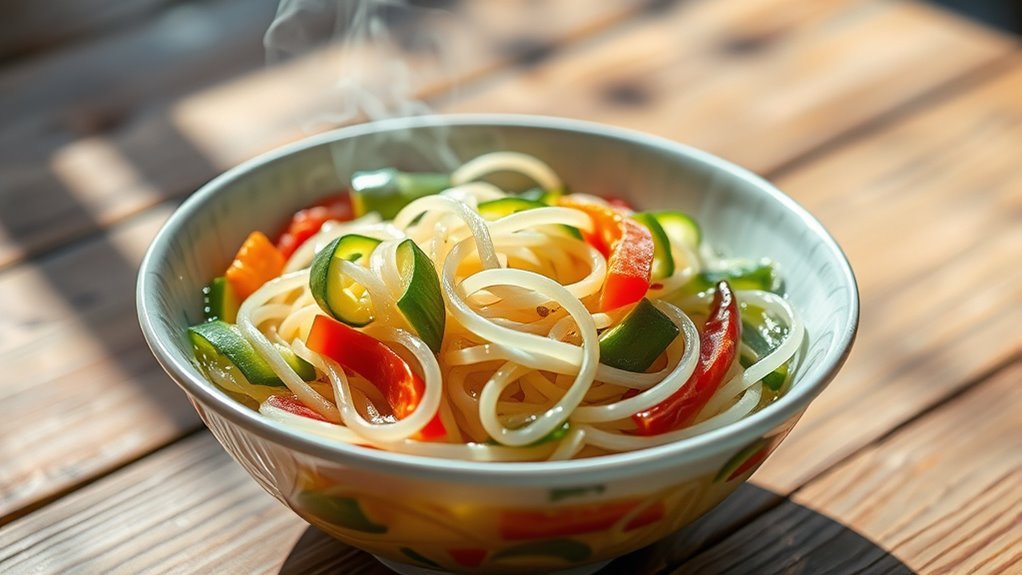
Kelp noodle stir-fries offer a quick and nutritious way to elevate your meals, especially for those following a keto diet. These dishes are perfect for quick cooking and can be whipped up in no time using simple stir fry techniques. Here’s how to create a delicious stir-fry:
- Choose your protein: Chicken, shrimp, or tofu work great.
- Select your vegetables: Bell peppers, broccoli, and zucchini add crunch and nutrients.
- Add flavor: Use garlic, ginger, or soy sauce for depth.
- Cook the noodles: Just rinse the kelp noodles and add them at the end to warm through.
With these steps, you can enjoy a satisfying, healthy meal that fits seamlessly into your keto lifestyle!
Creamy Kelp Noodle Salad
Salads can be a revitalizing and versatile option for those on a keto diet, and creamy kelp noodle salad is no exception. This dish combines the unique texture of kelp noodles with a rich, creamy dressing made from ingredients like avocado and olive oil, keeping your fat intake in check. You can customize your salad with a variety of vegetable toppings, such as cucumber, bell peppers, and shredded carrots, adding essential nutrients without the carbs. Not only is this salad invigorating, but it’s also quick to prepare, making it perfect for busy days. With its satisfying flavors and keto-friendly profile, creamy kelp noodle salad is a delicious way to enjoy your meals while sticking to your dietary goals.
Frequently Asked Questions
Are Kelp Noodles Gluten-Free?
Yes, kelp noodles are gluten-free, making them a great option for those with gluten sensitivities. Packed with nutritional benefits, they’re low in calories and rich in minerals like iodine. You can use them in various culinary applications, from salads to stir-fries. Their unique texture allows them to absorb flavors well, enhancing your dishes without added carbs or gluten. So, if you’re looking for a healthy, versatile ingredient, kelp noodles are definitely worth considering.
Where Can I Buy Kelp Noodles?
You can buy kelp noodles at various online retailers, like Amazon or health food stores. Imagine exploring a vibrant marketplace, where health-conscious choices abound. Just as you’d seek treasures among the stalls, you’ll find kelp noodles nestled among the aisles of nutrition. They’re often available in specialty stores too, giving you the freedom to choose where to shop. Always check the ingredients to verify they align with your dietary preferences. Happy hunting!
How Long Do Kelp Noodles Last?
Kelp noodles typically last about 1-2 years if stored properly. To enhance their shelf life, keep them in a cool, dry place and make sure they’re sealed tightly after opening. Once opened, it’s best to refrigerate them and consume within a week for ideal freshness. Always check for signs of spoilage before eating, and if they’ve changed in color or smell, it’s safer to discard them. Enjoy your healthy choices!
Can You Cook Kelp Noodles?
Yes, you can cook kelp noodles! Picture a steaming pot of water, ready for the transformation. Simply rinse the noodles, then simmer them for a few minutes or sauté them in a pan with your favorite vegetables and sauces. For recipe ideas, think stir-fries or salads where they add a delightful crunch. Kelp noodles absorb flavors beautifully, making them a versatile addition to your culinary adventures. Enjoy experimenting with cooking methods that excite your taste buds!
Are Kelp Noodles Suitable for Vegans?
Absolutely, kelp noodles are suitable for vegans! They’re made from seaweed and contain minimal calories, making them a great addition to many vegan recipes. Plus, they offer nutritional benefits like iodine, fiber, and essential minerals. You can easily incorporate them into salads, stir-fries, or soups to enhance your meals. With their unique texture, kelp noodles can provide a satisfying and healthy option for those following a plant-based lifestyle. Enjoy experimenting with them!
1. Are kelp noodles keto-friendly?
Yes, kelp noodles are keto-friendly. They are low in carbohydrates, making them an excellent choice for those following a ketogenic diet. Kelp noodles are primarily made from seaweed, which is high in fiber and low in calories, allowing you to maintain your daily carb limit while still enjoying a versatile noodle alternative.
2. What are the nutritional benefits of kelp noodles?
Kelp noodles are rich in vitamins and minerals, particularly iodine, calcium, and iron. They are also a good source of antioxidants and have a high fiber content, which can aid in digestion and promote a feeling of fullness. This makes them a nutritious addition to a keto diet, providing essential nutrients while keeping carb intake low.
3. How do you prepare kelp noodles for a keto meal?
Preparing kelp noodles is easy. Rinse them under cold water to remove any residual briny flavor. You can then add them directly to your dishes, as they don’t require cooking. They can be used in salads, stir-fries, or soups. For best results, combine them with flavorful sauces or seasonings to enhance their taste in your keto recipes.
4. Can kelp noodles be used as a substitute for traditional pasta?
Yes, kelp noodles can be used as a substitute for traditional pasta. They have a unique texture and absorb flavors well, making them a great alternative in various dishes. Keep in mind that they may not have the same chewy consistency as regular pasta, but they are an excellent low-carb option for those on a keto diet.
5. Are there any potential downsides to eating kelp noodles?
While kelp noodles are generally safe for most people, they do contain iodine, which can affect thyroid function in large amounts. If you have thyroid issues or are on medication, it’s wise to consult with a healthcare professional before incorporating kelp noodles into your diet. Additionally, some individuals may experience digestive discomfort if they consume large quantities due to their high fiber content.
References
- https://www.healthline.com/nutrition/kelp-noodles
- https://www.ncbi.nlm.nih.gov/pmc/articles/PMC6760524/
- https://www.medicalnewstoday.com/articles/kelp-noodles
- https://www.researchgate.net/publication/325623166_Nutritional_Analysis_of_Kelp_Noodles
- https://www.washingtonpost.com/food/2021/01/20/what-are-kelp-noodles/
- https://www.cdc.gov/nutrition/index.html
- https://www.nutrition.gov/topics/nutrition-education/healthy-eating
- https://www.sciencedirect.com/topics/agricultural-and-biological-sciences/kelp