
You can include certain beans in your ketogenic diet, but it’s essential to choose the right kinds to stay within your carb limits. Black soybeans are an excellent option, offering high protein and just 1 gram of net carbs per half-cup. Green beans and other low-carb varieties can also fit in. Portion sizes and overall carb intake matter greatly. If you want to discover more about incorporating beans into your meals, there’s plenty to explore.
Understanding Carbohydrate Counts in Beans
When you’re managing a ketogenic diet, understanding the carbohydrate counts in beans is vital, as these legumes can vary greatly in their carb content. The carbohydrate breakdown typically shows that while beans are high in complex carbohydrates, many also contain significant fiber content, which can impact net carbs. For instance, black beans have around 15 grams of carbohydrates per half-cup, but with nearly 7 grams of fiber, their net carbs drop considerably. This balance can provide a feeling of fullness and support digestive health. However, it’s important to assess each type of bean to guarantee it fits within your daily carb limit, allowing you the freedom to enjoy a diverse diet while staying keto-compliant.
The Best Low-Carb Bean Options
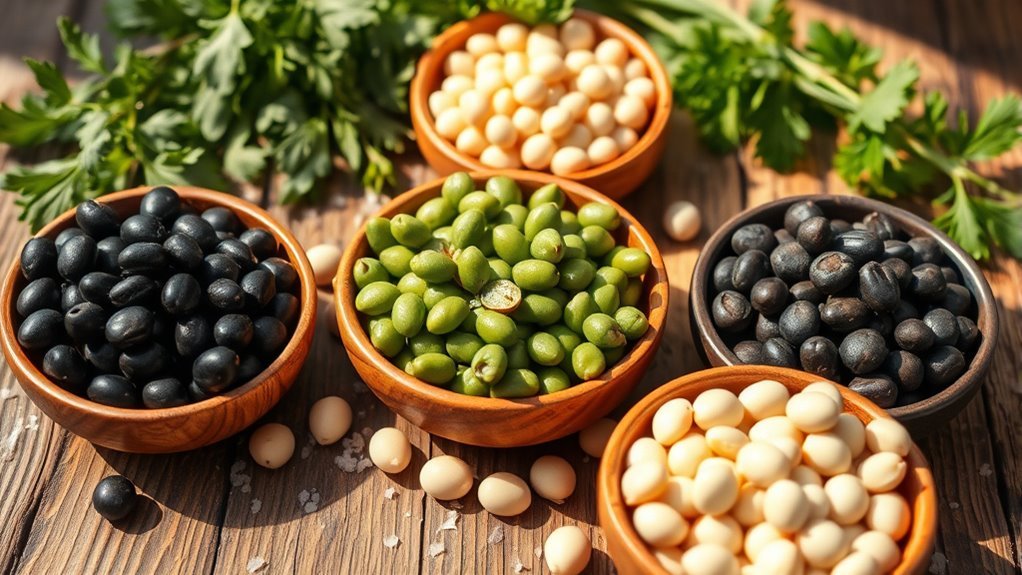
Although beans are often viewed as high-carb foods, some varieties can fit surprisingly well into a ketogenic diet if you choose wisely. For those looking for low-carb options, black soybeans and green beans are excellent choices. Black soybeans are protein-rich varieties, boasting about 7 grams of protein and only 1 gram of net carbs per half-cup. Green beans, while technically a legume, provide around 4 grams of protein and 2 grams of net carbs per cup. Both options come with fiber content benefits, aiding digestion and promoting a feeling of fullness. Incorporating these beans into your meals can enhance your diet while still maintaining your keto goals. Enjoy the versatility without sacrificing your freedom to indulge!
How Beans Affect Ketosis
While many people worry that beans could kick them out of ketosis, understanding their carbohydrate content and how they fit into your overall diet can help dispel those fears. Different bean varieties have varying carbohydrate levels, so it’s essential to choose wisely. For instance, black soybeans are lower in carbs and can be a better fit for your keto lifestyle, while others like kidney beans may have a higher ketosis impact. By monitoring your portion sizes and overall carb intake throughout the day, you can enjoy beans without derailing your progress. Remember, it’s all about balance and finding what works for your body, allowing you the freedom to include these nutritious foods as part of your ketogenic journey.
Creative Ways to Incorporate Beans in Keto Meals
Incorporating beans into your keto meals can be a delicious way to add variety and nutrition without sacrificing your dietary goals. Consider using black soybeans, which are low in carbs, in hearty bean recipes like chili or stews. They can also serve as a protein boost in keto salads. Toss some black soybeans with leafy greens, avocado, and a tangy vinaigrette for a satisfying meal. Another idea is to make a bean dip using mashed black soybeans, garlic, and spices, perfect for snacking with low-carb veggies. Experimenting with these ideas allows you to enjoy the textures and flavors beans provide while staying within your keto framework, giving you the freedom to explore new culinary delights.
Possible Alternatives to Beans on Keto
If you’re looking for alternatives to beans on a keto diet, there are plenty of options that can still provide flavor and texture without the high carb count. Here are some nutritional substitutes and legume alternatives you might enjoy:
| Alternative | Description |
|---|---|
| Cauliflower Rice | A versatile, low-carb base for many dishes. |
| Lentils (in moderation) | Slightly higher in carbs, but can be used sparingly. |
| Chia Seeds | Great for adding fiber and texture to meals. |
| Zucchini Noodles | Perfect for satisfying pasta cravings. |
| Mushrooms | Excellent for adding umami flavor and bulk. |
These alternatives can help you maintain a satisfying and diverse keto diet without sacrificing your goals. Enjoy exploring new flavors!
Frequently Asked Questions about Eating Beans on Keto
1. Can you eat beans on a keto diet?
While beans are a great source of protein and fiber, they are generally high in carbohydrates. Most beans, such as black beans, kidney beans, and chickpeas, contain more carbs than can typically fit into a ketogenic diet, which usually limits daily carb intake to around 20-50 grams. However, some lower-carb options, like green beans and black soybeans, can be included in moderation. Always check the nutrition label and track your intake to ensure you remain within your carb limits.
2. What are the carb counts for different types of beans?
The carbohydrate content in beans varies significantly. For example, one cup of cooked black beans has about 40 grams of carbs, while one cup of cooked kidney beans has around 36 grams. In contrast, green beans contain about 7 grams of carbs per cup, and black soybeans have only about 4 grams. If you’re considering beans on a keto diet, it’s crucial to choose lower-carb varieties and monitor portion sizes to stay within your carbohydrate allowance.
3. Are there any types of beans that are suitable for a keto diet?
Yes, certain types of beans can be suitable for a keto diet. Black soybeans are one of the best options due to their low carbohydrate content. Additionally, green beans and snap peas are also lower in carbs compared to other beans and can be consumed in moderation. Always consider the portion size and your overall daily carb intake when including these options in your meal plan.
4. Can I have bean-based products like hummus on keto?
Many bean-based products, such as traditional chickpea hummus, are not suitable for a keto diet due to their high carbohydrate content. However, you can make keto-friendly hummus using alternatives like cauliflower or avocado. These substitutes provide a similar texture and flavor profile without the excessive carbs found in chickpeas. Always check the ingredients and nutritional information to ensure they align with your dietary goals.
5. How can I incorporate beans into my keto meal plan responsibly?
To incorporate beans into your keto meal plan responsibly, focus on lower-carb varieties like black soybeans and green beans. Measure your portions carefully, keeping track of the carb content to ensure you remain within your daily limits. Use beans as a side dish or in salads, and balance your meals with plenty of healthy fats and proteins. Additionally, consider using beans as an occasional treat rather than a staple in your diet.
References
- https://www.healthline.com/nutrition/keto-diet-foods#beans
- https://www.dietdoctor.com/low-carb/keto/foods
- https://www.ncbi.nlm.nih.gov/pmc/articles/PMC6831120/
- https://www.verywellfit.com/can-you-eat-beans-on-keto-5110236
- https://www.webmd.com/diet/obesity/what-to-eat-on-keto-diet
- https://www.cdc.gov/healthyweight/healthy_eating/index.html
- https://www.nutrition.gov/topics/nutrition-basics/healthy-eating
- https://www.mayoclinic.org/healthy-lifestyle/nutrition-and-healthy-eating/expert-answers/keto-diet/faq-20463031