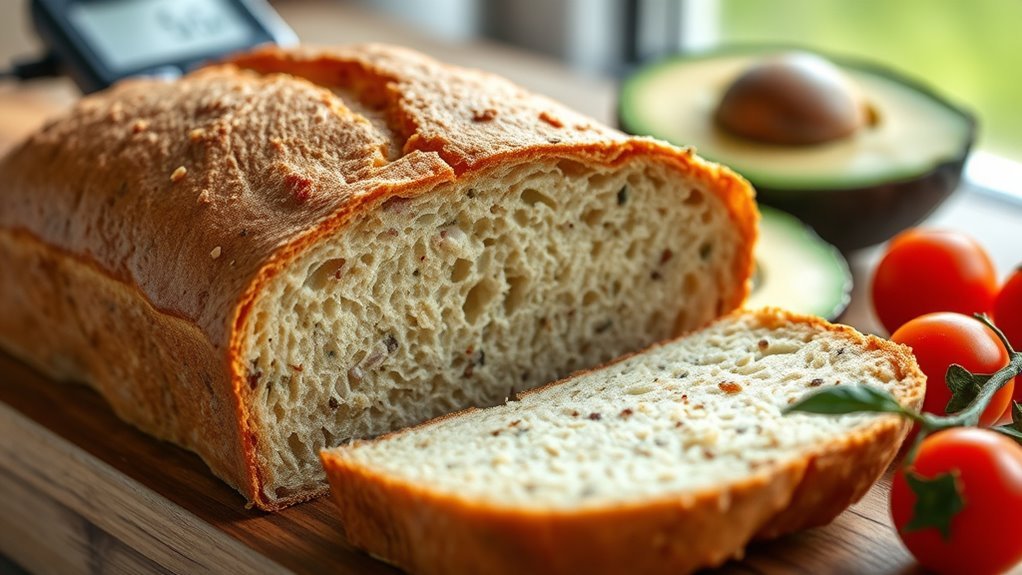

Keto bread usually has a lower impact on blood sugar levels than traditional bread. It’s made from low-carb alternatives like almond or coconut flour, which reduces the amount of carbohydrates you ingest. With high fiber content and healthy fats, it can help stabilize blood sugar by slowing digestion. However, individual responses can vary. To understand more about how different ingredients affect your blood sugar, you might want to explore the details further.
Understanding Keto Bread Ingredients

When exploring keto bread, it’s vital to understand its ingredients, as they greatly impact its nutritional profile. Most keto bread recipes utilize low carb alternatives like almond flour, coconut flour, and psyllium husk. These ingredients are low in carbohydrates and high in fiber, helping to keep your meals satisfying without spiking blood sugar levels. Additionally, many keto breads incorporate eggs or cheese, adding protein and healthy fats. It’s important to read labels carefully, as some store-bought options may include hidden sugars or fillers. By choosing the right keto bread ingredients, you can enjoy the freedom of indulging in bread while adhering to your dietary goals. Always opt for quality ingredients to guarantee you’re making the healthiest choices.
The Role of Carbohydrates in Blood Sugar Levels
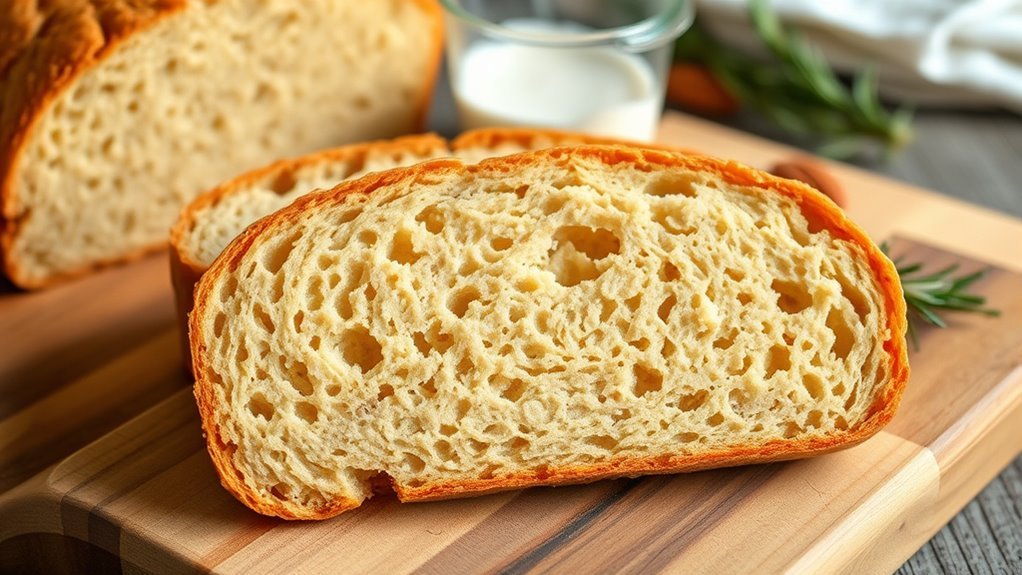
Carbohydrates play an important role in regulating blood sugar levels, as they’re the body’s primary source of energy. The type of carbohydrates you consume can greatly influence your blood sugar response. Understanding carbohydrate types—simple, complex, and fiber—is crucial for making informed dietary choices.
| Carbohydrate Type | Blood Sugar Response |
|---|---|
| Simple | Rapid increase |
| Complex | Gradual increase |
| Fiber | Minimal effect |
When you eat simple carbs, your blood sugar spikes quickly, while complex carbs provide a steadier release of energy. Fiber helps slow digestion, keeping your blood sugar stable. By choosing your carbs wisely, you can enjoy freedom in your diet while managing your blood sugar levels effectively.
How Keto Bread Differs From Traditional Bread

Although traditional bread is typically made from wheat flour, which is high in carbohydrates, keto bread offers a unique alternative that greatly alters its nutritional profile. Keto bread types often use almond flour, coconut flour, or flaxseed meal, considerably reducing carb content. This makes it a popular option for those seeking bread alternatives that won’t spike blood sugar levels. Unlike conventional bread, which can lead to cravings and energy crashes, keto bread is designed to provide sustained energy without the same glycemic impact. By incorporating healthy fats and fiber, keto bread can help you feel fuller longer. If you’re looking to enjoy bread while maintaining a low-carb lifestyle, exploring various keto bread types may be the freedom you seek.
The Glycemic Index and Its Importance
The glycemic index (GI) is an essential tool for understanding how different foods affect your blood sugar levels. It ranks foods based on their impact on glucose levels, helping you make informed dietary choices. By knowing the GI of foods like keto bread, you can better manage your blood sugar and overall health.
Understanding Glycemic Index
Understanding the glycemic index (GI) is essential for anyone looking to manage their blood sugar levels effectively. The GI measures how quickly a carbohydrate-containing food raises your blood sugar. Foods with a high GI can lead to a rapid glycemic response, causing spikes in blood sugar that may affect your insulin sensitivity over time. Conversely, low-GI foods promote steadier blood sugar levels, which can help maintain energy and reduce cravings. By prioritizing low-GI options, you gain more control over your blood sugar management. This awareness empowers you to make informed choices that align with your health goals, allowing you to enjoy a balanced diet while minimizing the risk of blood sugar fluctuations. Embracing the GI concept can be liberating!
Impact on Blood Sugar
When it comes to managing blood sugar, recognizing the impact of the glycemic index (GI) on your diet is essential. The GI measures how quickly foods raise your blood sugar levels. Foods with a high GI can lead to rapid spikes in blood sugar response, which may strain your insulin sensitivity over time. On the other hand, low-GI foods release glucose slowly, promoting steadier blood sugar levels and better overall health. When considering keto bread, its ingredients often yield a lower GI compared to traditional bread, potentially minimizing blood sugar spikes and supporting your goals. Understanding these differences empowers you to make informed choices, giving you the freedom to enjoy your meals while keeping your blood sugar in check.
Effects of Fiber and Fat on Blood Sugar
Although many people focus primarily on carbohydrates when considering blood sugar levels, the roles of fiber and fat are equally important. Fiber benefits your digestive health and can help stabilize blood sugar by slowing carbohydrate absorption. Healthy fat sources, like avocados and nuts, also play a significant role in managing blood sugar levels by providing sustained energy and promoting satiety.
Here’s a quick comparison of fiber and fat in relation to blood sugar:
| Nutrient | Impact on Blood Sugar |
|---|---|
| Soluble Fiber | Slows glucose absorption |
| Insoluble Fiber | Aids digestion |
| Healthy Fats | Reduces insulin spikes |
| Saturated Fats | May worsen insulin resistance |
| Trans Fats | Linked to inflammation |
Understanding these effects can empower you to make informed dietary choices.
Personalizing Your Keto Bread Choices
Choosing the right type of keto bread can greatly impact your blood sugar levels and overall health. When personalizing your keto bread choices, consider customizing recipes that align with your personal preferences and dietary needs. For instance, if you enjoy almond flour, it can be a low-carb option that suits your taste. Alternatively, coconut flour may fit better if you’re looking for a different flavor profile. Experimenting with various ingredients like seeds or psyllium husk can enhance texture and fiber content, further stabilizing blood sugar. Don’t hesitate to modify recipes to suit your lifestyle and preferences, as this flexibility can empower you to create delicious, satisfying bread that supports your keto journey while keeping your health in check.
Monitoring Blood Sugar Levels While on Keto
Monitoring your blood sugar levels while following a keto diet is vital, especially if you’re managing diabetes or insulin resistance. The keto diet can greatly impact how your body processes carbohydrates, making it essential to stay vigilant. Regularly checking your blood sugar helps you understand how different foods, including keto bread, affect your levels. Aim for a consistent monitoring schedule, ideally before and after meals, to identify any patterns. If you notice spikes, adjusting your keto meal plan might be necessary. Staying informed empowers you to make choices that align with your health goals. Remember, your freedom to enjoy the benefits of a keto lifestyle comes with responsibility, so keep your blood sugar in check for best well-being.
Frequently Asked Questions
Can I Eat Keto Bread if I’M Diabetic?
Yes, you can eat keto bread if you’re diabetic. It offers several benefits, like being low in carbs and high in fiber, which may help maintain stable blood sugar levels. Incorporating keto bread into your diabetic meal options can provide you with the satisfaction of bread without the usual spikes in glucose. Just be sure to monitor your portions and overall carb intake to keep your blood sugar in check. Enjoy the freedom it brings!
How Often Can I Consume Keto Bread?
When considering keto bread frequency, it’s essential to practice portion control. You can enjoy it a few times a week, but paying attention to how your body reacts is key. Since keto bread typically contains low carbs, it may have less impact on blood sugar, but moderation is still important. Balancing it with other nutritious foods will help you maintain a healthy lifestyle while enjoying the freedom of including keto bread in your diet.
Does Keto Bread Taste Like Regular Bread?
Have you ever wondered if keto bread can satisfy your cravings like regular bread? The flavor and texture comparison reveals that while keto bread often has a nutty taste and denser consistency, many enjoy it just as much. You might find it a rejuvenating alternative, especially if you’re watching carbs. It won’t replicate the exact experience of traditional bread, but it can still be a delicious option for your meals.
Are There Any Keto Bread Brands I Recommend?
When looking for keto bread, you’ve got some great brand options to evaluate. Brands like Sola, Base Culture, and Franz Keto Bread offer tasty choices that fit your low-carb lifestyle. They’re often made with almond flour or coconut flour, keeping carbs low while providing good texture. It’s important to check the nutritional labels to find one that suits your needs. Experiment a bit; you might find a favorite that feels just right!
Can I Make Keto Bread at Home?
Baking your own keto bread is like crafting a masterpiece; it gives you control over your ingredients. You can definitely make keto bread at home using low carb ingredients like almond flour and coconut flour. Experiment with various baking techniques, such as adding eggs for moisture or using psyllium husk for texture. Not only will you enjoy the freedom of creating your own recipes, but you’ll also guarantee a healthier option tailored to your taste!
Frequently Asked Questions
1. Does eating keto bread raise blood sugar levels?
Keto bread is typically made from low-carb ingredients like almond flour, coconut flour, or flaxseed meal, which have a minimal impact on blood sugar compared to traditional bread made from wheat flour. However, individual responses can vary depending on the specific ingredients used and the overall composition of your meal. Monitoring your blood sugar levels after consuming keto bread can help determine how it affects you personally.
2. What ingredients make keto bread low in carbohydrates?
Keto bread usually incorporates low-carb ingredients such as almond flour, coconut flour, psyllium husk, and eggs. These ingredients are high in fiber and protein, which help to lower the net carbohydrate content. Additionally, many recipes avoid sugar and common high-carb additives, further ensuring the bread remains keto-friendly.
3. How does the fiber content in keto bread affect blood sugar?
Fiber plays a crucial role in blood sugar management. High-fiber foods like keto bread can slow the absorption of carbohydrates, leading to a more gradual increase in blood sugar levels. This can help prevent spikes that are often associated with high-carb foods. It’s important to check the total and net carb content, as fiber is subtracted from total carbohydrates to determine the net carbs that impact blood sugar.
4. Can I include keto bread in a diabetes-friendly diet?
Yes, keto bread can be included in a diabetes-friendly diet due to its low carbohydrate content. However, it’s essential to monitor portion sizes and overall carbohydrate intake throughout the day. Consulting with a healthcare provider or a registered dietitian can provide personalized advice on how to effectively include keto bread in your meal plan while managing blood sugar levels.
5. Are there any potential drawbacks to eating keto bread?
While keto bread can be a great alternative for those on a low-carb diet, it may not be suitable for everyone. Some commercially available keto breads may contain additives, preservatives, or unhealthy fats that can still impact health negatively. Additionally, consuming too much of any type of bread, even low-carb varieties, can lead to overeating and disrupt dietary goals. It’s important to read labels and choose products wisely or consider making homemade versions to control the ingredients.
References
- https://www.ncbi.nlm.nih.gov/pmc/articles/PMC7312195/
- https://www.health.harvard.edu/blog/the-ketogenic-diet-what-is-it-and-is-it-right-for-you-2019121218480
- https://www.diabetes.org/healthy-living/recipes-nutrition/healthy-eating
- https://www.cdc.gov/diabetes/basics/index.html
- https://www.webmd.com/diet/obesity/what-is-the-ketogenic-diet
- https://www.mayoclinic.org/healthy-lifestyle/nutrition-and-healthy-eating/expert-answers/keto-diet/faq-20460954
- https://www.jamanetwork.com/journals/jama/fullarticle/2772354
- https://www.sciencedirect.com/science/article/pii/S2212267219301416
- https://www.nhlbi.nih.gov/health-topics/diabetes