

Almond milk is definitely keto-friendly, containing just 1-2 grams of carbs per cup. This low carbohydrate content makes it a great choice for your ketogenic diet. It’s also low in calories and free from cholesterol and saturated fat, promoting heart health. However, it’s important to choose unsweetened varieties to avoid added sugars. While it may lack protein and certain nutrients unless fortified, almond milk can fit perfectly into your meal plan. There’s even more to discover about how to use it effectively.
Understanding Almond Milk’s Nutritional Profile
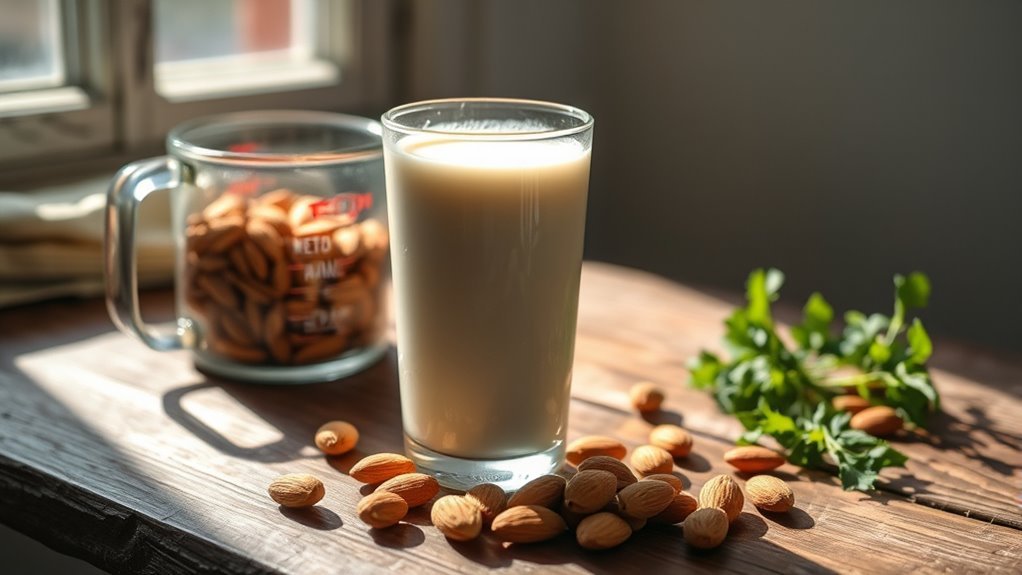
When exploring the nutritional profile of almond milk, it is essential to note its low calorie and carbohydrate content, making it a popular choice for those on a keto diet. Almond milk offers several nutritional benefits, including being rich in vitamin E, which acts as an antioxidant, promoting skin health. Unlike dairy milk, almond alternatives are often fortified with calcium and vitamin D, providing essential nutrients without the added carbs. Additionally, almond milk typically contains no cholesterol or saturated fat, aligning well with a low-carb lifestyle. It’s also lactose-free, catering to those with dietary restrictions. By incorporating almond milk into your diet, you can enjoy a versatile and healthy beverage while maintaining your keto goals.
Carbohydrate Content in Almond Milk
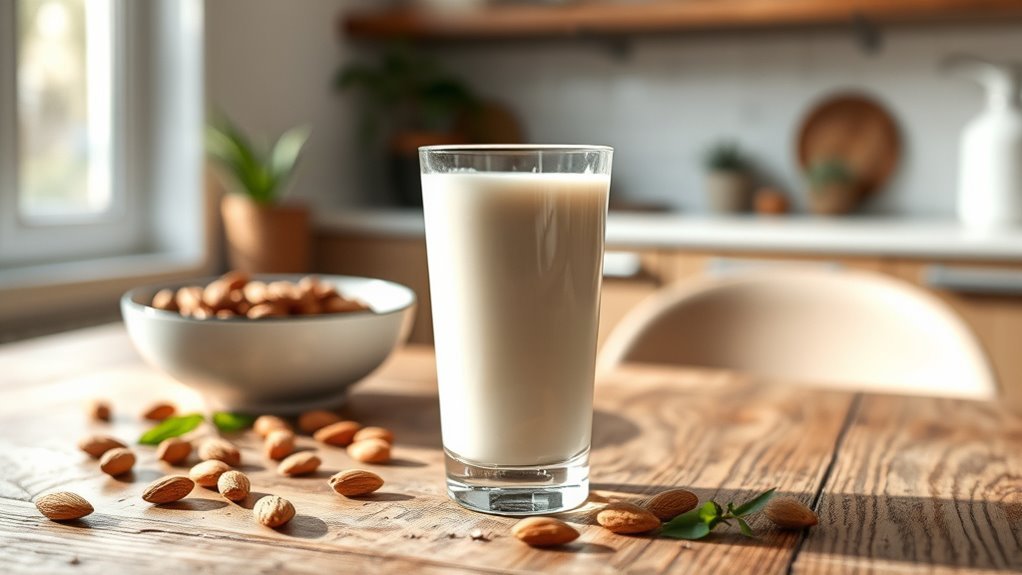
Almond milk is often celebrated for its incredibly low carbohydrate content, making it an ideal choice for those adhering to a keto diet. When considering carbohydrate sources, here’s what you should know about almond milk:
Almond milk’s low carb content makes it perfect for keto enthusiasts seeking delicious, nutritious options.
- One cup of unsweetened almond milk typically contains about 1-2 grams of carbs.
- This is markedly lower than cow’s milk, which can have around 12 grams per cup.
- Opting for unsweetened varieties is essential; flavored or sweetened versions can add unnecessary carbs.
- You can incorporate almond milk into various almond milk recipes, like smoothies or soups, to keep your carb count low.
With such a low carbohydrate content, almond milk provides freedom in your keto lifestyle while still allowing for delicious, nutritious meals.
Benefits of Almond Milk on a Keto Diet

Almond milk offers a low-carb alternative to traditional dairy, making it a great fit for your keto diet. Its nutrient density provides essential vitamins and minerals without the added sugars found in many other milk alternatives. Incorporating almond milk can help you maintain your carb limits while boosting your overall nutritional intake.
Low Carb Content
Because the ketogenic diet emphasizes low carbohydrate intake, choosing beverages that align with its principles is essential for success. Almond milk offers several advantages that make it a suitable choice for keto dieters. Here’s a quick nutritional comparison highlighting its benefits:
- Low in Carbs: Unsweetened almond milk typically contains only 1-2 grams of carbs per cup.
- Calorie Control: With fewer calories than dairy milk, it helps maintain a caloric deficit.
- Versatile Use: You can use it in smoothies, coffee, or as a base for keto recipes.
- No Lactose: Ideal for those who are lactose intolerant, ensuring you can enjoy milk without discomfort.
Incorporating almond milk can enhance your keto journey while enjoying its numerous almond milk benefits.
Nutrient Density Benefits
Many people are surprised to find that almond milk is not only low in carbs but also offers a variety of nutrient density benefits that can be particularly advantageous for those on a keto diet. Almond milk is rich in vitamins and minerals, including vitamin E, which supports skin health and acts as an antioxidant. This milk alternative can enhance nutrient absorption, helping your body utilize essential nutrients more effectively. Additionally, incorporating almond milk into your diet promotes dietary diversity, allowing you to enjoy different flavors and textures while sticking to keto guidelines. By substituting dairy with almond milk, you’re not just lowering carb intake; you’re also enriching your nutritional profile, giving you the freedom to explore new culinary possibilities.
Potential Drawbacks of Almond Milk
While almond milk can be a great addition to your keto diet, it’s important to contemplate some potential drawbacks. You might find that its nutritional value isn’t as high as other dairy alternatives, and some brands add sugars that could impact your carb intake. Being aware of these factors can help you make more informed choices.
Nutritional Value Concerns
Almond milk has become a popular alternative to dairy milk, but it’s important to reflect on its nutritional value concerns. While it’s lower in calories, you might want to take into account the following:
- Protein Content: Almond milk often contains less protein than dairy, which can be a concern for muscle maintenance.
- Vitamins and Minerals: It may lack essential nutrients like calcium and Vitamin D unless fortified.
- Fat Content: Though it’s low in saturated fat, the type of fat can vary, potentially affecting heart health.
- Carbohydrates: Some almond milk brands may have added carbs, which could impact your keto goals.
Being aware of these nutritional concerns helps you make informed choices about incorporating almond milk into your diet.
Added Sugars Risk
Although almond milk can be a nutritious alternative to dairy, it is crucial to watch for added sugars that can undermine your keto diet. Many brands sweeten their almond milk to enhance flavor, which can greatly increase the carbohydrate content. Consuming these added sugars not only conflicts with your keto goals but also poses health risks, such as weight gain and insulin spikes. To stay aligned with your dietary preferences, opt for unsweetened almond milk, which typically contains minimal carbohydrates. Always check the label for hidden sugars, as even small amounts can add up and derail your efforts. By being mindful of your choices, you can enjoy almond milk without compromising your commitment to a keto lifestyle.
How to Choose the Right Almond Milk
When it comes to choosing the right almond milk, you might wonder what factors really matter. To make an informed decision, consider these four key points:
- Ingredients: Look for unsweetened varieties with minimal ingredients, avoiding those with added sugars and unnecessary fillers.
- Nutritional Additives: Check for additives like calcium or vitamin D, which can enhance nutritional value.
- Brand Comparisons: Research different brands to find the best balance of taste and health benefits.
- Carbohydrate Content: Verify the almond milk fits your keto lifestyle by selecting options with low net carbs.
Creative Ways to Incorporate Almond Milk Into Your Keto Meal Plan
Finding the right almond milk is just the first step; the next challenge is figuring out how to incorporate it into your keto meal plan effectively. Here are some creative ways to enjoy almond milk:
| Use Case | Description | Example Recipe |
|---|---|---|
| Almond Milk Smoothies | Blend with low-carb fruits and spinach for a nutritious boost | Spinach & Avocado Smoothie |
| Keto Coffee | Replace regular milk with almond milk for a creamy, low-carb version | Almond Milk Bulletproof Coffee |
| Soups & Sauces | Use it as a base for creamy soups or sauces | Creamy Mushroom Soup |
These options not only add variety but also keep your meals aligned with keto principles. Enjoy the versatility almond milk brings to your diet!
Comparing Almond Milk With Other Dairy Alternatives
While almond milk is a popular choice among those following a keto diet, it’s essential to compare it with other dairy alternatives to find the best fit for your nutritional needs. Here are some key nutritional comparisons:
Almond milk is a favored option for keto dieters, but exploring other dairy alternatives can enhance your nutritional choices.
- Soy Milk: Higher in protein, but check for added sugars.
- Coconut Milk: Creamy and low in carbs, but may lack protein.
- Cashew Milk: Creamy and low-calorie, though it has less protein than soy.
- Hemp Milk: Nutritious with omega-3 fatty acids, but also lower in protein.
Frequently Asked Questions
Can I Make Homemade Almond Milk for Keto?
So, you think you can just whip up homemade almond milk and call it a day? Well, you can! It’s not just about playing chef; there are real nutritional benefits to almond milk recipes. By making your own, you control the ingredients, keeping it keto-friendly. Just blend almonds with water, strain, and voilà! You’ve got a creamy, low-carb delight. Plus, you can customize it to satisfy your taste buds without guilt. Enjoy!
How Does Almond Milk Taste Compared to Regular Milk?
When you compare almond milk to regular milk, you’ll notice some distinct differences in flavor and texture. Almond milk often has a slightly nutty flavor, which can vary by brand and added flavors, like vanilla or chocolate. With respect to texture, it’s usually thinner and less creamy than whole milk, making it a unique choice for your beverages and recipes. Ultimately, it’s about your personal preference and what suits your taste buds best.
Is Unsweetened Almond Milk the Best Option for Keto?
Did you know that unsweetened almond milk can contain as little as 30 calories per cup? When considering your options, it’s often the best choice for those on a keto diet due to its low carb content and nutritional benefits. Different almond milk brands offer various vitamins and minerals, so check the labels. Remember, unsweetened varieties provide the freedom to enjoy a creamy texture without added sugars that can disrupt your keto goals.
Can I Use Almond Milk in Keto Smoothies?
Absolutely, you can use almond milk in keto smoothies! It’s low in carbs, making it a great base for your keto smoothie recipes. Plus, almond milk benefits include being rich in vitamins and healthy fats, which can help keep you satisfied. Just be sure to choose unsweetened varieties to stay in line with your keto goals. With the right ingredients, you’ll enjoy delicious and nutritious smoothies without compromising your dietary freedom.
How Long Does Almond Milk Last After Opening?
Once you open almond milk, it typically lasts about 7 to 10 days in the fridge. To maximize its shelf life, keep it tightly sealed and store it in the coldest part of your refrigerator. Avoid leaving it out at room temperature for too long. If you notice any off smells or changes in texture, it’s best to discard it. Following these storage tips can help you enjoy your almond milk longer.
Frequently Asked Questions about Almond Milk and the Keto Diet
1. Is almond milk low in carbohydrates?
Yes, almond milk is generally low in carbohydrates, especially when compared to regular dairy milk. Unsweetened almond milk contains about 1-2 grams of carbs per cup, making it a suitable choice for those following a keto diet. However, it is important to check the labels, as flavored or sweetened varieties may contain added sugars and higher carb counts.
2. Can I use almond milk in keto recipes?
Absolutely! Unsweetened almond milk can be used in various keto recipes, including smoothies, soups, and baked goods. Its creamy texture and nutty flavor can enhance many dishes without adding significant carbs, making it a versatile ingredient for those on a ketogenic diet.
3. How does almond milk compare to other plant-based milks for keto?
When comparing almond milk to other plant-based milks, such as soy or oat milk, almond milk is typically the lowest in carbohydrates. For example, unsweetened soy milk contains about 4 grams of carbs per cup, while oat milk can have upwards of 15 grams. Therefore, unsweetened almond milk is often favored on a keto diet for its low carb content.
4. Does almond milk provide any nutritional benefits on a keto diet?
Yes, almond milk offers several nutritional benefits. It is a good source of vitamin E, which is an antioxidant that supports skin health and protects cells from damage. Additionally, almond milk is often fortified with calcium and vitamin D, which are essential for bone health. The healthy fats in almonds can also help support energy levels and satiety on a keto diet.
5. Are there any potential downsides to drinking almond milk on a keto diet?
While almond milk can be a great addition to a keto diet, there are a few considerations. Some brands may contain additives, preservatives, or sweeteners that can increase the carb content. Additionally, those with nut allergies should avoid almond milk altogether. It’s also important to consume it in moderation, as excessive intake might lead to an imbalance in nutrient intake.
References
- https://www.healthline.com/nutrition/almond-milk-keto-friendly
- https://www.medicalnewstoday.com/articles/323042
- https://www.verywellfit.com/almond-milk-nutrition-facts-5190297
- https://www.ncbi.nlm.nih.gov/pmc/articles/PMC7031421/
- https://www.ketoconnect.net/is-almond-milk-keto/
- https://www.organicfacts.net/health-benefits/beverages/almond-milk.html
- https://www.clevelandclinic.org/health/articles/what-is-almond-milk-and-is-it-good-for-you
- https://www.wisewell.com/blogs/news/keto-diet-what-to-drink-while-on-keto

