Keto bread can be a healthy choice if you’re following a low-carb diet. It usually has fewer carbs and more fiber than regular bread, helping you maintain ketosis and stabilize blood sugar. However, it’s important to check ingredients for hidden sugars and additives. While it offers benefits like satiety and essential nutrients, be aware of potential digestive issues from high fiber content. There’s more to evaluate when incorporating it into your meals.
Understanding Keto Bread: What Is It?
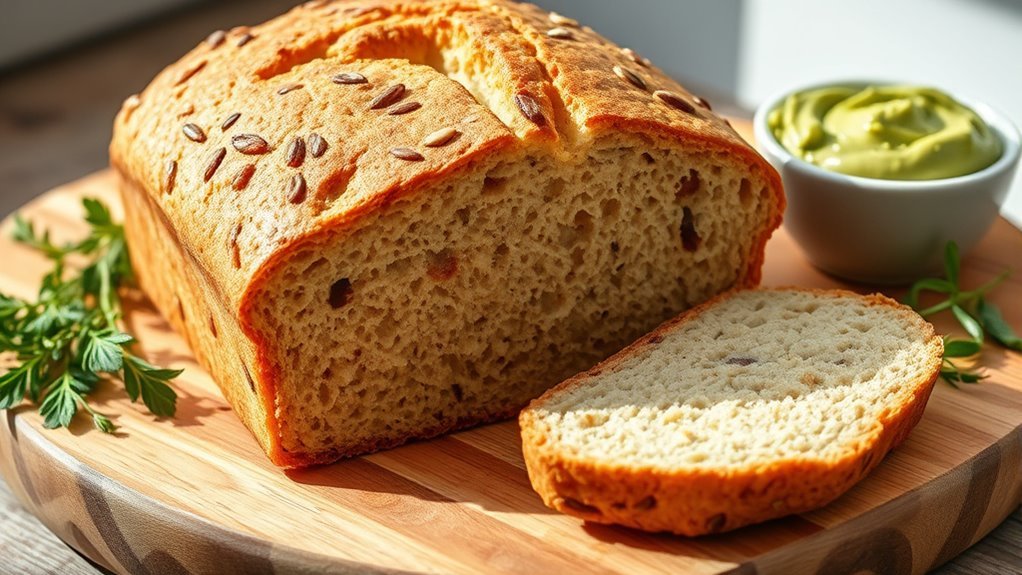
Keto bread is a low-carbohydrate alternative designed for those following a ketogenic diet, which emphasizes high-fat and low-carb foods. Unlike traditional bread, keto bread is typically made from ingredients like almond flour, coconut flour, or flaxseed meal, providing a unique texture and flavor. These bread alternatives aim to satisfy cravings while keeping your carb intake in check. If you’re pursuing a keto diet, incorporating keto bread can help you enjoy sandwiches or toast without straying from your dietary goals. However, it’s important to read labels carefully, as some products may contain hidden sugars or additives. By choosing wisely, you can enjoy the freedom of bread-like options while still adhering to your low-carb lifestyle.
Nutritional Breakdown of Keto Bread

When exploring the nutritional profile of keto bread, it’s essential to contemplate its primary ingredients and how they contribute to overall health. Keto bread often emphasizes nutrient density, providing essential vitamins and minerals while minimizing carbohydrates. Many varieties are made from almond flour or coconut flour, which can enhance fiber content considerably compared to traditional bread. This increase in fiber promotes digestive health and helps maintain stable blood sugar levels. Additionally, keto bread typically features healthy fats, which can support satiety and energy levels. However, it’s vital to examine labels carefully, as some brands may include additives that compromise the intended health benefits. Overall, keto bread can be a nutritious choice when made thoughtfully.
Common Ingredients in Keto Bread
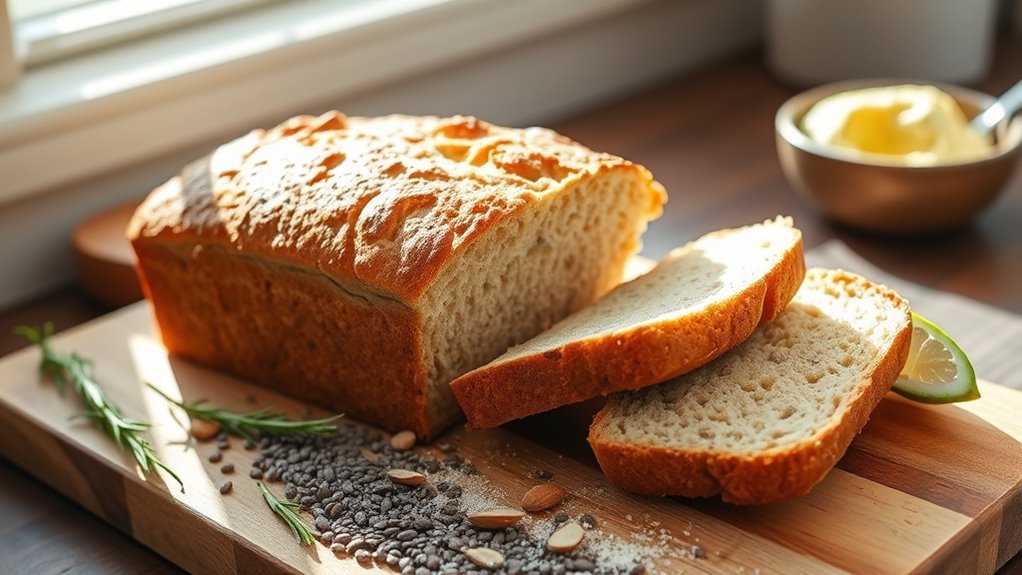
Understanding the common ingredients in keto bread helps clarify why it can be a healthier alternative to traditional bread. Many keto bread recipes use a combination of low-carb flours and nutrient-dense ingredients. Here are some staples you might find:
- Almond flour: A low-carb, high-fat option that adds moisture.
- Coconut flour: Absorbs moisture and provides fiber, enhancing texture.
- Psyllium husk: Acts as a binder and fiber source, improving structure.
- Flaxseed meal: Offers omega-3 fatty acids and helps with moisture retention.
Along with these, egg whites, olive oil, cheese blends, and baking powder are often included to create a satisfying bread-like texture. These ingredients contribute to the overall nutritional profile, making keto bread a viable option for those seeking alternatives.
Health Benefits of Keto Bread
Keto bread offers several health benefits that can support your dietary goals. Its low carb content can help you maintain ketosis, while the high levels of healthy fats promote satiety and energy. Additionally, keto bread may assist with blood sugar regulation, making it a suitable option for those looking to manage their glucose levels.
Low Carb Content
While many traditional breads are loaded with carbohydrates, keto bread offers a low-carb alternative that can be beneficial for those looking to reduce their carb intake. This shift can lead to several low carb benefits, making keto bread varieties an appealing option.
Here are some advantages you might enjoy:
- Weight Management: Lower carb intake can help in weight loss and maintenance.
- Stable Blood Sugar: Reduced carbs may assist in keeping your blood sugar levels steady.
- Increased Satiety: Keto bread can keep you feeling full longer, potentially curbing cravings.
- Improved Energy Levels: Fewer carbs can lead to more consistent energy throughout the day.
High Healthy Fats
Incorporating healthy fats into your diet can considerably enhance the benefits of low-carb options like keto bread. When you follow a keto diet, healthy fats serve as your primary energy source, promoting satiety and helping you feel fuller for longer. This can reduce cravings and the temptation to snack on high-carb foods. Sources like avocados, nuts, and olive oil offer essential fatty acids and nutrients that support heart health and overall well-being. Additionally, these fats can aid in nutrient absorption, ensuring you get the most from your meals. By choosing keto bread made with healthy fats, you’re not just enjoying a low-carb treat; you’re fueling your body with the quality nutrition it needs for peak performance.
Blood Sugar Regulation
When you choose keto bread, you might notice a positive impact on your blood sugar levels. The keto diet is designed to minimize carbohydrate intake, which can lead to better blood sugar regulation. Unlike traditional bread, keto bread is often lower in carbs and higher in fiber, making it a healthier option for those monitoring their blood sugar. Here are some benefits you might experience:
- Reduced blood sugar spikes after meals
- Improved insulin sensitivity
- Enhanced energy levels throughout the day
- Better appetite control, reducing cravings
Potential Drawbacks of Keto Bread
Although keto bread can be a convenient alternative for those following a low-carb lifestyle, it does come with some potential drawbacks that you should consider. One major concern is ingredient quality; many brands use highly processed components that could lack essential nutrients. If you have gluten sensitivity, some keto bread options might still trigger reactions due to their ingredients. Additionally, while keto bread may help with short-term weight loss, its long-term sustainability is questionable. It can also lead to digestive issues for some, particularly due to high fiber content or artificial additives. Finally, relying too heavily on keto bread might disrupt your nutritional balance, making it essential to include a variety of whole foods in your diet.
How to Incorporate Keto Bread Into Your Diet
Incorporating keto bread into your diet can enhance your meals and snacks while keeping you on track with your low-carb goals. Consider pairing it with healthy fats like avocado or cheese for a nutritious meal, or use it as a satisfying snack alternative to traditional breads. Remember, portion control is key to maintaining the benefits of a keto lifestyle, so be mindful of how much you consume.
Meal Pairing Suggestions
Keto bread can be a versatile addition to your low-carb lifestyle, opening up a world of meal pairing possibilities. Whether you’re craving a satisfying sandwich or a hearty breakfast, you can easily incorporate keto bread into your meals. Here are some ideas to inspire you:
- Keto sandwich ideas: Layer your favorite deli meats, cheese, and veggies for a quick lunch.
- Keto breakfast options: Top your bread with avocado, eggs, or nut butter for a filling start to your day.
- Serve it with a side of zoodles or a fresh salad for a balanced meal.
- Use it to soak up flavorful broths in soups or stews.
These pairings not only enhance the flavor but also maintain your low-carb goals, making your meals enjoyable and nutritious.
Snack Alternatives Available
While many people think of bread as a carb-heavy food to avoid, you can find delicious and satisfying snack alternatives by incorporating keto bread into your diet. Keto bread can be a versatile base for various snack ideas. Consider topping it with avocado and a sprinkle of salt for a nutritious boost, or spread some almond butter for a protein-rich treat. You can also make mini pizzas by adding low-carb marinara sauce, cheese, and your favorite veggies. For a revitalizing option, try cucumber slices with cream cheese on toasted keto bread. These healthy toppings not only enhance the flavor but also keep your snacks aligned with your keto lifestyle, allowing you to enjoy the freedom of tasty treats without the guilt.
Portion Control Tips
Finding tasty snack alternatives with keto bread is a great way to enjoy your favorite flavors without straying from your dietary goals. To help you incorporate keto bread into your diet while practicing portion control, consider these tips:
- Pre-portion your servings: Cut your keto bread into slices or pieces ahead of time.
- Pair wisely: Combine a small portion of keto bread with healthy fats or proteins to enhance satiety.
- Mindful eating: Focus on eating slowly and savoring each bite, which can help prevent overeating.
- Balance meals: Confirm your meals are balanced with vegetables, proteins, and healthy fats while keeping portion sizes in check.
Frequently Asked Questions about Keto Bread
1. What is Keto Bread?
Keto bread is a type of bread designed to be low in carbohydrates and high in healthy fats, making it suitable for those following a ketogenic diet. It typically replaces traditional flour with alternative ingredients such as almond flour, coconut flour, or other low-carb substitutes. This allows keto bread to provide a bread-like texture while adhering to the dietary restrictions of the keto lifestyle.
2. Is Keto Bread healthier than regular bread?
Keto bread can be considered healthier than regular bread for individuals on a ketogenic diet, as it is lower in carbohydrates and sugars, which can help maintain stable blood sugar levels. Additionally, it often contains healthy fats and higher protein content, which can promote satiety. However, it’s essential to check the ingredients, as some commercially available keto breads may still contain additives or preservatives that could be less beneficial.
3. Can I eat Keto Bread if I’m not on a keto diet?
Absolutely! Even if you are not following a ketogenic diet, you can enjoy keto bread as a low-carb alternative to regular bread. It may be particularly appealing for those looking to reduce their carbohydrate intake or for individuals with gluten intolerance, as many keto bread recipes are gluten-free. However, it’s important to consider portion sizes and overall dietary balance.
4. Are there any downsides to eating Keto Bread?
While keto bread can be a great addition to a low-carb diet, there are some downsides to consider. Some keto bread varieties can be high in calories and may contain unhealthy oils or additives. Additionally, consuming excessive amounts of fat can lead to digestive issues for some individuals. It’s essential to consume keto bread in moderation and as part of a balanced diet that includes a variety of foods.
5. How can I make Keto Bread at home?
Making keto bread at home is quite simple and allows you to control the ingredients. A basic recipe often includes almond flour or coconut flour, eggs, baking powder, and some form of fat, such as olive oil or butter. Combine the dry ingredients, mix in the wet ingredients, and bake until golden brown. There are many recipes available online catering to various tastes, including savory and sweet options. Experimenting with herbs, spices, and flavorings can help you create a keto bread that suits your palate.
References
- https://www.healthline.com/nutrition/keto-bread
- https://www.ncbi.nlm.nih.gov/pmc/articles/PMC7430714/
- https://www.webmd.com/diet/obesity/what-is-keto-diet
- https://www.medicalnewstoday.com/articles/keto-diet-and-bread
- https://www.verywellfit.com/keto-bread-5184709
- https://www.bbc.co.uk/news/health-50773400
- https://www.eatright.org/health/wellness/healthy-eating/what-is-the-keto-diet
- https://www.ncbi.nlm.nih.gov/books/NBK499877/