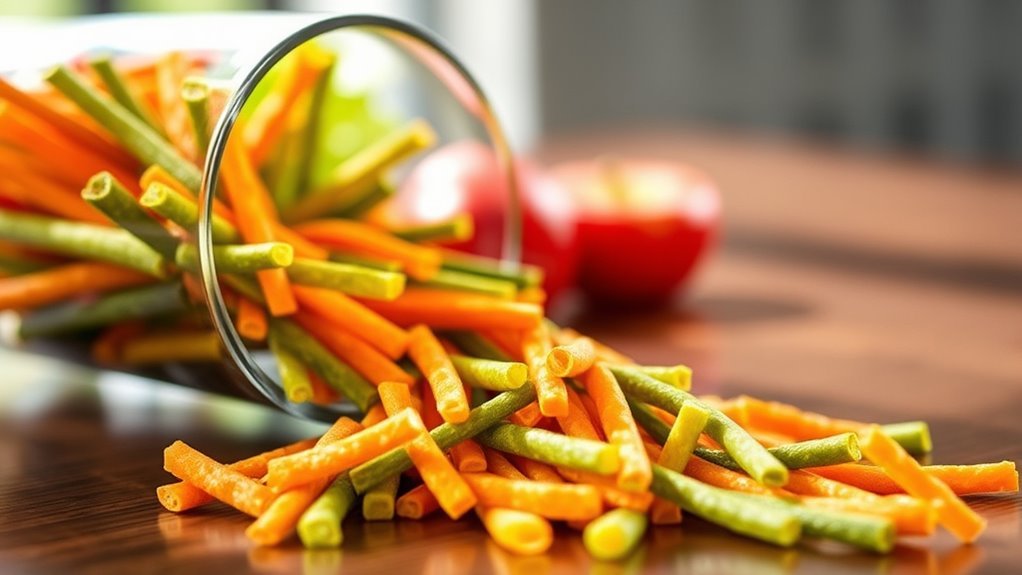

Veggie straws aren’t typically considered keto-friendly due to their higher carbohydrate content, which can disrupt ketosis. With around 14-15 grams of carbohydrates per serving, they may push you over your daily carb limits. While these snacks are marketed as healthier alternatives to traditional chips, they lack the nutrient density needed for a strict ketogenic diet. If you’re looking for suitable low-carb options, there are alternatives that might better fit your dietary goals. Discover more about healthier snack choices.
Understanding the Ketogenic Diet
When you plunge into the ketogenic diet, you’ll find it’s a high-fat, low-carbohydrate eating plan designed to shift your body into a state of ketosis. The keto basics revolve around specific macronutrient ratios, typically comprising about 70-75% fat, 20-25% protein, and only 5-10% carbohydrates. This significant reduction in carbs forces your body to rely on fat for energy, which can lead to weight loss and other health benefits. You’ll want to focus on whole, nutrient-dense foods while avoiding sugar and processed carbs. Understanding these principles empowers you to make informed choices, allowing you to experience the freedom that comes from better health and energy levels. Embracing the ketogenic diet can be a transformative journey toward improved well-being.
What Are Veggie Straws Made Of?
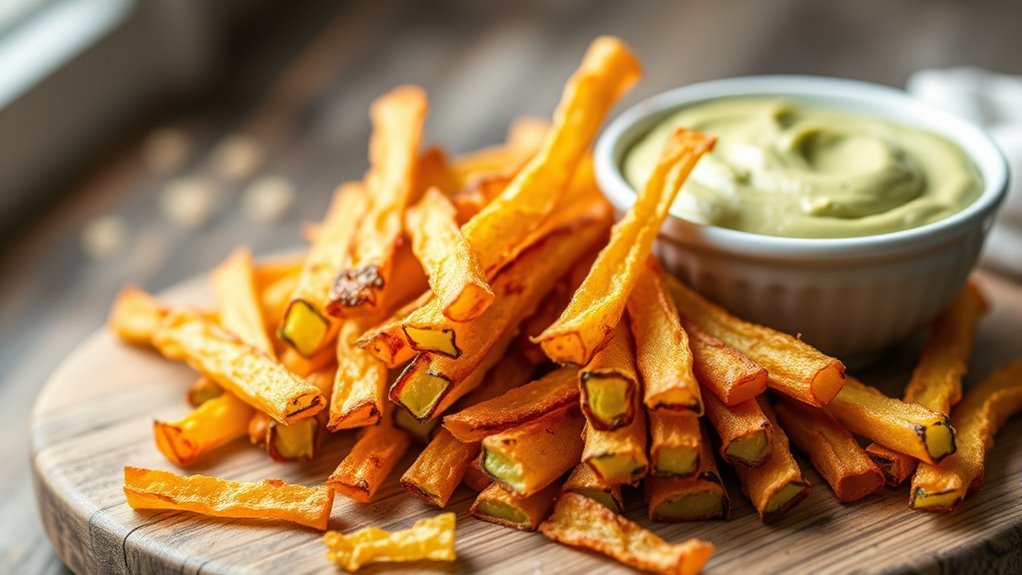
Veggie straws are often marketed as a healthier alternative to traditional potato chips, but their composition may surprise you. The primary veggie straw ingredients typically include a blend of potato starch, corn starch, and vegetable powders like spinach and beetroot. While they may sound nutritious, these snacks often lack the fiber and vitamins you’d expect from whole vegetables.
Here’s a breakdown of common ingredients:
| Ingredient | Purpose | Nutritional Aspect |
|---|---|---|
| Potato Starch | Base for texture | High in carbs |
| Corn Starch | Binding agent | Minimal nutrients |
| Vegetable Powders | Color and flavor | Limited health benefits |
Although veggie straws serve as snack food alternatives, it is crucial to evaluate their nutritional profile before indulging.
Nutritional Breakdown of Veggie Straws
When considering veggie straws, it’s important to look at their nutritional breakdown, particularly their carb content. You’ll find that while they may seem healthier than traditional chips, their ingredient composition can greatly impact their suitability for a keto diet. Understanding these factors will help you make an informed choice about including veggie straws in your meal plan.
Carb Content Analysis
Analyzing the carb content of veggie straws reveals essential information for those on a ketogenic diet. While marketed as healthier snack alternatives, veggie straws often contain significant carbohydrate sources. A typical serving can have around 14-15 grams of carbs, which can be substantial for someone adhering to a strict keto regimen that limits daily carb intake to 20-50 grams. This high carb count can hinder your progress if you’re aiming for ketosis. Additionally, the ingredients in veggie straws often include potato starch and other processed components, which contribute to their overall carb content. As a result, if you’re looking for low-carb snack alternatives, you might want to explore other options that align more closely with your keto goals.
Ingredient Composition Overview
The ingredient composition of veggie straws often raises questions about their suitability for a ketogenic diet. Typically made from a blend of potato starch, corn starch, and vegetable powders, these snacks are primarily carbohydrate-based. While the vegetable powders may suggest a healthy profile, the actual ingredient sources contribute to a higher carb count than one might expect. For those on a keto diet, the net carbs can make veggie straws less than ideal as a snack alternative. Instead, consider options like cheese crisps or nut-based snacks that align better with keto guidelines. Understanding the nutritional breakdown of veggie straws can help you make more informed choices about your snacking habits while adhering to your dietary preferences.
Carb Content in Veggie Straws
Although many snack options claim to be healthier alternatives, understanding the carb content in veggie straws is vital for those following a keto diet. Typically, veggie straws contain around 14-16 grams of carbohydrates per ounce, making them a less suitable choice for keto snacks. While they may be marketed as a healthier option, their primary carb sources—potato starch and corn—can greatly impact your daily carb limit. If you’re aiming to maintain ketosis, it’s important to evaluate these numbers carefully. Instead of reaching for veggie straws, you might want to explore low-carb alternatives that align better with your dietary goals. Always check labels and choose snacks that truly support your keto lifestyle.
Comparing Veggie Straws to Traditional Chips
While you might think veggie straws are a healthier option compared to traditional chips, a closer look reveals some significant differences. Regarding taste and texture, veggie straws offer a light, airy crunch that some find appealing. However, traditional chips often boast a richer flavor and a denser, more satisfying bite. When comparing veggie straws vs chips, it’s essential to take into account the ingredients, as veggie straws may contain added flavors and preservatives that aren’t present in some simpler chip varieties. Additionally, the nutritional profiles differ, with chips generally having higher fat content while veggie straws might pack in more carbs. Ultimately, your choice should align with your personal preferences and dietary goals.
Health Benefits of Veggie Straws
When considering health benefits, veggie straws can be a low-calorie snack option that offers a variety of nutrients. They are often gluten-free, making them a suitable choice for those with dietary restrictions. Understanding their nutrient content can help you make informed decisions about incorporating them into your diet.
Nutrient Content Overview
If you’re considering incorporating veggie straws into your diet, it’s essential to examine their nutrient content and health benefits. While they may not be the most nutrient-dense option available, veggie straws can offer some advantages, especially if you’re looking for a crunchy snack alternative. Keep in mind their vitamin content varies based on the ingredients used.
- Often made from various vegetables like spinach and beet, providing some vitamins.
- Generally lower in calories compared to traditional chips, making them a lighter snack.
- Can serve as a source of fiber, aiding in digestion when consumed in moderation.
Ultimately, while veggie straws can fit into a balanced diet, their overall nutrient density might not be substantial compared to whole vegetables.
Low-Calorie Snack Option
Veggie straws can be an appealing choice for those seeking a low-calorie snack option. With fewer calories compared to traditional chips, they serve as low-calorie alternatives that satisfy your crunch cravings without the guilt. Typically made from vegetables like potatoes, spinach, and carrots, these straws can offer a flavorful twist to your healthy snacking routine. They’re often lower in fat and sugar than many conventional snacks, making them a convenient choice for those watching their calorie intake. However, it’s essential to remember that while they can fit into a balanced diet, moderation is key. Opting for veggie straws can help you enjoy a tasty treat while still pursuing your health goals.
Gluten-Free Alternative Benefits
For those with gluten sensitivities or celiac disease, choosing gluten-free snacks is essential for maintaining overall health. Veggie straws offer a delicious option that aligns with these dietary needs. They provide several gluten free benefits, making them a suitable choice for those seeking healthy alternatives.
- Reduced Risk of Inflammation: Gluten can trigger inflammatory responses, so avoiding it may improve overall well-being.
- Diverse Nutrients: Made from various vegetables, veggie straws can introduce essential vitamins and minerals into your diet.
- Satiating Crunch: They offer a satisfying texture, satisfying cravings without high gluten content.
Incorporating veggie straws into your snacking routine allows you to enjoy a tasty treat while adhering to your dietary restrictions.
Can Veggie Straws Fit Into a Keto Meal Plan?
How do veggie straws fit into a keto meal plan? While they may seem like a fun snack, veggie straws often contain higher carbohydrates than you’d expect, making them less than ideal for strict keto diets. If you’re aiming for keto-friendly alternatives, consider their carb content in relation to your daily limits. Portion control is essential; a small serving may fit within your carb allowance, but it’s easy to overindulge. Instead of reaching for veggie straws, explore options like cheese crisps or nut-based snacks that align better with keto principles. Ultimately, understanding the nutritional value helps you make informed choices that suit your lifestyle and dietary goals, allowing you more freedom in your meal planning.
Alternative Low-Carb Snack Options
If you’re looking for tasty low-carb snacks, there are plenty of alternatives that can satisfy cravings without derailing your keto goals. Opting for healthy alternatives can help you stay on track while enjoying flavorful options. Here are some snack substitutions to contemplate:
- Nuts and seeds: A handful of almonds or pumpkin seeds provides healthy fats and protein.
- Cheese crisps: Baked cheese snacks offer a crunchy, savory option that’s low in carbs.
- Vegetable sticks with dip: Celery or cucumber paired with guacamole or ranch dressing make for a revitalizing choice.
These alternatives not only keep your carb intake low but also guarantee you’re getting nutrients. Embracing these snack substitutions can help maintain your keto lifestyle without feeling deprived.
Making Informed Snack Choices on Keto
Choosing snacks on a keto diet requires careful consideration to guarantee you remain within your carb limits while still enjoying delicious flavors. To make informed choices, focus on snacks that are low in carbohydrates and high in healthy fats or protein. Mindful eating is essential; take time to savor your snacks and assess their nutritional value. Consider snack portioning carefully; even low-carb options can lead to excessive carb intake if you eat too much. Reading labels helps you understand what’s in your snacks, ensuring you stick to your keto goals. Embrace whole foods like nuts, cheese, and avocado, which provide satisfying textures and tastes without jeopardizing your diet. Remember, it’s about balance and enjoying your food responsibly.
Frequently Asked Questions
Are All Brands of Veggie Straws Keto-Friendly?
You might think all veggie straws are healthy, but hold on—are they really keto-friendly? When you examine brand comparisons, you’ll find significant differences in nutritional analysis. Some brands pack in carbs that can derail your keto journey, while others might align better with your goals. It’s essential to read labels carefully and check the ingredients. The freedom to choose wisely starts with knowing what’s in those crunchy snacks!
How Do Veggie Straws Affect Ketosis?
Veggie straws can impact your ketosis if you’re not mindful of your carb intake. While they’re marketed as a healthier snack, they often contain higher carbohydrate levels than you might expect. If you’re following a strict keto diet, it’s essential to keep your snacks low in carbs to maintain ketosis. Opt for keto snacks that are more aligned with your dietary goals, like nuts or cheese, to stay on track.
Can I Make Homemade Veggie Straws for Keto?
Yes, you can make homemade veggie straws using keto-friendly ingredients! By opting for low-carb vegetables like zucchini or kale, you can create snacks that fit your dietary needs. There are plenty of homemade recipes online that guide you through the process, often involving seasoning and baking to achieve that crunchy texture. This way, you can enjoy a guilt-free snack while sticking to your keto lifestyle! Just remember to keep portions in check.
Are Veggie Straws Suitable for Other Diets?
If you’re on a quest for healthy snacks, you might wonder if veggie straws fit into your diet. These snacks can be suitable for various diet alternatives, offering a lighter crunch compared to traditional chips. However, their nutrition isn’t exactly stellar, often containing added oils and flavorings. While they can be enjoyed in moderation, it’s crucial to check labels to confirm they align with your dietary goals for ideal health.
How Should Veggie Straws Be Stored?
To guarantee veggie straws maintain their freshness and taste, proper storage is essential. Keep them in an airtight container or resealable bag after opening to prevent moisture and staleness. Store them in a cool, dry place away from direct sunlight. Typically, veggie straws have a shelf life of several months if unopened, but it’s best to consume them within a week after opening for peak crunch and flavor. Enjoy your snacks!
1. Are veggie straws keto-friendly?
Veggie straws are generally not considered keto-friendly. While they might contain some vegetable ingredients, they are primarily made from potato starch or corn, which are high in carbohydrates. The ketogenic diet typically restricts carbohydrate intake to maintain a state of ketosis, and even a small serving of veggie straws can exceed daily carb limits for many people on keto.
2. What are the main ingredients in veggie straws?
Veggie straws are usually made from a combination of potato starch, corn starch, and various vegetable powders (such as spinach or beet). Some brands may also add seasonings and preservatives. Although they are marketed as healthy snacks, the high starch content makes them less suitable for a low-carb diet like keto.
3. How many carbs are in a serving of veggie straws?
A typical serving size of veggie straws (about 1 ounce or 28 grams) can contain around 15-20 grams of carbohydrates. This amount varies by brand, but it’s generally high enough to be problematic for those adhering to a strict ketogenic diet, which usually limits carbohydrate intake to 20-50 grams per day.
4. Are there any keto-friendly alternatives to veggie straws?
Yes, there are several keto-friendly alternatives to veggie straws. Options include cheese crisps, pork rinds, or homemade veggie chips made from low-carb vegetables like kale or zucchini. These alternatives provide a satisfying crunch without the high carbohydrate content found in veggie straws.
5. Can I eat veggie straws occasionally on a keto diet?
While it’s possible to enjoy veggie straws occasionally on a keto diet, it’s important to be mindful of portion sizes and your overall daily carb intake. If you choose to indulge, consider adjusting your other meals to stay within your carb limits. However, for consistent success on a keto diet, it’s advisable to opt for lower-carb snack options as a primary choice.
References
- https://www.healthline.com/nutrition/keto-diet-foods
- https://www.medicalnewstoday.com/articles/323913
- https://www.verywellfit.com/what-is-the-keto-diet-5111959
- https://www.ncbi.nlm.nih.gov/pmc/articles/PMC5862050/
- https://www.diabetes.org/nutrition/healthy-foods/keto-diet
- https://www.webmd.com/diet/obesity/features/the-ketogenic-diet
- https://www.eatright.org/health/dietary-choices/what-is-the-keto-diet
- https://www.cdc.gov/healthyweight/healthy_eating/index.html