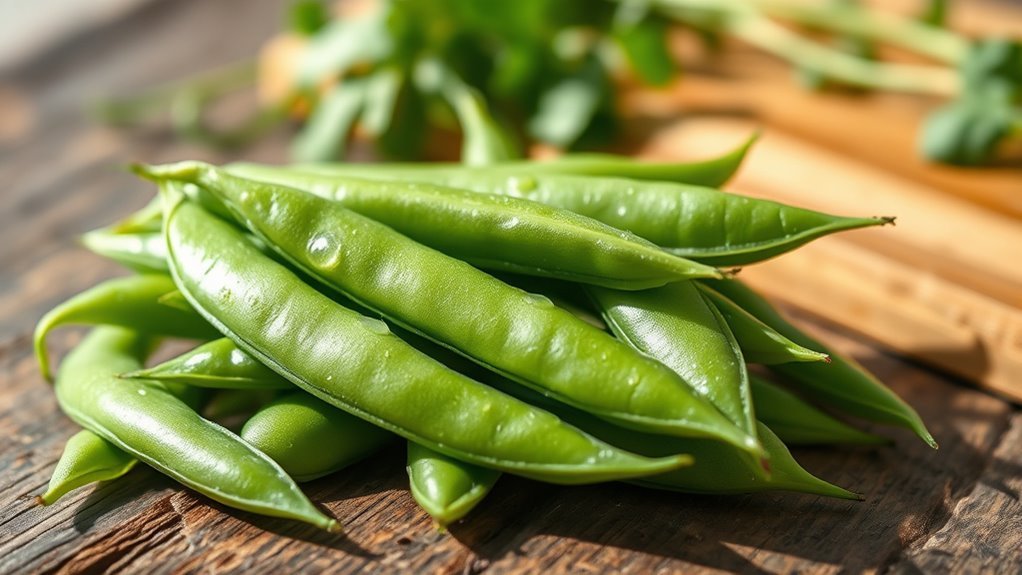

Yes, snow peas can fit into your keto diet since they contain roughly 4 grams of carbohydrates per 100 grams, making them a low-carb vegetable. They’re low in calories and packed with essential vitamins and minerals, plus their fiber aids digestion and blood sugar regulation. Just remember to practice portion control to stay within your daily carb limits. If you’re curious about how to best incorporate them into your meals, there’s more to discover about snow peas.
Understanding Carbohydrate Content in Snow Peas
When considering whether snow peas fit into a keto diet, it’s vital to understand their carbohydrate content. Snow peas contain about 4 grams of carbohydrates per 100 grams, making them a relatively low carb vegetable. This means they can be included in your meal plan, especially when you’re looking for diverse carbohydrate sources. Their fiber content also helps mitigate the impact on blood sugar levels, which is essential for maintaining ketosis. However, moderation is key; consuming large amounts could push you over your carb limit. Incorporating snow peas into your diet can add variety while staying mindful of your overall carb intake. They offer a fresh, crisp option that can enhance your meals without derailing your keto goals.
Nutritional Benefits of Snow Peas

While you might be focused on keeping carbs in check on a keto diet, snow peas also boast a range of nutritional benefits that can support your overall health. These crisp, vibrant vegetables are low in calories but high in essential vitamins and minerals, including vitamin C and vitamin K. One of the standout features of snow peas is their impressive fiber content. This not only aids digestion but can also help regulate blood sugar levels, making them a great addition to your meals. Additionally, the antioxidants found in snow peas may contribute to reducing inflammation and promoting heart health. So, while you’re steering through your keto journey, consider incorporating snow peas for their diverse health benefits.
Comparing Snow Peas to Other Vegetables

When comparing snow peas to other vegetables, it’s important to look at their nutritional profiles and glycemic index. Snow peas offer a unique combination of vitamins and fiber, but how do they stack up against options like broccoli or spinach? Understanding these differences can help you make informed choices that align with your dietary goals.
Nutritional Profile Comparison
Although snow peas are often praised for their crisp texture and sweet flavor, comparing their nutritional profile to other vegetables reveals important aspects for those following a keto diet. Snow peas offer a decent nutritional density, providing vitamins A, C, and K, but they also contain more carbohydrates than some keto-friendly options like spinach or broccoli. While they’re a good source of fiber, their higher carbohydrate content can impact your daily intake. In contrast, leafy greens tend to have lower carbs while delivering essential nutrients. If you’re aiming to maximize your vitamin content without exceeding your carb limit, it’s wise to balance your vegetable choices. Snow peas can fit into your diet, but moderation is key for staying in ketosis.
Glycemic Index Insights
How do snow peas measure up on the glycemic index compared to other vegetables? Snow peas have a low glycemic index, typically around 40, which means they produce a minimal glycemic response in your body. This makes them a great choice for those looking to maintain stable blood sugar levels. In comparison, vegetables like carrots and potatoes tend to have higher glycemic indices, often leading to a quicker spike in blood sugar. Eating low glycemic foods like snow peas can support your keto lifestyle by helping you avoid energy crashes. Incorporating them into your meals adds variety while keeping your carb intake in check. So, if you’re seeking freedom in your diet, snow peas can be a smart addition.
How to Incorporate Snow Peas Into a Keto Diet
Incorporating snow peas into your keto diet can be both tasty and nutritious. These crunchy vegetables offer a low-carb option packed with vitamins and minerals, making them a smart choice for your meals. Try adding them to stir-fries or salads for a delightful crunch and a boost of flavor.
Delicious Keto Recipes
When you’re looking to add variety to your keto meals, snow peas can be a delightful and nutritious option. Try incorporating them into a keto stir fry with your favorite proteins like chicken or shrimp, adding crunch and flavor. You can also create a rejuvenating snow pea salad by tossing them with avocado, cherry tomatoes, and a light vinaigrette for a satisfying side dish. For snacking, snow peas make excellent low carb snacks—just pair them with a creamy dip or hummus. Their naturally sweet taste complements various vegetable pairings, making them versatile for any meal. By using snow peas in these recipes, you’re not just enhancing your diet; you’re embracing delicious, healthy choices that align with your keto lifestyle.
Nutritional Benefits Overview
Snow peas offer a range of nutritional benefits that can enhance your keto diet. Packed with dietary fiber, they promote digestive health and help you feel fuller longer. This can be particularly beneficial when you’re managing your carb intake. Additionally, snow peas provide essential vitamins and minerals, including vitamin C and vitamin K, which support overall health. The low calorie count combined with their nutrient density makes them an excellent choice for maintaining energy levels without compromising your keto goals. You can easily incorporate snow peas into your meals by adding them to salads, stir-fries, or as a crunchy snack. Embracing these vibrant veggies can help you enjoy the health benefits while keeping your diet diverse and satisfying.
Portion Control and Moderation
While snow peas can be a nutritious addition to your keto diet, practicing portion control is vital to maintaining your desired macronutrient balance. You’ll want to be mindful of your portion sizes to guarantee you’re not exceeding your carb limits. Here are some tips to help you enjoy snow peas without compromising your keto goals:
- Measure your servings; a typical portion is about ½ cup.
- Incorporate snow peas into meals rather than eating them alone to enhance balance.
- Track your intake to align with your daily macro targets.
Final Thoughts on Snow Peas and Keto
Maintaining portion control with snow peas can help you enjoy their benefits while adhering to your keto diet. These legumes offer numerous health benefits, including vitamins A and C, fiber, and antioxidants. However, it’s important to reflect on their carb content within your overall dietary goals.
| Nutritional Aspect | Snow Peas |
|---|---|
| Net Carbs (per 100g) | 7g |
| Fiber (per 100g) | 2.6g |
| Vitamin C (per 100g) | 60% DV |
In moderation, snow peas can fit into your keto lifestyle. Just remember to monitor your intake and balance them with other low-carb vegetables for ideal nutritional benefits. Enjoy the freedom to include diverse foods while prioritizing your dietary considerations.
Frequently Asked Questions
Are Snow Peas High in Fiber for Digestive Health?
If you think of your gut as a garden, fiber’s the water that helps it thrive. Snow peas pack a decent fiber content, offering around 2 grams per cup. This fiber’s essential for promoting digestive benefits, aiding in regularity and overall gut health. Incorporating snow peas into your diet can be a tasty way to boost your fiber intake. So, if you’re looking for a crunchy addition, these little gems might be just what you need!
Can Snow Peas Be Eaten Raw in Salads?
Absolutely, you can eat raw snow peas in salads! They add a crisp texture and a sweet flavor that complements various salad recipes. Packed with nutrients, raw snow peas retain their vitamins and minerals better than when cooked. Just make sure to wash them thoroughly before adding them to your dish. Feel free to mix them with other veggies, proteins, or dressings for a revitalizing, healthy meal that aligns with your dietary preferences.
Do Snow Peas Have Any Allergens?
Snow peas can indeed pose allergens for some individuals. While they’re generally considered safe, snow pea allergens may trigger sensitivities in people with specific legume allergies. Symptoms can range from mild reactions to more severe responses, so it’s essential to pay attention to how your body reacts. If you’re unsure about snow pea sensitivities, it’s wise to consult with a healthcare professional before incorporating them into your diet. Always prioritize your health and well-being!
How Do Snow Peas Affect Blood Sugar Levels?
Snow peas can have a positive impact on blood sugar regulation due to their low glycemic index. This means they’re less likely to cause rapid spikes in blood sugar levels compared to high-GI foods. Incorporating snow peas into your meals can help you maintain steadier glucose levels. Plus, their fiber content further supports digestive health, making them a smart choice if you’re looking for nutritious options that won’t disrupt your blood sugar balance.
Are There Any Keto-Friendly Recipes Using Snow Peas?
If you’re looking for keto-friendly recipes, snow peas can be a great addition. You might enjoy a snow pea stir fry, sautéing them with low-carb veggies and protein sources like chicken or tofu for a quick meal. Alternatively, a revitalizing snow pea salad with avocado and a light vinaigrette can be a fantastic side. Both options are not only delicious but also help maintain a balanced diet while keeping carbs in check. Enjoy experimenting!
1. Are snow peas considered keto-friendly?
Yes, snow peas can be considered keto-friendly in moderation. They are relatively low in carbohydrates compared to other vegetables, making them suitable for a ketogenic diet. However, it is important to monitor your portion sizes to ensure you stay within your daily carb limit.
2. How many carbs are in snow peas?
Snow peas typically contain about 4 grams of carbohydrates per 100 grams, with around 2 grams of dietary fiber. This means the net carbs are approximately 2 grams, making them a suitable option for those following a low-carb diet.
3. Can I eat snow peas on a keto diet daily?
While you can include snow peas in your daily meals on a keto diet, moderation is key. Eating them daily is possible if you keep track of your total carbohydrate intake and ensure that you do not exceed your daily limit.
4. What are some keto-friendly ways to prepare snow peas?
Snow peas can be enjoyed in various keto-friendly ways. They can be stir-fried with low-carb vegetables, added to salads for crunch, or steamed and served as a side dish. Pairing them with healthy fats, like olive oil or avocado, can also enhance their flavor.
5. Are there any health benefits to eating snow peas?
Yes, snow peas are nutritious and offer several health benefits. They are a good source of vitamins A and C, as well as important minerals like iron and potassium. Additionally, their fiber content supports digestive health and can help you feel full longer, making them a great addition to a balanced diet.
References
- https://www.ncbi.nlm.nih.gov/pmc/articles/PMC6336648/
- https://www.healthline.com/nutrition/keto-diet-food-list#vegetables
- https://www.dietdoctor.com/low-carb/keto/food-list
- https://www.researchgate.net/publication/323073746_The_ketogenic_diet_A_systematic_review_and_meta-analysis
- https://www.webmd.com/diet/obesity/what-is-the-ketogenic-diet
- https://www.washingtonpost.com/food/2020/10/28/keto-diet-vegetables/
- https://www.nutrition.gov/topics/nutrition-101/what-ketogenic-diet
- https://www.health.harvard.edu/staying-healthy/the-ketogenic-diet