

To maintain ketosis, you should limit your daily carbohydrate intake to about 20 to 50 grams. This low range allows your body to efficiently burn fat for energy while still enjoying a variety of food sources. Factors like your metabolism and activity level can influence your specific carb needs. Monitoring your progress can help you adjust your intake as necessary. With these insights, you can optimize your keto experience and explore additional strategies for success.
Understanding Ketosis and Its Importance

When you begin on a ketogenic diet, understanding ketosis and its importance is vital for achieving your health goals. Ketosis is a metabolic state where your body burns fat for fuel instead of carbohydrates, leading to several ketosis benefits, including weight loss, increased energy levels, and improved mental clarity. However, it’s important to address ketosis misconceptions, such as the belief that it’s an unhealthy or unsustainable lifestyle. Research shows that when done correctly, a ketogenic diet can be safe and effective for many individuals. By grasping the science behind ketosis, you empower yourself to make informed decisions, ultimately enhancing your freedom to choose a dietary approach that aligns with your personal health aspirations. Embrace this knowledge as a foundation for your journey.
Recommended Daily Carbohydrate Intake
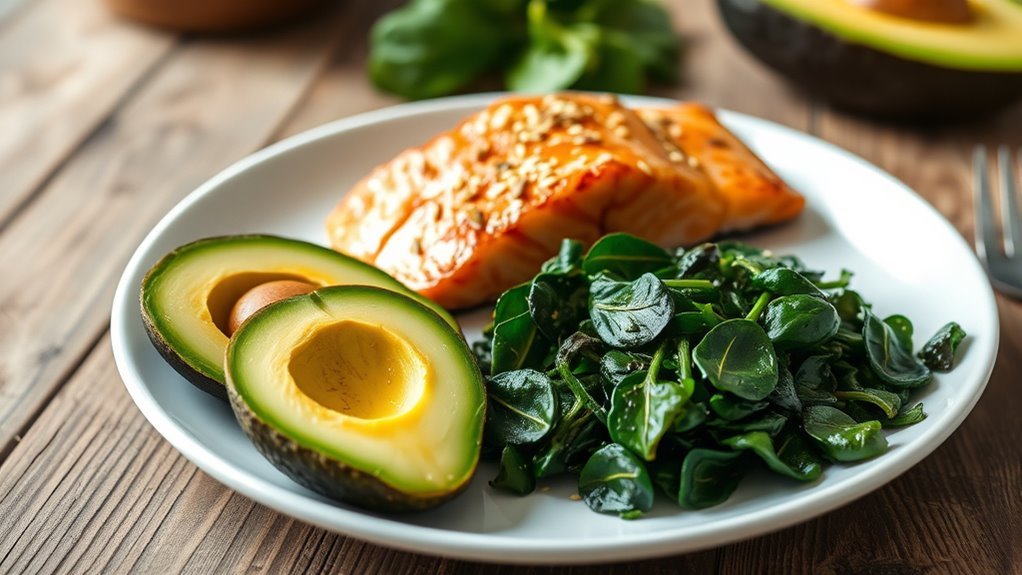
To successfully navigate a ketogenic diet, knowing the recommended daily carbohydrate intake is essential. Generally, keto guidelines suggest limiting daily carbs to about 20 to 50 grams. This range helps you maintain ketosis while allowing for various carb sources. Here’s a simple breakdown of carb sources and their typical contributions:
| Carb Source | Grams of Carbs per Serving | Recommended Servings |
|---|---|---|
| Leafy Greens | 1-3 | 3-5 |
| Berries | 5-15 | 1-2 |
| Nuts and Seeds | 4-6 | 1-2 |
| Low-carb Vegetables | 3-7 | 3-5 |
Sticking within this range can empower your journey towards improved health while enjoying the freedom of diverse foods.
Factors Influencing Your Carb Needs
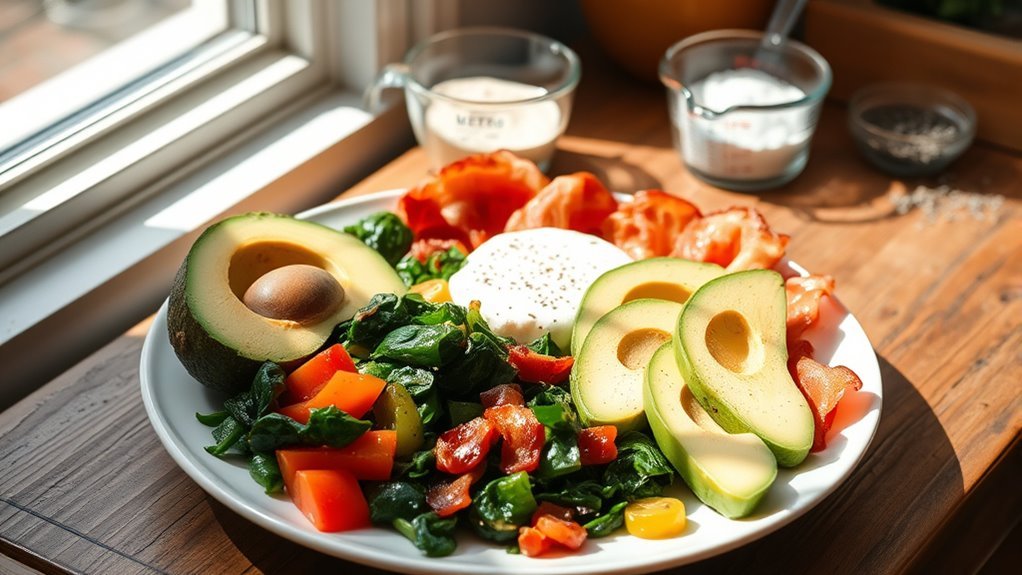
Several factors can greatly influence your carbohydrate needs on a ketogenic diet. Your individual metabolism plays a vital role; if you have a faster metabolism, you might require slightly more carbs to maintain energy levels without kicking yourself out of ketosis. Conversely, those with a slower metabolism may thrive on fewer carbs. Additionally, your activity level is important to take into account. If you’re highly active or engage in regular intense workouts, you may need to adjust your carb intake to fuel your performance and recovery properly. Ultimately, understanding these factors can empower you to tailor your carbohydrate consumption to align with your lifestyle and health goals, allowing you the freedom to enjoy the benefits of a ketogenic diet effectively.
Adjusting Carb Intake Based on Progress
While monitoring your progress on a ketogenic diet, adjusting your carb intake can be essential for optimizing results. If you’re not seeing the desired effects, consider incorporating carb cycling. This approach allows you to alternate between low-carb days and higher-carb days, which can help prevent metabolic slowdown and enhance fat loss. Progress tracking is vital; regularly assess your weight, energy levels, and overall well-being. If you find that your body adapts to a certain carb level, feel free to tweak your intake. Remember, flexibility is key to achieving long-term success on keto. By staying responsive to your body’s signals and adjusting your carb intake accordingly, you can maintain freedom and control over your keto journey.
Foods to Include and Avoid on a Keto Diet
Adjusting your carb intake is just one part of successfully steering through a ketogenic diet; knowing which foods to include and avoid is equally important. Focus on incorporating high-fat, low-carb foods like avocados, nuts, and fatty fish. For your meals, prioritize low carb vegetables such as leafy greens, broccoli, and zucchini, which provide essential nutrients without spiking your carb count. When you’re looking for keto friendly snacks, consider cheese, hard-boiled eggs, or celery with cream cheese. On the other hand, steer clear of grains, sugary foods, and high-carb fruits like bananas. By making these informed choices, you’ll enhance your keto experience and maintain your desired freedom in food selection while achieving your health goals.
Frequently Asked Questions about Carbs on Keto
1. How many carbs should I eat on a keto diet?
On a ketogenic diet, it is generally recommended to limit carbohydrate intake to about 20 to 50 grams of net carbs per day. Net carbs are calculated by subtracting fiber and certain sugar alcohols from the total carbohydrates. This low carb intake helps to induce a state of ketosis, where your body burns fat for fuel instead of carbohydrates.
2. What are net carbs and how do I calculate them?
Net carbs are the total carbohydrates in a food minus the fiber content and certain sugar alcohols that do not significantly affect blood sugar levels. To calculate net carbs, simply subtract fiber (and any non-impact carbs from sugar alcohols, if applicable) from the total carbohydrates. For example, if a food has 10 grams of total carbs and 5 grams of fiber, the net carbs would be 5 grams.
3. Why is it important to restrict carbs on a keto diet?
Restricting carbohydrates is crucial on a keto diet because it helps your body enter ketosis. In this metabolic state, your body shifts from using glucose as its primary energy source to burning fat for fuel. This can lead to weight loss, improved energy levels, and better mental clarity. Without sufficient carb restriction, your body may remain in a state of glucose metabolism, which can hinder the benefits of a ketogenic diet.
4. Can I eat more carbs if I exercise frequently?
While some individuals may be able to increase their carb intake slightly if they engage in high-intensity exercise, it is generally advisable to maintain a low carb intake to remain in ketosis. Athletes or those with higher energy requirements might experiment with ‘targeted’ or ‘cyclical’ keto diets, where they consume carbs around workout times or in cycles, but this should be approached with caution and personalized to individual needs.
5. What types of foods should I focus on to stay within my carb limit?
To stay within your carb limit on a keto diet, focus on low-carb vegetables like leafy greens, broccoli, and zucchini, as well as healthy fats such as avocados, nuts, seeds, and oils. Meats, fish, eggs, and full-fat dairy are also excellent choices. It’s important to avoid high-carb foods like grains, sugars, fruits (except for small portions of berries), and starchy vegetables to successfully maintain ketosis.
References
- https://www.ncbi.nlm.nih.gov/pmc/articles/PMC6836980/
- https://www.health.harvard.edu/staying-healthy/the-truth-about-carbs
- https://www.cdc.gov/healthyweight/healthy_eating/carbohydrates.html
- https://www.webmd.com/diet/what-is-the-keto-diet
- https://www.uptodate.com/contents/overview-of-the-ketogenic-diet
- https://www.kidney.org/atoz/content/keto-diet
- https://www.mayoclinic.org/healthy-lifestyle/nutrition-and-healthy-eating/in-depth/keto-diet/art-20310591