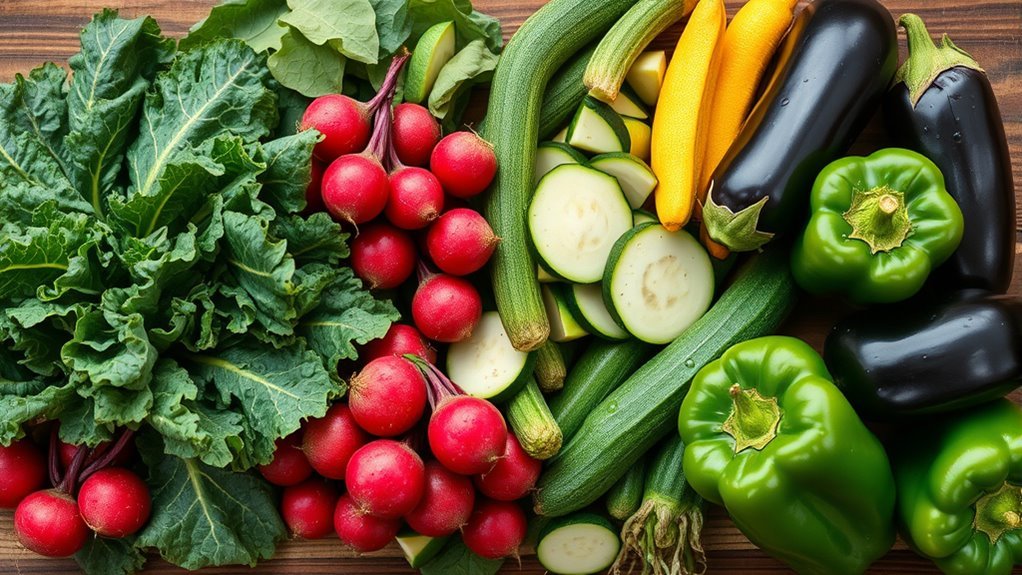

On a keto diet, you can enjoy various low-carb vegetables like leafy greens, cruciferous vegetables, zucchini, squash, bell peppers, and mushrooms. Avocados are also a great option due to their healthy fats. Tomatoes, including cherry and Roma varieties, fit well within your carb limits while providing essential vitamins. Incorporating these veggies not only helps maintain ketosis but also supports your overall health. Keep exploring to discover more about keto-friendly options!
Leafy Greens

When you’re following a keto diet, incorporating leafy greens can be a game-changer for your overall health and nutrition. Leafy greens, like spinach, kale, and Swiss chard, are low in carbs and rich in essential vitamins and minerals. These leafy greens benefits include improved digestion, enhanced immune function, and better skin health. They’re also high in antioxidants, which can boost your well-being. With such a variety of leafy greens available, you can easily incorporate them into your meals—whether in salads, smoothies, or as sautéed sides. Embracing these nutrient-dense options not only adds flavor but also supports your keto journey, allowing you to enjoy a diverse and satisfying diet while maintaining your health goals.
Cruciferous Vegetables

Cruciferous vegetables, like broccoli and cauliflower, offer numerous health benefits that align perfectly with a keto diet. They’re low in carbs and high in fiber, making them excellent choices for maintaining ketosis while providing essential nutrients. In the following sections, you’ll discover the top cruciferous options to include in your meals.
Health Benefits of Cruciferous
While you might be focused on the macronutrients in your keto diet, the health benefits of cruciferous vegetables shouldn’t be overlooked. These nutrient-dense veggies offer several advantages that can enhance your overall well-being:
- Cancer Prevention: Compounds like sulforaphane have been linked to reduced cancer risk.
- Anti-Inflammatory Properties: Their antioxidants can help combat inflammation in the body.
- Heart Health: Cruciferous vegetables may improve cardiovascular health by lowering cholesterol levels.
- Digestive Support: They’re high in fiber, promoting gut health and regularity.
Incorporating these vegetables into your meals not only aligns with your keto goals but also delivers vital cruciferous benefits that can support a healthier lifestyle. Enjoy the freedom of nourishing your body while enjoying delicious options!
Top Cruciferous Choices
If you’re looking to maximize your keto diet with nutrient-rich options, incorporating a variety of cruciferous vegetables is essential. These cruciferous varieties, like broccoli, cauliflower, Brussels sprouts, and kale, are low in carbs and high in fiber, making them perfect for your keto lifestyle. Broccoli is packed with vitamins C and K, while cauliflower can be a fantastic rice substitute. You can enjoy these veggies raw in salads or lightly steamed, roasted, or sautéed to maintain their nutritional benefits. Experimenting with different cooking methods can enhance their flavors, allowing you to create satisfying meals without compromising your diet. Embrace these cruciferous choices to enrich your meals and support your health goals on keto.
Zucchini and Squash

Zucchini and squash are excellent additions to a keto diet, as they offer low carbohydrate content while providing essential vitamins and minerals. You can easily incorporate them into your meals with a variety of zucchini recipes or by enjoying summer squash in different forms. Here are some benefits of including zucchini and squash in your meal plan:
Zucchini and squash are nutritious, low-carb vegetables perfect for enhancing your keto meal plan.
- Low in carbs, allowing you to stay within your keto limits.
- High in fiber, promoting digestive health.
- Rich in antioxidants, supporting overall wellness.
- Versatile for cooking, from grilling to spiralizing.
With these nutritious vegetables, you can enjoy flavorful dishes without compromising your dietary goals. So, get creative and embrace the freedom of cooking with zucchini and squash!
Bell Peppers
Bell peppers are a fantastic addition to your keto diet, offering a range of nutritional benefits including vitamins A and C while being low in carbohydrates. When choosing varieties, opt for green or yellow peppers, which typically have fewer carbs compared to red. To make the most of their flavor and texture, experiment with different preparation and cooking methods like roasting or stir-frying.
Nutritional Benefits Overview
A colorful addition to your keto plate, bell peppers pack a powerful nutritional punch. Their impressive nutrient density makes them a top choice for your diet. Here’s why you should consider them:
- High in Vitamins: Bell peppers are rich in vitamins A, C, and E, supporting immune function and skin health.
- Fiber Content: They provide a good source of dietary fiber, promoting digestive health and satiety.
- Low in Calories: With minimal calories, they fit seamlessly into your keto meal plan without compromising your carb intake.
- Antioxidant Properties: The antioxidants in bell peppers help combat oxidative stress, contributing to overall wellness.
Incorporating bell peppers into your meals gives you both flavor and nutrition, enhancing your keto experience.
Low Carb Varieties
When it comes to low carb vegetables, bell peppers stand out as an excellent choice for your keto diet. They’re not just colorful; they’re also packed with nutrients and flavor, making them great vegetable substitutes in various dishes. Plus, they offer keto friendly options that keep your carb intake in check.
Here’s a quick comparison of bell peppers:
| Type | Carbs (per 100g) | Nutritional Benefits |
|---|---|---|
| Green Pepper | 3.6g | Rich in Vitamin C |
| Red Pepper | 6g | High in antioxidants |
| Yellow Pepper | 6g | Good source of Vitamin A |
| Orange Pepper | 5g | Contains fiber and potassium |
| Purple Pepper | 4g | Supports eye health |
Incorporate bell peppers into your meals for a satisfying crunch!
Preparation and Cooking Tips
For the best results in preparing bell peppers, consider using three key methods: roasting, sautéing, and grilling. Each technique brings out their natural sweetness and enhances their flavor. Here are some tips to get you started:
- Roasting: Cut bell peppers into strips, toss with olive oil, and roast at 400°F for about 20 minutes.
- Sautéing: Use proper sautéing techniques by cooking chopped peppers in a hot skillet with a bit of oil until tender—about 5-7 minutes.
- Grilling: Slice peppers, brush with oil, and grill for 5-10 minutes, turning occasionally.
- Vegetable Steaming: For a quick option, steam bell peppers for 3-5 minutes to maintain their crispness and nutrients.
These methods will help you enjoy bell peppers in a variety of delicious ways!
Mushrooms
Although often overlooked, mushrooms are a nutritious and versatile addition to a keto diet. With various mushroom varieties like portobello, shiitake, and cremini, you can easily incorporate them into your meals. They’re low in carbs and high in fiber, making them perfect for keeping your ketosis intact while adding flavor and texture.
You can sauté them in olive oil, add them to salads, or use them as a low-carb pizza base in your keto recipes. Plus, mushrooms are rich in vitamins and minerals, supporting overall health. So, if you’re looking to elevate your keto meal plan, don’t forget about these delightful fungi—they’ll not only enhance your dishes but also provide essential nutrients. Enjoy the freedom of flavor they bring!
Avocado
Avocado is a powerhouse of nutrients and a staple for anyone on a keto diet. Its healthy fats and low carbohydrate content make it an ideal choice. With various avocado varieties available, you can easily find one that suits your taste. Here are some delicious ways to incorporate avocados into your meals:
- Guacamole: A classic dip that’s perfect for parties or as a topping.
- Avocado Salad: Toss with greens, nuts, and a light dressing for a rejuvenating dish.
- Avocado Smoothie: Blend with spinach and almond milk for a creamy drink.
- Avocado Toast: Use keto-friendly bread for a satisfying breakfast.
Experimenting with avocado recipes can enhance your keto journey while enjoying its creamy goodness.
Tomatoes
Tomatoes are a versatile addition to a keto diet, offering a burst of flavor with relatively low carbohydrates. You can enjoy various tomato varieties, each bringing unique tastes and textures to your meals. From cherry tomatoes to heirloom, they’re perfect for enhancing keto recipes.
Here’s a quick comparison of some popular tomato varieties:
| Tomato Variety | Carbs per 100g |
|---|---|
| Cherry Tomatoes | 3.9g |
| Roma Tomatoes | 3.2g |
| Beefsteak Tomatoes | 3.5g |
| Sun-Dried Tomatoes | 25g |
Incorporating tomatoes into salads, sauces, or as snack options can keep your meals fresh and exciting while staying within your carb limits. Enjoy the freedom to explore these delicious options!
Frequently Asked Questions about Keto-Friendly Vegetables
1. What vegetables are low in carbs and suitable for a keto diet?
On a keto diet, it’s essential to choose vegetables that are low in carbohydrates. Some excellent options include leafy greens like spinach, kale, and Swiss chard, as well as cruciferous vegetables such as broccoli, cauliflower, and Brussels sprouts. Other low-carb choices include zucchini, bell peppers, asparagus, and cucumber. These vegetables not only fit within the carb limit but also provide essential vitamins and minerals.
2. Are there any vegetables I should avoid on a keto diet?
Yes, while many vegetables are suitable for a keto diet, there are some that are higher in carbohydrates and should be limited or avoided. These include starchy vegetables like potatoes, corn, and peas, as well as root vegetables like carrots and beets. These can quickly add up in carbs and may hinder ketosis, so it’s best to consume them in moderation or look for lower-carb alternatives.
3. Can I eat vegetables raw on a keto diet?
Absolutely! Many keto-friendly vegetables can be enjoyed raw, which helps preserve their nutritional value. Leafy greens, bell peppers, cucumbers, and celery are great choices for salads or snacks. However, some people may prefer cooking certain vegetables, like broccoli or cauliflower, to enhance their flavor or digestibility. Whether raw or cooked, these vegetables can be incorporated into your keto meals.
4. How can I incorporate more vegetables into my keto meals?
Incorporating more vegetables into your keto meals can be both fun and delicious. You can create salads loaded with leafy greens, add sautéed or roasted vegetables as side dishes, or use spiralized vegetables like zucchini or spaghetti squash as pasta substitutes. Additionally, blending leafy greens into smoothies or using cauliflower rice in place of regular rice can help you enjoy more veggies without feeling like you’re missing out on your favorite meals.
5. Are frozen vegetables acceptable on a keto diet?
Yes, frozen vegetables can be a convenient and nutritious option for a keto diet. They are often picked and frozen at their peak freshness, preserving their nutrients. However, it’s important to choose frozen vegetables without added sauces or seasonings that may contain sugars or other high-carb ingredients. Always check the nutrition label to ensure they fit within your daily carb allowance.
References
- https://www.healthline.com/nutrition/keto-vegetables
- https://www.medicalnewstoday.com/articles/vegetables-on-keto-diet
- https://www.ncbi.nlm.nih.gov/pmc/articles/PMC6520860/
- https://www.cdc.gov/healthyweight/healthy_eating/vegetables.html
- https://www.thepaleodiet.com/vegetables-allowed-paleo-diet/
- https://www.ketogenic.com/what-vegetables-can-you-eat-on-a-keto-diet/
- https://www.verywellfit.com/low-carb-vegetables-for-keto-4781773
- https://www.washingtonpost.com/lifestyle/wellness/why-the-keto-diet-is-so-popular-and-how-it-works/2021/06/17/7f1e8f8e-c3e1-11eb-9dd6-2b453b3e8e6b_story.html

