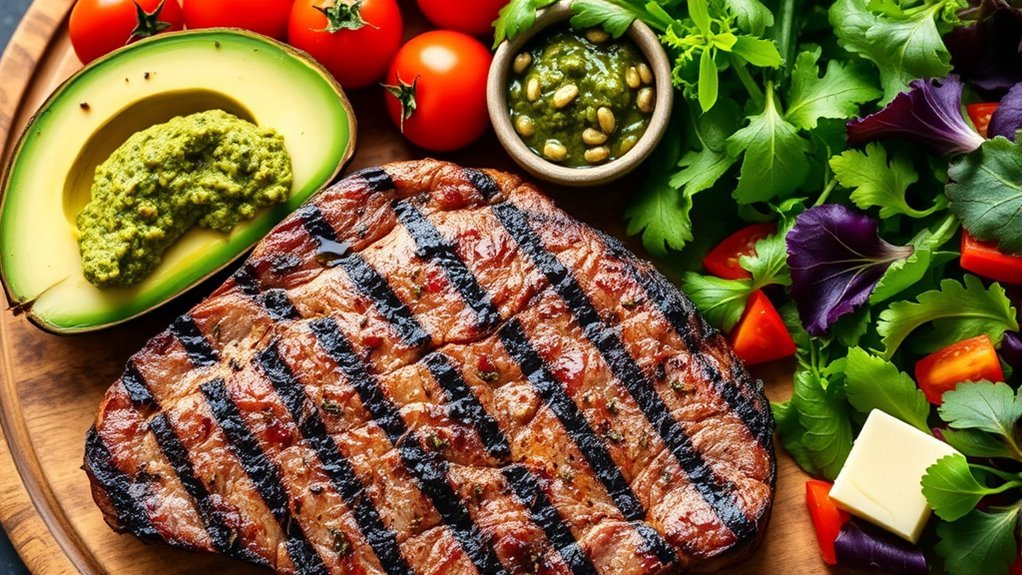

On a keto diet, you eat high-fat, low-carb foods to shift your body into ketosis, burning fat for energy instead of glucose. Focus on quality proteins like grass-fed beef and fatty fish, and fill your plate with low carb vegetables such as leafy greens and cauliflower. Snack smart with keto-friendly nuts and cheese crisps, and choose unsweetened beverages to stay hydrated. You’ll find there’s a lot more to discover about this lifestyle that can help you thrive.
Understanding the Basics of Keto
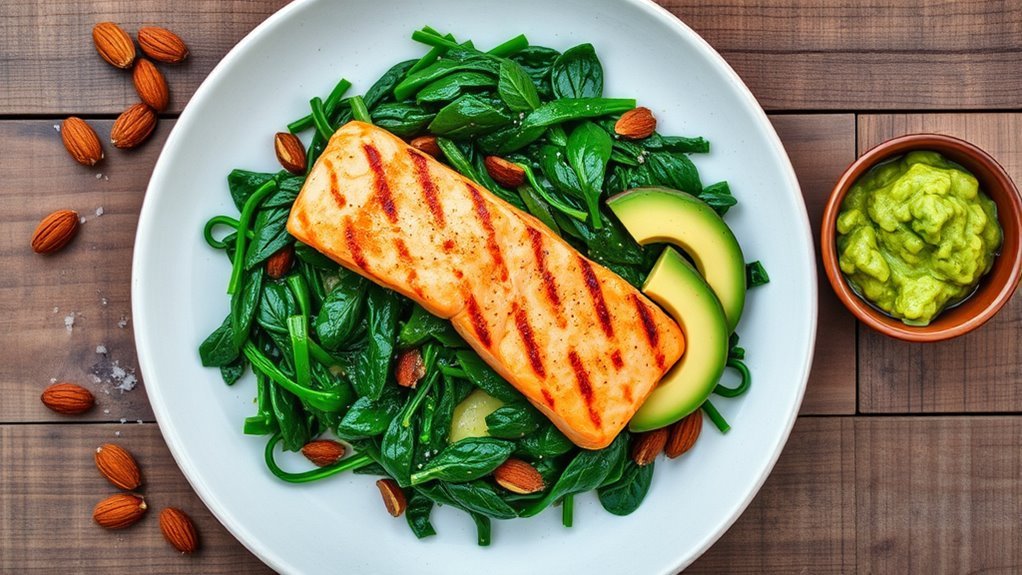
When you’re diving into the keto diet, it’s vital to understand its fundamental principles. At its core, the keto diet focuses on drastically reducing carbohydrate intake while increasing fats to shift your body into a metabolic state called ketosis. In ketosis, your body becomes efficient at burning fat for energy instead of relying on glucose from carbs. This metabolic state can lead to weight loss and improved energy levels. It’s important to balance your macronutrients carefully, aiming for about 70% fats, 25% protein, and only 5% carbohydrates. This approach not only supports your body’s change to fat-burning but also encourages adaptability and freedom in choosing foods that align with your health goals. Understanding these keto principles is your first step toward success.
Essential Foods to Include
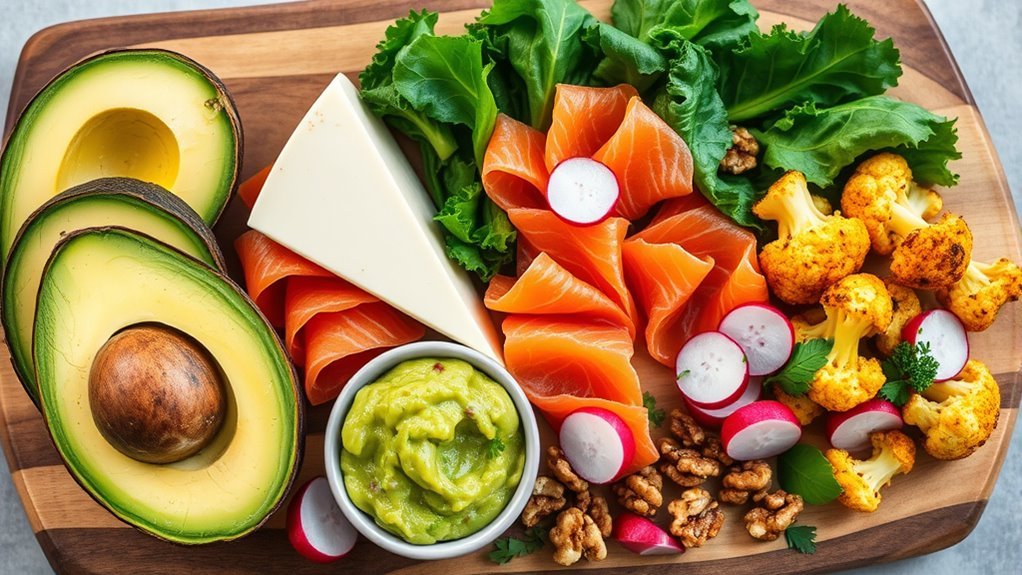
To achieve success on the keto diet, you’ll want to focus on incorporating a variety of essential foods that support your low-carb, high-fat lifestyle. Start by including keto friendly proteins like grass-fed beef, chicken, and fatty fish such as salmon and mackerel. These options provide quality nutrients while keeping your carb intake low. Next, don’t forget about low carb vegetables—think leafy greens, broccoli, cauliflower, and zucchini. These veggies are not only low in carbs but also rich in fiber, vitamins, and minerals, making them perfect for your meals. By focusing on these essential foods, you’ll not only enjoy diverse and satisfying dishes but also stay aligned with your dietary goals, giving you the freedom to thrive on keto.
Delicious Snacks for a Keto Diet
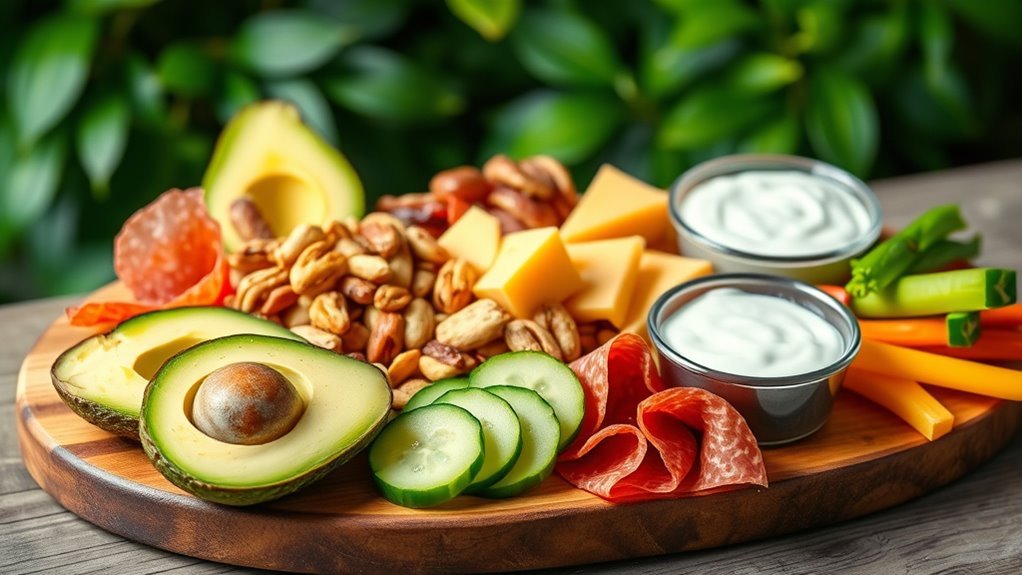
Snacking on a keto diet doesn’t have to be boring or unsatisfying. You can enjoy a variety of delicious options that keep you on track while satisfying your cravings. Here are three tasty snacks to contemplate:
- Keto friendly nuts: Almonds, pecans, and macadamia nuts are great choices packed with healthy fats and protein.
- Cheese crisps: Bake your favorite cheese until crispy for a savory, satisfying snack that’s low in carbs.
- Low carb desserts: Whip up some coconut flour brownies or indulge in sugar-free chocolate mousse to satisfy your sweet tooth without derailing your diet.
These snacks not only fit within your keto lifestyle but also allow you to enjoy eating without guilt. Embrace the freedom to snack smart!
Beverages That Fit Within Keto Guidelines
While following a keto diet, choosing the right beverages is essential for maintaining your low-carb lifestyle. Many options can keep you refreshed without derailing your progress. Look for keto-friendly drinks like unsweetened iced tea, black coffee, or sparkling water. When it comes to socializing, low carb cocktails made with spirits like vodka or gin, and mixed with soda or tonic water can be enjoyable too.
Here’s a quick reference table for you:
| Beverage Type | Keto-Friendly Options |
|---|---|
| Non-Alcoholic | Unsweetened Iced Tea |
| Black Coffee | |
| Alcoholic | Vodka Soda |
| Gin and Tonic | |
| Low Carb Beer |
Stay hydrated and enjoy your drink choices!
Common Foods to Avoid on Keto
Staying mindful of your beverage choices is just one part of the keto journey; equally important is knowing which foods can hinder your progress. To maintain that state of ketosis, you’ll want to steer clear of certain high carb foods and sugar sources that can disrupt your goals. Here are three common culprits:
- Bread and Pasta: These are often packed with refined carbs that can spike your insulin levels.
- Sugary Snacks: Think cookies, cakes, and candy; these are loaded with sugar and can quickly derail your diet.
- Starchy Vegetables: Foods like potatoes and corn are high in carbs and can affect your ketosis.
1. What foods can I eat on a keto diet?
On a keto diet, you can enjoy a variety of foods that are high in healthy fats and low in carbohydrates. Common food choices include:
- Meats: beef, pork, chicken, turkey, and fatty fish like salmon.
- Low-carb vegetables: leafy greens, broccoli, cauliflower, zucchini, and bell peppers.
- Dairy products: cheese, butter, heavy cream, and Greek yogurt (in moderation).
- Nuts and seeds: almonds, walnuts, chia seeds, and flaxseeds.
- Healthy oils: olive oil, coconut oil, and avocado oil.
It’s important to avoid high-carb foods like sugars, grains, and starchy vegetables while following a keto diet.
2. Can I eat fruits on a keto diet?
Fruits are generally higher in carbohydrates, which makes them less compatible with a strict keto diet. However, you can still enjoy certain low-carb fruits in moderation, such as:
- Berries: strawberries, raspberries, blackberries, and blueberries.
- Avocado: high in healthy fats and very low in carbs.
- Lemons and limes: great for flavoring dishes and drinks without adding many carbs.
When incorporating fruits into your keto plan, be mindful of portion sizes to maintain ketosis.
3. What snacks are suitable for a keto diet?
Keto-friendly snacks should be low in carbs and high in healthy fats. Some great options include:
- Nuts and seeds: almonds, pecans, and sunflower seeds.
- Cheese: string cheese, cheese slices, or cheese crisps.
- Olives and pickles: both are low in carbs and can satisfy cravings.
- Hard-boiled eggs: a protein-rich, portable snack.
- Vegetable sticks: celery or cucumber with a high-fat dip like guacamole or ranch dressing.
4. Are there any drinks I can have on a keto diet?
Yes, there are several drink options that fit well within a keto diet, including:
- Water: always the best choice for hydration.
- Coffee: black coffee or with added heavy cream or coconut oil.
- Tea: herbal, green, or black tea without added sugars.
- Bone broth: rich in nutrients and low in carbs.
- Unsweetened almond milk: a low-carb alternative to dairy milk.
Be cautious with drinks that contain sugar or high-carb mixers, as they can quickly break ketosis.
5. How do I ensure I stay in ketosis while eating?
To maintain ketosis, it’s essential to keep your carbohydrate intake to around 20-50 grams per day. Here are some tips to help you stay in ketosis:
- Track your macros: Use a food diary or app to monitor your carb, protein, and fat intake.
- Plan your meals: Prepare keto-friendly meals in advance to avoid high-carb temptations.
- Read labels: Be aware of hidden sugars and carbs in packaged foods.
- Incorporate intermittent fasting: This can help your body enter ketosis faster.
- Stay hydrated: Drink plenty of water to support metabolic processes.
By following these guidelines, you’ll be better equipped to sustain a state of ketosis while enjoying a varied and satisfying diet.
References
- https://en.wikipedia.org/wiki/Ketogenic_diet
- https://www.healthline.com/nutrition/what-to-eat-on-keto
- https://www.ncbi.nlm.nih.gov/pmc/articles/PMC6078930/
- https://www.cdc.gov/healthyweight/assessing/bmi/adult_bmi/english_bmi_calculator/bmi_calculator.html
- https://www.hsph.harvard.edu/nutritionsource/healthy-weight/dietary-approaches/keto-diet/
- https://www.webmd.com/diet/obesity/what-is-the-ketogenic-diet
- https://www.mayoclinic.org/healthy-lifestyle/nutrition-and-healthy-eating/in-depth/keto-diet/art-20459901

