

Keto bread can be a healthy alternative for you if you’re following a low-carb, high-fat diet. It typically features low-carb flours like almond or coconut, which can help stabilize your blood sugar levels and keep you feeling full longer. However, some options may lack essential nutrients or contain additives that aren’t ideal for a health-focused lifestyle. Moderation and quality ingredients are key, and there’s much more to explore about its benefits and potential drawbacks.
Understanding the Basics of the Keto Diet

When you think about the keto diet, it’s essential to understand its foundation: a high-fat, low-carbohydrate eating plan designed to shift your body into a state of ketosis. The keto principles emphasize minimizing carbs while increasing healthy fats, allowing your body to burn fat for energy instead of glucose. This can lead to weight loss and improved mental clarity for many. However, it’s important to recognize that there are diet variations within the keto framework, such as targeted or cyclical keto, which might suit different lifestyles and health goals. By understanding these basics, you can make informed choices that align with your personal health journey, embracing the freedom to customize your approach for best results.
Ingredients Commonly Found in Keto Bread

When exploring keto bread, you’ll find a variety of ingredients that support a low-carb lifestyle. Commonly used low-carb flours, like almond or coconut flour, replace traditional wheat flour, while healthy fats such as avocado oil or butter enhance flavor and texture. Additionally, nutritional additives like psyllium husk can provide fiber, helping to maintain digestive health while keeping your carb intake in check.
Low-Carb Flour Options
While traditional bread relies heavily on wheat flour, keto bread takes a different approach by incorporating low-carb flour options that cater to a ketogenic diet. Almond flour and coconut flour are two popular choices that not only reduce carbohydrate intake but also provide unique flavors and textures. Almond flour is rich in healthy fats, fiber, and protein, making it a nutritious alternative. Coconut flour, on the other hand, is high in fiber and absorbs moisture well, resulting in a light, fluffy bread. Both flours offer versatility, allowing you to enjoy your favorite baked goods without the guilt. By choosing these low-carb options, you can indulge in delicious bread while staying aligned with your health goals.
Healthy Fats Inclusion
Incorporating healthy fats into keto bread is essential for maintaining the diet’s low-carb principles while enhancing flavor and texture. These fats not only help you feel full longer but also provide necessary nutrients. Common dietary sources of healthy fats in keto bread include:
| Healthy Fats | Dietary Sources | Benefits |
|---|---|---|
| Coconut Oil | Coconut, MCT Oil | Energy boost, metabolism |
| Olive Oil | Extra virgin olive oil | Heart health, anti-inflammatory |
| Avocado Oil | Avocados | Nutrient-rich, versatile |
| Nut Butters | Almond, peanut butter | Satiety, healthy snacking |
Nutritional Additives Benefits
Adding nutritional additives to keto bread can greatly enhance its health benefits and overall quality. Ingredients like psyllium husk offer fiber, which supports digestive health, while adding probiotic benefits can further improve gut flora. When you choose bread enriched with vitamins, you’re not just enjoying a low-carb option; you’re also bolstering your immune system and overall wellness. For instance, incorporating almond flour can provide essential nutrients like vitamin E and magnesium, promoting heart health. Additionally, fortified keto bread can help bridge potential nutrient gaps in your diet. By selecting breads with these nutritional additives, you’re embracing a balanced approach to your keto lifestyle, allowing you to feel good about what you eat while enjoying the freedom of delicious bread choices.
Nutritional Comparison: Keto Bread vs. Traditional Bread
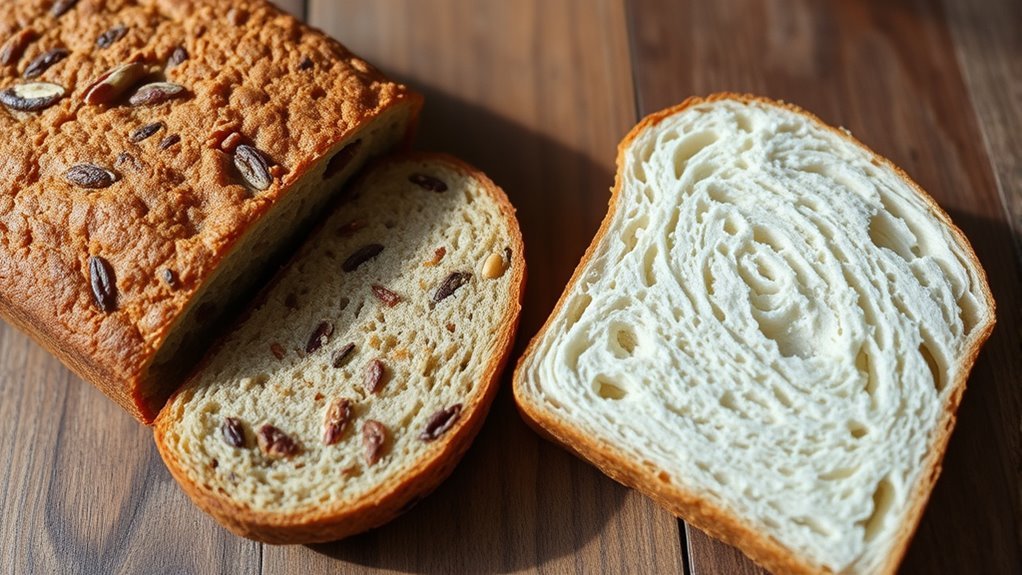
When comparing keto bread to traditional bread, you’ll notice significant differences in carb content, which can impact your dietary choices. Keto bread typically contains fewer carbs and may offer higher fiber and nutrient levels, depending on its ingredients. Understanding these differences can help you make informed decisions about what fits best into your health goals.
Carb Content Differences
The differences in carb content between keto bread and traditional bread can greatly impact your dietary choices, especially if you’re following a low-carb lifestyle. Traditional bread typically contains high amounts of carbohydrates, primarily from wheat and other grains, while keto bread uses alternative carb sources like almond flour or coconut flour, markedly reducing carb counts. This lower carb content allows for better carb timing in your meals, enabling you to maintain stable energy levels without spiking your blood sugar. If you’re seeking freedom in your diet while adhering to low-carb principles, keto bread can be a satisfying option. It’s essential, however, to read labels and choose options that align with your nutritional goals for ideal health benefits.
Fiber and Nutrients
While many people focus on carb content when comparing keto bread to traditional bread, it’s equally important to evaluate their fiber and nutrient profiles. Keto bread often utilizes alternative fiber sources, enhancing nutrient density while keeping carbs low.
Here’s a quick comparison of their fiber and nutrient aspects:
| Type of Bread | Fiber Content (g) | Nutrient Density (1-10) |
|---|---|---|
| Keto Bread | 6-10 | 8 |
| Whole Wheat Bread | 2-4 | 6 |
| White Bread | 1 | 4 |
| Gluten-Free Bread | 1-3 | 5 |
| Rye Bread | 3-5 | 7 |
Ultimately, choosing the right bread can support your health goals while enjoying a diverse diet.
Potential Health Benefits of Keto Bread
Keto bread offers several potential health benefits that can be appealing, especially if you’re following a low-carb diet. One of the primary keto bread benefits is its ability to help maintain stable blood sugar levels. By being low in carbohydrates, it may reduce insulin spikes, making it a suitable choice for those managing diabetes. Additionally, many keto breads are rich in healthy fats and fiber, promoting satiety and potentially aiding in weight management. You might also appreciate that these breads often contain nutrient-dense ingredients, contributing to your overall health. However, it’s important to be mindful of health risks, such as over-reliance on processed ingredients. Balancing your diet with whole foods will guarantee you reap the full benefits of keto bread without compromising your health.
Considerations and Drawbacks of Keto Bread
Although keto bread can be a tasty alternative for low-carb diets, there are important factors and potential drawbacks to keep in mind. Some health concerns could arise from consuming it regularly, especially if the ingredient quality isn’t prioritized. Here are a few factors to contemplate:
- Nutritional Imbalance: Some keto breads may lack essential nutrients.
- Ingredient Quality: Low-quality ingredients can lead to health issues over time.
- Digestive Issues: Certain ingredients, like almond flour, may cause digestive discomfort for some.
- Additives and Preservatives: Many commercial options contain additives that may not align with a health-focused lifestyle.
Being aware of these aspects can help you make informed choices about incorporating keto bread into your diet while still prioritizing your health.
How to Incorporate Keto Bread Into Your Diet
When you’re looking to incorporate keto bread into your diet, it’s essential to evaluate how it fits into your overall nutritional goals. Start by exploring various keto bread recipes that align with your preferences, whether you enjoy almond flour or coconut flour options. These breads can be a great substitute for traditional carbs while still keeping your net carbs low.
For meal pairing, consider using keto bread for sandwiches filled with proteins and fresh veggies, or as a base for avocado toast topped with seeds. You can also enjoy it with soups or salads, enhancing your meals without sacrificing taste. Just remember, moderation is key; balance is vital for long-term success on your keto journey.
Frequently Asked Questions about Keto Bread
1. What is Keto Bread?
Keto bread is a low-carbohydrate alternative to traditional bread, designed specifically for those following a ketogenic diet. It is typically made with ingredients such as almond flour, coconut flour, or flaxseed meal, which are low in carbs and high in healthy fats and fiber. This bread helps individuals maintain ketosis, a metabolic state where the body burns fat for fuel instead of carbohydrates.
2. Is Keto Bread healthier than regular bread?
Keto bread can be considered healthier than regular bread for those on a ketogenic diet, as it is lower in carbohydrates and sugars. This makes it a suitable option for individuals looking to manage their weight, blood sugar levels, and overall health. However, it is important to note that not all keto breads are created equal; some may contain unhealthy additives or preservatives. Always check the ingredient list and nutritional information.
3. Can I eat Keto Bread if I’m not on a ketogenic diet?
Yes, you can eat keto bread even if you’re not following a ketogenic diet. Its low-carb and high-fiber content can be beneficial for anyone looking to reduce their carbohydrate intake or increase their fiber consumption. However, keep in mind that keto bread may not provide the same texture or flavor as traditional bread, and you may need to adjust your expectations accordingly.
4. What are the nutritional benefits of Keto Bread?
Keto bread typically offers several nutritional benefits, including a lower carbohydrate content, which can help with weight management and blood sugar control. It is often rich in healthy fats, which provide satiety and sustained energy, and high in fiber, which promotes digestive health. Additionally, many keto bread recipes incorporate nutrient-dense ingredients like seeds and nuts, contributing vitamins and minerals to your diet.
5. Are there any downsides to eating Keto Bread?
While keto bread can be a great alternative for those on a low-carb diet, there are some potential downsides. Some brands may use artificial ingredients or preservatives that might not be ideal for health-conscious consumers. Additionally, some people may experience digestive discomfort when consuming large amounts of fiber from keto bread. It’s essential to consume it in moderation and pay attention to how your body reacts.
References
- https://www.ncbi.nlm.nih.gov/pmc/articles/PMC6462215/
- https://www.healthline.com/nutrition/keto-diet-foods
- https://www.webmd.com/diet/obesity/keto-diet-overview
- https://www.clevelandclinic.org/health/diet-nutrition/what-is-the-keto-diet
- https://www.mayoclinic.org/healthy-lifestyle/nutrition-and-healthy-eating/expert-answers/keto-diet/faq-20454862
- https://www.hsph.harvard.edu/nutritionsource/keto-diet/
- https://www.bbc.com/news/health-51114081