On a keto diet, you can enjoy low-carb fruits like avocado, which is creamy and nutrient-rich, and various berries such as raspberries, strawberries, and blackberries. Watermelon and cantaloupe can be included, but in moderation. Consider lemons and limes for zest, and don’t forget about tomatoes, which are surprisingly classified as fruits. Olives and coconut offer healthy fats, while rhubarb provides a tart option. Discover more about other delicious fruit choices that fit into your keto lifestyle.
Avocado: The Creamy Low-Carb Delight
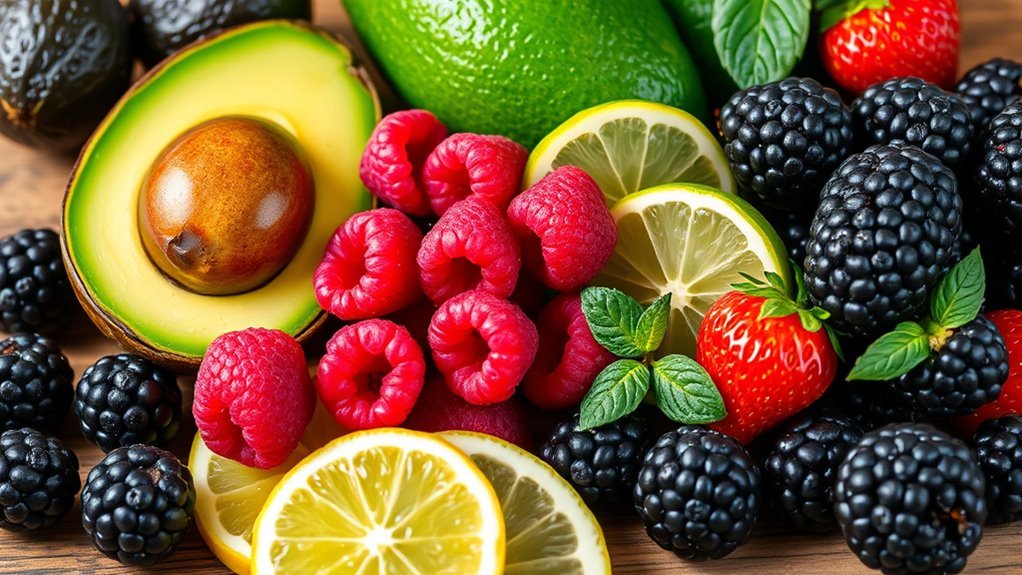
Avocado, often hailed as a superfood, is a staple for those following a ketogenic diet. With its low carbohydrate content and high healthy fat levels, it fits perfectly into your meal plan. You’ll find various avocado varieties, each offering unique flavors and textures, from the creamy Hass to the smooth Fuerte. These versatile fruits can be incorporated into numerous avocado recipes—think guacamole, salads, or even avocado smoothies. They’re not just delicious but also packed with essential nutrients, such as potassium and fiber, promoting overall health. By embracing avocados, you’re not only satisfying your taste buds but also fueling your body with crucial nutrients while enjoying the freedom of a keto lifestyle.
Berries: Raspberries, Strawberries, and Blackberries
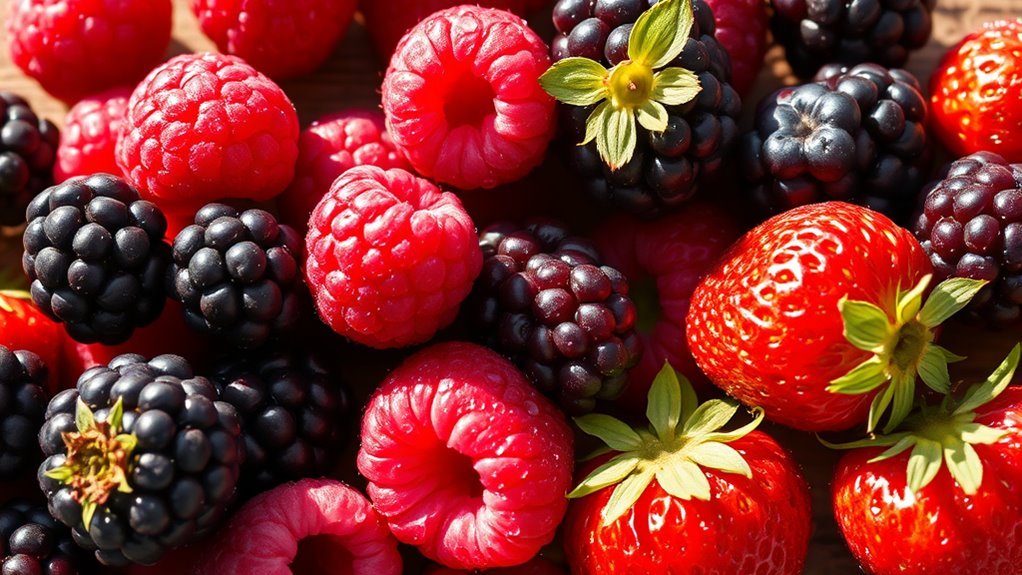
When you’re on a ketogenic diet, incorporating berries like raspberries, strawberries, and blackberries can add a burst of flavor while keeping your carb intake in check. These berry varieties are not only delicious but also low in carbs and high in fiber, making them a perfect fit for keto-friendly recipes. For instance, you can whip up a revitalizing berry salad or blend them into a smoothie with coconut milk. Raspberries have about 7 grams of net carbs per cup, while strawberries contain roughly 8 grams, and blackberries come in at about 6 grams. By choosing these berries, you can satisfy your sweet tooth without derailing your progress, allowing you to enjoy your food freedom while staying in ketosis.
Watermelon: A Refreshing Option in Moderation
Watermelon can be a revitalizing treat on a keto diet, but moderation is key. With its high water content and natural sugars, understanding its nutritional profile and appropriate serving sizes is essential for staying within your carb limits. Pairing watermelon with healthy fats can enhance its flavor while keeping your keto goals in check.
Nutritional Profile Overview
While many fruits can be high in carbohydrates, watermelon stands out as an invigorating option that can be enjoyed in moderation on a keto diet. With about 7 grams of net carbs per 100 grams, it’s essential to keep track of your intake. Watermelon’s high water content—over 90%—helps keep you hydrated, while its nutritional benefits include vitamins A and C, along with antioxidants like lycopene. These elements can support overall health, making watermelon not just a tasty treat but a beneficial one too. However, remember to balance this invigorating fruit with your daily carb counts to stay within your keto goals. Enjoying watermelon responsibly can add a burst of flavor to your diet without derailing your progress.
Serving Size Recommendations
For those following a keto diet, enjoying watermelon requires mindful serving sizes to stay within carbohydrate limits. While this juicy fruit can be invigorating, it’s important to practice portion control. A typical serving size of watermelon is about 1 cup, providing roughly 11 grams of carbs. Here’s a quick reference to help you enjoy watermelon while maintaining your keto lifestyle:
| Serving Size | Carbohydrates (g) | Notes |
|---|---|---|
| 1 slice (1/8) | 10.5 | Great for summer BBQs |
| 1 cup diced | 11 | Perfect snack option |
| 1/2 cup | 5.5 | Low-carb treat |
| 1/4 cup | 3.5 | Easy to fit in meals |
Being aware of serving sizes will let you savor watermelon without derailing your diet.
Ideal Pairings for Keto
When you’re looking to enjoy watermelon on a keto diet, pairing it with complementary ingredients can enhance both flavor and nutritional value without pushing your carb intake too high. Consider these fruit combinations to create delicious keto-friendly smoothies:
- Avocado: Adds creaminess and healthy fats.
- Coconut milk: Provides richness while keeping carbs low.
- Mint: Freshens up the flavor profile.
- Lemon juice: Balances sweetness with acidity.
These pairings not only make your smoothie more satisfying but also help you stay within your keto goals. Just remember to enjoy watermelon in moderation, as its natural sugars can add up quickly. With the right combinations, you can savor the invigorating taste of watermelon while sticking to your keto lifestyle.
Cantaloupe: Satisfying Your Sweet Cravings
Cantaloupe can be a delightful option for those on a keto diet, especially when you’re craving something sweet. This fruit, while higher in carbs than some keto-friendly options, can still fit into your daily allowance when consumed in moderation. There are several cantaloupe varieties, each offering unique flavors and textures that can satisfy your sweet tooth without derailing your diet. Consider creating invigorating cantaloupe recipes like a simple salad with feta cheese or blending it into a smoothie with spinach for added nutrients. Just remember to track your carb intake! By incorporating cantaloupe thoughtfully, you can enjoy its juicy sweetness while maintaining your keto lifestyle and indulging your cravings.
Lemons and Limes: Zesty Flavor Boosters
Lemons and limes are two of the most versatile fruits you can incorporate into your keto diet, both adding vibrant flavor without greatly impacting your carb count. Not only do they enhance your meals, but they also offer several health benefits that can support your keto journey.
Consider these lemon benefits and lime uses:
- Low in carbs: Perfect for flavoring dishes without adding significant carbs.
- Rich in vitamin C: Boosts your immune system and overall health.
- Natural flavor enhancer: Use in dressings, marinades, or beverages to brighten up flavors.
- Digestive aid: Lemon water may help improve digestion and hydration.
Tomatoes: A Surprising Fruit Choice
Have you ever considered that tomatoes, often thought of as a vegetable, are actually a fruit? This surprising distinction makes them a great choice for your keto diet. With various tomato varieties like cherry, roma, and heirloom, you can enjoy different flavors and textures. Whether you’re slicing them for a salad, roasting them for a warm dish, or blending them into a sauce, tomatoes offer versatility in your cooking methods. Plus, they’re low in carbs and rich in vitamins, making them a nutrient-dense option. Just remember to watch portion sizes, as they do contain natural sugars. Incorporating tomatoes can elevate your meals while keeping you aligned with your keto goals. Enjoy the freedom of adding this delicious fruit to your plate!
Olives: Savory and Satisfying
Olives are a fantastic low-carb snack option that can fit seamlessly into your keto diet. Packed with healthy fats and antioxidants, they offer a range of nutritional benefits that support overall health. Plus, their savory flavor makes them a satisfying addition to your meals or snacks.
Nutritional Benefits of Olives
While you might think of olives as just a savory addition to your dishes, their nutritional benefits are impressive and make them a great fit for a keto lifestyle. Different olive varieties offer unique flavors and health benefits, enriching your diet while keeping carbs low. Here are some key advantages of including olives in your meals:
- Heart Health: Rich in monounsaturated fats, olives can support cardiovascular function.
- Antioxidants: They contain powerful antioxidants that help combat inflammation.
- Vitamins and Minerals: Olives are a good source of vitamin E and iron, essential for overall health.
- Low in Carbs: With minimal carbohydrates, they fit perfectly within your keto meal plan.
Low-Carb Snack Options
When it comes to satisfying your snack cravings on a keto diet, finding options that are both low in carbs and high in flavor can be a challenge. Olives are a perfect choice—they’re savory, satisfying, and versatile. You can enjoy them on their own or pair them with keto friendly dips, like guacamole or spinach artichoke dip. For an extra crunch, consider adding some crunchy veggie pairings, such as celery sticks or bell pepper slices. This combination not only keeps your carb count low but also provides essential nutrients. Plus, olives come with healthy fats, making them a great option for sustained energy. Embrace the freedom of tasty snacking while sticking to your keto goals!
Coconut: Versatile and Nutritious
Coconut is not only a delicious tropical fruit but also a powerhouse of nutrition that can seamlessly fit into a ketogenic diet. With its low carb content and high healthy fat profile, it’s perfect for satisfying your cravings and maintaining energy levels. Here are some coconut benefits you can enjoy:
- Rich in medium-chain triglycerides (MCTs) that support weight loss.
- Provides essential minerals like potassium and magnesium.
- Acts as a natural source of fiber, promoting digestive health.
- Versatile in coconut recipes, from smoothies to keto desserts.
Incorporating coconut into your meals can enhance flavor and nutrition while keeping you aligned with your keto lifestyle. So, embrace this tropical delight and explore its myriad uses!
Rhubarb: Tart and Low in Carbs
After exploring the many benefits of coconut, it’s time to turn our attention to another keto-friendly option: rhubarb. This tart vegetable is low in carbs, making it a perfect addition to your ketogenic diet. With only about 1 gram of net carbs per 100 grams, it allows you to enjoy a fruity flavor without derailing your macros.
Rhubarb benefits include high fiber content and antioxidants that promote digestive health and reduce inflammation. You can easily incorporate rhubarb into your meals with various rhubarb recipes, like keto-friendly pies or compotes. Its unique taste pairs well with sweeteners, enabling you to satisfy your cravings while staying on track. Embrace rhubarb as a vibrant, versatile ingredient in your keto journey!
Frequently Asked Questions about Fruits on Keto
1. What fruits are best to eat on a keto diet?
The best fruits to consume on a keto diet are those that are low in carbohydrates and sugar. Some excellent options include berries such as strawberries, blueberries, raspberries, and blackberries. Avocados and olives are also great choices due to their healthy fats and low carb content. Additionally, tomatoes and watermelon can be enjoyed in moderation.
2. Are all fruits high in sugar and carbs?
Not all fruits are high in sugar and carbs. While many fruits contain natural sugars, some are lower in carbohydrates, making them more suitable for a keto diet. For instance, fruits like bananas, grapes, and cherries are typically higher in sugar, whereas berries, avocados, and lemons are lower and can be included in moderation.
3. How do I incorporate fruits into my keto meal plan?
Incorporating fruits into your keto meal plan can be done by using them as toppings or garnishes. For example, you can add a few berries to a low-carb yogurt or smoothie, or use avocado slices in salads. It’s important to track your carbohydrate intake and consume fruits in moderation to stay within your daily carb limits.
4. Can I eat dried fruits on a keto diet?
Dried fruits are generally not recommended on a keto diet as they tend to have a significantly higher concentration of sugars and carbohydrates due to the removal of water content. For example, raisins and dried apricots can contain high amounts of sugar, making them unsuitable for maintaining ketosis. It’s better to stick to fresh fruits in moderation.
5. What are the risks of eating too much fruit on a keto diet?
Eating too much fruit on a keto diet may lead to exceeding your carbohydrate limit, which can kick you out of ketosis. This can stall weight loss and impact your energy levels. It’s essential to choose low-carb fruits and be mindful of portion sizes to maintain your keto goals. Always consider your total daily carb intake to ensure you remain in ketosis.
References
- https://www.health.harvard.edu/staying-healthy/the-ketogenic-diet
- https://www.ncbi.nlm.nih.gov/pmc/articles/PMC6010565/
- https://www.webmd.com/diet/obesity/ss/slideshow-keto-diet-foods
- https://www.dietdoctor.com/low-carb/keto/fruits
- https://www.ketogenic.com/what-fruits-can-you-eat-on-keto-diet/
- https://www.mayoclinic.org/healthy-lifestyle/nutrition-and-healthy-eating/expert-answers/keto-diet/faq-20429299
- https://www.nutrition.gov/
- https://www.cdc.gov/healthyweight/index.html
- https://www.jamanetwork.com/journals/jama/fullarticle/2761536