

Plantain is not keto-friendly, so you should avoid it on a keto diet. The main reason is that plantain is far higher in net carbohydrates than typical keto limits, which can quickly push your daily carb intake over target and stall ketosis. If you want a fruit- or starchy-side alternative, choose low-carb options that fit your carb allowance instead.
Plantain usually isn’t keto-friendly because it’s relatively high in carbs—especially when it’s ripe. You might fit a small portion if you carefully track net carbs, but for most people, it makes staying in ketosis harder; this guide explains how to judge plantain using labels and macros and what to choose instead.
If you’re doing keto for weight loss, blood sugar control, or simply to reduce carbs, the practical question is whether plantain can fit your daily net-carb limit. That applies whether you’re eating it as a side, turning it into chips, or swapping it for potatoes.
Why plantain usually isn’t keto-friendly
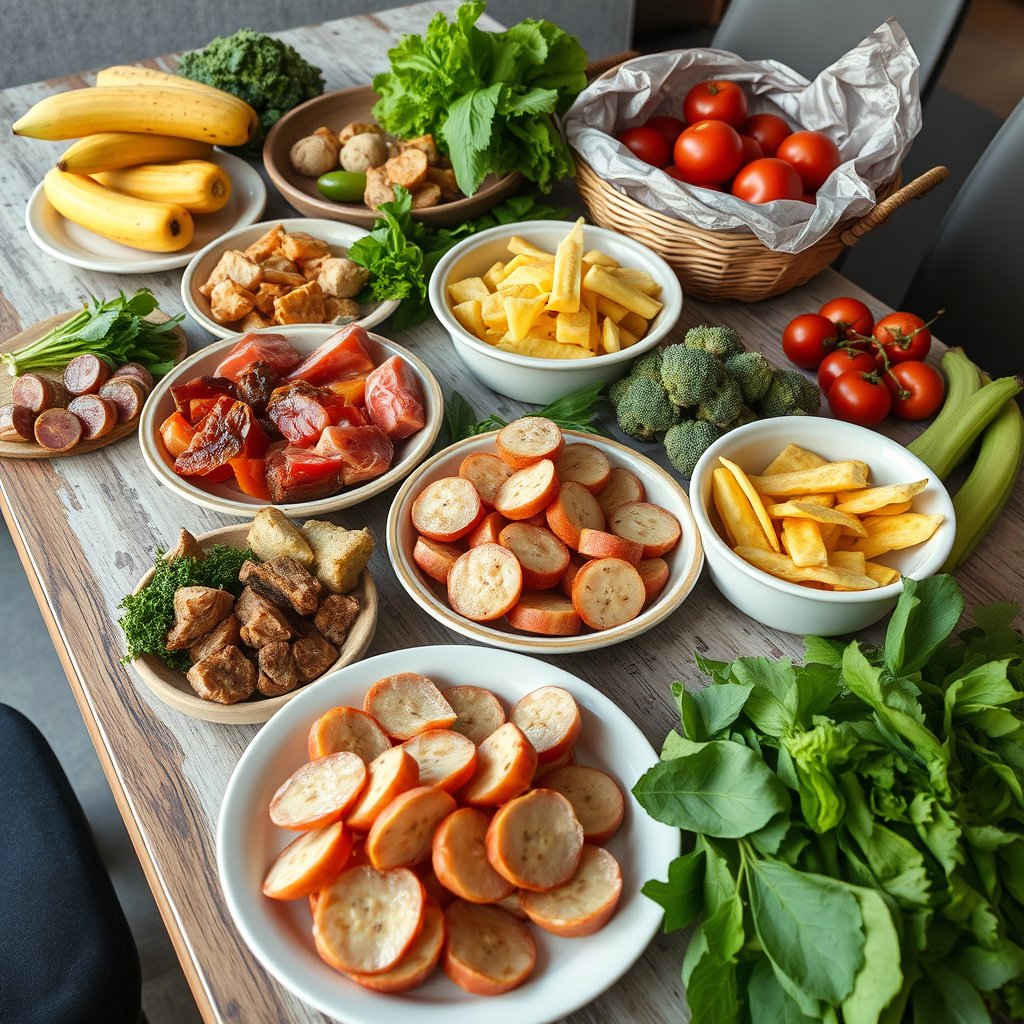
Plantain is typically not keto-friendly because it tends to deliver a high carb load per serving. Even when it’s a “whole food,” keto still requires tight carbohydrate control to keep ketone production stable.
– Plantains contain carbs that typically push daily net-carb totals beyond keto targets.
– Riper plantains (more yellow/brown) tend to be sweeter, which usually means more carbs than greener ones.
– Even if the ingredient is “natural,” keto is about carb counting—not just food type.
From a numbers standpoint, plantain is very similar to other starchy foods: it’s primarily carbohydrate with comparatively modest fiber. According to USDA FoodData Central, raw plantain contains about 32.3 g total carbohydrate per 100 g (with about 2.3 g fiber per 100 g), which is why net-carb totals can add up fast. USDA FoodData Central also reports that ripe plantain is typically higher in available carbs—often around 34.0 g total carbohydrate per 100 g with about 1.8 g fiber per 100 g—making portion control even more important as plantain ripens.
How to check if plantain fits your keto macros
Plantain can fit keto only if the portion you eat stays within your remaining daily net-carb allowance. The most reliable way to decide is to read the label (or the nutrition entry for the preparation) and do net-carb math for your specific serving size.
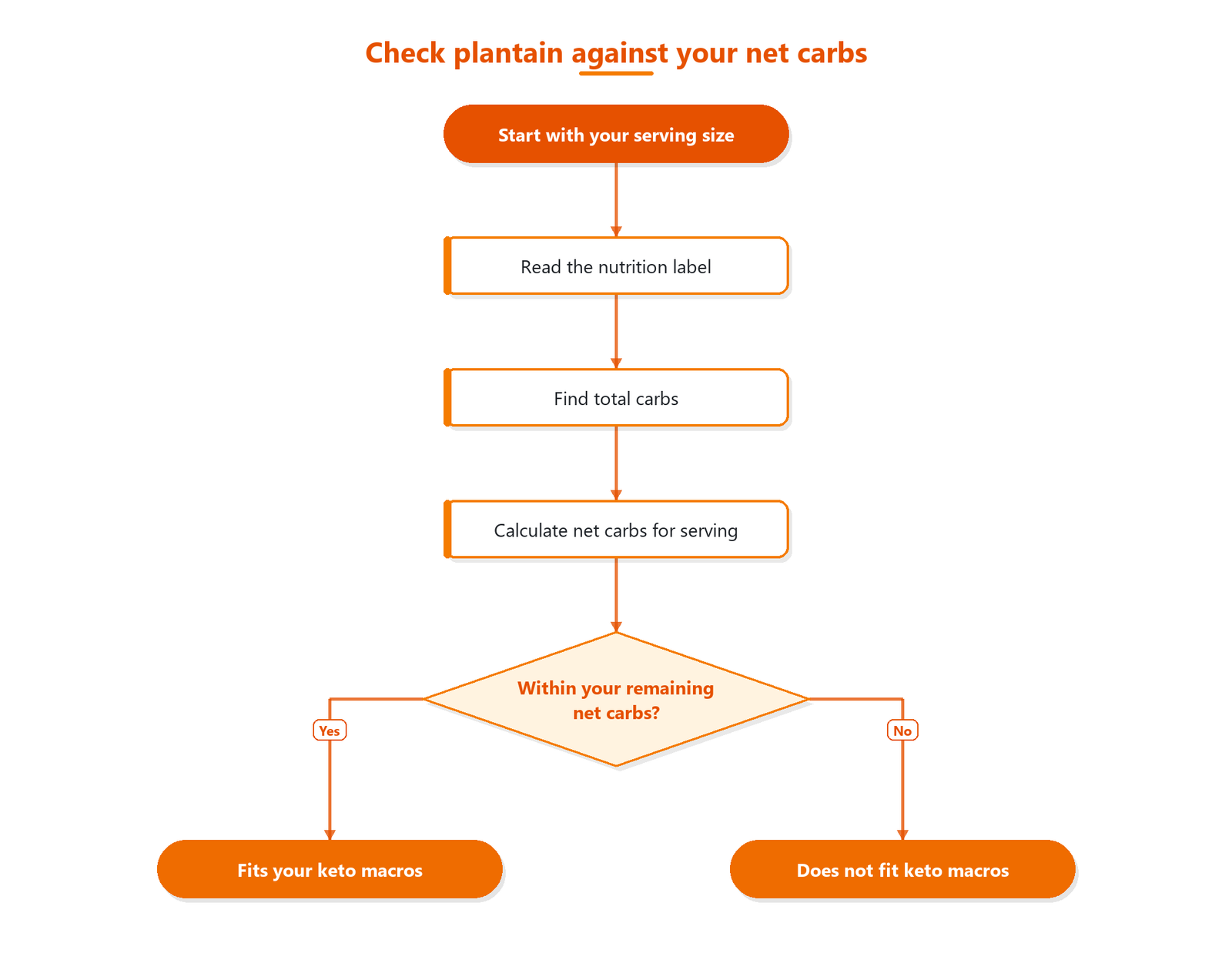
– Start with the nutrition label: find total carbs, then use net carbs (or calculate the net carbs approach you follow).
– Compare the plantain portion you plan to eat to your remaining daily net-carb allowance.
– Decide your “budget” in advance (for example: a small serving only, then no other carb-heavy foods that day).
Here’s the practical method many keto dieters use:
1) Pick your keto target (commonly 20–50 g net carbs/day, depending on how strict you are). According to NIH / National Institute of Neurological Disorders and Stroke, ketogenic diets often restrict carbohydrate intake to roughly 20–50 g/day for therapeutic use.
2) Use a net-carb rule you can apply consistently. In most standard approaches:
Net carbs = total carbs − fiber.
(If your product includes sugar alcohols, some keto trackers subtract them differently—follow the specific method your app or diet approach uses.)
3) Calculate your portion’s net carbs, not the entire package.
Because labels rarely match the exact way you’ll cook plantain, consistency matters more than perfection: the goal is to be close enough that you don’t “surprise” yourself into overshooting carbs later in the day.
Max Plantain Portion That Can Fit Common Keto Net-Carb Limits (2026)
| # | Daily net-carb budget | Estimated max plantain* | Portion practicality | Keto fit |
|---|---|---|---|---|
| 1 | 20 g/day | ~67 g | Small side | ★★☆☆☆ |
| 2 | 25 g/day | ~83 g | Very portion-sensitive | ★★☆☆☆ |
| 3 | 30 g/day | ~100 g | Single serving boundary | ★★★☆☆ |
| 4 | 35 g/day | ~117 g | Often fits with low-carb meals | ★★★★☆ |
| 5 | 40 g/day | ~133 g | More room, still not “free” | ★★★★☆ |
| 6 | 45 g/day | ~150 g | Only if other foods are low-carb | ★★★★★ |
| 7 | 50 g/day | ~167 g | Likely feasible for some keto plans | ★★★★★ |
*Assumes “raw plantain” net carbs of about 30 g per 100 g (computed from ~32.3 g total carbs minus ~2.3 g fiber from USDA FoodData Central). Actual numbers vary by ripeness, cooking method, and product labeling.
Does ripeness and preparation change the answer?
Ripeness and preparation change the real-world keto fit, even if the plantain stays the same “ingredient.” In practice, ripening increases perceived sweetness and often shifts the nutrition profile enough that your usual portion can become too high-carb.
– Choose greener (less ripe) plantains if you’re determined to try them—sweet, fully ripe plantains are the harder sell on keto.
– Preparation matters for keto in a practical way: plain/unsweetened cooking is easier to track than glazes and sauces.
– Watch for “hidden carbs” from add-ons (honey, sugar-based marinades, breading, sweet toppings).
If you’ve ever compared two platters—one with green plantains cooked simply and another with caramelized or sweetened plantains—you’ve seen the difference keto makes. The same plantain can become a keto problem when it’s coated with sugar, honey, sweet sauces, or a batter that adds extra starch.
Also pay attention to “plantain chips” and restaurant sides. Many chips include added flavorings, starch coatings, or seasoning blends that can include added carbs. On top of that, chips shrink the serving size, so it’s easy to eat more than your planned grams and blow past net-carb targets.
A key operational point: if you’re trying to correct ketosis (or avoid falling out), treat plantain as a “debugging variable.” Keep all other carb-heavy foods minimal for that day, and track what happens after your meal.
Keto-friendly swaps for plantain
If you’re craving the starchy side role that plantain fills, you’ll usually get better keto compliance from lower-carb vegetables. The goal is texture satisfaction (chew, mash, crunch) without the carb load that makes plantain hard to fit.
– If you want a starchy side: consider lower-carb options like cauliflower “rice,” mashed cauliflower, or roasted zucchini.
– For crunch: try keto-friendly chips made from approved keto vegetables (or simple roasted nuts/seeds—unsweetened).
– For comfort-food vibes: look for recipes built around keto vegetables, not fruit-based or starchy swaps.
Here’s a practical comparison that maps “what you wanted” to “what keto tolerates”:
- Plantain role
- What you get: starchy, sliceable side; naturally sweet flavor when ripe.
- Keto downside: carb density can exceed net-carb budgets quickly, especially with ripe plantain.
- Cauliflower “rice” or mashed cauliflower
- What you get: similar bulk and comfort-food vibe with far fewer net carbs.
- Keto upside: easier to keep portions within a strict net-carb plan.
- Roasted zucchini
- What you get: caramelized edges and satisfying bite.
- Keto upside: typically less net carbs than plantain while still feeling “substantial.”
From my own day-to-day approach to meal planning, the easiest way to stay consistent is to decide the “category” (side, crunch, mash) before you decide the ingredient. That keeps plantain from creeping back in as a default swap.
What can go wrong (common keto plantain mistakes)
Plantain usually fails keto due to predictable execution errors, not because plantain is uniquely “bad.” If you’re strict, the most common failures are portion size, counting method mismatches, and treating plantain like dessert.
– Portion creep: plantain can be deceptively filling, so it’s easy to eat more than you planned.
– Counting errors: some labels focus on total carbs; keto often requires net-carb thinking (fiber and sugar alcohol rules vary).
– Ripe-plantain “treats”: eating it like dessert (or pairing with sweet sauces) often breaks ketosis quickly.
– “Keto” label confusion: some products labeled “keto” may still contain ingredients that add carbs—always check the nutrition facts.
Two issues come up repeatedly for people on keto:
1) Total carbs vs. net carbs mismatch. Many apps and labels show total carbs, while keto plans often focus on net carbs. If you add everything up using the wrong method, your “budget” won’t match reality.
2) Ripe-plantain pairing. Even if the plantain portion fits, pairing it with rice, sweet fruit, breaded items, or sugar-forward sauces can push you over. On days you want to stay in ketosis, treat plantain as the only “starch” variable—then keep the rest of your plate low-carb.
Finally, if you’re using keto “replacements” as a strategy (swap potatoes with plantain, for example), ketosis can slip because the replacement isn’t actually low-carb—it’s just familiar.
Verdict: should you eat plantain on keto?
Plantain isn’t automatically off-limits, but it’s usually a poor match for keto because it’s carb-dense. If you’re strict about ketosis, skipping plantain is the easiest way to stay consistent; if you’re experimenting, keep servings small and track net carbs carefully—then avoid other carb-heavy foods that day. Skip plantain entirely if you tend to overshoot your net-carb limit, you’re newly in ketosis (or trying to get back into it), or you use it as a “replacement” for higher-carb foods without tracking.
If you’re doing keto for blood sugar stability, remember that carbohydrate intake can still influence glucose response even when you “feel fine.” For weight loss goals, the bigger risk is often calorie creep from starchy sides plus sauces—plantain makes it easy to eat more than you planned.
Quick checklist: Can you include plantain today?
– ☐ I checked the nutrition label for net carbs (or my keto method)
– ☐ My planned portion fits within my remaining daily net-carb budget
– ☐ I’m choosing less ripe/greener plantain (not sweet, fully ripe)
– ☐ It’s cooked without sugary sauces, breading, or sweet glazes
– ☐ I’m not pairing it with other high-carb sides that day
Frequently Asked Questions
Is plantain keto-friendly?
Plantain is usually not considered keto-friendly because it is higher in net carbs than typical keto vegetables. While plantains can be eaten as a whole food, they still raise blood sugar and can make it difficult to stay within a keto carb limit. If you’re strict keto, you’ll generally choose lower-carb options like zucchini, spinach, or cauliflower instead.
How many carbs are in plantain on keto?
Carbs in plantain are often too high for most keto diets, especially depending on ripeness. Generally, more ripe plantain (yellow or sweeter) contains more sugars, increasing net carbs. To stay keto, you would need to measure portions carefully, but even then plantain may push you over your daily net carb target.
Why isn’t green or unripe plantain always keto?
Even unripe (green) plantain contains carbohydrates, and its carb load can still exceed keto-friendly thresholds. Although green plantain is often lower in sugar than ripe plantain, it’s not low enough in net carbs to reliably fit standard keto macros. For keto success, it’s better to treat plantain as an occasional, portion-controlled food rather than a staple.
Which type of plantain has the lowest carbs for keto?
Unripe or green plantain typically has fewer carbs than ripe, yellow plantain because ripening increases sugar content. That said, “lowest carb” doesn’t mean “keto-approved,” so it may still be difficult to fit into a strict ketogenic diet. If you do try it, use small portions, calculate net carbs, and avoid pairing it with other carb-heavy foods.
What are keto alternatives to plantain?
If you want a similar savory, starchy experience, try keto-friendly swaps like roasted turnips, cauliflower “fries,” or zucchini chips. You can also use hearts of palm or radishes for a low-carb texture that still works well in side dishes. These options help you keep carbs lower while still enjoying satisfying meals aligned with keto meal planning.
📅 Last Updated: October 31, 2026 | Topic: is plantain keto | Content verified for accuracy and freshness.
References
- Plantain
- https://www.britannica.com/plant/plantain
- https://pubmed.ncbi.nlm.nih.gov/?term=plantain+glycemic+index
- https://pubmed.ncbi.nlm.nih.gov/?term=plantain+carbohydrate+content
- https://pubmed.ncbi.nlm.nih.gov/?term=ketogenic+diet+carbohydrate+intake
- https://www.niddk.nih.gov/health-information/diet-nutrition/ketogenic-diet
- https://www.mayoclinic.org/diseases-conditions/diabetes/in-depth/ketogenic-diet/art-20045282
- https://scholar.google.com/scholar?q=plantain+keto Google Scholar
- https://scholar.google.com/scholar?q=plantain+glycemic+index+carbohydrates Google Scholar
- https://scholar.google.com/scholar?q=ketogenic+diet+carbohydrate+limit+20+50+grams Google Scholar


Pingback: Is Polenta Keto? Can You Eat Polenta on Keto? - Keto Model