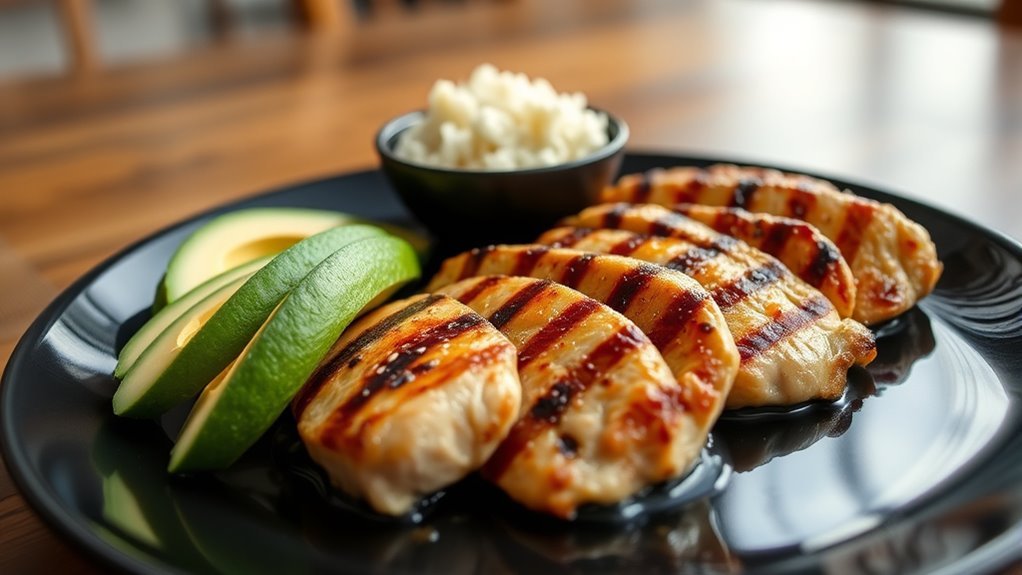

On a ketogenic diet, you can typically consume between 20 to 50 grams of net carbs per day to maintain ketosis effectively. This limit helps your body switch from burning glucose to using fat for energy. Keep in mind that individual factors, like activity level and metabolic health, can influence your carb needs. Tracking your intake will help optimize your diet. If you want to understand more about managing your carb consumption, there’s plenty more to explore.
Understanding Ketosis and Carbohydrate Impact

When you start on a ketogenic (keto) diet, understanding ketosis and how carbohydrates impact your body is vital for achieving your goals. The ketosis process occurs when your body shifts from burning glucose to utilizing fat for energy, leading to the production of ketones. To enter this metabolic state, you need to limit carbohydrate intake. It’s important to recognize different carbohydrate types; some, like refined sugars and grains, can spike blood sugar, hindering ketosis, while others, like non-starchy vegetables, are lower in carbs and nutrient-dense. By focusing on quality carbohydrate sources and understanding their effects, you can better navigate your keto journey, enjoy freedom from cravings, and optimize your body’s fat-burning capabilities.
Recommended Daily Carb Intake on Keto

When it comes to the recommended daily carb intake on a keto diet, the standard limit is typically around 20 to 50 grams of net carbs. However, individual variability factors such as activity level, age, and metabolic health can influence how many carbs you should consume. To find your ideal intake, it’s essential to track your carb consumption and adjust based on your body’s response.
Standard Carb Limit
The standard carb limit for a ketogenic diet typically ranges from 20 to 50 grams of net carbohydrates per day. Sticking to this range helps you achieve and maintain ketosis, where your body burns fat for fuel. Here are three key points to reflect on regarding keto guidelines and carb sources:
- Focus on Low-Carb Vegetables: Leafy greens and cruciferous vegetables provide essential nutrients with minimal carbs.
- Avoid Sugary Foods: Most fruits and processed snacks contain high sugar, which can disrupt ketosis.
- Choose Whole Foods: Opt for natural sources of fats and proteins to guarantee you’re meeting your nutritional needs while staying within your carb limit.
Individual Variability Factors
While individual responses to carbohydrate intake on a ketogenic diet can vary considerably, several factors influence how many carbs you should consume daily to effectively maintain ketosis. Your genetic predisposition plays a significant role, as some people metabolize carbohydrates differently based on their genetic makeup. This can affect how quickly your body enters ketosis and how well it stays there. Additionally, your metabolic rate is essential; a higher metabolic rate may allow for a greater carb intake while still maintaining ketosis. Understanding these variables can empower you to tailor your carb consumption to your unique body chemistry, leading to a more personalized and successful ketogenic experience. Ultimately, it’s about finding the balance that works best for you.
Tracking Your Intake
Determining your daily carbohydrate intake on a ketogenic diet is essential for maintaining ketosis, and most experts recommend limiting carbs to about 20 to 50 grams per day. To effectively manage your carb tracking and guarantee you’re within this range, consider these steps:
- Use a food diary or app: Track everything you eat to monitor your carb intake accurately.
- Read nutrition labels: Familiarize yourself with the carb content of foods to make informed choices.
- Plan your meals: Prepare meals ahead of time to avoid unintentional carb spikes.
Types of Carbohydrates: Net vs. Total
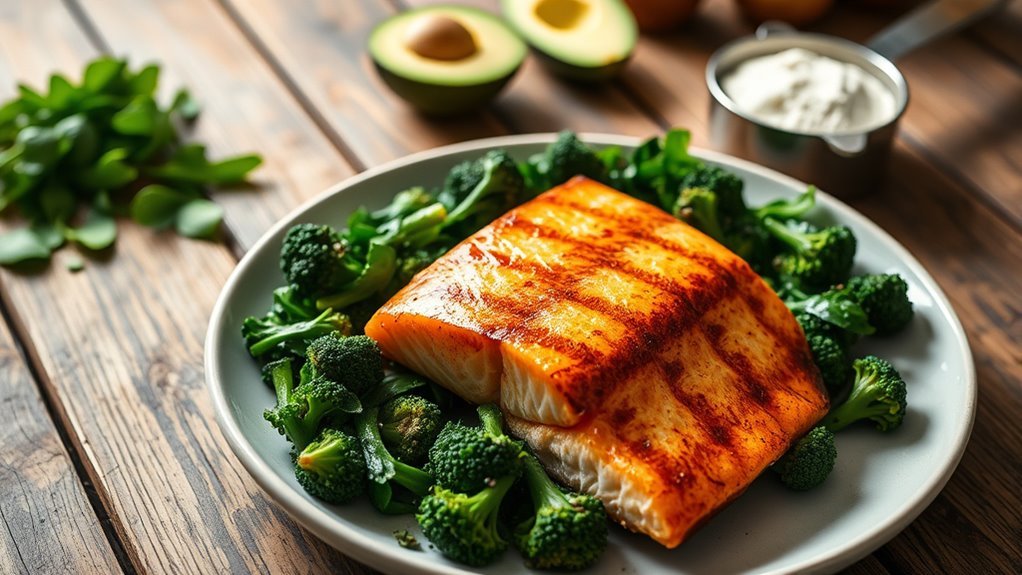
Understanding the differences between net and total carbohydrates is essential for anyone following a ketogenic diet. Total carbohydrates represent all carbs in a food item, including fiber and sugars, while net carbohydrates are calculated by subtracting fiber and certain sugar alcohols from the total. This distinction matters because fiber and some sugar alcohols don’t greatly impact blood sugar levels, allowing you to enjoy more foods without exceeding your carb limit. For instance, if a snack has 10 grams of total carbohydrates and 5 grams of fiber, it contains only 5 grams of net carbohydrates. By focusing on net carbohydrates, you can maintain your keto goals while enjoying a wider variety of low-carb foods, empowering your dietary freedom.
Signs of Staying in Ketosis
To know if you’re staying in ketosis, look for specific signs that indicate your body is effectively burning fat for fuel. Here are three key indicators:
Look for signs of ketosis: increased energy, breath changes, and reduced hunger to confirm fat burning.
- Increased Energy Levels: Many people experience a surge in energy as they adapt to fat burning, reducing common fatigue symptoms.
- Breath Changes: You might notice a distinct fruity or metallic odor on your breath, often due to the presence of acetone, a ketone that your body produces during ketosis.
- Reduced Hunger: A significant decrease in appetite can signal that your body is efficiently using fat stores for energy.
Adjusting Carb Intake for Individual Needs
While the standard ketogenic diet typically recommends limiting carbohydrate intake to around 20 to 50 grams per day, adjusting your carb intake to suit your individual needs can be essential for long-term success. Each person’s body responds differently to carbs, so personalized nutrition is key. You might find that experimenting with carb cycling—alternating between low and higher carb days—can help you maintain ketosis while allowing for greater flexibility. This approach can also support energy levels and workouts, making it easier to stick to your plan. Remember, finding the right balance involves listening to your body, tracking your progress, and making adjustments as needed. Ultimately, it’s about creating a sustainable lifestyle that empowers you to thrive on your keto journey.
Tips for Managing Carb Consumption on Keto
To successfully manage your carb consumption on a ketogenic diet, it’s crucial to track your intake diligently. By monitoring what you eat, you can make informed choices and guarantee you stay within your carb limits. Additionally, selecting low-carb options will not only help you maintain ketosis but also support overall health.
Track Your Carb Intake
Managing your carb intake on a keto diet is essential for achieving and maintaining ketosis, and tracking your consumption can greatly enhance your success. Here are three effective strategies for carb tracking and intake management:
- Use a Food Diary: Writing down everything you eat helps you stay aware of your carb count and identify patterns in your diet.
- Leverage Apps: Many mobile apps can assist with carb tracking by providing nutritional information and allowing you to log meals effortlessly.
- Read Labels: Familiarize yourself with food labels to understand the carb content of products, helping you make informed choices.
Choose Low-Carb Options
Choosing low-carb options is essential for anyone following a ketogenic diet, as it directly impacts your ability to maintain ketosis. Prioritizing low-carb recipes can help you enjoy a variety of satisfying meals without exceeding your carbohydrate limit. When you’re craving pasta, consider using zucchini noodles or spaghetti squash as healthy alternatives. Opt for leafy greens instead of traditional bread or wraps to create delicious sandwiches or wraps. Snack on nuts and seeds instead of high-carb chips or sweets. Don’t forget to explore cauliflower rice for a low-carb side dish. By being mindful of your choices and incorporating these alternatives, you can stay committed to your keto lifestyle while enjoying the freedom of diverse, flavorful meals.
Frequently Asked Questions about Carbohydrate Intake on Keto
1. How many carbohydrates can I eat on a keto diet?
On a ketogenic diet, the general guideline is to limit your carbohydrate intake to about 20 to 50 grams per day. This low level of carb consumption is crucial for entering and maintaining a state of ketosis, where your body burns fat for fuel instead of carbohydrates. The exact amount may vary depending on individual factors such as age, activity level, and metabolic health.
2. What types of carbohydrates should I avoid on keto?
On a keto diet, it is best to avoid high-carb foods such as grains (like bread, pasta, and rice), sugary snacks, starchy vegetables (like potatoes and corn), and most fruits. Instead, focus on low-carb vegetables (like leafy greens), nuts, seeds, and dairy products to help you stay within your carb limit while still getting essential nutrients.
3. Can I eat more carbs during special occasions on keto?
While it may be tempting to indulge in higher carb foods during special occasions, doing so can temporarily knock you out of ketosis. If you choose to have more carbs, consider planning for it by adjusting your carb intake in the days leading up to the event. Afterward, return to your regular low-carb intake to help re-enter ketosis more quickly.
4. How do I track my carb intake on a keto diet?
Tracking your carb intake can be done using various apps and tools that allow you to log your food consumption. Many of these apps provide detailed nutritional information and can help you stay within your daily carb limit. Additionally, reading food labels and understanding portion sizes can greatly aid in effective tracking.
5. What happens if I exceed my carb limit on keto?
Exceeding your carb limit can disrupt ketosis, causing your body to switch back to burning glucose for energy instead of fat. This can lead to a temporary halt in weight loss and may result in feelings of fatigue or lethargy as your body readjusts. If you do exceed your carb limit, simply return to your low-carb regimen, and you should be able to re-enter ketosis within a few days.
References
- https://www.ncbi.nlm.nih.gov/pmc/articles/PMC6313444/
- https://www.health.harvard.edu/staying-healthy/the-ketogenic-diet
- https://www.cdc.gov/diabetes/managing/eating/healthy-eating.html
- https://www.nhs.uk/live-well/healthy-weight/keto-diet/
- https://www.webmd.com/diet/what-is-a-keto-diet
- https://www.bbcgoodfood.com/howto/guide/what-keto-diet
- https://www.mayoclinic.org/healthy-lifestyle/nutrition-and-healthy-eating/expert-answers/keto-diet/faq-20456341
- https://www.nutrition.gov/topics/nutrition-education/keto-diet
- https://www.verywellfit.com/keto-diet-carb-intake-5194576