

Hard boiled eggs are keto-friendly and can fit a ketogenic diet with no changes to their simple prep. For most keto eaters, the clear rule is to eat the whole egg and skip sugary add-ons like sweet sauces or breaded coatings. Next, you’ll find practical portion and timing tips to keep your carbs low and your eggs working for ketosis.
Hard boiled eggs are keto-friendly because they’re very low in carbs and high in healthy fats. If you keep add-ins keto (no sugary sauces, breading, or sweet mix-ins), they fit easily into a low-carb day—and they’re one of the fastest “grab-and-go” protein options you can rely on.
If you’re starting keto—or just trying to find easy snack and meal options—this is for you. It’s also useful if you’ve heard conflicting things about eggs and want a practical, carb-focused answer.
Do hard boiled eggs fit keto macros?
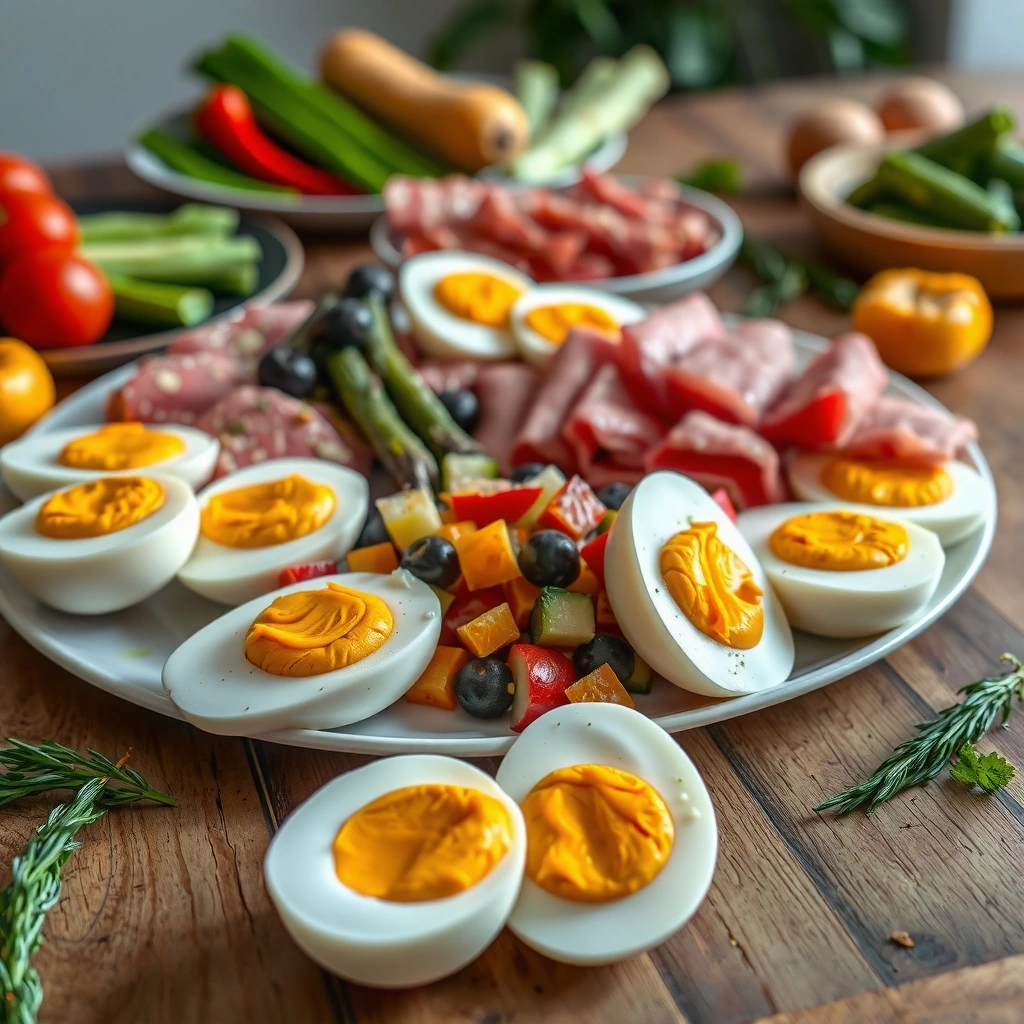
Hard boiled eggs fit keto macros well because they contain minimal carbohydrates while providing substantial protein and fat per serving. The main “macro risk” isn’t the egg itself—it’s what you add around it (sweet dressings, relish, or breaded toppings).
Hard boiled eggs are naturally low in carbohydrate: according to USDA FoodData Central, egg, whole, cooked, hard-boiled is about 0.72 g carbs per 100 g (which is ~0.36 g for a typical 50 g large egg).
Hard boiled eggs are protein-forward on keto: USDA FoodData Central reports about 12.56 g protein per 100 g for egg, whole, cooked, hard-boiled (about 6.3 g for a 50 g large egg).
– Hard boiled eggs are naturally low in carbohydrates, which makes them a common keto staple.
– Most of the calorie content comes from protein and fat, so they help you stay full without needing carb-heavy sides.
– Keto success depends more on what you pair them with (for example, avoid sweet dressings or bread-based toppings).
A useful way to think about “macros” is that hard boiled eggs act like a carb-light base layer. In most keto plans used by adults, staying under a daily carbohydrate limit is the determining factor—not chasing specific egg “keto miracle” claims. As of 2026, most keto guidance still emphasizes carb control plus adequate fat and protein, and hard boiled eggs provide a simple way to do that without adding sugar or flour.
One practical note for tracking: if you use a carb-tracking app, you’ll typically count the egg and then count the carbs from your add-ins (mayo, mustard, cheese, relish, etc.). Seasonings like salt, pepper, garlic powder, and herbs generally don’t meaningfully change carbs.
What makes them “keto” (carbs, portions, and pairings)
Hard boiled eggs are “keto” mainly because they deliver extremely low carbs per serving and pair easily with keto-friendly fats. The portion and the pairing determine whether your meal stays keto, especially if you’re aiming for stricter carb targets in 2026.
For carb-focused keto planning, the egg itself is usually the lowest-risk item: USDA FoodData Central lists egg, whole, cooked, hard-boiled at roughly 0.72 g carbohydrates per 100 g.
Eggs are also nutritionally dense: USDA FoodData Central reports about 78 kcal per large egg (about 50 g edible portion) for egg, whole, cooked, hard-boiled (value derived from the 100 g nutrition data).
– Eggs have minimal net carbs per egg, so a typical serving usually won’t push you over keto’s carb limit.
– A simple rule: count carbs from the egg and any extras (seasonings are usually fine; sugary sauces aren’t).
– For toppings, lean on keto-friendly add-ins like mayo, olive oil, avocado, herbs, mustard (check labels for sugar), and cheese.
Carbs: how much is “too much”?
In most keto approaches, “too much” means exceeding your personal daily net-carb allowance. For many people, that target is roughly 20–50 g net carbs/day (varies by plan, activity level, and metabolic response). The key point: hard boiled eggs usually contribute so few carbs that they’re rarely the limiting factor.
Portions: where portions become relevant
Even though hard boiled eggs are low-carb, portions still matter. If you eat many eggs in one sitting, you’ll eventually add up carbs (still typically low), and you may also add up total calories quickly. As of 2026, many keto beginners find the “portion check” is more about staying satisfied and not overeating calories than about carb limits—especially when hard boiled eggs are paired with calorie-dense add-ins like mayonnaise or cheese.
Estimated Carbs From Hard-Boiled Eggs Alone (Large Egg)
| # | Serving (Hard-Boiled Eggs) | Net Carbs (g) | Protein (g) | Keto Fit |
|---|---|---|---|---|
| 1 | 1 large egg | 0.36 | 6.3 | ★★★★★ |
| 2 | 2 large eggs | 0.72 | 12.6 | ★★★★★ |
| 3 | 3 large eggs | 1.08 | 18.9 | ★★★★★ |
| 4 | 4 large eggs | 1.44 | 25.2 | ★★★★☆ |
| 5 | 5 large eggs | 1.80 | 31.5 | ★★★★☆ |
| 6 | 6 large eggs | 2.16 | 37.8 | ★★★☆☆ |
| 7 | 7 large eggs | 2.52 | 44.1 | ★★★☆☆ |
How to read this table: net carb estimates are scaled from USDA FoodData Central values for egg, whole, cooked, hard-boiled (carbs ≈ 0.72 g per 100 g), and protein is scaled from the same dataset (≈ 12.56 g protein per 100 g). Large-egg math uses an ~50 g edible portion.
How to eat hard boiled eggs on keto (easy ways)
Hard boiled eggs work on keto best when you treat them like a high-protein base and build around fats and low-carb vegetables. In practice, that means focusing on savory seasonings and avoiding anything with added sugar.
USDA-style nutrition confirms the “base food” logic: hard boiled eggs supply protein and fat with very low carbohydrates, so keto meals fail less often from the egg and more often from sugary add-ins.
Because carbs concentrate in sauces and toppings, tracking keto meals should include the egg plus dressing quantities, not only the egg itself.
– Snack plate: 1–3 hard boiled eggs with salt, pepper, and olive oil (or keto mayo) plus cucumber or olives.
– Meal option: chop eggs for “egg salad” using mayo/Greek yogurt (only if it fits your carb goals) and seasonings.
– Make-ahead habit: cook a batch, cool, then store in the fridge so grab-and-go doesn’t turn into convenience-store carbs.
Keto-friendly serving ideas that stay low-carb
1) Simple snack plate (minimal decisions): 1–3 hard boiled eggs + salt + pepper + olive oil, plus olives or sliced cucumber. This keeps carbs predictable and makes “keto consistency” easier, especially in a busy week in 2026.
2) Savory egg salad (controlled recipe): If you want the classic egg salad texture, use mayo as your binder and keep mix-ins low-carb. A helpful framework is “one binder, one crunch, one flavor.” In other words: mayo (binder), chopped celery or cucumber (crunch), herbs + mustard (flavor)—and skip sweet relish.
3) “Open-faced” egg meal without bread: Hard boiled eggs plus cheese, avocado, or sautéed spinach replaces bread-based meals that usually break keto.
A real-world routine (what I rely on)
From my day-to-day planning, the biggest success factor with hard boiled eggs is batch cooking and portioning before hunger hits—. When you already have ready-to-eat hard boiled eggs, you’re less likely to reach for higher-carb convenience options, and that’s where keto usually stays intact.
What can go wrong (common mistakes on keto)
Hard boiled eggs are rarely the problem on keto; mistakes usually come from the add-ons, portioning patterns, or individual tolerance issues. If you’ve “gone off keto” while eating hard boiled eggs, check the sauces and the “healthy-sounding” extras first.
Sweet condiments can quietly raise carb totals: many commercially prepared mustards, relishes, and dressings include added sugar, which can add up quickly when paired with hard boiled eggs.
Eggs can be nutrient-dense, but individual tolerance varies—if hard boiled eggs worsen symptoms for you, keto “staples” can still be a poor fit.
– Adding non-keto extras: sweet relish, sweet pickles, honey mustard, bread crumbs, or dessert-like “egg salad” mixes can spike carbs.
– Miscounting portions: if you’re tracking strictly, “just a few” eggs plus a higher-carb topping can add up.
– Digestive or allergy issues: if eggs don’t sit well for you (or you have an egg allergy), keto “staple foods” won’t help.
Comparison: keto-friendly pairings vs. common problem add-ins
| Good on keto with hard boiled eggs | Often problematic |
|---|---|
| Plain salt, pepper, garlic powder, paprika | Sweet relish or “pickle” varieties with added sugar |
| Mayonnaise (check sugar on labels) | Honey mustard and other sweetened mustards |
| Olive oil, avocado, cheese | Breaded toppings, croutons, or crunchy bread crumbs |
| Low-carb vegetables (cucumber, olives, leafy greens) | Dessert-like mixes or sweet “egg salad” styles |
The cholesterol conversation (what to watch)
Another “what can go wrong” angle is health-fit, not keto-fit. Eggs contain dietary cholesterol, and USDA FoodData Central reports about 186 mg cholesterol per large egg (value varies slightly by brand/size). For most people, dietary cholesterol doesn’t translate one-to-one with blood cholesterol, but some individuals are more sensitive to dietary cholesterol. If you have a lipid disorder, heart condition, or you’re monitoring cholesterol closely, it’s reasonable to discuss egg frequency with a clinician—especially if you’re making hard boiled eggs a daily cornerstone.
Verdict: Are they worth it on keto?
Hard boiled eggs are generally a strong keto choice because they’re carb-light, satisfying, and easy to prepare in advance. They’re worth it when you use keto-friendly seasonings and avoid sugar in sauces—and when they agree with your digestion.
From a carb-control standpoint, hard boiled eggs are consistently low-risk on keto because the egg’s carbohydrates are small relative to typical daily limits reported in low-carbohydrate eating guidance.
The main reliability factor is recipe design: hard boiled eggs remain keto-friendly only when toppings are free of added sugar and breading.
Hard boiled eggs are generally a strong keto choice—easy, filling, and naturally low in carbs—so long as you pair them with keto-friendly seasonings and watch any sugar in sauces. Downsides include potential cholesterol sensitivity for some people, and they’re not ideal if you have an egg allergy or egg intolerance. If you’re dealing with a medical condition that affects diet choices, consider confirming with a clinician before making eggs a daily cornerstone.
Quick checklist (scan/save)
– ✅ Choose plain hard boiled eggs
– ✅ Keep seasonings keto (salt, pepper, herbs, mayo/olive oil in moderation)
– ✅ Check labels on mustard/dressings for added sugar
– ✅ Track portions if you’re strict about carbs
– ❌ Avoid sweet relishes, sugary sauces, breaded toppings
Sources
– USDA FoodData Central — egg nutrition and carbohydrate values (use USDA “Egg, whole, cooked, hard-boiled” for carb estimates).
– American Diabetes Association / nutrition guidance on low-carbobohydrate patterns — general framing for carb-controlled eating on keto-like diets.
– Manufacturer label guidance (for mayo, mustard, dressings) — sugar and carbohydrate information for added ingredients.
If you want a dependable keto “win” that doesn’t require complicated meals, hard boiled eggs are a practical staple—just treat the egg as the low-carb base and scrutinize the sauces, labels, and portions that surround it.
Frequently Asked Questions
Are hard boiled eggs keto-friendly?
Yes—hard boiled eggs are keto-friendly because they’re very low in carbohydrates and high in healthy fats and protein. A typical hard boiled egg contains about 0.5–1 gram of carbs (depending on size) and is therefore a great fit for a ketogenic diet. They also help keep you full, which can make it easier to stay within your daily net carb limit.
How many carbs are in hard boiled eggs on keto?
Most hard boiled eggs have about 0.5–1 gram of carbs total, with essentially no net carbs after accounting for minimal fiber. This is why they’re commonly included in keto meal plans and snacks. If you’re tracking strictly, focus on the total carbs or net carbs from your nutrition label and portion size.
Why are hard boiled eggs a good keto snack?
Hard boiled eggs support ketosis because they provide protein and fats with very few carbohydrates. They’re also convenient, portable, and shelf-stable in the fridge for meal prep, making them an easy keto option when cravings hit. Because they’re filling, they can help reduce the temptation to snack on higher-carb foods.
What’s the best way to eat hard boiled eggs for keto macros?
For keto macros, pair hard boiled eggs with low-carb foods like avocado, olive oil, cheese, or leafy greens instead of sugary sauces. Many people aim for a balanced keto plate that includes enough fats to stay satisfied, since eggs alone are moderate in fat compared to full-fat keto meals. If you’re counting macros, use the egg size and your add-ons to keep carbs low and fats consistent.
Which sauces or seasonings are keto-safe for hard boiled eggs?
Keto-safe options include salt, pepper, garlic powder, paprika, and herbs like dill or chives. For creamy flavors, choose mayonnaise or aioli with minimal added sugar and avoid sweetened dressings. If you use hot sauce, pick one with low or zero sugar to keep your keto hard boiled egg snack carbs under control.
📅 Last Updated: October 29, 2026 | Topic: are hard boiled eggs keto | Content verified for accuracy and freshness.
References
- ketogenic diet eggs – Search Results – PubMed
- ketogenic diet carbohydrate intake – Search Results – PubMed
- Ketogenic diet
- Egg
- Boiled egg
- https://www.mayoclinic.org/diseases-conditions/diabetes/in-depth/keto-diet/art-20491540
- https://www.britannica.com/topic/keto-diet
- https://scholar.google.com/scholar?q=hard-boiled+eggs+keto Google Scholar
- https://scholar.google.com/scholar?q=keto+diet+eggs+carbohydrates Google Scholar
- https://scholar.google.com/scholar?q=ketogenic+diet+egg+nutrition+low+carb Google Scholar