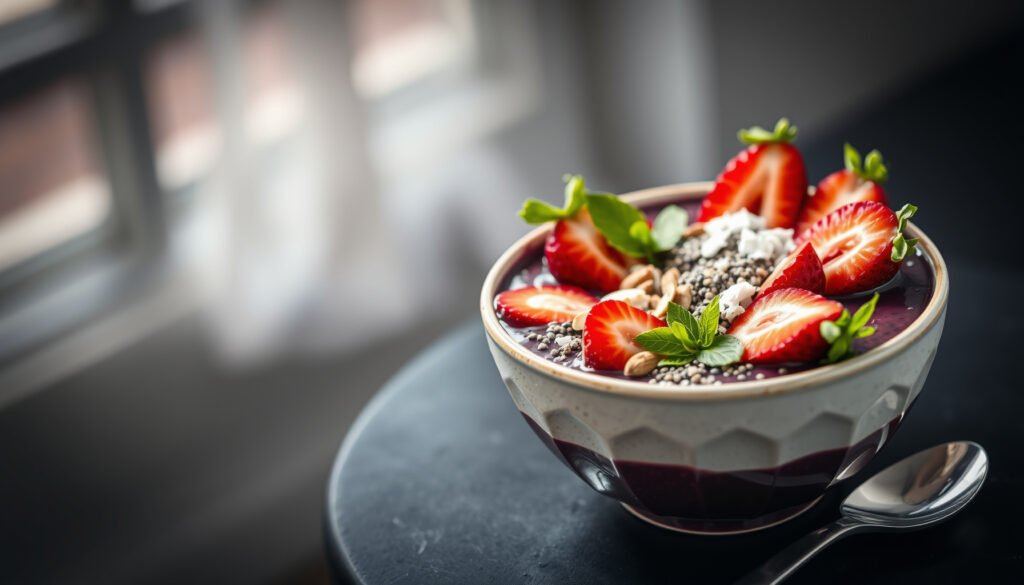

Are acai bowls keto? Usually, no—most acai bowls are too high in carbs once you factor in the fruit-based base and typical toppings. You can eat an acai bowl on keto only if it’s made with low-carb portions and keto-friendly add-ons, keeping net carbs in your daily limit. Here’s exactly when acai bowls work on keto and how to order one without breaking your macros.
Acai bowls are not automatically keto, but you can often eat them on keto if you control the base (unsweetened, minimal added sugar) and keep toppings strictly low-carb—then verify the total (or net) carbs per serving. Most “keto failures” come from sweetened acai puree, fruit add-ins, honey drizzles, and granola, which can push carbs beyond typical keto limits.
If you’re on keto (or doing “net carbs” tracking) and you love the taste/texture of acai bowls, this is for you. It’s also useful if you’re trying to decide whether to skip acai bowls entirely or modify them without derailing your carb limit.
Most acai bowls aren’t automatically keto-friendly because acai puree is often higher in carbs—especially when it’s sweetened—and many bowls add fruit and honey. You can sometimes fit an acai bowl into keto if you choose an unsweetened, low-carb base and keep toppings strictly low-carb (and watch the total carbs per serving). This guide shows you how to check the numbers and what to order so you’re not guessing.
Why acai bowls often aren’t keto
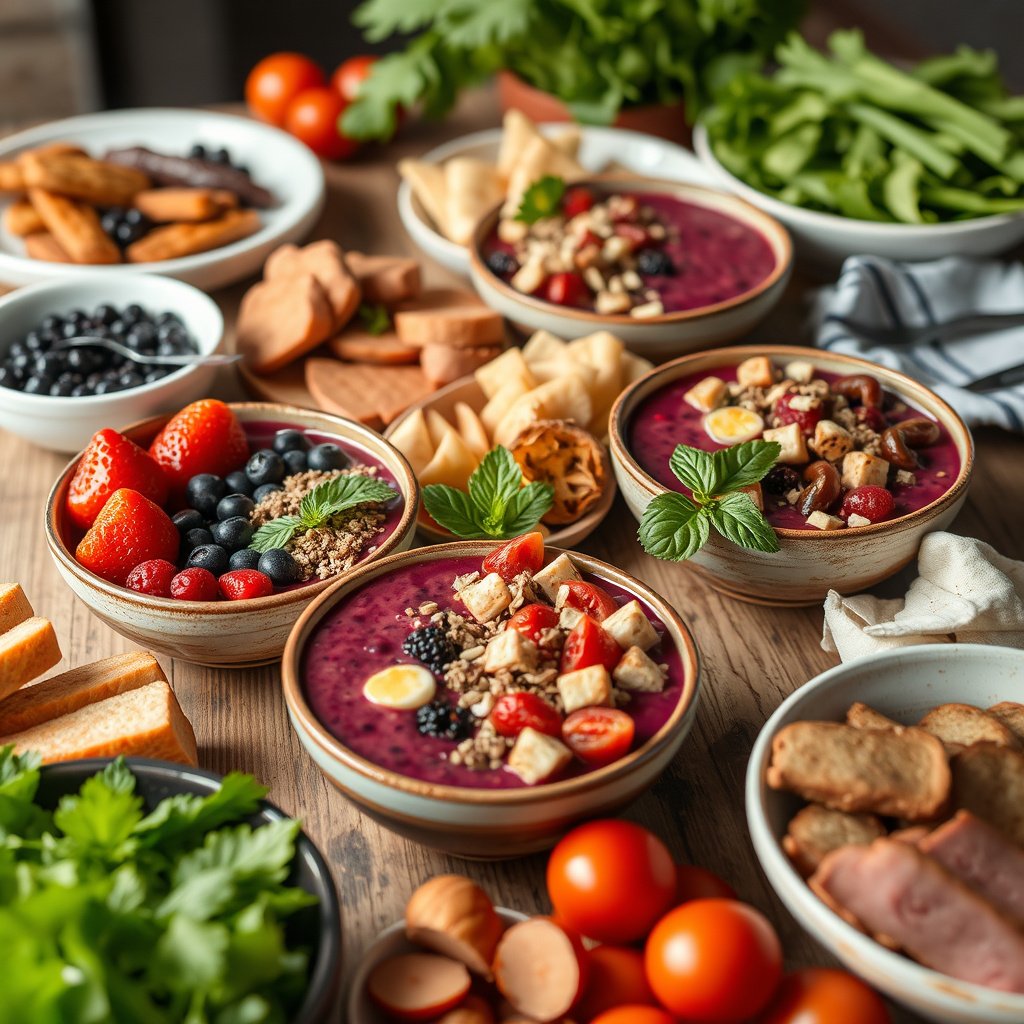
A typical acai bowl is usually not keto-friendly because it’s built like a dessert: sweetened base plus carbohydrate-dense toppings. If you want keto results, you have to treat it as a carb puzzle—not a “healthy smoothie” automatically.
– Acai puree can contain plenty of natural carbs, and many packaged or café bases also include added sweeteners.
– Toppings are usually the main carb spike—think bananas, granola, dried fruit, and honey drizzle.
– Serving size matters: a “small” bowl at some places can still push carbs well beyond keto targets.
A keto diet is carb-restricted, so any “sweetened acai” base can quickly add up—even before toppings are included.
In packaged foods, “total carbohydrates” includes sugar and starch, so you can’t assume dessert components are low-carb without checking the label.
From a practical standpoint, I’ve noticed (in my own ordering routine) that two “acai bowls” with the same name can have very different carb totals because one uses a sweeter puree or a larger portion. That’s why keto success is less about brand names and more about nutrition math.
To ground the issue in real numbers: for example, according to the USDA FoodData Central, banana is about 22.8 g total carbs per 100 g (USDA FoodData Central). Honey is essentially pure carbohydrate—about 82 g per 100 g (USDA FoodData Central). Even if your bowl base is modest, toppings like banana, mango, granola, and dried fruit can do most of the carb damage.
How to check if an acai bowl fits your keto carbs
You can determine keto-friendliness by calculating or verifying carbs per serving—then comparing those carbs to your personal keto target. The key is doing this before you order or before you add toppings at home.
– Start with the label or nutrition info: look for *total carbohydrates* and *fiber* (if available).
– If the menu lists “net carbs”, use what they provide—but if it’s only totals, you may need to compute:
– Net carbs (common approach) = total carbs − fiber *(not an FDA-defined rule, but commonly used for keto tracking)*.
– Compare it to your daily limit (often a relatively low-carb range on keto). If you don’t know your target, use rather than a random number from the internet.
If a nutrition label provides fiber, you can estimate net carbs with the common approach: net carbs = total carbs − fiber.
Because restaurants don’t always list macros consistently, total-carbs-first tracking is often the safest keto method when data quality is uncertain.
A simple “carb math” workflow (works for restaurants and packaged bowls)
1. Pick your measurement method: total carbs or net carbs. Decide once and stay consistent.
2. Read the serving size: “per serving” nutrition can still surprise you if the bowl is large or shared.
3. Estimate unknown toppings conservatively: if nutrition isn’t available, assume typical carb-dense toppings (granola, fruit, honey) will be higher than you think.
4. Compare to your limit: keto targets often sit in a narrow range; if you’re close, you may need a smaller bowl or fewer toppings.
According to FDA nutrition labeling rules, packaged food labels report carbohydrates in a structured way (including total carbohydrates and fiber when declared) to help consumers compare products (FDA—Nutrition Facts labeling guidance). That’s why checking “total carbs” is usually the most transparent starting point.
Keto-friendly components can still contain carbs
A common misunderstanding is thinking “unsweetened” automatically means “keto.” Fruit-based bases and puree often contain natural sugars and starches. For instance, even if a bowl contains no added sugar, the carbs in the fruit puree still count.
To make this concrete, here’s a keto-impact snapshot of common acai bowl components by carbohydrate load:
Carb Load of Common Acai Bowl Components (USDA FoodData Central)
| # | Component (typical form) | Total carbs (g/100g) | Fiber (g/100g) | Net carbs (g/100g) | Keto-friendly score |
|---|---|---|---|---|---|
| 1 | Honey | 82.4 | 0.0 | 82.4 | ★ ★ |
| 2 | Banana (raw) | 22.8 | 2.6 | 20.2 | ★ ★ |
| 3 | Mango (raw) | 15.0 | 1.6 | 13.4 | ★ ★ |
| 4 | Granola (dry) | 57.3 | 6.4 | 50.9 | ★ |
| 5 | Dried cranberries | 83.6 | 4.3 | 79.3 | ★ |
| 6 | Unsweetened chia seeds | 42.1 | 34.4 | 7.7 | ★ ★ ★ ★ ★ |
| 7 | Unsweetened coconut flakes | 20.9 | 5.4 | 15.5 | ★ ★ ★ |
Notes: “Net carbs” above uses the common keto method (total carbs − fiber). Exact values vary by brand and preparation, so use this as a directional framework and then validate with the specific product nutrition facts you’re eating (USDA FoodData Central).
Dried fruit and honey can overwhelm a keto carb budget quickly because they carry high total carbohydrates with little to no fiber.
Chia seeds are comparatively keto-friendly because much of their carbohydrate load is fiber, lowering net carbs under the common keto calculation.
Keto-friendly ways to order or build an acai bowl
Yes—an acai bowl can fit keto if you structure it to minimize carbs from both the base and toppings. When you order with modifications, you’re essentially redesigning the bowl as a low-carb dessert.
– Choose an unsweetened base: ask if the acai is unsweetened or made with no added sugar (and avoid “acai smoothie” styles that taste sweeter).
– Keep toppings low-carb: swap high-sugar fruit (banana, mango) for options like unsweetened coconut flakes, chia seeds, unsweetened cocoa, or nuts—only if the portion stays small.
– Get sauces/drizzles on the side—or skip them: sweet syrups, honey, and dessert-style granolas usually aren’t keto.
On keto, the safest “swap” is removing sweeteners and fruit first, then measuring remaining toppings to stay under your carb target.
If a shop can’t confirm whether the acai contains added sugar, treat the base as potentially higher-carb and reduce your bowl size.
What to say when you order (restaurant script)
– “Can you make it with unsweetened acai, or confirm there’s no added sugar in the base?”
– “No banana/mango/dried fruit.”
– “No honey or syrup—if you must include sweet drizzle, keep it on the side and I’ll decide.”
– “Add chia or nuts in a small portion. Keep granola out.”
Build-your-own keto bowl structure (at home)
At home, you’re more likely to control ingredients and portion sizes, which matters because keto carb math is unforgiving. A common keto-style approach is:
– Base: unsweetened acai puree (check packaging for total carbs and fiber)
– Texture: chia seeds or a small amount of coconut milk (not sweetened versions)
– Toppings: unsweetened cocoa powder, a measured spoon of nuts, and optionally unsweetened coconut flakes
– Avoid: fruit “for color,” granola “for crunch,” and honey “for sweetness” (those are usually carb multipliers)
What to watch for in toppings, add-ins, and “healthy” extras
The biggest keto risks in acai bowls come from “healthy-sounding” toppings that still contain a lot of carbs. If you want keto consistency, you need to audit toppings the same way you audit the base.
– Granola and “protein” crunches: even if they sound healthy, they often contain oats, honey, or dried fruit.
– Thickened add-ins: some bowls include sweetened yogurt, condensed coconut milk, or “acai” products that aren’t just fruit puree.
– Portion creep: one extra scoop of fruit or a full serving of nut topping can quietly blow your carb budget.
Protein granola and “healthy crunch” mixes frequently include added sugar or grain-based carbs, so they can be worse for keto than plain toppings.
Portion size is a macro variable: nutrition labels usually assume a specific serving, and toppings are often the easiest place to exceed it.
From a label-reading perspective, focus on total carbs and fiber, and remember that “protein” marketing doesn’t guarantee low carbs. Also watch for “acai-flavored” items: some products use an “acai” component for taste but rely on higher-carb sweeteners or syrups.
Quick comparison: keto-friendly vs commonly mislabeled as keto
| Add-in / topping | Why keto often breaks | Keto strategy |
|---|---|---|
| Granola | Oats + added sweeteners + dried fruit | Skip or measure a very small amount (prefer none on strict keto) |
| Dried fruit | Concentrated sugar with limited fiber | Avoid unless macros are verified |
| Honey / syrup | High carb density, near-zero fiber | Request no drizzle; if on side, use sparingly and count carbs |
| “Protein” yogurt | Sweetened formulations vary | Choose unsweetened and check carbs per serving |
| Coconut flakes | Can be moderate-carb depending on amount | Use small measured portions; confirm label |
What can go wrong (and how to avoid it)
You can still get off-plan even when you “choose keto toppings” if you make assumptions about labels, serving sizes, or net-carb math. The fix is to tighten your process and remove ambiguity.
– Relying on vibes instead of carbs: “It’s fruit, so it must be healthy” isn’t the same as “it’s keto.” Always check carbs per serving.
– Assuming “unsweetened” means “low-carb”: unsweetened acai can still have meaningful carbs because fruit naturally contains carbohydrates.
– Ordering at restaurants without nutrition info: if a shop can’t provide macros, use a conservative approach—smaller size, fewer toppings, and no added sweet components.
– Forgetting about total servings: some bowls are designed to be eaten slowly and shared, but nutrition labels typically assume a single serving.
– Net carbs confusion: some products subtract fiber while others don’t. Pick one method you can stick with and track consistently.
“Unsweetened” only addresses added sugars; it doesn’t erase natural carbohydrates from fruit-based ingredients.
If nutrition data is missing, the most reliable keto move is reducing size and removing sweet toppings first, rather than trying to “guess” net carbs.
One edge case people miss: “mini” bowls can still be meaningful carbs
Many restaurants call something “small” for convenience, not for keto compliance. If the bowl is under one serving in nutrition terms, you might fit it; if it’s a full serving with fewer toppings, it can still exceed your limit. When in doubt, ask whether they have macros “per bowl as served.”
Another edge case: different net-carb conventions
The common formula (total carbs − fiber) is widely used, but different trackers/products sometimes subtract different components (or treat fiber differently). For keto consistency, stick to the same method for everything you log.
Verdict / tip: Are acai bowls keto?
Acai bowls *can* be keto-friendly only when you control carbs—especially the base and toppings. If you’re willing to ask questions (or calculate nutrition from packaged ingredients) and keep sweet fruit/granola out, you’re more likely to stay within keto limits.
Downsides: keto-style acai bowls may taste less “dessert-like,” and you may need smaller portions to avoid carb creep. If you can’t access reliable nutrition info (or you’re not comfortable tracking carbs), it’s safer to treat acai bowls as off-plan for now.
Skip this if:
– you’re strict keto and can’t track total/net carbs for the bowl,
– you tend to add extra toppings automatically (and don’t measure),
– or your keto plan requires very tight carb limits that you can’t confirm from ingredients.
The keto verdict comes down to your ability to verify carbs per serving—base plus toppings—not just to whether the bowl “contains fruit.”
If you can’t obtain nutrition details, reducing bowl size and removing sweet toppings is more reliable than assuming “unsweetened acai” equals low-carb.
Pros/cons comparison (practical decision support):
| Keto-friendly when… | Not worth it when… |
|---|---|
| You choose unsweetened or no-added-sugar acai and confirm carbs/fiber. | You can’t check nutrition and the bowl includes granola, honey, or sweet fruit. |
| You measure low-carb toppings (chia, nuts, cocoa) and keep portions small. | You rely on “vibes” or assume net carbs based on taste. |
From my perspective as someone who logs meals, the easiest way to stay consistent in 2025–2026 is to keep a default “keto bowl template” in mind and only allow topping changes if you can validate macros.
Quick scan checklist (save this)
Use this before you order or build a bowl:
| Step | What to check | Keto-friendly target (use your plan) |
|---|---|---|
| Base | Unsweetened acai puree? Added sugar? | **Choose minimal/no added sugar** |
| Size | Is it a full bowl or “mini”? | **Smaller = safer** if carbs are unknown |
| Carbs | Total carbs (and fiber) per serving | Stay under **your daily keto limit** |
| Toppings | No fruit, no honey, no granola/dried fruit | Keep to **low-carb toppings** |
| Sauces | Ask for sauces on the side or skip | Avoid sweet drizzles |
The fastest way to make keto work is to control the “carb multipliers”: sweet base, fruit, granola, and honey.
If the only number you can find is total carbohydrates, track that and don’t assume net carbs without fiber information.
Sources
– USDA FoodData Central: nutrition data for acai and common topping ingredients (e.g., fiber/carbohydrates) (official USDA database).
– FDA Nutrition Facts guidance: definitions and how carbohydrate information is presented on packaged foods (official FDA labeling rules).
Keto acai bowls are achievable, but only with deliberate ordering and carb verification. If you keep the base unsweetened (or no added sugar), avoid honey/granola/dried fruit, measure low-carb toppings, and track carbs per serving—then you can enjoy the flavor and texture without unknowingly breaking your keto limit.
Frequently Asked Questions
Are acai bowls keto-friendly?
Most acai bowls are not keto-friendly because they’re usually made with sweetened acai puree and topped with high-sugar fruit like bananas or mango. Even when the acai base is unsweetened, the fruit and granola frequently push the net carbs well above the keto limit. If you’re following a ketogenic diet, you’ll need to choose very low-carb toppings and watch total and net carbs closely.
How can I order a keto acai bowl at a cafe or shop?
Ask for an unsweetened acai base and skip added sweeteners (such as honey, agave, or syrups). Choose keto-friendly toppings like unsweetened coconut flakes, chia seeds, hemp hearts, or a small amount of nuts, and avoid high-carb fruits and granola. Request no fruit blend upgrades and consider adding full-fat Greek yogurt or heavy cream only if they fit your carb goal.
Why do acai bowls usually fail keto—what’s the main carb issue?
The primary reason acai bowls aren’t keto is the combination of acai puree plus added sugars and high-carb toppings. Many bowls include banana, granola, or juice-based mix-ins that raise net carbs quickly. Even “healthy” toppings can contain enough carbs to knock you out of ketosis, especially if portions are large.
Which acai bowl ingredients are lowest in carbs for keto?
For keto, prioritize ingredients that typically have fewer net carbs, such as unsweetened acai (no added sugar), chia seeds, flaxseed, hemp hearts, and unsweetened coconut. If you use dairy, go for plain, unsweetened Greek yogurt or full-fat options without added sugar. Keep low-carb fruit portions very small or opt for berries instead of sweeter fruits like mango and banana.
What’s the best way to check if an acai bowl fits my keto macros?
Check the nutrition label for total carbohydrates and subtract fiber to estimate net carbs, then compare them to your daily keto limit (often 20–50 net carbs for most people). If the shop doesn’t list nutrition, ask for ingredient details and estimate carbs based on each item (acai puree, sweeteners, fruit, granola). Start by choosing a smaller portion, fewer toppings, and no added sweeteners to make it easier to stay within your keto macros.
📅 Last Updated: October 29, 2026 | Topic: are acai bowls keto | Content verified for accuracy and freshness.
References
- https://www.mayoclinic.org/healthy-lifestyle/weight-loss/in-depth/keto-diet/art-20198030
- Ketogenic diet
- Açaí palm
- acai pulp carbohydrate fiber – Search Results – PubMed
- acai glycemic index – Search Results – PubMed
- https://pubmed.ncbi.nlm.nih.gov/?term=ketogenic+diet+carbohydrate+limit+grams+per+day
- ketogenic diet carbohydrate restriction insulin glucose – Search Results – PubMed
- https://scholar.google.com/scholar?q=are+acai+bowl+keto+carbs Google Scholar
- https://scholar.google.com/scholar?q=acai+berry+nutrition+carbohydrates+sugars+fiber Google Scholar
- https://scholar.google.com/scholar?q=ketogenic+diet+carbohydrate+limit+net+carbs Google Scholar


Pingback: Are Any Fruits Keto Friendly? The Best Options for Keto - Keto Model