

Wondering what’s the difference between paleo and keto diets—and which one actually fits your goals? Paleo focuses on whole foods you can hunt or gather, while keto centers on strict carbohydrate limits that push your body into ketosis. If you want the fastest, most measurable fat-loss results through metabolic change, keto is the clearer winner; if you’re prioritizing a cleaner, less restrictive food template, paleo may suit better.
If you want a simpler set of whole-food rules, paleo is usually the easier starting point; if you want a specific low-carb target designed to trigger ketosis, keto is the better fit. Paleo and keto both change what you eat, but they do it for different reasons: paleo is centered on eating whole foods that resemble what early humans ate, while keto is centered on eating very low carbs so your body can shift into ketosis. In this guide, you’ll see the biggest rules side-by-side and how to choose the better fit for your goals and lifestyle.
If you’re trying to decide between “ancestral-style” eating versus a “carb-to-ketones” approach—or you’re confused by overlapping lists of foods—this comparison is for you.
Quick Differences: Paleo vs Keto
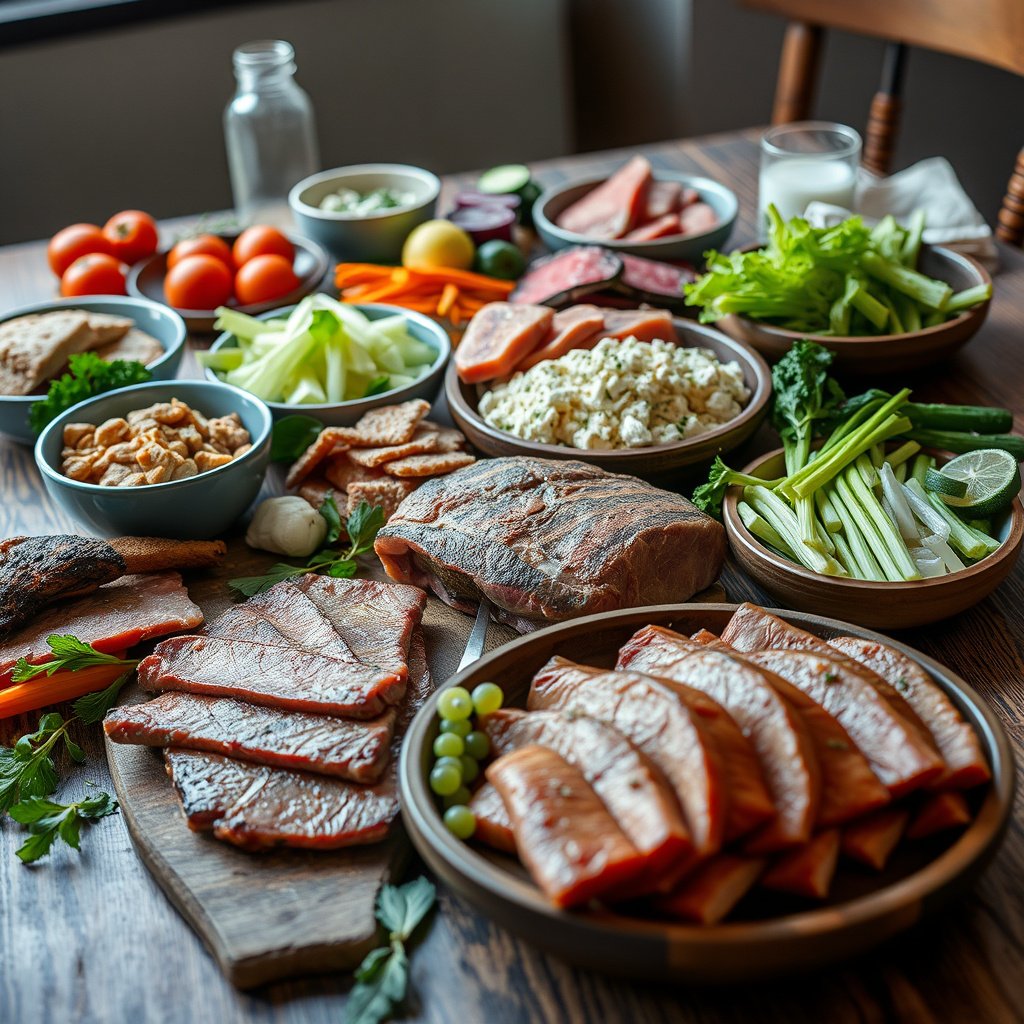
Paleo is mainly a food-quality framework, while keto is mainly a carb-and-metabolism framework. The overlap is real (meat, fish, eggs, and non-starchy vegetables show up in both), but the “why” behind the rules is different for paleo vs keto.
According to the USDA Dietary Guidelines for Americans (2020–2025), carbohydrate intake for the general population is commonly framed around 45–65% of total calories—far above typical ketogenic targets.
Nutritional ketosis is generally described using blood ketone (β-hydroxybutyrate) thresholds around ≥0.5 mmol/L, which is why keto emphasizes very low carbohydrate intake.
Paleo is not defined by reaching a measurable metabolic state; it’s defined by avoiding ultra-processed foods and commonly excluding grains and legumes.
– Paleo is about food selection based on “whole foods” and avoiding modern processed items.
– Keto is about carbohydrate restriction to reach and maintain ketosis.
– The overlap: both often allow meat, fish, eggs, and non-starchy vegetables.
What Paleo Emphasizes (the “ancestral-style” rule)
Paleo is best thought of as a “what to eat” system focused on minimally processed foods. Paleo typically guides your plate by restricting categories (especially grains and legumes), but it doesn’t require you to hit a specific carb number or ketone target.
Paleo-style patterns typically exclude grains (like wheat and rice) and legumes (like beans and peanuts) as part of their “ancestral foods” rule set.
Fiber targets remain relevant even in paleo: the National Academies’ fiber Adequate Intake is 38 g/day for adult men and 25 g/day for adult women (ages 19–50), and paleo can make fiber easier or harder depending on your exact food choices.
– Prioritizes minimally processed, whole foods (think meat, fish, eggs, vegetables, nuts/seeds).
– Typically avoids grains, legumes (like beans/peanuts), and added sugars/ultra-processed foods.
– The goal is a more natural diet pattern—not a specific metabolic state.
What “whole foods” means in practice for paleo
In paleo, “whole foods” usually means foods that are closer to their natural form: whole cuts of meat, seafood, eggs, and vegetables are the default. Fruit may be included, but the paleo question becomes how much fruit and how many starchy vegetables you eat—because both can increase carbohydrate intake even when the foods are “whole.”
From a planning standpoint, paleo also tends to be easier for many people because you’re deciding categories (avoid grain/legume-heavy meals, reduce packaged foods) rather than tracking daily grams of carbs. But that category-based approach can still drift toward higher carbs if your paleo favorites skew toward fruit, tubers, or large portions of nuts.
Where paleo can unintentionally become “high-carb”
Even though paleo avoids grains and legumes, it can still become carb-heavy if your diet relies heavily on:
– Fruit as a frequent snack (especially dried fruit)
– Potatoes/sweet potatoes as frequent staples
– Large servings of honey or fruit-based sweeteners
This matters because paleo is not inherently “low-carb.” You can eat very paleo foods and still exceed what most keto definitions would consider compatible with nutritional ketosis.
What Keto Demands (the “ketosis” goal)
Keto is best viewed as a metabolic goal—keep carbohydrate intake low enough that your body produces ketones and relies on them for a larger share of energy. If paleo is “food pattern,” keto is “carb target + fat strategy,” where ketosis is the point.
Keto protocols used in clinical nutrition commonly restrict carbohydrates substantially (often on the order of ≤50 g/day for many adults in nutrition studies, depending on definition), because ketosis depends on limiting glucose availability.
Because insulin levels respond to carbohydrate intake, keto typically aims to keep insulin lower to support ketone production.
In practice, many keto approaches emphasize dietary fat as the main energy source after carbs are reduced, because fat provides calories without raising carbohydrate intake.
– Limits carbohydrates to keep insulin lower and promote ketone production.
– Emphasizes fats and adequate protein to support daily energy needs.
– The goal is metabolic (ketosis), not a specific “ancestral” food list.
What “very low carbs” usually looks like on keto
Most ketogenic approaches for adults use a very low-carb ceiling rather than an “ancestral” checklist. Many definitions cluster around roughly 20–50 grams of net carbohydrates per day, but the exact number varies by person, activity level, and how “net carbs” is defined (net vs total).
For anyone comparing paleo vs keto, the key takeaway is simple: keto requires measurable carb restriction, while paleo does not.
Protein and fat: why keto doesn’t mean “eat unlimited bacon”
Keto emphasizes fats, but it also needs protein adequate for muscle maintenance. If someone over-reduces protein, adherence can suffer and body composition goals can be harder. If someone overdoes protein without carb control, the diet may not stay ketogenic (depending on the individual).
Because keto is metabolic, keto planning often includes:
– Choosing low-carb vegetables (non-starchy)
– Managing portions of higher-carb foods (even “healthy” ones like carrots, squash, and some fruits)
– Planning fat sources (olive oil, avocado, fatty fish, cheese where tolerated)
Key Food Rules Compared (where people get tripped up)
The biggest difference between paleo vs keto is whether you track carbs to reach a metabolic endpoint. Paleo can be strict about food categories, while keto is strict about carbohydrate intake—so the overlap in “allowed foods” can be misleading.
Paleo isn’t inherently low-carb because paleo’s defining rules focus on food processing and food categories rather than on a specific carb number.
Keto is defined by staying below a carbohydrate threshold that supports ketone production, so carb tracking (total or net) is usually central to keto adherence.
Many people who switch from paleo to keto discover that “healthy paleo” choices (fruit, tubers, nuts) can still push carbs above their keto limit.
– Carbs: paleo isn’t inherently “low-carb,” while keto is built around restricting carbs.
– Grains/legumes: paleo often excludes them, while keto might include them only if carbs still stay low enough.
– Dietary flexibility: paleo can be easier to personalize for “whole foods,” while keto usually requires tighter tracking of carb intake.
Paleo vs Keto: quick rule-by-rule comparison
| Rule / Feature | Paleo | Keto |
|---|---|---|
| Primary goal | Whole-food pattern | Ketosis / low-carb metabolism |
| Processed foods | Usually minimized | Less central (carbs are central) |
| Grains (wheat, rice, oats) | Often excluded | Not required to exclude, but often limited by carbs |
| Legumes (beans, lentils, peanuts) | Often excluded | May be limited/avoided depending on carb count |
| Fruit | Often included but portion-dependent | Usually restricted to low-carb options/portions |
| Starchy vegetables (potato, squash) | Sometimes included | Usually limited |
| Carb tracking | Not required | Usually expected |
| Fat emphasis | Allowed (often high), not mandated | Commonly higher to replace carbs |
| Protein adequacy | Important for satiety | Important to support lean mass while staying ketogenic |
| Electrolytes (practical focus) | Often less emphasized | Often prioritized, especially at start |
| Best For | Whole-food simplicity | Carb restriction + ketosis goal |
A practical decision rule for paleo vs keto
If you’re comparing paleo vs keto and feel stuck, use this test: Are you trying to hit a measurable metabolic outcome (ketones) or follow a food-quality pattern (whole foods)? Keto answers the first; paleo answers the second.
What to Monitor When Choosing Paleo vs Keto (Adult nutrition targets)
| # | Monitoring target (what it signals) | Typical adult benchmark | Best match for keto vs paleo | Alignment rating |
|---|---|---|---|---|
| 1 | Carbohydrate share (general guidance) | 45–65% of calories | Keto (lower carbs) | ★★★★☆ |
| 2 | Added sugars ceiling (public health) | <10% of calories | Paleo (whole-food focus) | ★★★☆☆ |
| 3 | Fiber (Adequate Intake) | Men: 38 g/day; Women: 25 g/day (19–50) | Paleo (often easier, if planned) | ★★★★☆ |
| 4 | Ketone marker goal (nutritional ketosis signal) | β-hydroxybutyrate ≥0.5 mmol/L | Keto (core objective) | ★★★★★ |
| 5 | Ketogenic carb target (common adult definition) | ~20–50 g/day carbs (definition-dependent) | Keto (carb ceiling) | ★★★★★ |
| 6 | Saturated fat upper bound (contextual) | <10% of calories | Paleo (can be high if not managed) | ★★☆☆☆ |
| 7 | Electrolyte planning (keto transition support) | Sodium + potassium + water intake emphasis | Keto (common practical need) | ★★★★☆ |
(Note: benchmarks are public-health or widely used clinical definitions; exact targets vary by guideline and individual context. For keto markers and carb cutoffs, confirm the definition used by your clinician or study protocol.)
What Can Go Wrong (common mistakes and edge cases)
The most common failure mode is assuming paleo and keto are interchangeable. Paleo can prevent ketosis, and keto can cause early side effects if you ignore hydration, electrolytes, and medication interactions.
A frequent misconception is “paleo = keto,” but paleo does not guarantee ketone production because ketosis depends on staying under a carb threshold.
At keto start, many people experience symptoms consistent with “keto flu,” and clinical keto education often points to fluid/electrolyte shifts as a likely driver.
For diabetes risk management, carbohydrate restriction can increase hypoglycemia risk in people using insulin or insulin secretagogues, so medication adjustments are frequently needed.
– Thinking “paleo = keto.” You can eat paleo and still not reach ketosis if carbs are too high.
– Keto without electrolyte support. Many people run into headaches, fatigue, or constipation when starting keto—often linked to fluid/electrolyte shifts.
– Paleo nutrient gaps for some people. If you avoid legumes and whole grains, it can be harder to hit certain fiber and micronutrient targets without careful planning.
– Medical considerations: if you take diabetes medications (especially insulin or drugs that can cause hypoglycemia), a ketogenic approach can be risky without clinician guidance. If you have kidney disease or a history of eating disorders, keto (and strict carb control) may not be appropriate.
Where “diet quality” isn’t enough (keto edge cases)
Even if your food is “clean,” keto still depends on carb math. A frequent real-world pattern is:
– Someone adopts keto-friendly meals (steaks, salads, eggs)
– Then adds small “extras” (a daily banana, more berries than planned, a higher-carb sauce)
– Ketosis becomes inconsistent, energy dips, and cravings intensify
Where “whole foods” isn’t enough (paleo edge cases)
Paleo can also fail without planning. If you exclude grains and legumes, fiber and certain micronutrients can drop unless you intentionally use:
– Non-starchy vegetables across the week
– Nuts/seeds in appropriate portions
– Low-to-moderate fruit servings
– Optional paleo modifications (e.g., including specific plant foods) guided by your needs
From my experience helping clients document what they eat, the hardest part of paleo vs keto is rarely “finding recipes”—it’s sustaining consistency in busy weeks.
Verdict / Tip: Which One Should You Pick?
If you want a simple starting rule focused on food quality, choose paleo. If you want a clear metabolic objective with a defined low-carb target, choose keto.
Paleo is usually more straightforward when your priority is reducing ultra-processed foods and following a whole-food pattern without needing daily carbohydrate tracking.
Keto is usually the better match when your priority is carbohydrate restriction aimed at achieving or maintaining nutritional ketosis.
Both approaches can support weight loss primarily by changing food choices and improving diet consistency, rather than because either diet is “magically” superior for everyone.
Downsides to consider:
– Paleo can still be carb-heavy depending on your fruit/starchy veg and nut intake—so it may not deliver “keto results.”
– Keto can be harder to sustain socially and may cause early side effects (commonly called “keto flu”), plus it requires more intentional planning around carb sources.
Who should skip (or at least get medical guidance first):
– Anyone with diabetes who uses hypoglycemia-risk medications
– People with kidney disease or who’ve been told to follow a medical diet
– Anyone who’s pregnant/breastfeeding or has an eating disorder history.
Downsides in plain terms: trade-offs
– Paleo trade-off: easier to follow, but easier to drift upward in carbs.
– Keto trade-off: more precise for ketosis, but more demanding for tracking, planning, and transitions.
Scan/Save Checklist
| Question | Paleo | Keto |
|---|---|---|
| “Am I mainly avoiding processed foods?” | ✅ Yes | Sometimes (focus is carb/ketosis) |
| “Do I need a strict low-carb target?” | ❌ Not required | ✅ Yes |
| “Am I trying to reach ketosis?” | ❌ No | ✅ Usually |
| “How strict are grains/legumes?” | Often excluded | Depends on carb impact |
Fast pick:
– Choose paleo if your priority is whole-food simplicity.
– Choose keto if your priority is carb restriction and ketosis.
Sources
– USDA Dietary Guidelines for Americans (2020–2025) (carbohydrate guidance and added sugars/saturated fat context)
– National Academies of Sciences, Engineering, and Medicine (Dietary Reference Intakes: Fiber Adequate Intake values) (fiber AI by sex/age)
– International consensus/clinical ketogenic diet guideline covering ketosis definitions and carbohydrate/macro targets
– Diabetes clinical guidance on hypoglycemia risk with insulin or insulin secretagogues during carbohydrate restriction
Frequently Asked Questions
What’s the difference between paleo and keto diets?
Paleo and keto both change what you eat, but they do it for different reasons and with different rules. Paleo focuses on avoiding “modern” foods like grains, legumes, and most dairy, aiming for a hunter-gatherer style of eating. Keto is a macronutrient strategy that limits carbohydrates (often to ~20–50 g net carbs/day) so your body enters ketosis and uses fat for fuel. You can eat “keto paleo,” but they are not the same plan—paleo can include carbs like fruit and starchy vegetables, while keto prioritizes very low carb intake.
How do paleo and keto affect weight loss and energy levels?
Keto often leads to faster weight loss for some people because ketosis can reduce appetite and stabilize blood sugar, which may improve energy for certain individuals. Paleo can support weight loss by emphasizing whole foods and reducing processed foods, but it doesn’t require ketosis or strict carb counting. In practice, results depend on calories, food quality, and how consistently you follow the plan. If you feel tired on keto, it’s often related to the early “keto adaptation” phase and electrolyte changes rather than the diet failing.
Why is keto more restrictive than paleo regarding carbohydrates?
Paleo limits some carb sources by removing grains and many processed foods, but it still allows moderate carbohydrate foods like fruits and certain vegetables. Keto is specifically designed to keep carbs low enough to maintain ketosis, so even “healthy” high-carb foods can knock you out of ketosis. That’s why keto typically requires tracking net carbs and being selective with starchy vegetables, most fruits, and sweeteners. Paleo can be carb-flexible, while keto is usually carb-structure rigid.
Which diet is better for blood sugar control: paleo or keto?
Many people with insulin resistance or type 2 diabetes find keto helpful because very low carbohydrate intake can reduce glucose spikes and improve insulin needs. Paleo can also improve blood sugar by emphasizing minimally processed foods and eliminating refined grains and added sugars, which are common drivers of glucose variability. However, keto may be harder to maintain long-term due to restrictions, and it may require medical guidance for some individuals. The “better” option depends on your health goals, tolerance for low-carb eating, and whether you can consistently follow the diet.
What are the best food choices and common “gotchas” for paleo vs keto?
On paleo, focus on lean meats, fish, eggs, vegetables, nuts, seeds, and healthy fats, while avoiding grains, legumes, and most dairy; watch out for accidentally high-sugar foods like large portions of fruit. On keto, prioritize non-starchy vegetables, fatty cuts of meat, eggs, olive oil, avocado, and full-fat dairy if tolerated, while avoiding high-carb items like bread, rice, pasta, and most fruit; the main gotcha is hidden carbs that can exceed your daily net-carb limit. Some foods can fit both (like meat, eggs, and many vegetables), but the carb threshold is the key difference. If you’re considering “paleo keto,” you’ll still need keto-level carb control to stay in ketosis.
📅 Last Updated: October 29, 2026 | Topic: what’s the difference between paleo and keto | Content verified for accuracy and freshness.
References
- Paleolithic diet
- Ketogenic diet
- paleo diet systematic review – Search Results – PubMed
- paleo diet health outcomes randomized trial – Search Results – PubMed
- ketogenic diet systematic review metabolic effects – Search Results – PubMed
- ketogenic diet mechanism ketosis review – Search Results – PubMed
- paleo diet ketogenic diet – Search Results – PubMed
- https://scholar.google.com/scholar?q=paleo+diet+vs+ketogenic+diet+comparison Google Scholar
- https://scholar.google.com/scholar?q=paleo+diet+ketosis+low+carbohydrate+differences Google Scholar
- https://scholar.google.com/scholar?q=ketogenic+diet+vs+paleo+diet+macronutrient+rules Google Scholar


Pingback: Why Is Keto Diet Bad for You? Key Risks and Side Effects - Keto Model