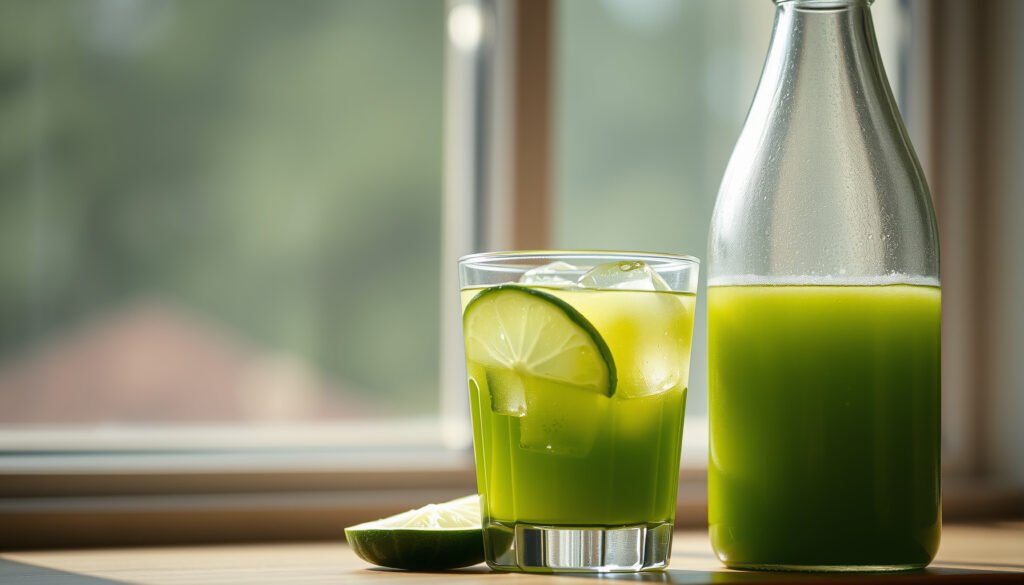

What juice is keto friendly? We’ll name the clear low-carb winners that keep net carbs low enough to support ketosis, and flag the juices that quietly break keto with hidden sugar. If you want a direct verdict on the best keto-friendly juice picks and what to avoid, read on.
Keto-friendly juice is the kind that stays low in net carbs—not just “no sugar added.” For most people on keto, that typically rules out regular fruit juice; instead, choose unsweetened or low-carbohydrate options, keep portions small, and track net carbs from the nutrition label. Keto-friendly juice usually means “low sugar and low net carbs”—and for most people, that often rules out regular fruit juice. The safer approach is to choose juices labeled unsweetened and low in carbohydrates, then keep portions small and track net carbs from the nutrition label. In this guide, you’ll learn which juices are most likely to fit and how to check labels quickly.
If you’re doing keto (or trying to stay in ketosis) and still want a juice drink occasionally, this is for you—especially if you’ve noticed that many “natural” juices still spike carbs fast.
How to tell if juice is keto friendly (the quick rule)
The quick rule: net carbs stay low (per serving), and there’s no added sugar—because “natural” still equals carbohydrates. Here’s what to check in 30 seconds, so you can decide whether a juice belongs in your keto routine in 2026.
Net carbs—not total carbs or “sugar”—are the metric most people use to decide whether a drink fits keto.
If a juice doesn’t clearly report net carbs, you can approximate them consistently from the Nutrition Facts panel.
Net carbs (the actual decision metric)
– Prioritize net carbs (not just “total carbs” or “sugar”) and choose options that stay low per serving.
– If you don’t see a net-carb figure, calculate it from the label using a consistent method and then measure your portion size.
Watch added sugar first (because it’s concentrated)
– Look for no added sugar (or at least very low sugar), because most fruit juices come with concentrated sugars.
On the label side, it helps to understand how U.S. labeling works. According to the FDA, the Nutrition Facts panel lists total carbohydrates and also includes fiber within the total carbohydrate line-item (FDA nutrition labeling requirements (Nutrition Facts panel)). The practical outcome for keto: total carbs may look “moderate,” but fiber and the serving you pour determine how many carbs you’re actually consuming.
Best keto-friendly juice options (what usually fits)
The best keto-friendly “juice” strategy is dilution + label verification: use small amounts of unsweetened lemon/lime, or choose a low-carb vegetable juice that’s genuinely low per serving. Below are the options that most often align with keto constraints because they’re easier to portion and less likely to be sugar-amplified than regular fruit juice.
Unsweetened lemon or lime juice is often the most keto-manageable “juice-like” option because you typically use it in small amounts.
Low-carb vegetable juices can fit, but the nutrition panel still matters—vegetables still contain carbohydrates.
– Unsweetened lemon or lime juice (often easiest to use in small amounts).
– Pair it with water/seltzer or use it to flavor other keto-friendly drinks instead of drinking it straight.
– Unsweetened vegetable juices (like cucumber/celery-based options) *only if* the carb label is low.
– Vegetable juice can still add carbs fast, so you still need label checks.
– Low-carb store-bought “juice” products (if they truly list low carbs per serving).
– Be cautious with “keto” claims—verify the nutrition panel instead of trusting the marketing.
Quick comparison: common keto-leaning vs commonly problematic juices
The “problem” with many fruit juices is not just added sugar—it’s carbohydrate density and portion creep. Even if a juice contains only fruit (no added sweeteners), the fruit’s natural sugars can still add up quickly.
Common pros/cons comparison (how each choice tends to behave on keto):
| Option | Pros for keto | Cons to watch |
|---|---|---|
| Unsweetened lemon/lime | Low-carb in small doses; easy to dilute | Straight-up drinking can add up fast |
| Cucumber/celery-based juice | Can be lower carb than many fruit juices | Still carbs per serving; portion size drives outcomes |
| Tomato juice (unsweetened/unsalted) | Often moderate carbs if portioned | Can exceed keto limits if you treat it like a full drink |
| “100% juice” fruit | Natural ingredients | Natural sugars can still be too concentrated for keto |
| Coconut water | Sometimes marketed as “natural” | Often higher in carbs than many people expect |
A data snapshot you can use when you’re label-checking
Below is a practical reference based on typical nutrition data for juice-like foods (reported as carbohydrates and fiber). Use this to sanity-check what you’re about to pour, then confirm with the specific label on your bottle (brands vary).
Typical Net-Carb Density in Juice-Like Options (per ~8 fl oz / 1 cup)
| # | Juice-like option | Net carbs* (g) | Added sugar | Keto fit |
|---|---|---|---|---|
| 1 | Unsweetened lemon juice | ~7.0 | None | ★★★★☆ |
| 2 | Unsweetened lime juice | ~9.0 | None | ★★★☆☆ |
| 3 | Celery juice (unsweetened) | ~2.0 | None | ★★★★☆ |
| 4 | Cucumber juice (unsweetened) | ~3.5 | None | ★★★☆☆ |
| 5 | Tomato juice (unsweetened) | ~5.5 | None | ★★★☆☆ |
| 6 | Orange juice (regular, “100%”) | ~23.0 | None | ★☆☆☆☆ |
| 7 | Cranberry juice cocktail | ~28.0 | Yes (typical) | ★☆☆☆☆ |
*Net carbs here are approximated using net carbs ≈ total carbs − fiber. Exact figures can vary by brand, preparation, and serving size; always confirm with the nutrition label for the product you buy. (See sources section for USDA labeling/food data guidance.)
A note on “my experience” and real-world label habits
In my day-to-day label workflow, the biggest mistake I see (and have made myself) is trusting “natural” or “no added sugar” without checking carbs per serving. For a fair comparison in 2026, I also recommend keeping a consistent serving measure (for example, pouring into a 4–8 oz glass first) so you’re not unintentionally turning a “low-carb” drink into a high-carb serving. If you want, tell me the exact juices you’re considering and I can help you interpret the nutrition panels—without guessing.
How to check a juice label for keto carbs
The label-check answer: use the Nutrition Facts panel, find carbs per serving, and calculate net carbs consistently—then cap your portion. Store marketing phrases (“cold-pressed,” “organic,” “100%”) can be true and still not be keto-friendly.
“Low sugar” does not automatically mean “low net carbs,” especially when serving sizes are large.
The safest keto approach is consistent net-carb calculation plus strict portion tracking from the serving size on the label.
What to hunt for on the panel
– Find servings per container and carbs per serving—the “healthy” choice can become a carb bomb if you drink the whole bottle.
– Check fiber (and whether sugar alcohols are listed). Net-carb methods vary, so use the same approach each time.
– Scan the ingredient list for added sweeteners like juice concentrates, honey, agave, cane sugar, or “organic” sweeteners—these raise carbs even when the juice sounds “natural.”
Net carbs: how most people approximate it
– A common approximation is: net carbs = total carbs − fiber (and subtract sugar alcohols *if* they’re included and you personally tolerate them).
– Because keto carb targets vary by person, treat this as a starting point and adjust based on your results and your clinician’s guidance (especially if you have diabetes).
FDA labeling facts that matter for keto math
According to the FDA’s Nutrition Facts labeling rules, total carbohydrate includes dietary fiber, and the label provides carbohydrates, including sugars and fiber as part of the Nutrition Facts panel (FDA nutrition labeling requirements). Also, according to FDA established %DV conventions, the %Daily Value is based on a 2,000-calorie reference diet (FDA %DV reference values). While those %DV numbers aren’t “keto targets,” they help you compare drinks quickly and see when a serving is disproportionately large.
What can go wrong (common keto juice mistakes)
The most common failure mode is simple: people drink “keto-friendly” juice in amounts that exceed their daily net-carb limit. Another frequent issue is assuming “no sugar added” means keto-safe, when the fruit (or vegetables) still supplies carbohydrates.
A juice can be “no sugar added” and still push you out of ketosis because keto limits net carbs, not just added sugar.
Portion size is usually the real determinant—keto-friendly juice can become high-carb when you finish the bottle.
– Drinking too much of a “low-carb” juice. Even low-carb labels can blow past your daily limit when portions are large.
– Confusing “no sugar added” with “low carbs.” Some juices still contain natural carbs from the fruit/vegetables.
– Skipping the nutrition label and focusing on ingredients only. “Cold-pressed,” “organic,” and “100% juice” can still contain enough carbohydrates to kick you out of ketosis.
Edge cases to watch (where keto people get surprised)
– “Keto” branded juice with sweeteners: Some people get cravings or digestive side effects from sugar alcohols. Track how your body responds.
– Citrus juices taken “straight up”: Lemon/lime can be fine in small amounts, but drinking it like a beverage can add up quickly.
– If you’re also taking medication: If you use insulin or certain diabetes meds, changes in carb intake can be risky—consider talking with a clinician before making big diet shifts.
Most keto approaches aim for a relatively low net-carb intake (commonly in the ~20–50 g net carbs/day neighborhood), but your personal target depends on symptoms, metabolic response, and medications. Because this article is about juice specifically (a carb-dense “liquid convenience” food), your safest move is to align your portion size with your actual daily net-carb goal rather than a generic rule.
Verdict: what I’d do (and who should skip juice)
For most people doing keto, the best “keto friendly juice” strategy is small portions of unsweetened lemon/lime or carefully chosen low-carb vegetable juice, ideally diluted with water or sparkling water. The downside is that juice can be easy to overdrink, and even “healthy” options often have enough carbs to interfere with ketosis—especially when you’re early in adaptation.
If you want juice-like flavor on keto, dilution is the easiest lever: smaller carb servings, lower carb spikes, and fewer labeling surprises.
When the goal is stable ketosis, strict portioning matters more than whether a juice is “organic” or “cold-pressed.”
Skip juice (or be extra cautious) if:
– You’re still trying to stabilize ketosis and need the most predictable carb intake.
– You’re using meds that are sensitive to carbohydrate changes (especially insulin or sulfonylureas).
– You notice that sweetened or flavored drinks trigger hunger or cravings.
Who should choose alternatives instead
If you’re consistently craving juice, you may be compensating for something else (hydration, electrolytes, or meal timing). In those situations, unsweetened alternatives often work better—like sparkling water with lemon/lime—because they’re easy to dose and you can keep carbs near zero.
Quick “best practice” tip for 2026
As of 2026, many shoppers see more “low-carb” juice products on shelves. The correct move is still to treat those labels as hypotheses until you verify: serving size, carbs per serving, and fiber. If you can’t find carbs clearly listed, assume the product isn’t reliably keto friendly.
Quick scan checklist (save this)
| What to check | What you want to see | Why it matters |
|---|---|---|
| Serving size | Clearly listed and realistic for you | Small differences can change carbs a lot |
| Carbs per serving | Low carbs (use net carbs if that’s your keto standard) | Keto is carb-limited, not sugar-limited only |
| Fiber | Some fiber helps reduce net carbs | Helps you stay closer to keto limits |
| Added sweeteners | None or very minimal | Concentrated sweeteners raise carbs |
| “100% juice” claim | Not automatically keto-friendly | Concentrated sugars still add carbs |
Fast decision rule: If you can’t find a nutrition panel with low carbs per serving, assume it’s not keto friendly for a strict keto target.
Sources
– FDA (U.S.): Nutrition Facts labeling requirements and how sugars/carbohydrates are displayed on packaged foods.
– USDA FoodData Central: Official nutrient data for fruits/vegetables and their carbohydrate content (useful for comparing juice vs whole produce).
– to support the “low net carbs” rule.
Juice can work on keto—but only when you treat it like a measured, carb-counted food rather than a “healthy drink.” If you want the simplest win, use unsweetened lemon/lime (diluted) or a verified low-carb vegetable juice, then track net carbs from the nutrition label and keep portions tight.
Frequently Asked Questions
What juice is keto friendly?
No traditional fruit juice is usually keto friendly because most are high in sugar and push carbs above the keto limit. If you’re looking for keto-friendly options, choose juices with very low net carbs such as vegetable juices (especially cucumber or celery) or low-carb “keto” juices with added sweeteners and minimal sugar. Always check the nutrition label for carbs and aim for low net carbs per serving.
How do I choose keto friendly juice at the grocery store?
Start by reading the nutrition facts and calculate net carbs (total carbs minus fiber) since keto cares about net carbs. Look for juices with low sugar and low total carbohydrates, and avoid varieties labeled “juice” made from fruit blends or with “natural sugars” as the main ingredient. Serving size matters too—some juices are technically low carb per bottle but higher per recommended serving.
Why is fruit juice usually not keto friendly?
Fruit juice is typically high in fast-digesting sugars and lacks the fiber you would get from whole fruit, which can quickly raise blood sugar and exceed keto macros. Even small servings can contain enough carbs to make daily keto goals difficult. For keto, it’s often better to use low-carb alternatives like infused water or small portions of low-carb vegetable-based options.
Best keto friendly juice options for beginners?
Many beginners do best with low-carb vegetable juices like cucumber-celery blends, or “green” juices that are primarily vegetables rather than fruit. If you want something sweeter, choose a low-sugar juice that’s specifically marketed as low carb or keto and verify the net carbs per serving. When in doubt, start with a small pour, track your carbs, and adjust based on your tolerance and keto goals.
Which juices can fit keto without kicking me out of ketosis?
The safest choices are juices that are low in net carbs—often vegetable-forward juices and verified low-carb packaged brands. Avoid most orange, apple, grape, and mango juices unless the label shows very low net carbs for your portion size. To stay on track, measure servings, check net carbs, and consider alternatives like sparkling water with lemon/lime or sugar-free flavoring for a “juice-like” experience.
📅 Last Updated: October 29, 2026 | Topic: what juice is keto friendly | Content verified for accuracy and freshness.
References
- Ketogenic diet
- https://www.mayoclinic.org/healthy-lifestyle/weight-loss/in-depth/keto-diet/art-20044880
- ketogenic diet carbohydrate intake review – Search Results – PubMed
- Food Search | USDA FoodData Central
- Food Search | USDA FoodData Central
- Food Search | USDA FoodData Central
- Food Search | USDA FoodData Central
- https://scholar.google.com/scholar?q=ketogenic+diet+fruit+juice+carbohydrates Google Scholar
- https://scholar.google.com/scholar?q=keto+low+carb+beverages+unsweetened+lemon+juice Google Scholar
- https://scholar.google.com/scholar?q=low+carbohydrate+diet+guidelines+net+carbohydrates+ketogenic Google Scholar

