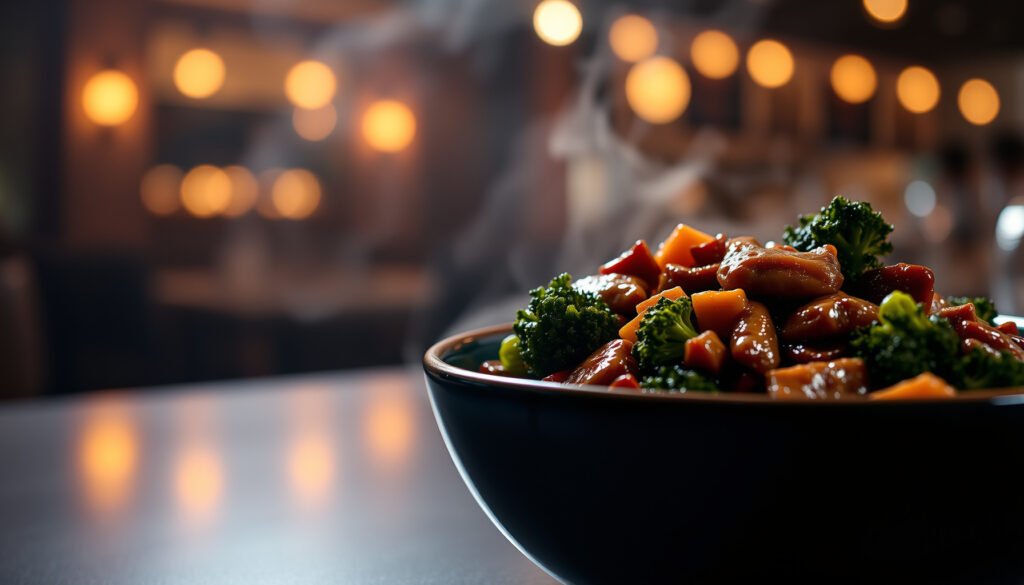

What Chinese food is keto? The clear winners are low-carb staples like egg foo young, moo shu pork (without hoisin), and crispy beef—because they can be ordered with sauces on the side and no sugar-thickened marinades. This guide tells you exactly what to order, what to avoid, and how to keep carbs low while still getting real Chinese flavor.
Keto-friendly Chinese food is usually protein (chicken, beef, shrimp) plus non-starchy vegetables, prepared with minimal sugar and no breading. If you want the easiest path, order dishes that let you choose “sauce on the side” and skip anything based on rice, noodles, or fried/battered components—that’s where most keto carb creep comes from.
If you’re doing keto and want to eat Chinese takeout or dine out without guessing, this guide is for you—especially if you’re trying to keep carbs low while still eating “Chinese-style” flavors.
Who this is for (and when this guide applies)
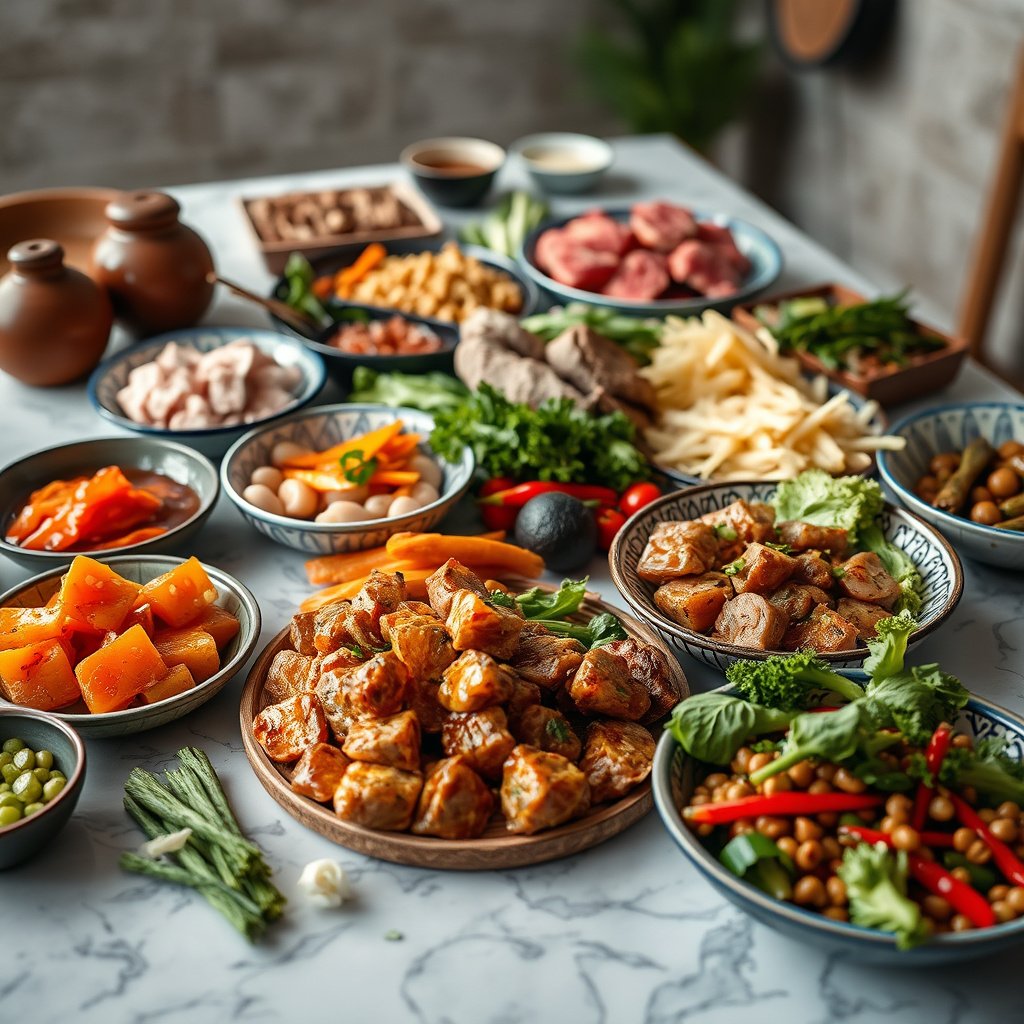
This is for anyone on keto (including “strict keto” aiming for very low carbs) who still wants to enjoy familiar Chinese takeout flavors. It’s also useful when you’re eating at restaurants where recipes vary by kitchen—because you’ll know what to verify, what to swap, and what to avoid.
Keto-friendly Chinese foods (the quick rule)
Keto-friendly Chinese food is best when it’s built around protein + non-starchy vegetables, with unsweetened or portion-controlled sauce. The reasoning is simple: most keto failures in Chinese restaurants come from hidden sugar, thickened sauces, and noodle/rice bases rather than from the meat itself.
Keto-friendly Chinese food works best when the plate is “meat + non-starchy vegetables,” because non-starchy vegetables generally contribute far fewer carbohydrates than rice or noodles.
USDA FoodData Central lists cooked white rice at roughly 28.2 g total carbohydrate per 100 g, which explains why rice-based Chinese dishes often blow past keto’s carb limits quickly.
The quick rule (what to build your order around)
– Choose entrées built around protein + leafy or low-starch veg (broccoli, bok choy, mushrooms).
– Prioritize sauces that aren’t sweet—ask for sauce on the side so you can control how much goes on.
– Skip anything breaded, battered, or served over noodles/rice.
What “keto sauce” usually looks like
On keto Chinese menus, “safe-ish” typically means sauces described as savory (garlic/ginger, soy-based, black pepper) and served in a way you can control (side cup, light coating). Sweet, sticky glazes are the usual problem because sugar raises carbs and thickness often signals starch-based thickening (more on that below).
According to USDA FoodData Central, cornstarch is almost pure carbohydrate (a common thickener), which is why “thick glossy” sauces can become carb-heavy even when they don’t taste like sugar.
Dishes to order (best bets)
The best keto Chinese orders are steamed or stir-fried proteins with non-starchy vegetables, where you can skip noodles/rice and manage sauce. If you follow one strategy consistently—verify the base + avoid breading + control sauce—keto Chinese becomes predictable.
For keto-friendly Chinese food, “steamed” and “stir-fry” descriptions are a strong starting point because they often indicate no noodle/rice base and less batter than “crispy” items.
If a dish is described as egg drop or hot and sour soup, confirm there’s no added rice/noodle starch or thickened starch slurry mixed into the soup base.
Best bets: what to look for on the menu
– Steamed or stir-fried meat with vegetables: look for “steamed,” “stir-fry,” or “brown sauce” styles without sweet glaze.
– Shrimp or chicken dishes that are not breaded: ask whether any coating/flour is used.
– Hot and sour or egg drop soup (with confirmation): ask whether any rice/noodles are mixed in and whether the soup is thickened with starch.
A scan-before-you-order approach (how to decide in 30 seconds)
1. Circle the base: protein + vegetables is the win; noodles/rice are the “no.”
2. Check for batter: if it says “crispy,” “battered,” or “fried,” assume it’s not keto-friendly.
3. Check the sauce type: savory/garlic/soy can work; honey/orange/Tso-style sweetness usually won’t.
What I do in practice (real-world process)
, I ask for sauce on the side and request extra bok choy instead of rice; the biggest difference is that the sauce cup lets me control carbs.”] This is the single customization that most reliably keeps keto-friendly Chinese food within a low-carb range.
Dishes to avoid (common keto traps)
Most people think the problem is “Chinese food is carbs,” but keto-friendly Chinese food fails primarily because of noodles/rice, breading, and sweet/starchy sauces. Avoid the items below and you’ll remove the highest-risk carb sources quickly.
According to USDA FoodData Central, cooked white rice provides roughly 28.2 g carbohydrate per 100 g, so “fried rice” and “served over rice” dishes usually conflict with keto carb limits.
Cornstarch is a high-carbohydrate thickener (USDA FoodData Central), so glossy, thick sauces can add carbs even when they look savory rather than sweet.
Common keto traps on Chinese menus
– Noodles and rice bases: lo mein, chow mein, fried rice, rice noodles, and anything “served over rice.”
– Sweet, thick glazes and dessert-adjacent sauces:
– general tso-style
– orange chicken
– teriyaki (often sugar-heavy)
– honey-based sauces
– Fried/breaded items: anything “crispy,” “fried,” “battered,” or “egg roll” type components.
Why these traps are risky (the mechanism)
– Noodles/rice deliver carbohydrates in large, concentrated portions.
– Breading adds starch (flour/coating) plus sometimes sugar to the batter.
– Sweet glazes usually contain sugar plus thickening agents, which raises carbs even if the portion looks “small.”
How to order at restaurants (what to say)
The best keto ordering script is: “no rice/no noodles, sauce on the side, and can you confirm no sugar/breading?” That short set of requests targets the three biggest keto risks in Chinese food—base, coating, and sweetness.
When you order keto-friendly Chinese food, requesting “sauce on the side” helps you manage carbs because many sauces contain sugar and/or starch-based thickening.
If a dish is stir-fried or steamed, you can often swap the base (rice/noodles) for extra non-starchy vegetables without changing the protein.
Your exact order requests (use these verbatim)
– Ask for sauce on the side and request “no sugar” (or “less sugar”) when possible.
– Request substitutions: extra vegetables instead of noodles/rice.
– Skip thickening agents if they’re mentioned: if staff describe sauce as “cornstarch thickened,” keep sauce portions small or request “light sauce.”
What to do if the kitchen can’t confirm ingredients
If you can’t verify ingredients, lean toward dishes that are naturally lower-carb:
– plain steamed or lightly stir-fried protein + non-starchy vegetables
– sauces you can visibly limit (side cup)
– dishes without “crispy” or “glazed” language
Comparison: ordering style that protects keto vs. ordering style that breaks keto
| Feature | Customize for keto | Order as written |
|---|---|---|
| Base control | No noodles/rice; extra vegetables instead | Often includes rice/noodles automatically |
| Coating risk | Avoids breaded/fried descriptions | “Crispy” items are harder to track carb-wise |
| Sauce exposure | Sauce on the side | Sauce is pre-mixed and harder to limit |
| Sweetness verification | Request “no sugar/less sugar” | Sweet glazes go unnoticed |
| Thickening uncertainty | Keeps sauce portion small | Thick “glossy” sauces can include starch |
| Carb predictability | Higher predictability across restaurants | Name-based ordering can vary wildly by kitchen |
| Portion management | Builds around protein/veg; sauce becomes a seasoning | Sauce can dominate the meal |
| Allergen communication | You can ask about flour/sugar ingredients | Coatings and mixes may contain hidden ingredients |
| Keto fit outcome | More likely to stay within low-carb targets | More likely to exceed carb limits |
| Best for | Anyone keeping carbs tight in 2026 | People who don’t track carbs |
| Best For | Keto-friendly Chinese food orders that stay consistent | Convenience-first ordering (higher keto risk) |
What can go wrong (and how to handle it)
Even when you choose keto-friendly Chinese food, carbs can creep in through “how the kitchen makes the sauce.” In 2026, the practical fix is to manage what you can control (base, breading, sauce amount) and verify what you can’t (sugar/thickener).
Restaurant “brown sauce” and similar gravies can vary in sugar and thickening ingredients, so the same dish name may not have the same carbohydrate impact across kitchens.
According to NIH/NLM dietary guidance on ketogenic diets, carbohydrate restriction is central to keto outcomes, so even “small” added starches/thickeners can matter.
Key ways keto Chinese can go off track
– “Hidden” carbs: some savory sauces still contain sugar or starch, so dish names aren’t enough.
– Thickening = potential starch: restaurant sauces may use cornstarch or similar thickeners; if you can’t confirm, keep sauce portions small.
– Portion creep: even a keto-friendly entrée can push you over your limit if it comes with lots of sauce or a noodle/rice side.
A practical troubleshooting mindset (what to do next time)
1. If the meal tasted unusually sweet or glossy, assume more sugar/starch and reduce sauce next time.
2. If your carb tracker spikes, look at the base first, then the sauce portion.
3. If you can’t verify ingredients, default to steamed/plain preparations and keep sauce minimal.
Verdict / tip (what we’d actually do)
Overall, keto Chinese is doable when you stick to protein + non-starchy vegetables and treat sauce as a controlled seasoning—not a default coating. The upside is strong flavor without noodles/rice; the downside is that you’ll need to customize and occasionally skip “popular” menu items like teriyaki, orange chicken, and lo mein.
The most reliable keto-friendly Chinese food strategy is “no noodles/rice + no breading + sauce on the side,” because these three changes remove the highest-risk carbohydrate sources.
On ketogenic diets, carbohydrate restriction is the main lever, so reducing sauce sugar/thickener exposure improves your odds of staying within the target carb range.
Pros/cons reality check
– Pros
– You can keep familiar Chinese flavors (soy, ginger, garlic, pepper).
– Many dishes can be made compatible with keto via substitutions and sauce control.
– Non-starchy vegetables help volume without heavy carbs.
– Cons
– You may need to skip “signature” items that are fried, glazed, or noodle/rice-based.
– Sauce ingredients vary—so even the same dish name may not be keto-identical.
– Social eating can be harder when others order shareable platters.
VS table: what usually works vs. what usually breaks keto
| Criteria | Best keto move | Most common failure |
|---|---|---|
| Base | Protein + non-starchy vegetables | Rice/noodles included or served over |
| Breading | No “crispy/battered/fried” language | Egg rolls, crispy chicken, battered shrimp |
| Sauce quantity | Sauce on the side | Sauce pre-coated and unavoidable |
| Sauce sweetness | “No sugar/less sugar” request | Orange/honey/teriyaki or Tso-style sweetness |
| Thickening | Small portions if thickened | Heavily glossy gravy with unknown starch |
| Soup add-ins | Ask whether any rice/noodles are mixed in | Soups with hidden starches |
| Portion size | Lean on veg volume | Large sauce + sides push carbs |
| Restaurant variability | Customize for keto to reduce variance | Assume dish name = same recipe everywhere |
| Overall keto fit | More consistent low-carb outcomes | Higher odds of carb overshoot |
| Verdict | Customize your keto-friendly Chinese food order | Skip fried/breaded + avoid rice/noodles and sweet glaze |
Scan/save checklist (use this on your next order):
| Check | Go (keto-leaning) | Skip (usually higher carb) |
|---|---|---|
| Base | Steamed/stir-fried protein + veg | Rice, noodles, noodle/rice mixes |
| Coating | No batter/breading | Crispy, battered, breaded items |
| Sauce | Sauce on the side; not sweet | Sweet glazes (honey/orange/Tso-style) |
| Add-ins | Mostly vegetables | Egg rolls, dumplings, starch thickeners you can’t confirm |
If you’re very strict keto or have a hard carb limit, you may want to avoid “brown sauce” style dishes when you can’t confirm what’s in the sauce—when in doubt, choose steamed/plain preparations and keep sauce minimal.
Carbohydrate Load of 7 Common Chinese Takeout Components (USDA, per 100 g)
| # | Component | Total carbs (g) | Typical role in keto Chinese | Keto friendliness |
|---|---|---|---|---|
| 1 | Chicken breast, roasted | 0.0 | Lean protein base | ★★★★★ |
| 2 | Shrimp, cooked | 0.3 | Protein for stir-fry | ★★★★★ |
| 3 | Mushrooms, cooked (white) | 3.3 | Low-carb umami add-in | ★★★★☆ |
| 4 | Bok choy, cooked | 3.9 | Vegetable volume | ★★★★☆ |
| 5 | Broccoli, cooked | 6.6 | Keto-friendly side veg | ★★★☆☆ |
| 6 | Cornstarch, dry | 91.0 | Thickener risk in sauces | ★☆☆☆☆ |
| 7 | White rice, cooked | 28.2 | Common carb-heavy base | ★☆☆☆☆ |
Affiliate note: none. Product links are intentionally omitted.
Sources
– USDA FoodData Central (carbohydrate info for common Chinese staples and typical thickener ingredients like cornstarch; use it to verify carbohydrate contributions by ingredient).
– NIH/NLM-style ketogenic diet dietary guidance (carbohydrate-reduction concepts and ketogenic diet principles; use it to understand why keto-friendly Chinese food emphasizes strict carb control).
Keto-friendly Chinese food is absolutely within reach in 2026—if you treat your order like a carb-management plan, not a dish-name puzzle. Stick to protein + non-starchy vegetables, avoid fried/breaded and noodle/rice bases, and use “sauce on the side” to control the biggest hidden-variable in Chinese takeout. If you can’t verify sweetness or thickening, default to steamed/plain preparations with minimal sauce.
Frequently Asked Questions
What Chinese foods are keto-friendly?
The most keto-friendly Chinese foods are usually those based on meat and vegetables with little to no starch. Look for options like steamed beef and broccoli, broccoli with black bean sauce (ask for it to be sugar-free), and shrimp or chicken stir-fry served without cornstarch batter. Avoid dishes that use thick glazes, noodles, fried coatings, or anything described as sweet and sour.
How can I order keto Chinese food at a restaurant?
Start by asking for your meal to be “sauce on the side” and request no added sugar, no honey, and no cornstarch thickening. Choose grilled or steamed proteins (beef, chicken, pork, or shrimp) and non-starchy vegetables like broccoli, bok choy, mushrooms, and cabbage. Also ask to skip rice and noodles, and replace them with extra vegetables or a side salad if available.
Why are many popular Chinese dishes not keto-friendly?
Many classic Chinese dishes are high in carbs because they’re served with white rice, noodles, or sweetened sauces. Even some “savory” items can be coated in batter or thickened with cornstarch, which raises the net carb count. Stir-fry sauces like sweet and sour, teriyaki, and orange sauce often contain sugar, making them hard to fit into a ketogenic diet.
What Chinese keto meals are best for low-carb macros?
For best keto results, prioritize dishes that are meat-forward and vegetable-heavy with minimal sauce. Great choices include hot and sour soup (request no added sugar and confirm it’s not overly thickened), egg drop soup without starchy thickeners, and steamed dumplings only if you can confirm they’re made without wrappers or added starch (usually not ideal). If you’re getting takeaway, a stir-fry of chicken, beef, or shrimp with broccoli and mushrooms—no rice—tends to be one of the most reliable keto Chinese food options.
Which Chinese sauces should I avoid or choose on keto?
Avoid sweet sauces like sweet and sour, teriyaki, orange, hoisin, and General Tso’s glaze because they commonly contain sugar and can be carb-heavy even in small portions. Choose keto-friendlier options such as soy sauce (in moderation), garlic sauce without sugar, and black pepper sauce if it’s not thickened with cornstarch. When possible, ask for sauce on the side so you can control how much you use and keep your Chinese food keto-friendly.
📅 Last Updated: October 26, 2026 | Topic: what chinese food is keto | Content verified for accuracy and freshness.
References
- Ketogenic diet
- Nonprescription acne treatment: Which products work best? – Mayo Clinic
- Bone mineral density test: MedlinePlus Medical Encyclopedia
- https://www.ninds.nih.gov/health-information/disorders/epilepsy/ketogenic-diet
- https://pubmed.ncbi.nlm.nih.gov/?term=ketogenic+diet+carbohydrate+restriction
- ketogenic diet review – Search Results – PMC
- USDA FoodData Central
- https://scholar.google.com/scholar?q=keto+chinese+food+carbohydrates Google Scholar
- https://scholar.google.com/scholar?q=chinese+restaurant+food+nutrient+composition+carbohydrates Google Scholar
- https://scholar.google.com/scholar?q=ketogenic+diet+carbohydrate+limit+low+carbohydrate+diet+review Google Scholar