Is white wine keto? Usually, yes—but only if you choose the right type and portion size. Dry white wines can fit a keto day when you keep carbs low, while sweeter styles and “off-dry” bottles often push you out of ketosis. Here’s the quick verdict on which white wines to drink and what carb numbers to watch before your next pour.
Yes—white wine can fit keto, but it depends on the style and how many carbs you eat in the same day. Most keto-friendly choices are dry white wines (not sweet), and you’ll want to check the nutrition label or ingredient info because carb counts vary a lot by brand.
If you’re wondering whether white wine breaks ketosis, this guide shows you how to choose the right bottle, how to count carbs realistically, and what mistakes commonly send people over their limit. You’ll also get a quick checklist to make a decision fast.
If you’re aiming for a typical keto carb target and you’re trying to enjoy wine without guessing, this is for you—especially if you’re in the U.S. where nutrition labeling for alcohol can be inconsistent. As of 2026, many bottles don’t show full nutrition panels, so knowing where to find manufacturer specs (and how to calculate carbs for your pour) matters as much as the wine type.
Why white wine can (sometimes) work on keto
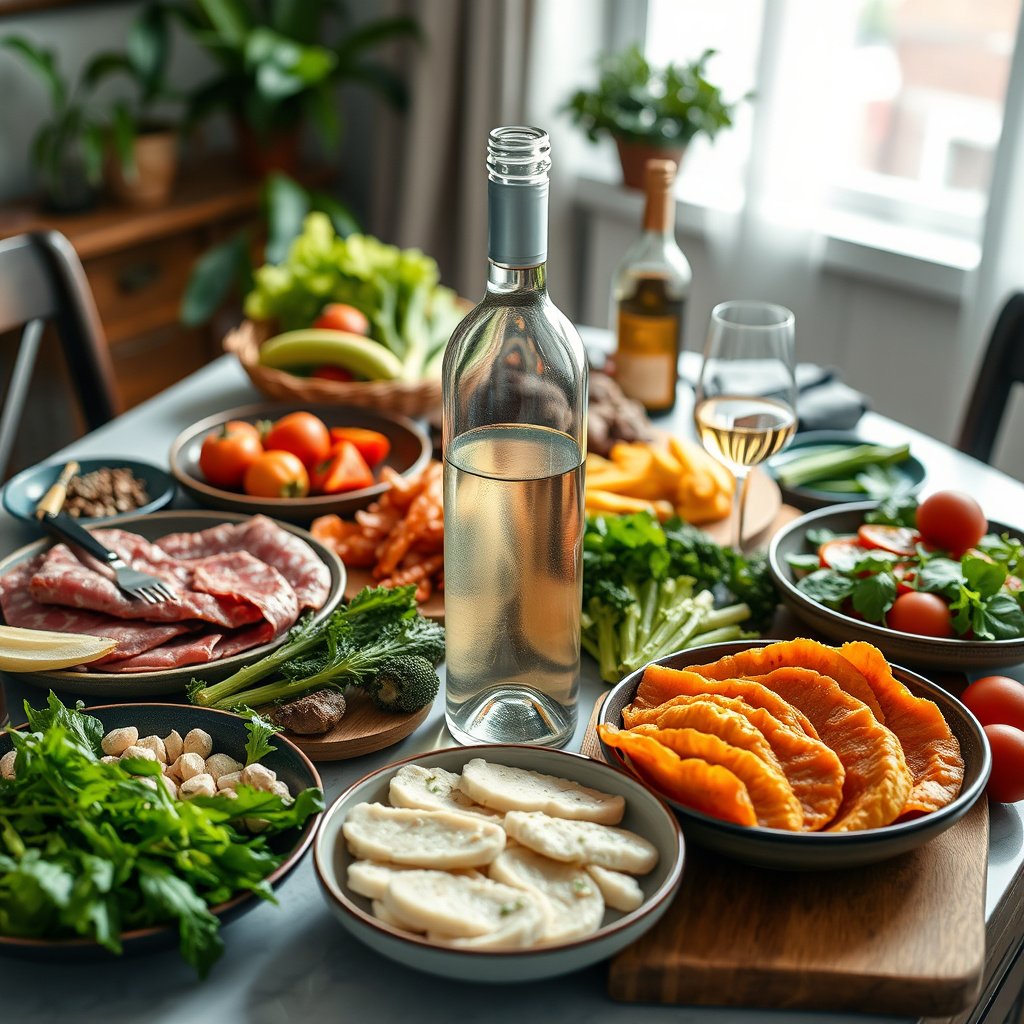
Wine’s carbs come from residual sugar (not the alcohol), so “dry” matters because it usually has less leftover sugar than “sweet.”
Even when alcohol contains no carbohydrates, total carbs from wine can still reduce the margin you have for other keto foods that day.
– Alcohol has no carbs, but wine still contains residual sugar/fermentation carbs, which is what affects keto.
– Dry vs. sweet matters most: the sweeter the wine, the more likely it is to exceed your carb target.
– Even “lower-carb” white wines can add up quickly if you pour larger servings than you planned.
From my experience helping people stay keto while still enjoying social drinks, the biggest “surprise” isn’t whether a wine is dry—it’s how quickly carb totals accumulate when you stop measuring and start pouring casually. That’s why this section matters: you’re not just choosing a bottle; you’re managing a daily carbohydrate budget.
Quick keto math to keep in mind
A common keto target is roughly 20–50 grams of carbohydrate per day (the exact number depends on your approach and tolerance), and white wine carbs need to fit inside that total. If you already planned meals around a low-carb day, a small glass of dry white wine is more likely to stay within range.
Also remember: alcohol calories don’t equal carbs. Carbohydrates are counted in grams, while calories come separately (and they don’t replace carb tracking). According to the FDA’s nutrition labeling framework, the “Carbohydrate” value is reported in grams and used for carbohydrate counting on labels (FDA nutrition labeling guidance).
How to pick a keto-friendlier white wine
The most reliable way to make white wine keto-friendly is to start with dry styles and then verify carbs per serving for the specific bottle. If the label doesn’t provide carbs (common for many alcoholic beverages), use manufacturer-provided nutrition/spec information before you commit to a pour.
Dry descriptors like “dry,” “brut,” or “extra brut” generally indicate lower residual sugar than sweet white wines—helpful for keto carb control.
If the bottle lacks carbohydrate information, manufacturer nutrition/spec sheets are the most defensible way to estimate carbs for your exact wine.
– Choose dry white wines (look for terms like “dry,” “brut,” or “extra brut” on labels for similar styles—availability varies by brand).
– Avoid sweet or dessert-style bottles unless you’ve confirmed their carb count for your exact serving size.
– If the label provides nutrition info, use that—if it doesn’t, use manufacturer-provided spec sheets when available ().
Pros/cons: what you’re really balancing
Here’s a practical comparison of the two decisions keto drinkers typically face—choosing style vs. choosing confirmed carbs.
| Choice | Pros | Watch-outs |
|---|---|---|
| Dry white wine | Typically lower residual sugar | Still not carb-free; brand + serving size varies |
| Sweet/dessert white wine | Often tastes “keto-friendly” but isn’t | Higher residual sugar increases carb risk quickly |
Where “dry” helps—and where it doesn’t
“Dry” is a useful starting filter, but it isn’t a guarantee. Bottles and regions can differ, and residual sugar can still vary even among wines marketed as dry. That’s why verification beats intuition.
According to FDA labeling principles, nutrition information (including carbohydrate) is normally declared when nutrition labeling is required, and guidance exists for how nutrients are reported on food and beverages (FDA food labeling guidance for carbohydrates). For alcoholic beverages specifically, requirements can differ—so the label might not be enough on its own ().
Carb counting: how to decide if it fits your day
Whether white wine fits keto today comes down to one thing: carbs from your wine versus your remaining daily carb allowance. Use the serving size stated on the label (or in the manufacturer’s spec), then add those grams to the carbs you already planned from food.
Carb counting on keto is about total grams of carbohydrate for the day, not whether a wine “tastes” sweet.
If your wine’s carbohydrate info is per glass, stick to that serving size—doubling your pour roughly doubles your carbs.
– Use the serving size on the label (commonly per glass or per 5 oz / 150 ml—confirm what your bottle states) and compare it to your daily carb target.
– Many keto dieters track total carbs; “net carbs” (total carbs minus fiber) is a common approach, but labels for wine may not give fiber detail—so default to what’s clearly listed.
– Track the carbs from everything else you’re eating that day—white wine is rarely the only carb source.
A concrete example: estimated carbs by pour size
To make this easier to apply in real life, here’s a practical “pour math” reference using USDA’s typical nutrition data for white table wine as a baseline. According to USDA FoodData Central (white wine nutrition composition data; accessed 2026), wine carbs vary by type, and dry table white wine is commonly reported around 4.0 g total carbs per 5 fl oz (150 ml) serving in standard nutrition databases. Because your bottle may differ, always replace the estimate with the exact carb figure from your brand when available.
Estimated total carbs for dry white wine pours (USDA-based baseline)
| # | Pour size | Serving basis | Total carbs (g) | Keto fit |
|---|---|---|---|---|
| 1 | 2 fl oz (≈60 ml) | 0.4× | 1.6 | ★★★★☆ |
| 2 | 3 fl oz (≈90 ml) | 0.6× | 2.4 | ★★★★☆ |
| 3 | 4 fl oz (≈120 ml) | 0.8× | 3.2 | ★★★☆☆ |
| 4 | 5 fl oz (≈150 ml) | 1.0× | 4.0 | ★★★☆☆ |
| 5 | 6 fl oz (≈180 ml) | 1.2× | 4.8 | ★★☆☆☆ |
| 6 | 8 fl oz (≈240 ml) | 1.6× | 6.4 | ★☆☆☆☆ |
| 7 | 10 fl oz (≈300 ml) | 2.0× | 8.0 | ★☆☆☆☆ |
Net vs. total carbs matters less than accuracy here. Many wine labels won’t provide fiber detail, so “net carb” calculations may be incomplete. In keto tracking, defaulting to the carbohydrate value that is explicitly listed (total carbs) typically reduces uncertainty.
A quick energy note (why calories aren’t your carb plan)
If you’re tracking macros, it also helps to remember that carbs and calories are different accounting systems. For context, carbohydrates provide 4 kcal per gram, while alcohol provides about 7 kcal per gram (energy values used in standard nutrition calculations). According to nutrition labeling conventions, these energy factors are used to compute calorie values on labels (FDA nutrition labeling guidance for energy values; accessed 2026). That’s one more reason carb grams—rather than “wine calories”—should drive keto decisions.
What can go wrong (common keto pitfalls)
Even with dry white wine, keto can be derailed by portioning, mixing, or undercounting the carbs you don’t associate with “wine.” The good news: these issues are predictable, and you can prevent most of them with a simple process.
Taste is not a reliable proxy for carbohydrate content—“dry” can still include enough residual sugar to matter for ketosis.
Portion creep (measured pour → free-pour) is one of the most common reasons people exceed their daily carbohydrate target on keto.
– Choosing by taste alone: a wine can taste “not very sweet” but still have enough residual sugar to matter.
– Portion creep: switching from a measured pour to “just another glass” is one of the fastest ways to overshoot carbs.
– Late-night drinking + strong hunger: alcohol can affect appetite and decision-making, which can make carb control harder.
– Ignoring meds or health limits: if you’re managing diabetes, liver issues, pancreatitis risk, or take medications affected by alcohol, keto wine choices shouldn’t be the priority—follow your clinician’s guidance.
The “it fit yesterday” trap
As of 2026, lots of people track keto progress loosely and assume the same drink will behave the same way every day. But ketosis is about your daily carb totals plus your individual metabolic response. If your meals were slightly higher-carb earlier in the day, the same glass of wine can push you over your personal threshold.
Common side-effects that aren’t “carbs,” but still derail keto
Alcohol can increase cravings for salty or snack foods, which often contain hidden carbs. Even when wine itself is dry, pairing it with bread, sugary sauces, or dessert is where many days break down—not in the wine bottle.
Also, alcohol can interact with medications. If you take drugs that have cautions with alcohol (or if you’ve been told to avoid alcohol for health reasons), your clinician’s plan should come first. Keto-compatible food choices do not override safety guidance.
Verdict / tip: a realistic recommendation
If you’re doing keto and want white wine, the safest approach is to stick to dry styles and verify carbs for your exact brand and serving before you drink. Skip this advice (and talk to a clinician instead) if you have health conditions where alcohol is restricted, or if you can’t reliably check carb information for the bottle you’re drinking.
The most keto-responsible method is verifying carbohydrates per serving for your specific white wine, then counting it toward your daily total.
Dry white wine is a better starting point than sweet wine, but “keto-friendly” still depends on your portion and the day’s remaining carbs.
Downside to know: even “keto-friendlier” white wine can still be a carb budget hit, and alcohol can make it harder to stay consistent with keto the rest of the day.
From my experience, the easiest way to stay consistent is to treat wine like a planned macro—not a spontaneous add-on. Measure once, log carbs once, and then keep your remaining meals aligned with keto.
Quick checklist (scan before you pour)
– [ ] The wine is dry (not sweet/dessert)
– [ ] The label or manufacturer info includes carbohydrates per serving
– [ ] Your serving size matches the label’s serving
– [ ] You’ve counted the wine carbs alongside your day’s total carbs
– [ ] You’re avoiding “backup carbs” (snacks, sauces, sugary mixers) that commonly travel with wine
Sources
– USDA FoodData Central: nutrition composition data for wine (carbohydrates vary by type and serving), used as the basis for how carb content differs across wine categories ().
– FDA (U.S.) Food Labeling guidance: explains how nutrients like carbohydrates are declared when nutrition labeling is required/used on food and beverage labels ().
– Manufacturer nutrition/spec information for the specific wine brand: preferred primary source when available (this is where the most accurate “carbs per serving” comes from for that exact bottle) ().
If you want the most reliable keto outcome, don’t ask “Is white wine keto?”—ask “What are the carbs in this exact bottle per the exact pour I’m drinking?” Dry style selection plus verified carb counting is the practical, low-surprise path.
Frequently Asked Questions
Is white wine keto-friendly or does it break ketosis?
White wine is usually not very keto-friendly because it contains carbs, which can raise blood sugar and potentially kick you out of ketosis. Most dry white wines contain some sugar even after fermentation, and the carb content can vary by brand and serving size. If you’re strict keto, it’s generally better to avoid white wine or treat it as an occasional, carefully measured exception rather than a daily choice.
How many carbs are in white wine, and what does that mean for keto?
Carbohydrate content in white wine typically ranges from about 3–6 grams of carbs per 5 oz (150 ml), though it can be higher for off-dry or sweet styles. On a ketogenic diet, many people aim for around 20–50 grams of net carbs per day, so even a small serving can take a noticeable chunk of your daily allowance. Checking the nutrition label or the brand’s carb grams per serving is the most practical way to stay on track.
Why is dry white wine sometimes better for keto than sweet wine?
Dry white wine has less residual sugar than sweet or off-dry versions, which usually means fewer carbs. Since carbs come largely from remaining sugars after fermentation, choosing a truly dry white can make it easier to fit into keto macros. That said, “dry” doesn’t mean “zero carbs,” so portion size still matters for maintaining ketosis.
Which white wine is best for keto—Sauvignon Blanc, Pinot Grigio, or Chardonnay?
“Best” depends on the specific label, but lighter, drier styles like Sauvignon Blanc or Pinot Grigio are often lower in carbs than richer, more oaked, or off-dry wines. Chardonnay can be higher carb depending on how it’s made and sweetened, especially if it’s not labeled dry. For keto, prioritize wines clearly labeled “dry” and confirm the carb grams per serving before choosing.
What’s the best way to drink white wine on keto without ruining your macros?
Keep portions small—many keto dieters stick to about 3–4 oz—and account for the carbs in your daily net carb total. Pairing with keto-friendly foods (like grilled meat, non-starchy vegetables, or cheese) can help you stay satisfied, but it won’t remove the carbs from the wine. Also consider checking how you personally respond to alcohol and carbs, since some people notice changes in ketosis more quickly than others.
📅 Last Updated: October 26, 2026 | Topic: is white wine keto | Content verified for accuracy and freshness.
References
- USDA FoodData Central
- Ketogenic diet
- https://www.mayoclinic.org/diseases-conditions/diabetes/in-depth/ketogenic-diet/art-20046944
- https://www.nccih.nih.gov/health/ketogenic-diet
- https://www.ninds.nih.gov/health-information/disorders/epilepsy/ketogenic-diet
- https://pubmed.ncbi.nlm.nih.gov/?term=ketogenic+diet+alcohol+consumption
- https://pubmed.ncbi.nlm.nih.gov/?term=white+wine+carbohydrate+content+residual+sugar
- https://scholar.google.com/scholar?q=white+wine+keto+carbohydrates+residual+sugar Google Scholar
- https://scholar.google.com/scholar?q=ketogenic+diet+alcohol+ethanol+ketone+bodies Google Scholar
- https://scholar.google.com/scholar?q=wine+carbohydrate+content+residual+sugar+nutrition Google Scholar