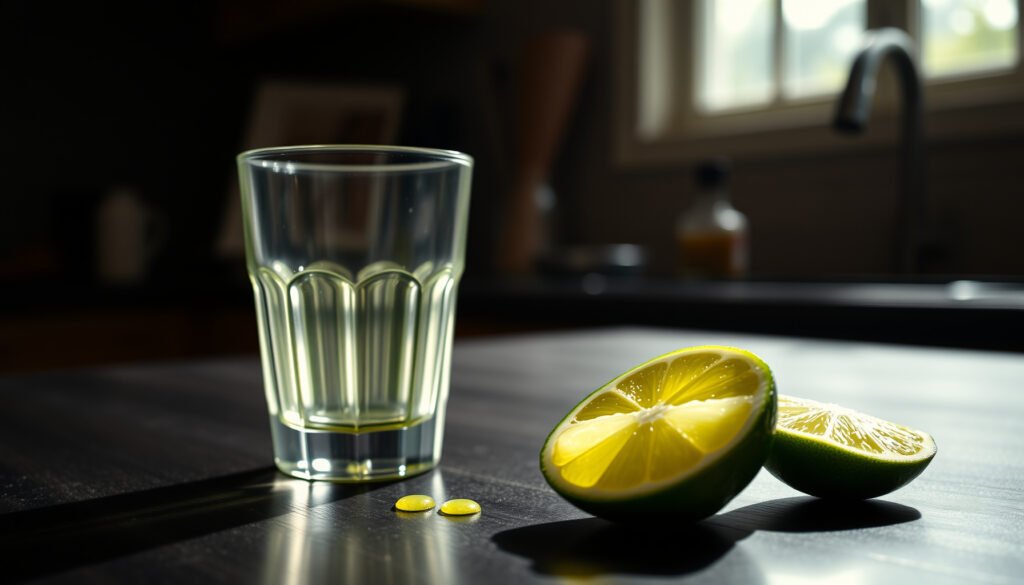

Is lime juice keto—yes, but only within tight carb limits. A typical serving is low enough for most ketogenic diets, yet it can quickly add up if you pour it on like juice. You’ll learn exactly how many carbs to watch, what portion to use, and the best keto-friendly ways to get lime’s flavor without breaking ketosis.
Yes—lime juice can fit keto as long as you keep portions small and count its carbs. Lime juice is flavorful and relatively low in calories, but it’s not “carb-free,” so keto success depends on portion size and your daily net-carb total—especially in 2026 when more “no-sugar” lime products are marketed in ways that still vary by label.
If you’re doing keto and want to use lime for water, dressings, marinades, or cocktails, this is for you. It’s especially helpful if you’re trying to figure out whether “no-sugar” lime products are truly keto-friendly and how to measure carbs without guesswork.
Why lime juice can work on keto

Lime juice can work on keto because it boosts flavor without requiring a lot of carbohydrate-heavy ingredients. The key is understanding how much carbs (and fiber) you’re actually adding each time you squeeze or pour.
Lime juice is not carb-free: USDA FoodData Central reports carbohydrates for lime juice, so it counts toward keto totals.
Because lime juice contains some fiber, net carbs (carbs minus fiber) are lower than total carbs—but they’re still not zero.
– Lime juice adds a lot of flavor for very few calories, which makes it easier to stick with keto-friendly meals.
– It is not “carb-free,” though—lime juice contains natural sugars/carbohydrates, so keto success depends on portion size and daily carb totals.
– The exact carb impact varies by serving size and whether it’s plain juice vs. sweetened “lime” beverages—always check the label when available. USDA FoodData Central (lime juice, raw) reports ~7.1 g carbohydrates and ~2.8 g fiber per 100 g (plus ~25 kcal per 100 g)
Lime juice net-carb reality check (USDA-based)
Here’s what lime juice can look like in keto terms, using USDA nutrient values for lime juice, raw, scaled across common measurements. (Net carbs are calculated as total carbs − fiber.)
Lime Juice Net-Carb Impact by Serving Size (USDA FoodData Central)
| # | Lime juice serving | Total carbs (g) | Fiber (g) | Net carbs (g) | Calories | Keto fit |
|---|---|---|---|---|---|---|
| 1 | 1 tsp (5 g) | 0.36 | 0.14 | 0.22 | 1.3 | ★★★★★ |
| 2 | 1 tbsp (15 g) | 1.07 | 0.42 | 0.65 | 3.8 | ★★★★☆ |
| 3 | 1/4 cup (60 g) | 4.26 | 1.68 | 2.58 | 15.0 | ★★☆☆☆ |
| 4 | 1/2 cup (120 g) | 8.52 | 3.36 | 5.16 | 30.0 | ★☆☆☆☆ |
| 5 | 1 cup (240 g) | 17.04 | 6.72 | 10.32 | 60.0 | ★☆☆☆☆ |
| 6 | 100 g | 7.10 | 2.80 | 4.30 | 25.0 | ★★☆☆☆ |
| 7 | 250 g | 17.75 | 7.00 | 10.75 | 62.5 | ★☆☆☆☆ |
> Note: Net carbs here are calculated as total carbs − fiber, based on USDA values for lime juice, raw. USDA FoodData Central: “Lime juice, raw”
How much lime juice fits keto macros
Lime juice can fit keto at surprisingly small portions, but it can crowd out your carbs fast if you drink it like juice. The practical goal is to log it and ensure your lime juice doesn’t push your day beyond your carbohydrate limit.
Net carbs are commonly tracked as total carbohydrate grams minus fiber grams, so lime juice’s fiber amount changes what counts toward keto.
A single “small pour” of lime juice can be multiple grams of net carbs, even when it tastes light.
– Keto is typically managed by keeping your daily carb intake low (often tracked as net carbs = carbs minus fiber). The right amount of lime juice depends on your personal carb target.
– Because lime juice has relatively little fiber, most of its carbohydrates count toward net carbs for keto tracking (so don’t assume it’s “free”).
– A practical approach is to treat lime juice like a measured ingredient: start with a small serving (for example, 1 tbsp) and log it, then adjust if your daily carb total gets tight.
What I’d do to set your lime juice limit (log-first, not guess-first)
First, decide how you track (total carbs or net carbs). Then measure one consistent serving for your lime juice routines—like always using the same tablespoon or always squeezing and then weighing the juice for a few days.
From there, you can back into a sustainable portion. For instance, if your goal is tight net carbs, the difference between 1 tbsp and 1 cup of lime juice is massive: according to USDA-based scaling, 1 tbsp comes out around 0.65 g net carbs, while 1 cup is around 10.32 g net carbs. USDA FoodData Central: lime juice, raw (carbs and fiber per 100 g)
If you want to avoid overthinking, build a “lime juice allowance” that you can repeat every day. Lime juice works best on keto when it behaves like a seasoning—small, consistent, and accounted for.
Plain lime juice vs. “lime” products: count what’s really in the label
With bottled products, lime juice can be misleadingly packaged. A drink labeled “lime flavor” may include added sugars or carbs from non-juice ingredients, while a product labeled “100% lime juice” still contains naturally occurring carbs.
“No-sugar added” does not necessarily mean “zero carbs,” because lime juice can still contribute naturally occurring carbohydrates.
If you’re tracking, the label’s grams of carbohydrate (and fiber) matter more than marketing terms. Lime juice is only keto-friendly when the serving you drink actually fits your carb budget.
Best ways to use lime juice while staying keto
The best approach is to use lime juice where it replaces sugar-heavy flavoring—then measure the portion once so you don’t have to keep guessing. Lime juice shines in water, dressings, marinades, and keto cocktails where you can control what goes in.
Lime juice adds perceived brightness and “sweet-tart” flavor without requiring sugar, which makes it easier to keep keto recipes balanced.
Using lime juice alongside fat and protein (like olive oil or grilled chicken) often helps keep meals satisfying while staying carb-controlled.
– Use lime juice in keto-friendly ways like:
– Keto water/sparkling water (lime squeeze + no-sugar flavoring)
– Salad dressing (lime + olive oil + salt/pepper)
– Marinades for chicken, fish, or shrimp (lime + garlic + herbs)
– Choose products carefully:
– Prefer “100% lime juice” or “no added sugar” options.
– Avoid sweetened limeade, cocktail mixes, and concentrate products that include added sugar. (Even if the drink tastes “tangy,” added sugar can add up fast.)
– If you’re sensitive to acidity or reflux, consider smaller amounts or pairing with a fat/protein meal to reduce irritation from the tang.
Fresh vs. bottled: what to look for
Fresh limes can be easier to portion consistently if you weigh your juice, but bottled products can be easier to log accurately if the nutrition facts are clear. For keto, the deciding factor is how many grams of carbohydrate you’re consuming per serving.
For bottled lime products, nutrition labels provide the fastest path to keto accuracy: track the grams of carbs per serving and confirm fiber if you use net carbs.
– Nutrition labels matter most for bottled options—check the grams of carbs per serving (and whether fiber is listed).
– Fresh limes can be easier to control in terms of portion size, but you still need to measure if you’re tracking tightly.
Comparison: which lime option tends to be more keto-proof?
This is a practical “decision table” for lime juice choices—use it to avoid accidentally paying with carbs.
| Feature (lime juice) | Plain fresh lime juice | Bottled “no added sugar” lime juice |
|---|---|---|
| Typical carbs per serving | Naturally present; measure portions | Label-based; usually predictable |
| Added sugar risk | Low (ingredient control) | Lower, but verify ingredient list |
| Portion consistency | Varies by lime size | More consistent per serving size |
| Tracking convenience | Needs measurement or weighting | Often easier to log |
| Acidity intensity | Can be sharp depending on lime | May feel similar; verify your tolerance |
| Flavor control in dressings | Excellent when measured | Reliable for repeat recipes |
| Mixer suitability | Best for DIY keto soda/water | Good if carbs are low per serving |
| Label clarity | Not applicable (single ingredient) | Depends on manufacturer disclosure |
| Keto “budget” fit | Works with measured portions | Works when you stay within labeled carbs |
| Who benefits most | People who can measure squeezes | People who want “log-and-go” accuracy |
| Best For | Flavor control with minimal ingredients | Tighter carb tracking and consistency |
In my own workflow for macro tracking, I treat lime juice as a “logged ingredient” rather than a free garnish—because the portion creep is real, especially with repeated sips of lime water.
Practical keto recipes that keep lime juice controlled
Use lime juice in ways that naturally keep quantity low:
– Keto lime water: 1–2 tbsp lime juice in sparkling water plus salt (optional). Avoid premixed “lime soda” unless the label confirms low carbs.
– Simple lime dressing: lime juice + olive oil + salt + pepper. This usually uses a modest lime amount because olive oil provides the bulk of the flavor and texture.
– Lime marinade: lime juice + garlic + cilantro + chili flakes (go easy if you’re using bottled sauces). Lime helps tenderize and brighten without adding sugar.
If you’re planning a keto cocktail, the biggest variable isn’t the lime—it’s the mixer. Keep the mixer sugar-free.
What can go wrong
Even when lime juice is “technically keto,” a few common mistakes can turn it into a carb problem. The most frequent failures are hidden sugar, portion creep, and forgetting that mixers add carbs quickly.
Lime juice failures on keto usually come from label confusion (lime juice vs. limeade/juice drinks) or from using too much per day.
When you drink lime flavored beverages, carb creep often comes from the drink base—not the lime.
– Accidentally using sweetened lime products: “Lime juice” on the label is not always the same as “limeade” or “juice drink,” which can contain added sugar.
– Forgetting that mixers add carbs: Lime juice in a high-sugar drink, tonic, soda, or sweetened tea can push you over your daily carb limit.
– Overdoing portions because it “feels” low-carb: Lime juice is small, but it adds up—especially if you’re using it multiple times per day.
– Not counting it at all: If you track net carbs, lime juice can matter even in “small” servings because keto budgets are tight. When in doubt, log it at least for a few days.
Lime juice vs. sweetened “lime drink” (what actually changes)
This “VS” comparison shows why the category of product matters more than the word “lime.”
| Criteria (keto reality) | Plain lime juice | Sweetened limeade / lime “juice drink” |
|---|---|---|
| Carbs source | Natural carbs in citrus | Natural + added sugars + other carbs |
| Fiber contribution | Some fiber (affects net carbs) | May be lower fiber |
| Labeling clarity | Often “100% lime juice” | Often “drink,” “ade,” or “concentrate” |
| Keto budget impact | Usually manageable in small doses | Often too high per serving |
| Mixer compatibility | Pairs well with sugar-free water | Becomes a carb multiplier when diluted |
| Reflux/acidity risk | Can trigger symptoms in sensitive people | May be worse due to added ingredients |
| “No sugar added” meaning | No added sugar, but carbs remain | Sometimes still contains carbs (verify nutrition) |
| Typical use pattern | Condiment amount | Drink amount (larger portions) |
| Most common keto mistake | Not measuring your squeeze | Assuming “tangy” = “low carb” |
| Action if tracking | Log portion and count carbs | Avoid unless label carbs fit your daily limit |
| Verdict | Usually keto-friendly in modest portions | Often not keto-friendly due to added carbs/sugar |
A note on “no added sugar” labels (lime juice edition)
In 2026, more products advertise “no sugar added,” but keto tracking still requires carbs math. Lime juice itself contains carbohydrates—so even the “cleanest” lime option must fit your daily budget.
Even if a lime product has no added sugar, net carbs can still be non-trivial because lime juice contains naturally occurring carbohydrates.
Verdict: should you use lime juice on keto?
Lime juice is generally keto-friendly in modest amounts, especially when it’s plain (no added sugar) and you track the carbs. The main downside is that it’s still a carbohydrate source—so if you’re extremely carb-sensitive or you’re already near your daily limit, it may crowd out other foods.
For most keto trackers, lime juice is best treated as a measured ingredient: log it once and then keep it consistent.
If you already have a tight carb budget, large servings of lime juice (or frequent lime drinks) can quickly consume it.
Skip or be extra cautious if:
– You’re relying on sweetened bottled “lime” drinks (not plain juice).
– You have a very low daily carb target and you don’t want to spend “carb budget” on juice.
– Acid triggers reflux or stomach upset for you—use smaller amounts or limit frequency.
If you want an easy starting point: measure a small squeeze (like 1 tbsp) for a few days, log it, and see how it affects your daily total.
Frequently Asked Questions
Is lime juice keto-friendly?
Yes, lime juice can be keto-friendly in small portions because it’s low in net carbs and contains mostly water and flavor. The main thing to watch is the amount you use, since even low-carb juices can add up quickly. In most keto plans, lime juice works best when measured (for example, a few tablespoons in drinks or meals) rather than poured freely.
How many net carbs are in lime juice on keto?
Net carbs in lime juice are generally low—lime juice is typically around 3–4 grams of carbs per 1 tablespoon, with a portion of that being fiber (depending on the product) so net carbs are often even lower. However, the exact numbers vary by brand and whether it’s fresh-squeezed or bottled. To stay keto, calculate net carbs based on your serving size and fit it within your daily carb limit.
What’s the best way to use lime juice for keto recipes?
Lime juice is great for keto because it boosts flavor without many carbs, making it ideal for dressings, marinades, and sauces. Try using lime juice with olive oil, salt, garlic, and cilantro for a quick keto-friendly vinaigrette, or squeeze it over grilled chicken, fish, or avocado-based bowls. For keto accuracy, measure your lime juice so your daily carb intake stays on track.
Why can lime juice still raise carbs on a keto diet?
Lime juice contains natural sugars, and those carbs can add up if you use larger amounts than planned. Even though lime juice is lower in carbs than many fruit juices, it’s still not “carb-free,” so frequent high pours can push you over your keto carb limit. The best approach is portion control and pairing it with keto-friendly foods that keep meals filling.
Which lime juice is better for keto: fresh or bottled?
Fresh-squeezed lime juice is often the best choice for keto because it typically has no added ingredients and you can control the portion precisely. Bottled lime juice can still fit keto, but it’s important to check the label for added sugar, concentrates, or extra carbs. If you choose bottled, use the nutrition facts to calculate net carbs for your serving size and avoid brands with added sweeteners.
📅 Last Updated: October 26, 2026 | Topic: is lime juice keto | Content verified for accuracy and freshness.
References
- Ketogenic diet
- Lime (fruit)
- https://www.mayoclinic.org/healthy-lifestyle/nutrition-and-healthy-eating/in-depth/keto-diet/art-20489541
- https://health.clevelandclinic.org/how-many-carbs-can-you-eat-on-keto/
- https://fdc.nal.usda.gov/fdc-app.html#/search?query=lime%20juice%20raw
- https://pubmed.ncbi.nlm.nih.gov/?term=ketogenic+diet+carbohydrate+intake
- ketogenic diet carbohydrate restriction – Search Results – PMC
- https://scholar.google.com/scholar?q=is+lime+juice+keto Google Scholar
- https://scholar.google.com/scholar?q=keto+diet+carbohydrates+net+carb+citrus+juice Google Scholar
- https://scholar.google.com/scholar?q=lime+juice+carbohydrates+glycemic+index Google Scholar