

Is cranberry juice keto? The answer depends on the sugar: traditional cranberry juice is usually not keto-friendly because it’s high in carbs, while unsweetened cranberry juice with very low net carbs can fit in a keto day if you measure carefully. Get the carb numbers, the key “net carbs” rule, and how to decide before you sip so you don’t accidentally blow your macros.
Cranberry juice is usually not keto-friendly because it’s typically high in sugar (and carbs), which can kick you out of ketosis. If you want cranberry on keto, the practical option is unsweetened cranberry juice in very small amounts—or better, cranberry products designed for low carbs. This guide will help you check labels correctly and decide what’s realistic for your daily carb target.
If you’re doing keto for weight loss, blood sugar control, or general low-carb eating, this matters because “healthy-sounding” drinks can still be carb-heavy. This is especially relevant if you’re used to drinking cranberry juice regularly and want to stay within ketosis.
People who do keto and still want a “something tart” option are the target here—especially anyone who drinks juice like a daily habit (instead of an occasional measured treat). If you’re in the keto transition phase or you’re trying to regain ketosis after a carb-heavy day, cranberry juice needs extra scrutiny.
How keto and cranberry juice carbs usually clash
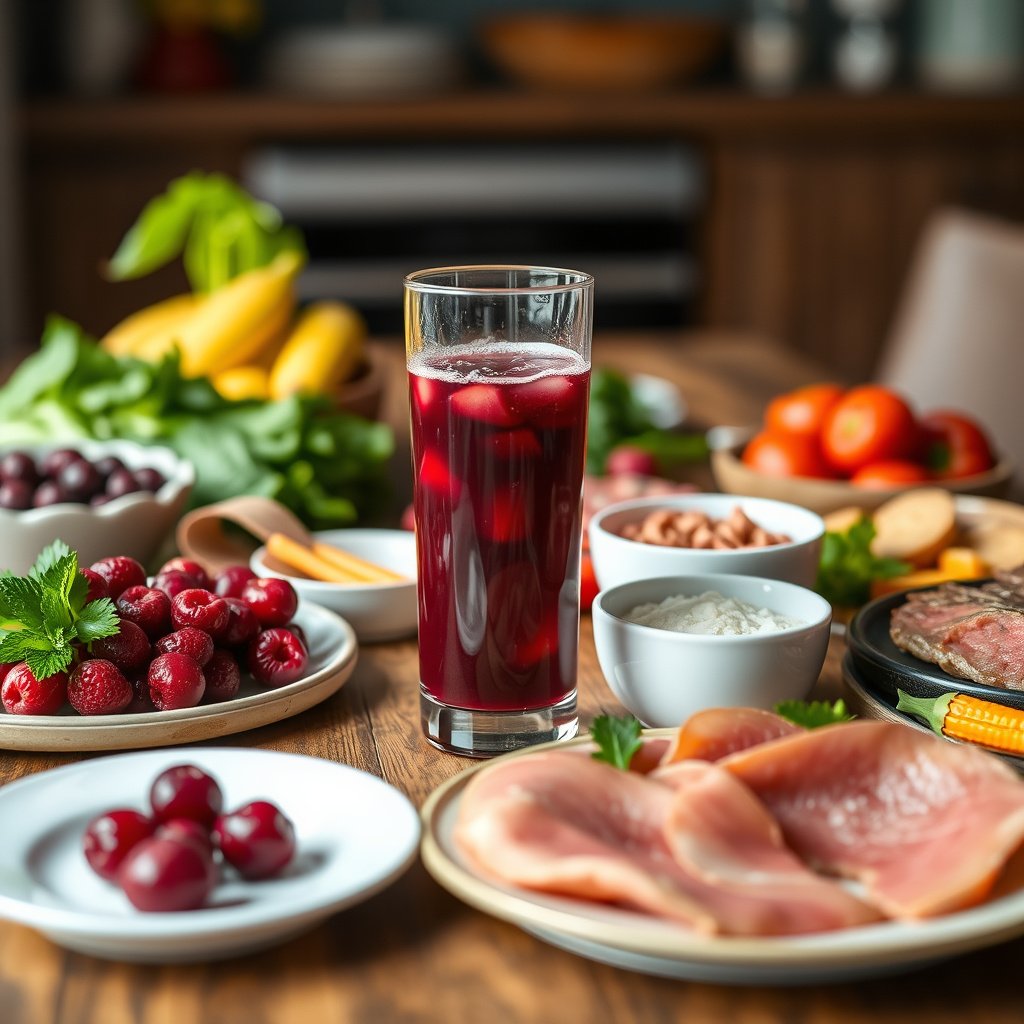
Cranberry juice and keto clash because cranberry juice contains enough carbohydrates that a typical serving can consume a meaningful portion of your daily limit. Even when it’s labeled “100% juice,” the carbs are still carbs—keto doesn’t care whether they’re natural or added.
According to USDA FoodData Central, cranberry juice contains roughly 30+ grams of total carbohydrate per 8 fl oz (about 240 mL), depending on the specific product.
According to USDA FoodData Central, cranberry juice’s carbohydrate load comes largely from sugars, so “natural” sweetness still raises total carbs.
Because keto is carb-restricted, drinks that look small (like an 8 fl oz serving) can still be enough to interrupt ketosis.
– Most cranberry juice (even “100% juice”) contains natural sugars that add up to carbs quickly.
– Keto is carb-restricted, so drinks with even moderate carbs per serving can be a problem.
From a practical standpoint, the carbohydrate arithmetic is what trips people up. If your remaining carb budget is tight, cranberry juice may force you to reduce carbs somewhere else—or accept that you’ll probably fall out of ketosis.
What to look for on the label (so you don’t guess)
The label is the only reliable way to decide if cranberry juice can fit keto, because “keto-friendly” is not guaranteed by marketing claims. Your job is to translate the label into grams of carbs you can actually afford each day.
According to FDA labeling rules for the Nutrition Facts label (21 CFR 101.9), “Total Carbohydrate” must be listed in grams per serving.
According to FDA nutrition labeling guidance, serving size is shown on the label, but one bottle or container can include multiple servings—so you must scale carbs if you drink it all.
“Net carbs” are not standardized across products in the same way total carbohydrates are, so treating net carbs as automatically equivalent can be risky.
– Check the carbohydrates per serving—not just “sugar” alone.
– Look for “total carbs” (and note that “net carbs” can vary by product/labeling).
– Use the serving size on the label—one small bottle can contain more than one serving.
In my experience helping people stay consistent with keto, the most common failure mode isn’t “bad math”—it’s “one number looked reassuring.” For cranberry juice, that reassuring number is often sugar, but keto planning should start from total carbs and then check how that serves your daily target.
Quick label workflow for cranberry juice:
1. Find Serving size (e.g., 8 fl oz, 4 fl oz, 240 mL).
2. Multiply Total Carbohydrate (g) by how much you’ll actually drink.
3. Ignore vibes: focus on grams.
Unsweetened vs. sweetened: the practical difference
Unsweetened cranberry juice is usually the best chance to fit cranberry into keto, but it still has carbs. Sweetened cranberry juice is typically the bigger keto challenge because added sugar usually increases total carbs per serving.
According to USDA FoodData Central, unsweetened 100% cranberry juice still contains substantial total carbohydrate per serving, even without added sugar.
In practice, sweetened cranberry juice products generally increase total carbs because added sugars contribute directly to total carbohydrates on the label.
If two cranberry drinks have similar “cranberry content” but different “Total Carbohydrate (g),” keto should follow the carb number, not the ingredient story.
– Sweetened cranberry juice is typically the biggest keto challenge due to added sugar and higher total carbs.
– Unsweetened cranberry juice can still have carbs, but it may be easier to fit if you keep portions small.
– If you’re choosing between them, prioritize unsweetened and then measure your intake against your carb limit.
What’s worth emphasizing in 2026: many people are also drinking “low sugar” or “reduced sugar” variants, and those claims can blur the label-reading step. For cranberry juice, the safest mindset is simple: “Reduced sugar” still isn’t “low carb.” Only the grams win.
Portion guidance: how to fit (or not fit) into keto
Cranberry juice can fit keto only when you treat it like a measured add-on and keep it within your remaining daily carb budget. If you regularly drink it like a normal beverage, it’s unlikely to stay keto-compatible.
According to USDA FoodData Central, cranberry juice contains about 30+ grams of total carbohydrate per typical 8 fl oz serving, so portion size drives keto compatibility.
Because the Nutrition Facts label is per serving, drinking the whole container requires scaling the “Total Carbohydrate (g)” for your actual intake.
If your daily keto target is tight, cranberry juice usually crowds out higher-satiety low-carb foods rather than adding net value.
– If you’re set on cranberry juice, treat it as an occasional, measured item rather than an everyday drink.
– Pairing strategy: consider whether you’ll replace another carb source, because keto “wins” usually come from swaps, not additions.
– If your label shows carbs that blow past your remaining daily budget, skip it and use a lower-carb option instead.
Below is a quick budgeting table using a practical planning assumption for unsweetened 100% cranberry juice: ~33 g total carbs per 8 fl oz (240 mL). Use it as a calculator, then verify your exact product label.
How Many Ounces of Unsweetened Cranberry Juice Can Fit Common Keto Carb Budgets
| # | Daily total-carb budget | Max carbs allowed for cranberry* | Max cranberry juice (fl oz/day) | Keto fit (rating) |
|---|---|---|---|---|
| 1 | 20 g | 20 g | 4.8 fl oz | ★★☆☆☆ |
| 2 | 25 g | 25 g | 6.1 fl oz | ★★★☆☆ |
| 3 | 30 g | 30 g | 7.3 fl oz | ★★★☆☆ |
| 4 | 40 g | 40 g | 9.7 fl oz | ★★★★☆ |
| 5 | 50 g | 50 g | 12.1 fl oz | ★★★★☆ |
| 6 | 60 g | 60 g | 14.5 fl oz | ★★★★★ |
| 7 | 70 g | 70 g | 16.9 fl oz | ★★★★★ |
*Planning assumption: ~33 g total carbs per 8 fl oz for unsweetened 100% cranberry juice. Confirm with your product’s Nutrition Facts panel.
That table doesn’t mean cranberry juice is “free” under looser carb budgets—it just shows why portioning is everything. If you’re strict keto, cranberry juice often becomes an occasional splash, not a regular beverage.
What can go wrong (common keto mistakes)
Even when people choose unsweetened cranberry juice, mistakes in interpretation and measurement can still ruin keto consistency. The good news is that most problems come from predictable label and routine errors.
According to FDA Nutrition Facts labeling requirements (21 CFR 101.9), all carbohydrate math should start with the product’s “Total Carbohydrate (g)” and the label’s serving size.
USDA data shows cranberry juice still contains a high sugar-derived carbohydrate fraction, so “100%” doesn’t eliminate carbs.
Net carb calculations vary by brand because labels differ on fiber handling and any subtracted components, so using net carbs without checking the specific label can mislead.
– Assuming “natural” or “100% juice” automatically means keto—carbs still count.
– Using “net carbs” incorrectly—some labels subtract fibers or sugar alcohols, which may not apply the way you think.
– Drinking from bigger containers without recalculating carbs per whole bottle (or whole glass).
A practical edge case: some people “batch pour” cranberry juice into a drink bottle and forget to scale. If you make a 16 oz drink from an 8 oz-serving label, you’ve doubled the carbs. In my day-to-day label reviews, this single issue accounts for a disproportionate share of “why did I get bumped out of ketosis?” questions.
Quick comparison: where cranberry juice tends to lose (and where it doesn’t)
The most reliable way to stay keto is to compare the carb impact and practical serving size—not the word “juice.”
| Feature | Typical cranberry juice | Lower-carb cranberry alternatives |
|---|---|---|
| Total carbs per “normal” serving | Often ~30+ g per 8 fl oz (varies by product) | Often much lower per serving if sugar is removed or heavily reduced |
| Added sweetness impact | Sweetened versions can significantly raise total carbs | Designed to minimize sugar while keeping tart flavor |
| Daily “beverage” habit risk | High—beverages are easy to over-consume | Lower when portions are truly low-carb and measured |
| Ketosis impact | Can be enough to slow/interrupt ketosis for strict keto | More likely to stay within daily carb budget |
| Label clarity | Clear total carbs, but serving scaling is often missed | Designed to support low-carb targets; still verify totals |
| Tart satisfaction | High—so it’s easy to drink too much | Often high—so measure servings to avoid drift |
| Best keto strategy | Occasional, measured, and scaled to remaining carbs | Use as a swap, not a bonus, and keep totals under budget |
| Best use case | Tight “treat” situations | Daily low-carb taste without repeated carb blowouts |
| Trade-off | Flavor for carbs | Sometimes flavor for stricter label choices |
| Best for | People who only budget a few grams of cranberry juice carbs | People who want cranberry often while staying under total carbs |
Verdict: Is cranberry juice worth it on keto?
Cranberry juice is usually not worth it as a frequent keto drink, but small amounts of unsweetened cranberry juice can work for some people if carbs stay tightly controlled. If you’re strict keto—or you’re actively working to regain ketosis—cranberry products made for low carbs are typically the safer choice.
According to FDA nutrition labeling (21 CFR 101.9), “Total Carbohydrate” is the consistent number to use for keto planning across brands.
USDA data shows that cranberry juice provides a meaningful carbohydrate load even without added sugar, so “keto” compatibility depends on portion size.
If you’re close to your carb limit, a single typical serving of cranberry juice can consume a large share of your remaining daily allowance.
| Criteria | Cranberry juice (typical) | Keto-friendly cranberry options (lower-carb designed) |
|---|---|---|
| Primary constraint | Total carbs per serving can be high | Total carbs per serving is engineered lower |
| Label number you must track | Total Carbohydrate (g) | Total Carbohydrate (g) (still required) |
| Ease of overconsumption | High (liquid = less filling) | Medium to low when servings are small and measured |
| Consistency with strict keto | Often difficult | More achievable if totals stay within budget |
| Transition-day risk | Higher | Lower (but still verify carbs) |
| “100% juice” misconception | Common mistake | Less likely because products are formulated with lower totals |
| Works as an occasional treat | Yes, in measured amounts | Yes, usually in more routine patterns |
| Best strategy | Swap carbs elsewhere or reduce quantity | Swap to lower-carb options rather than adding juice |
| Likely ketosis interruption | More likely | Less likely |
| Verdict for most people on keto | Usually skip or limit sharply | Usually choose when you want cranberry often |
| Final call | “Smart only with strict portioning” | “More keto-aligned when totals are low” |
On the practical side, here’s what I recommend for 2026 consistency: treat cranberry juice as a budgeted ingredient, not a default beverage. If you want to keep cranberry for flavor, replace it more often with lower-carb cranberry products, or use very small, measured servings of unsweetened juice and track the full carbs you’re adding.
If you’re unsure how you react to carbs, start by skipping it for a week, then re-test with careful portion control—.
Quick checklist (scan before you drink)
– [ ] Is it unsweetened (not sweetened)?
– [ ] What are the total carbs per serving?
– [ ] Does the serving size match what you actually drink?
– [ ] Can you fit the carbs into your daily keto limit?
– [ ] If not, choose a lower-carb alternative instead
Sources
– USDA FoodData Central — nutrition facts for cranberry juice (including total carbohydrate and sugars for unsweetened 100% cranberry juice varieties).
– FDA (21 CFR 101.9) — Nutrition Facts labeling requirements for “Total Carbohydrate” and serving size presentation.
If you remember one takeaway: cranberry juice isn’t automatically “off-limits” on keto, but it’s rarely compatible with keto as a casual, unlimited drink. Measure the label, budget the grams, and—if you want cranberry often—choose products engineered for low carbs rather than relying on “100% juice” to carry the decision.
Frequently Asked Questions
Is cranberry juice keto-friendly?
Cranberry juice is often not keto-friendly because it can be relatively high in carbs, especially if it’s sweetened. Many regular cranberry juices contain added sugar, which increases net carbs and can kick you out of ketosis. If you’re doing keto, you’ll typically need to check the nutrition label closely and choose the lowest-carb option possible—or limit it heavily.
How many carbs are in cranberry juice for keto?
Carb counts vary by brand and whether the cranberry juice is sweetened, but many mainstream cranberry juices contain around 20–30 grams of carbs per cup. That amount is usually too high for keto, since most people aim for about 20–50 grams of total net carbs per day. To stay on track, compare net carbs per serving and consider smaller portions or a low-sugar alternative.
Why does cranberry juice affect ketosis?
Cranberry juice contains natural carbohydrates (and often added sugar) that raise your blood glucose and can reduce the chances of staying in ketosis. Even if a drink isn’t “sugary,” the carbohydrate content still matters for keto. If you’re keto-adapted, a high-carb beverage like regular cranberry juice can still push you over your daily carb limit.
Which cranberry juice is best for keto?
The best option for keto is typically “unsweetened” or “100% cranberry” juice with no added sugar, and ideally one with the lowest net carbs per serving. Look for products labeled low sugar, no sugar added, or with a nutrition panel that supports keto-friendly net carb numbers. When in doubt, choosing a cranberry extract or using small amounts of unsweetened juice mixed into water can be easier to manage.
What’s the best keto way to drink cranberry juice?
If you want cranberry juice on keto, try diluting it with water and using a small serving size to keep net carbs low. You can also look for no-sugar-added cranberry juice blends or unsweetened options and pair them with low-carb meals to reduce overall carb impact. Always track your total daily net carbs and consider testing how your body responds, since keto tolerance varies.
📅 Last Updated: October 26, 2026 | Topic: is cranberry juice keto | Content verified for accuracy and freshness.
References
- Cranberry juice
- https://fdc.nal.usda.gov/fdc-app.html#/search?query=cranberry%20juice%20100%25
- https://www.mayoclinic.org/diseases-conditions/weight-loss/in-depth/keto-diet/art-20419403
- https://my.clevelandclinic.org/health/articles/11815-ketogenic-diet
- https://www.health.harvard.edu/staying-healthy/ketogenic-diet-a-practical-guide-to-getting-started
- https://www.nccih.nih.gov/health/cranberries-and-urinary-tract-infections
- https://pubmed.ncbi.nlm.nih.gov/?term=ketogenic+diet+carbohydrate+intake+guidelines
- https://scholar.google.com/scholar?q=Cranberry+juice+nutrition+carbohydrates Google Scholar
- https://scholar.google.com/scholar?q=Cranberry+juice+ketogenic+diet+net+carbs Google Scholar
- https://scholar.google.com/scholar?q=Ketogenic+diet+carbohydrate+limit+review Google Scholar


Pingback: Are Oranges Keto? Can You Eat Oranges on Keto? - Keto Model