

Eating veggies on a ketogenic diet is not only possible but also encouraged, as many low-carb vegetables can fit seamlessly into your meals. Emphasizing nutrient-dense, low-carbohydrate vegetables allows you to maintain ketosis while enjoying a diverse range of flavors and textures. In this article, you’ll discover which vegetables are keto-friendly, how to incorporate them into your diet, and the benefits they provide while maintaining ketosis.
Understanding the Keto Diet Basics
The ketogenic diet focuses on high-fat, moderate-protein, and very low-carb intake, typically comprising about 70-75% fat, 20-25% protein, and only 5-10% carbohydrates. The primary goal of this dietary approach is to enter a metabolic state known as ketosis, wherein the body shifts from utilizing glucose derived from carbohydrates as its main source of energy to burning fat for fuel. This metabolic transition can lead to various benefits, including weight loss, improved mental clarity, and increased energy levels. By understanding the core principles of the keto diet, you can strategically select vegetables that align with your nutritional goals.
Low-Carb Vegetables to Include
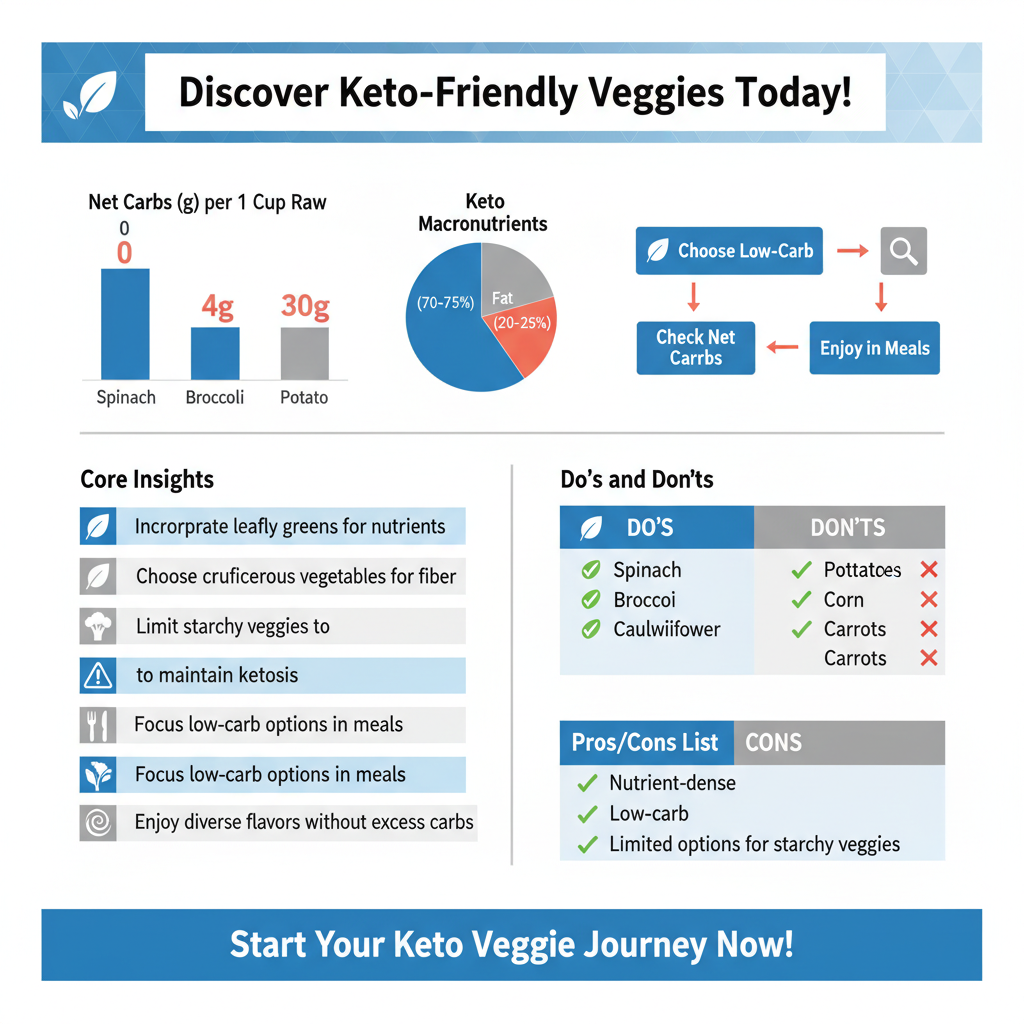
Incorporating low-carb vegetables into your ketogenic meals can enhance both flavor and nutritional value. Leafy greens like spinach, kale, and arugula are particularly beneficial, offering a plethora of vitamins and minerals while containing minimal carbohydrates. For instance, one cup of raw spinach has only about 1 gram of net carbs, making it an ideal addition to salads or smoothies.
Cruciferous vegetables, such as broccoli, cauliflower, and Brussels sprouts, are also excellent choices on a keto diet. These vegetables are not only low in carbohydrates but are also high in fiber, which can support digestive health. A cup of raw broccoli contains approximately 4 grams of net carbs. Cauliflower can be used as a versatile substitute for higher-carb grains and has gained popularity for its ability to mimic rice or mashed potatoes when prepared correctly. By focusing on these low-carb vegetables, you can create satisfying and nutritious meals that align with your keto dietary needs.
Vegetables to Avoid on Keto
While vegetables are generally considered healthy, certain varieties are high in carbohydrates and should be limited or avoided on a ketogenic diet. Starchy vegetables such as potatoes, corn, and carrots contain significantly more carbs than their low-carb counterparts. For example, one medium potato can contain upwards of 30 grams of carbohydrates, which can quickly exceed your daily carb limit on a keto diet.
Legumes and beans, although rich in protein and fiber, also fall into the high-carb category. Chickpeas and lentils, for instance, can contain 25 grams of carbs in just one cup. Therefore, it is crucial to be discerning when choosing vegetables, ensuring that you prioritize low-carb options to maintain ketosis effectively.
Tips for Incorporating Veggies into Your Keto Meals
Finding creative ways to incorporate vegetables into your keto meals can enhance both nutritional value and taste. One effective strategy is to use vegetables as a base for salads or stir-fries. For instance, you can start with a bed of mixed leafy greens and add protein sources like grilled chicken or tofu, topped with healthy fats such as avocado or olive oil. This not only adds volume to your meal but also provides essential nutrients without piling on the carbs.
Another innovative approach is to experiment with vegetable-based substitutes for commonly consumed high-carb foods. Cauliflower rice is an excellent alternative to traditional rice, and it can be easily prepared by grating raw cauliflower and sautéing it in a pan. Similarly, zucchini noodles (or “zoodles”) can be created using a spiralizer, allowing you to enjoy pasta-like dishes without the carb load. Incorporating these substitutes can diversify your meals and keep your diet interesting.
The Nutritional Benefits of Veggies on Keto
Including vegetables in your ketogenic diet offers numerous nutritional benefits that extend beyond mere calorie counts. High-fiber vegetables, for instance, can aid in digestion and promote gut health. Fiber acts as a prebiotic, nourishing the beneficial bacteria in your gut microbiome, which can lead to improved digestion and overall well-being.
Moreover, many vegetables are rich in essential vitamins and minerals that support various bodily functions. For example, leafy greens are packed with vitamin K, which plays a critical role in blood clotting and bone health. Cruciferous vegetables are often high in antioxidants, which can help combat oxidative stress and inflammation in the body. By incorporating a diverse range of low-carb vegetables, you can enhance your nutritional intake while adhering to your keto lifestyle.
Meal Ideas Featuring Keto-Friendly Veggies
Creating delicious meals with keto-friendly vegetables is both simple and enjoyable. Here are some meal ideas to inspire your culinary creativity:
1. Colorful Salad: Prepare a vibrant salad using a mix of leafy greens, cherry tomatoes, avocado, and a protein source such as grilled shrimp. Drizzle with olive oil and lemon juice for a refreshing dressing.
2. Stir-Fried Veggies: Sauté broccoli, bell peppers, and zucchini in sesame oil, adding in your choice of protein (tofu, chicken, or beef) for a quick and satisfying stir-fry. Season with soy sauce or coconut aminos for added flavor.
3. Cauliflower Pizza: Create a low-carb pizza crust using riced cauliflower, cheese, and eggs. Top with sugar-free marinara sauce, mozzarella cheese, and your favorite low-carb toppings for a satisfying meal.
4. Stuffed Bell Peppers: Hollow out bell peppers and fill them with a mixture of ground meat, cauliflower rice, and spices. Bake until the peppers are tender for a wholesome, hearty dish.
5. Zucchini Lasagna: Use thinly sliced zucchini as a substitute for pasta sheets in a classic lasagna recipe. Layer with ricotta cheese, marinara sauce, and ground meat for a delicious, low-carb twist on a traditional favorite.
By experimenting with these meal ideas, you can enjoy the diverse flavors and health benefits of low-carb vegetables while staying committed to your ketogenic lifestyle.
Incorporating vegetables into your keto diet is not only possible but beneficial. By choosing low-carb options and avoiding starchy varieties, you can enjoy the health advantages of vegetables while maintaining ketosis. Start experimenting with these veggie ideas today and enhance your keto meals!
Frequently Asked Questions
Can you eat all types of vegetables on a keto diet?
While vegetables are an essential part of a healthy diet, not all are suitable for a ketogenic lifestyle due to their carbohydrate content. On a keto diet, it’s best to focus on low-carb veggies such as leafy greens (spinach, kale), cruciferous vegetables (broccoli, cauliflower), and other non-starchy options like zucchini and bell peppers. High-carb vegetables like potatoes, corn, and peas should be limited or avoided to maintain ketosis.
How many carbs should I aim for when eating vegetables on keto?
When following a ketogenic diet, it’s generally recommended to limit total carbohydrate intake to around 20-50 grams per day, depending on individual factors like activity level and metabolic health. Since vegetables can contribute to your daily carb count, aim to consume primarily low-carb varieties, ensuring that the majority of your carbohydrate intake comes from these nutrient-dense foods. Tracking your macros using a food diary or app can help you stay within your carb limits.
Why are non-starchy vegetables encouraged on a keto diet?
Non-starchy vegetables are encouraged on a keto diet because they are low in carbohydrates and high in fiber, vitamins, and minerals, making them an excellent choice for maintaining overall health while in ketosis. These vegetables help provide essential nutrients without significantly impacting your daily carb allowance, allowing you to enjoy a variety of flavors and textures in your meals while supporting your weight loss and health goals.
What are the best vegetables to eat on a keto diet?
The best vegetables to eat on a keto diet include leafy greens (such as spinach and arugula), cruciferous vegetables (like broccoli, cauliflower, and Brussels sprouts), asparagus, zucchini, cucumbers, and bell peppers. These options are not only low in carbohydrates but also packed with essential nutrients, making them ideal for adding volume and flavor to your meals without derailing your ketogenic goals.
How can I incorporate more vegetables into my keto meals?
To incorporate more vegetables into your keto meals, consider adding them to salads, stir-fries, or omelets, and using them as substitutes for higher-carb ingredients. For example, zucchini noodles can replace pasta, and cauliflower can be used to create a low-carb rice or pizza crust. Experimenting with different cooking methods, such as roasting or sautéing, can enhance the flavor and make veggies more appealing, ensuring you enjoy a diverse and satisfying ketogenic diet.
References
- Ketogenic diet
- https://www.healthline.com/nutrition/keto-diet-vegetables
- https://www.ncbi.nlm.nih.gov/pmc/articles/PMC6071090/
- https://www.webmd.com/diet/what-is-the-keto-diet
- https://www.mayoclinic.org/healthy-lifestyle/nutrition-and-healthy-eating/expert-answers/keto-diet/faq-20447181
- https://www.cdc.gov/healthyweight/healthy_eating/index.html