

Eating berries on a keto diet is not only possible but can also be beneficial when done in moderation. While traditional high-carb fruits are off-limits, certain berries offer a lower carbohydrate content that can fit well within your daily macros. This article will explore which berries are keto-friendly, their nutritional benefits, and how to incorporate them into your diet effectively.
Understanding Keto and Carbohydrate Limits

The ketogenic diet, or keto for short, emphasizes a high-fat, moderate-protein, and very low-carbohydrate intake. Typically, individuals on a keto diet limit their carbohydrate consumption to between 20 to 50 grams per day. This restriction is crucial for achieving and maintaining a state of ketosis, where the body burns fat for fuel instead of carbohydrates. Most fruits are high in natural sugars, which can disrupt ketosis and lead to unwanted weight gain or stalled progress. Therefore, careful selection of lower-carb fruits, particularly berries, becomes essential for those following a keto lifestyle. Understanding which berries have lower carbohydrate counts can help you enjoy the flavors and health benefits of these fruits without compromising your dietary goals.
Best Berries for Keto
When it comes to selecting berries for a keto diet, some varieties stand out due to their lower carbohydrate content.
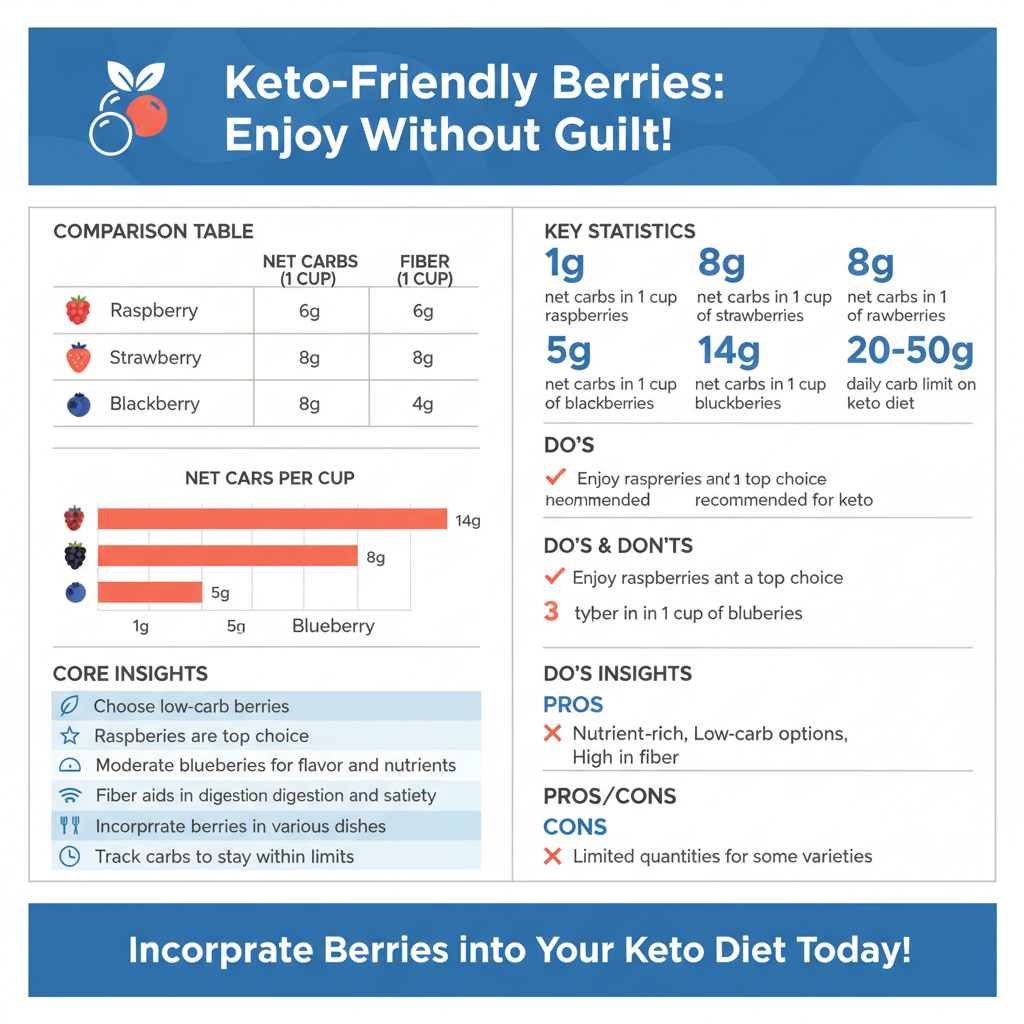
– Raspberries: One of the best options, raspberries contain about 7 grams of carbohydrates and 6 grams of fiber per cup, resulting in only 1 gram of net carbs. Their high fiber content not only aids digestion but also helps maintain satiety, making them an excellent choice for those on a keto diet.
– Strawberries: With approximately 11 grams of carbohydrates and 3 grams of fiber per cup, strawberries are relatively low in net carbs (around 8 grams). A handful of strawberries can fit into your daily carb allowance, and their natural sweetness makes them a delightful addition to various dishes.
– Blackberries: Similar to raspberries, blackberries are low in carbs, containing about 10 grams of carbohydrates and 5 grams of fiber per cup, resulting in 5 grams of net carbs. They are also rich in vitamins and minerals, contributing to your overall nutrient intake.
– Blueberries: While blueberries are slightly higher in carbohydrates, featuring about 17 grams of carbohydrates and 3 grams of fiber per cup (14 grams of net carbs), they can still be enjoyed in moderation. A small handful can provide a burst of flavor without derailing your keto efforts.
By focusing on these berries, you can enjoy the taste and health benefits while staying within your carbohydrate limits.
Nutritional Benefits of Berries
Berries are not just delicious; they are also packed with a variety of nutrients that make them a valuable addition to any diet, including keto.
– Rich in Antioxidants: Berries are renowned for their high antioxidant content, particularly anthocyanins, which are responsible for their vibrant colors. Antioxidants play a vital role in combating oxidative stress and inflammation in the body, potentially reducing the risk of chronic diseases.
– Vitamins and Minerals: Berries are rich in essential vitamins such as vitamin C, which supports the immune system and promotes healthy skin. They also contain potassium, which is important for maintaining proper muscle function and cardiovascular health.
– Low in Calories: Most berries are low in calories, making them an ideal snack for those looking to lose weight or maintain a healthy lifestyle. The high fiber content in berries also aids in digestion and helps you feel fuller for longer.
Incorporating berries into your keto diet not only enhances flavor but also boosts your nutrient intake significantly.
Portion Control and Serving Suggestions
While berries can be a healthy addition to your keto diet, portion control is crucial to stay within your carbohydrate limits.
– Serving Sizes: A quarter cup of berries is often a safe amount to include in your meals or snacks. This portion provides a satisfying taste without significantly impacting your daily carb intake.
– Pairing with High-Fat Foods: To enhance the flavor and maintain ketosis, consider combining berries with high-fat foods. For instance, adding a few berries to full-fat Greek yogurt or mixing them into almond flour pancakes can create a delicious and satisfying meal. Additionally, whipping cream can be used as a dip or topping for berries, allowing you to enjoy a rich taste while adhering to your dietary goals.
By keeping portions in check and pairing berries with high-fat options, you can enjoy their sweetness without compromising your keto lifestyle.
Creative Ways to Include Berries in Your Diet
Incorporating berries into your keto diet can be both enjoyable and versatile. Here are some creative ideas to consider:
– Smoothies: Blend a handful of keto-friendly berries with spinach, avocado, and unsweetened almond milk for a nutritious, low-carb smoothie. This combination not only tastes great but also provides a wealth of vitamins and healthy fats.
– Keto-Friendly Desserts: Use berries in low-carb dessert recipes, such as keto cheesecake or almond flour muffins. Their natural sweetness can enhance the flavor of desserts without the need for added sugars.
– Salads: Add berries to salads for a refreshing twist. Combine mixed greens with walnuts, feta cheese, and a handful of raspberries or strawberries for a colorful and nutritious meal. Berries can also be paired with balsamic vinaigrette for a delightful contrast of flavors.
By thinking outside the box, you can find numerous ways to enjoy berries while sticking to your keto plan.
Potential Pitfalls of Eating Berries on Keto
While berries can be a great addition to a ketogenic diet, there are potential pitfalls to be aware of:
– Overindulgence: Eating too many berries can quickly lead to exceeding your daily carbohydrate limits. It’s essential to be mindful of portion sizes and track your intake to ensure you remain in ketosis.
– Added Sugars: Many commercial products containing berries, such as jams, sauces, or smoothies, often include added sugars that can significantly increase carbohydrate content. Always read labels carefully and opt for fresh or frozen berries without added sugars to stay true to your keto goals.
By being vigilant about portion sizes and the products you choose, you can enjoy the benefits of berries while minimizing the risk of disrupting your dietary progress.
In summary, berries can be a delicious and nutritious addition to your keto diet when consumed in moderation. Focus on low-carb options like raspberries and strawberries, and consider creative ways to incorporate them into your meals, such as smoothies and salads. As always, monitor your carbohydrate intake to maintain ketosis and enjoy the health benefits these fruits can offer. Start experimenting with berries today to enhance your keto journey!
Frequently Asked Questions
Can you eat berries on a keto diet?
Yes, you can eat berries on a keto diet, but in moderation. Berries like strawberries, raspberries, blackberries, and blueberries are lower in carbohydrates compared to other fruits. They offer essential vitamins, antioxidants, and fiber while providing a sweet taste that can satisfy cravings. Just be mindful of portion sizes to ensure you stay within your daily carb limit.
What types of berries are best for a keto diet?
The best types of berries for a keto diet are strawberries, raspberries, blackberries, and blueberries, as they have lower net carbs per serving compared to other fruits. For example, a half-cup of raspberries contains about 3 grams of net carbs, making them a great choice. Always check the carb content and opt for fresh or frozen berries without added sugars for the healthiest options.
How many berries can you eat on keto without exceeding your carb limit?
The amount of berries you can eat on a keto diet largely depends on your individual daily carbohydrate limit, which typically ranges from 20 to 50 grams for most people. A general guideline is to limit your berry intake to about 1/4 to 1/2 cup per day. This portion allows you to enjoy the health benefits of berries while keeping your carb intake in check.
Why are berries considered a good choice for a keto diet?
Berries are considered a good choice for a keto diet because they are nutrient-dense, low in carbohydrates, and high in fiber and antioxidants. They can help satisfy your sweet cravings without significantly impacting your blood sugar levels. Additionally, the vitamins and minerals found in berries can contribute to overall health and well-being while following a ketogenic lifestyle.
Which berries should I avoid on a keto diet?
On a keto diet, you should generally avoid high-sugar fruits such as bananas, grapes, and cherries, as they contain higher carbohydrate levels that can hinder ketosis. Additionally, fruits like mangoes and pineapples are also best to steer clear of due to their high sugar content. Sticking to lower-carb options like strawberries and raspberries will help you maintain your keto goals while still enjoying some fruit.
References
- https://www.healthline.com/nutrition/berries-on-keto
- https://www.medicalnewstoday.com/articles/326845
- https://www.dietdoctor.com/low-carb/keto/recipes/berries
- https://www.ncbi.nlm.nih.gov/pmc/articles/PMC6520887/
- https://www.verywellfit.com/berries-on-a-keto-diet-5183146
- https://www.ketodietapp.com/Blog/post/2020/09/24/how-to-choose-berries-on-keto
- USDA
- Not Found | American Heart Association | American Heart Association