

Yes, you can enjoy yogurt on a keto diet, but it’s essential to choose the right types. While many traditional yogurts are high in carbohydrates, there are several low-carb options that can fit seamlessly into your daily macro goals. This article will delve into the different types of yogurt available, their carbohydrate content, and effective strategies for incorporating them into your keto lifestyle.
Understanding Keto and Carbohydrate Limits

A ketogenic diet is characterized by its low carbohydrate intake, typically requiring individuals to keep their daily carbs between 20-50 grams. This restriction is crucial for maintaining a state of ketosis, where the body shifts from relying on glucose for energy to utilizing fat. As a result, selecting foods that align with this carb limit is paramount. Foods high in carbohydrates can disrupt ketosis, leading to diminished weight loss and energy levels. Therefore, understanding the carbohydrate content of yogurt is essential for those adhering to a keto diet.
Types of Yogurt Suitable for Keto
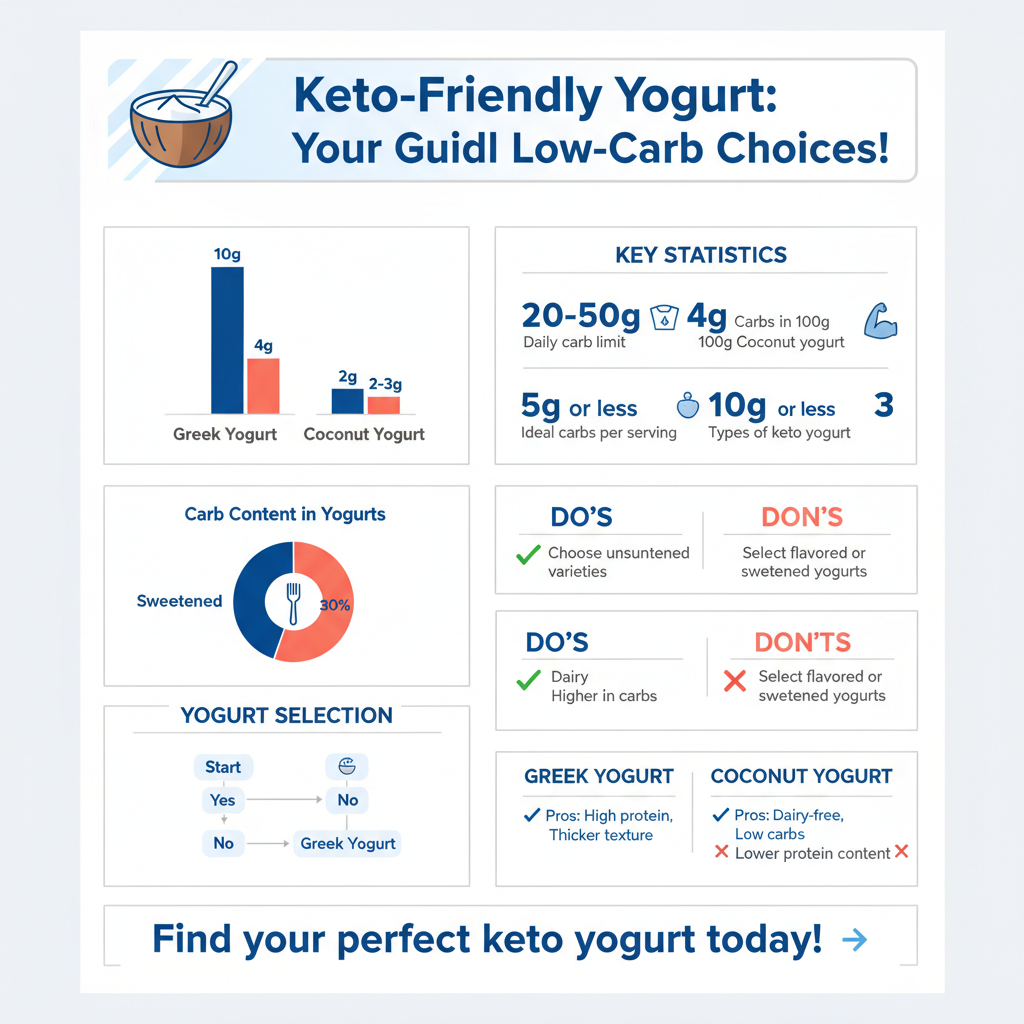

When considering yogurt options for a ketogenic diet, it is vital to focus on low-carb varieties that provide nutritional benefits without derailing your progress.
– Greek Yogurt: This is often the go-to choice for keto dieters. Greek yogurt is strained, resulting in a thicker texture and higher protein content compared to regular yogurt. Typically, a 100-gram serving of unsweetened Greek yogurt contains around 4 grams of carbohydrates and 10 grams of protein, making it an excellent option for those looking to maintain muscle mass while losing fat. It’s versatile and can be used in both savory and sweet dishes.
– Unsweetened Coconut Yogurt: For those avoiding dairy, unsweetened coconut yogurt is a fantastic alternative. Made from coconut milk, this yogurt is rich in healthy fats—ideal for a ketogenic diet. It generally contains about 2-3 grams of carbs per serving and can provide a creamy texture for smoothies or as a base for toppings. When choosing coconut yogurt, ensure it is unsweetened and free from additives that might increase carb content.
Reading Labels: What to Look For
Navigating the yogurt aisle can be daunting, especially with the plethora of options available. To make informed choices, it’s essential to read nutrition labels carefully.
– Always check the total carbohydrates per serving. A good rule of thumb is to select yogurt that contains 5 grams of carbs or less per serving. This will help you stay within your daily carb limit while still enjoying yogurt.
– Additionally, pay attention to the added sugars. Many flavored yogurts, even those marketed as “healthy,” can contain significant amounts of sugar which can quickly push you over your carb limit. Look for labels that state “no added sugars” or “unsweetened” to ensure you are making a keto-friendly choice.
Homemade Yogurt: A Keto-Friendly Alternative
Making yogurt at home can be a rewarding endeavor, allowing you to have complete control over the ingredients and sugar content.
– To create homemade yogurt, start with whole milk or coconut milk as your base. Use a yogurt starter culture that contains live active cultures without additives or sugars. This method ensures that you can enjoy a creamy, tangy yogurt that aligns with your keto dietary needs.
– The fermentation process in yogurt-making also tends to reduce the lactose content, making it more digestible for those who are lactose intolerant. This can be particularly beneficial for individuals who want the benefits of yogurt without the side effects.
Flavoring Your Keto Yogurt
While plain yogurt can be enjoyable, adding flavor can make your keto yogurt experience more delightful.
– Consider incorporating low-carb toppings such as fresh berries (strawberries, raspberries, or blackberries) in moderation, as these fruits are lower in sugar and can add a burst of flavor and nutrients. A small serving of nuts or seeds can also add texture and healthy fats, complementing your yogurt without significantly increasing the carb count.
– If you prefer a sweeter flavor, avoid traditional sweeteners high in sugar. Instead, opt for low-carb alternatives like stevia or erythritol, which do not impact blood sugar levels. These sweeteners can enhance the taste of your yogurt without compromising your ketogenic goals.
Common Mistakes to Avoid with Yogurt on Keto
While yogurt can be a nutritious part of a keto diet, certain pitfalls should be avoided to ensure it contributes positively to your health journey.
– One of the most common mistakes is choosing flavored yogurts, which often contain hidden sugars and higher carbohydrate counts. Always opt for plain varieties to maintain control over your sugar intake.
– Another frequent error is the overconsumption of yogurt. While it is low in carbs, consuming large quantities can lead to exceeding your daily limits without realizing it. Portion control is key—measure out servings to keep your carb intake in check.
Creative Ways to Incorporate Yogurt into Your Keto Meal Plan
Incorporating yogurt into your meal plan can be both fun and beneficial.
– Use yogurt as a base for smoothies by blending it with spinach, avocado, and ice for a refreshing, nutrient-packed drink. This combination can provide healthy fats and fiber, making it a perfect breakfast or snack option.
– Yogurt can also serve as a delicious addition to salad dressings. Combine yogurt with olive oil, vinegar, herbs, and spices for a creamy dressing that enhances your salads without unnecessary carbs.
– For a crunchy texture, consider pairing yogurt with low-carb granola or chia seeds. These additions can provide a satisfying crunch and nutrients that complement the yogurt’s creaminess.
Summarizing the key points, yogurt can definitely fit into a ketogenic diet if you choose the right types and monitor your portions. Opt for low-carb varieties, read labels carefully, and get creative with flavoring to make it an enjoyable part of your meals. Start experimenting with keto-friendly yogurts today to find what you love!
Frequently Asked Questions
Can I have yogurt on a keto diet?
Yes, you can include yogurt in your keto diet, but it’s crucial to choose the right type. Full-fat, unsweetened Greek yogurt is often the best option as it typically contains fewer carbs and more protein compared to regular yogurt. Always check the nutrition label for carbohydrate content, aiming for options that have less than 5 grams of net carbs per serving to stay within your keto limits.
What types of yogurt are keto-friendly?
Keto-friendly yogurt options include full-fat Greek yogurt, plain coconut yogurt, and certain brands of unsweetened almond milk yogurt. These alternatives are lower in sugar and carbohydrates, making them suitable for a ketogenic diet. Avoid flavored yogurts and those with added sugars, as they can significantly increase carb counts and kick you out of ketosis.
How can I incorporate yogurt into my keto meal plan?
You can easily incorporate yogurt into your keto meal plan by using it as a base for smoothies, salad dressings, or dips. Additionally, it can serve as a snack topped with keto-friendly ingredients like nuts, seeds, or berries. Just be sure to measure your portions to maintain carb control and ensure you’re not exceeding your daily limits.
Why is Greek yogurt preferred over regular yogurt on keto?
Greek yogurt is preferred on a keto diet primarily due to its higher protein content and lower carbohydrate levels compared to regular yogurt. The straining process used to make Greek yogurt removes some of the whey, resulting in a thicker texture and more concentrated nutrients. This makes it a filling option that helps support muscle maintenance while keeping your carb intake low.
Which brands of yogurt are best for a keto diet?
Some of the best brands of yogurt for a keto diet include Fage Total, Chobani Whole Milk Greek Yogurt (plain), and Kite Hill Almond Milk Yogurt (unsweetened). These brands offer options that are lower in sugar and carbohydrates while providing the creamy texture and taste you may desire. Always verify the nutritional information, as formulations can change, and opt for plain varieties to avoid added sugars.
References
- https://www.healthline.com/nutrition/yogurt-on-keto
- Alzheimer’s disease: Symptoms, stages, causes, and treatments
- https://www.eatthis.com/yogurt-keto/
- https://www.dietdoctor.com/low-carb/keto/yogurt
- https://www.verywellfit.com/is-yogurt-keto-friendly-5118323
- https://www.ncbi.nlm.nih.gov/pmc/articles/PMC7079471/
- https://www.webmd.com/diet/obesity/what-is-a-keto-diet